

Organic fertilizers work slowly, so when do they make economic sense?
Organic fertilizers often act more slowly than synthetic inputs, raising a critical question for finance-focused decision-makers: when do they deliver real economic value? Beyond short-term yield expectations, the answer depends on input costs, soil health improvements, price premiums, and long-term risk reduction. For financial approvers evaluating agricultural investments, understanding where Organic fertilizers make economic sense is essential to balancing budget discipline with sustainable returns.
For budget holders, the core issue is not whether Organic fertilizers are environmentally attractive, but whether they can compete on cash flow, margin, and risk-adjusted return over 2, 3, or 5 growing seasons. In practice, the answer varies by crop value, soil condition, local nutrient prices, certification strategy, and how quickly a farm or supply chain can monetize non-yield benefits.
This matters far beyond the farm gate. Exporters, sourcing teams, and agribusiness finance departments increasingly evaluate fertilizer choices in relation to premium markets, residue requirements, buyer standards, and long-term supply resilience. For readers in global trade and industrial intelligence, Organic fertilizers are best understood as an input decision with implications for procurement, product positioning, and commercial risk management.
Why slower-release inputs can still create measurable economic value
The first financial misconception is that slower nutrient release automatically means weaker economics. Organic fertilizers often release nitrogen, phosphorus, and potassium over 4–12 weeks rather than in an immediately soluble form. That can reduce short-term response in some systems, but it may also lower leaching losses, improve nutrient retention, and support more stable soil performance across multiple seasons.
For financial approvers, the right comparison is not input price per ton alone. It is cost per usable nutrient unit, impact on yield over time, effect on secondary costs such as irrigation or corrective soil treatment, and potential influence on selling price. A higher upfront cost can make sense if it reduces volatility or supports a stronger revenue profile over a 24–60 month planning window.
Where the economic case usually improves
Organic fertilizers tend to make more sense in 4 common situations: high-value crops, degraded soils, markets with organic or residue-sensitive premiums, and operations exposed to high synthetic fertilizer price swings. In each case, the buyer is not paying only for nutrients. They are paying for a broader package of agronomic and commercial outcomes.
- High-value crops such as fruit, vegetables, spices, or specialty grains, where a 5%–10% price premium can outweigh slower nutrient response.
- Soils with low organic matter, where repeated application over 2–4 seasons may improve structure, water retention, and root activity.
- Export-oriented production that benefits from cleaner positioning, certification pathways, or buyer sustainability requirements.
- Regions with unstable synthetic input pricing, where blended fertility strategies can reduce exposure to annual cost shocks.
A finance-friendly way to compare options
A useful internal model is to score Organic fertilizers across 5 dimensions: input cost, nutrient release timing, yield sensitivity, premium potential, and risk reduction. When at least 3 of those 5 factors are favorable, the investment case becomes materially stronger. This is especially relevant for enterprises that evaluate agricultural inputs as part of a broader sourcing or export strategy.
The table below shows a practical framework for assessing when Organic fertilizers are likely to make economic sense compared with conventional inputs.
The key takeaway is that Organic fertilizers rarely win on speed alone. They win when finance teams measure margin durability, procurement stability, and downstream market value alongside agronomic performance.
How to calculate the real payback period
A disciplined financial review should estimate payback over at least 3 scenarios: one-season, three-season, and downside-risk case. This avoids the common error of rejecting Organic fertilizers because they do not maximize immediate yield in year 1, even when they improve economics across years 2 and 3.
Step 1: Measure full nutrient economics, not invoice price
Start with purchase cost, freight, storage, application labor, and nutrient concentration. Some Organic fertilizers have lower nutrient density, which can raise transport and handling costs by 10%–30% compared with concentrated synthetic products. That must be modeled clearly. However, if local supply is available within a 50–150 km radius, the logistics disadvantage can narrow substantially.
Step 2: Account for soil-related savings over multiple seasons
Where soil compaction, low microbial activity, or poor moisture retention are limiting factors, Organic fertilizers may produce indirect savings. These can include fewer corrective amendments, lower stress losses in dry periods, and improved nutrient use efficiency. Such effects usually do not appear fully in the first 60–90 days, but they matter in annual budgeting.
Step 3: Estimate revenue upside from market access or premium pricing
In some channels, a premium of 3%–15% is more realistic than a large yield increase. For exporters and processors, the economic case may rest on customer preference, certification eligibility, or lower residue concern rather than on field productivity alone. Finance teams should therefore compare not only tons harvested, but also average selling price and contract quality.
Step 4: Price in risk reduction
Risk-adjusted return is often decisive. If Organic fertilizers reduce dependence on a single imported input stream, improve resilience under irregular rainfall, or support compliance with buyer specifications, they may justify approval even with a slower nominal payback. Many procurement teams now assign explicit value to supply continuity, especially after 2–3 years of global logistics disruption.
The following table can help finance teams structure a simple payback model before approving a trial or scale-up.
This model encourages a broader investment lens. In many cases, Organic fertilizers should be approved not as a like-for-like substitute, but as part of a phased fertility strategy tied to commercial goals.
Best-fit scenarios for finance approvers and procurement teams
Not every operation should shift heavily toward Organic fertilizers. The strongest cases are usually selective, targeted, and staged. A finance team can often reduce risk by approving a 10%–30% acreage pilot, comparing results over 2 crop cycles, and expanding only where margin evidence is clear.
Scenario 1: Premium export crops
If the output enters premium retail, food service, or export channels, even modest differentiation can matter. In these systems, Organic fertilizers may support product storytelling, alignment with buyer policies, or reduced concern around residue-heavy production methods. The financial trigger is usually stronger selling price, not lower fertilizer spend.
Scenario 2: Soil rebuilding after declining productivity
Where synthetic-only programs have maintained output but weakened soil structure over 3–5 years, finance teams should compare the cost of ongoing correction against gradual soil rebuilding. If waterlogging, crusting, or poor root development is reducing consistency, Organic fertilizers may deliver better long-term return than repeated short-term fixes.
Scenario 3: Blended nutrient strategies
A common and often economical approach is not full replacement, but combination use. For example, base fertility may come from Organic fertilizers, while a limited synthetic top-up addresses peak nutrient demand in critical growth windows. This can improve nutrient timing while still capturing part of the soil and risk benefits.
Why blended programs often get approved faster
Blended programs lower transition risk. They preserve production confidence, allow 1–2 season measurement, and reduce the chance of underfeeding crops during sensitive stages. For CFOs or budget committees, this makes approval easier because downside exposure is narrower and performance can be tracked with standard agronomic and financial KPIs.
- Start with fields showing low organic matter or weak water-holding capacity.
- Limit the first trial to crops with above-average selling price or strong buyer differentiation.
- Track at least 6 indicators: input cost, labor cost, yield, grade quality, average selling price, and soil condition trend.
- Review results after 1 season, then again after 2–3 seasons before scaling.
Common approval mistakes and how to avoid them
One
Recommended News
 China's Smart Electric Wheelchair Exports Face EU MDR Compliance Shift from Q3 2026China's smart electric wheelchair exports must meet EU MDR + CE dual certification by Q3 2026 — only 12 manufacturers comply. Act now to secure market access.
 Apple Opens AI Service Hub to Third Parties: New Export Path for Chinese AIoT HardwareApple's AI Service Hub opens new export opportunities for Chinese AIoT hardware—enabling iFLYTEK, SenseTime & others to power HomeKit, CarPlay & HealthKit with on-device AI.
 GPT-5.5 Instant Rollout Impacts AI SaaS Exporters’ SLAsGPT-5.5 Instant rollout reshapes AI SaaS exporters’ SLAs—learn how P95 latency, multimodal context, and contract compliance impact your global clients now.
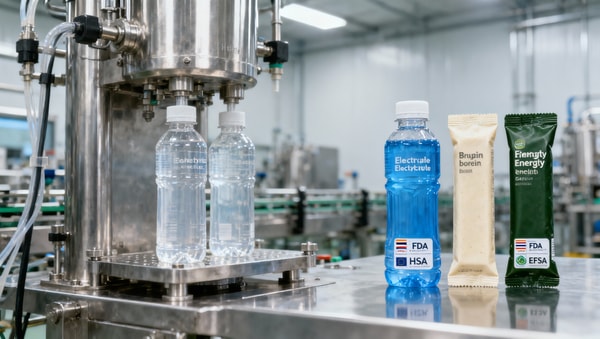
 Red Bull SA15 Uses Tiantai Energy Solutions: China OEM Compliance Gains ASEAN AttentionRed Bull SA15 adopts Tiantai’s China OEM energy solutions—triple-registered (TH FDA, SG HSA, EU EFSA). A benchmark for ASEAN importers & nutraceutical manufacturers seeking compliant, scalable sourcing.
 China’s New GB 4343.1-2026 Mobile Power Bank Standard Takes Effect Nov 2026GB 4343.1-2026 mobile power bank standard takes effect Nov 2026—learn key compliance steps, dual-protocol requirements & global certification strategy.
 Morocco Ranks 4th in EU Africa Energy Aid; China PV Mounting & ESS Export Path WidensMorocco ranks 4th in EU Africa energy aid—unlocking new PV mounting & ESS export opportunities for certified Chinese suppliers. Act now to leverage the white-list advantage.
 China Holds 68% of Global Autonomous Sanitation Vehicle PatentsChina holds 68% of global autonomous sanitation vehicle patents—key for smart infrastructure exporters, AI developers & edge hardware suppliers targeting GCC tenders.
") China’s Petrochemical Plant Upgrade Policy (2026–2029)China’s Petrochemical Plant Upgrade Policy (2026–2029) mandates safety assessments & intelligent upgrades for aging equipment—key for exporters, EPC firms, and certified equipment suppliers.
China’s Petrochemical Plant Upgrade Policy (2026–2029)China’s Petrochemical Plant Upgrade Policy (2026–2029) mandates safety assessments & intelligent upgrades for aging equipment—key for exporters, EPC firms, and certified equipment suppliers. U.S. Natural Gas Inventory Rise Below Expectations: Export Cost Pressure on PVC, ABS, CoatingsU.S. natural gas inventory rise fell short—impacting PVC, ABS & coatings exporters. Discover cost risks, mitigation steps & pricing insights now.
 EN 62368-1:2026 Enforced in EU: Thermal Runaway Protection Required for Wearables & Smart Home DevicesEN 62368-1:2026 mandates thermal runaway protection for wearables & smart home devices in the EU—act now to ensure CE compliance and avoid market access delays.
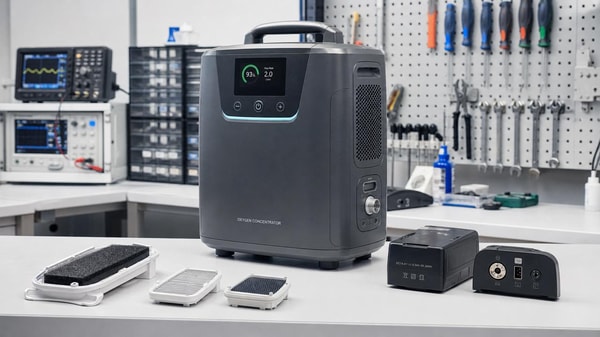
 Portable oxygen concentrators are quieter now, but are they easier to maintain?Portable oxygen concentrators are quieter, but are they easier to maintain? Explore service challenges, scenario-based insights, and smart ways to reduce downtime.
 Interactive whiteboards are underused when training stops after installationInteractive whiteboards often underperform when training ends at installation. Learn how continuous, role-based support boosts adoption, productivity, and ROI.
 Medical diagnostic equipment buying mistakes often start with workflow mismatchMedical diagnostic equipment buying mistakes often stem from workflow mismatch. Learn how to assess fit, avoid hidden costs, and choose scalable systems that support real clinical operations.
![]() Eco-friendly building materials can add compliance work, not just green valueEco-friendly building materials can boost sustainability but also add compliance work. Learn how they affect approvals, costs, timelines, and risk across key project scenarios.
Eco-friendly building materials can add compliance work, not just green valueEco-friendly building materials can boost sustainability but also add compliance work. Learn how they affect approvals, costs, timelines, and risk across key project scenarios. Ergonomic workspace design fails when posture is treated as the whole answerErgonomic workspace design fails when posture is the only focus. Learn how integrated planning improves productivity, retention, and workplace performance.
 Outdoor garden supplies demand changes faster than seasonal forecasts suggestOutdoor garden supplies demand is changing faster than seasonal forecasts. Discover key signals, sourcing strategies, and inventory tactics to stay competitive and capture growth.
 Sustainable home decor sells better when the material story is verifiableSustainable home decor wins more buyers when material claims are verifiable. Discover how traceable sourcing, certifications, and clear proof build trust and drive sales.
 Modern office furniture choices can raise complaints instead of comfortModern office furniture can improve productivity—or trigger costly complaints. Learn how to choose ergonomic, durable, flexible office solutions that support comfort and long-term value.
 Smart street lighting saves energy only when controls are tuned properlySmart street lighting saves energy only when controls are tuned to real traffic, safety, and maintenance needs. Learn how proper settings turn connected lighting into measurable ROI.
 Solid-state battery breakthroughs are real, but scaling is another storySolid-state battery breakthroughs are real, but scaling remains the real test. Explore where commercialization starts first, what limits adoption, and which markets may gain the earliest edge.
![]() Commercial LED lighting upgrades often disappoint in high-heat spacesCommercial LED lighting often underperforms in high-heat spaces. Learn the hidden causes, warning signs, and smart upgrade choices to improve reliability, safety, and long-term value.
Commercial LED lighting upgrades often disappoint in high-heat spacesCommercial LED lighting often underperforms in high-heat spaces. Learn the hidden causes, warning signs, and smart upgrade choices to improve reliability, safety, and long-term value.
















Popular Tags
Global Trade Insights & Industry
Our mission is to empower global exporters and importers with data-driven insights that foster strategic growth.
Search News
Popular Tags
Industry Overview
The global commercial kitchen equipment market is projected to reach $112 billion by 2027. Driven by urbanization, the rise of e-commerce food delivery, and strict hygiene regulations.