

Vertical farming technology looks efficient, so why do yields vary so much?
Vertical farming technology promises precise control, year-round production, and efficient land use, yet actual yields often differ sharply between operators. For business decision-makers, understanding why these gaps exist is critical to evaluating risk, scalability, and return on investment. This article explores the operational, technical, and market factors behind yield variability and what they mean for smarter strategic planning.
Why does Vertical farming technology look efficient on paper but perform unevenly in practice?
At first glance, Vertical farming technology seems designed to eliminate agricultural uncertainty. Indoor climate control, artificial lighting, irrigation automation, and stacked production systems should, in theory, create predictable output. Yet yield variation remains one of the most important realities in commercial vertical farming. The reason is simple: controlled conditions do not automatically mean optimized conditions.
A facility may operate with similar hardware to a competitor and still produce very different results. Small differences in environmental calibration, crop selection, labor discipline, nutrient management, airflow balance, and harvest timing can compound over every growing cycle. In a conventional field, variability often comes from weather. In a vertical farm, variability usually comes from system design and execution quality.
For enterprise leaders, this matters because marketing claims around Vertical farming technology often highlight potential yield per square meter, not actual realized yield after accounting for crop losses, downtime, suboptimal recipes, or market-driven production adjustments. The commercial question is not whether the technology can produce high output, but whether a specific operator can do so consistently and profitably.
What are the biggest technical reasons yields vary so much between vertical farms?
The largest technical driver is environmental precision. Vertical farming technology depends on keeping light intensity, photoperiod, temperature, humidity, CO2 concentration, irrigation frequency, and nutrient concentration within narrow crop-specific ranges. Even when sensors are installed, poor calibration or delayed response can reduce plant performance. A system that is “controlled” but not “well tuned” may underperform significantly.
Lighting is one of the most misunderstood variables. Two farms may use LED systems with comparable power ratings, yet actual plant-level results differ based on spectrum design, canopy distance, uniformity, heat load, and light scheduling. If the top shelf receives slightly different intensity than lower layers, growth uniformity declines. Non-uniformity reduces harvest predictability and complicates labor planning.
Airflow is another critical factor. In dense stacked systems, microclimates often develop around leaves and trays. Weak circulation can increase disease pressure, reduce transpiration control, and create uneven biomass accumulation. Because Vertical farming technology is often discussed as a software-and-lighting solution, airflow engineering is sometimes underestimated despite being central to consistent output.
Water and nutrient delivery also influence yield variation. Recirculating systems can be highly efficient, but only if pH, electrical conductivity, dissolved oxygen, and sanitation are managed with discipline. Root-zone stress may not be immediately visible, yet it can reduce growth rates over multiple cycles. In this sense, high-tech infrastructure does not eliminate biological sensitivity; it simply shifts where management attention must go.
Does crop choice make a bigger difference than many investors expect?
Yes. Crop strategy is often the hidden variable behind reported yield differences. Vertical farming technology works best when the crop’s biology, growth cycle, market value, and post-harvest handling profile align with the economics of indoor production. Leafy greens and herbs have dominated because they are lightweight, fast-growing, and suited to controlled environments. However, even within these categories, cultivar choice can dramatically change performance.
Some operators pursue higher-value crops too quickly, assuming that premium pricing will compensate for complexity. In practice, fruiting crops, specialty greens, or pharmaceutical-grade plants often require more precise climate control, pollination strategies, labor input, or certification costs. Yield may vary not because the facility is weak, but because the crop-facility fit is poor.
Decision-makers should also separate biological yield from sellable yield. A farm can produce substantial biomass, but if leaf shape, color, texture, consistency, or shelf life do not match buyer requirements, commercial output falls. This is especially relevant for B2B supply chains serving retailers, foodservice distributors, and branded packaged salad programs. Vertical farming technology can generate impressive harvest metrics while still missing market-grade specifications.
How much do operations and management discipline affect yield consistency?
More than many buyers, investors, and even operators initially assume. Vertical farming technology is not a plug-and-play production model. It is a high-frequency operational system where minor procedural gaps can create measurable output loss. Standard operating procedures for seeding, transplanting, cleaning, monitoring, harvesting, and packaging must be executed consistently every day.
Labor quality is especially important. A sophisticated farm with weak training may underperform a simpler facility with better process discipline. Seed spacing errors, sanitation lapses, delayed interventions, and inconsistent harvest timing all affect realized yield. In many businesses, management teams initially focus on equipment CAPEX but underestimate the importance of horticultural leadership and cross-functional coordination between growing, maintenance, quality assurance, and sales teams.
Maintenance practices also have a direct link to output. Sensor drift, pump wear, clogged emitters, HVAC imbalance, and lighting degradation may not trigger immediate shutdowns, but they reduce consistency across production layers. In commercial terms, this means that yield variability is often an asset management issue as much as a plant science issue. For companies evaluating suppliers or partners, operational maturity may be a more reliable predictor than headline technology branding.
Can economics and market strategy influence “yield” even when biology is stable?
Absolutely. In business analysis, yield should not be viewed as a purely biological measurement. Vertical farming technology operates within energy markets, labor markets, logistics constraints, and customer demand patterns. A farm may intentionally lower planting density, change harvest timing, or reduce production on specific SKUs to protect margins, preserve quality, or respond to contract demand. From the outside, this can look like poor yield, when it may actually reflect commercial optimization.
Energy costs are a major example. If electricity prices rise sharply, operators may alter lighting strategies, production schedules, or crop mix. This can lower output per cycle even if the facility remains technically capable of higher production. Similarly, if downstream demand weakens, excess production becomes waste. Real business yield must therefore be measured against sell-through, pricing resilience, and operating margin, not only kilograms harvested.
This distinction is highly relevant for corporate decision-makers in sourcing, investment, and partnership development. A vertical farm that reports moderate output with strong order fulfillment and low waste may be a better partner than a farm with higher theoretical yield but unstable economics. Vertical farming technology should be evaluated through a whole-system lens, where production data and market alignment are assessed together.
What common misconceptions cause poor decision-making around Vertical farming technology?
One common misconception is that yield claims are universally comparable. In reality, operators may calculate output by fresh weight, dry weight, tray count, annualized projections, peak-cycle performance, or idealized utilization rates. Without a shared definition, comparisons can be misleading. Business leaders should always ask how yield is measured, over what period, and under what level of commercial utilization.
Another misconception is that automation guarantees repeatability. Automation improves consistency only when workflows, data governance, and intervention thresholds are well designed. Poorly integrated automation can create false confidence, especially when teams focus on dashboards rather than root causes.
A third misconception is that scale automatically reduces variability. Scaling Vertical farming technology can actually introduce new complexity. Larger facilities face more demanding HVAC zoning, more difficult sanitation control, more complicated labor coordination, and greater exposure to downtime risk. What works in a pilot room does not always translate directly into a multi-site network.
Quick evaluation table: what should decision-makers verify first?
Before comparing vendors, operators, or investment opportunities linked to Vertical farming technology, it helps to review a few practical checkpoints.
How should companies assess whether a vertical farming operation is truly scalable?
Scalability should be tested through repeatability, not presentation quality. A credible Vertical farming technology platform should demonstrate stable output across multiple cycles, not just one strong harvest. It should also show that quality, labor efficiency, sanitation performance, and customer fulfillment remain strong as volume increases.
Business decision-makers should ask for evidence of performance under real commercial conditions: occupancy rates, loss percentages, downtime records, quality rejection rates, and customer retention. These indicators reveal whether the farm can translate technical capability into dependable supply. If yield increases only under ideal trials, the business case remains fragile.
It is also wise to examine data architecture. The most successful operators often treat Vertical farming technology as a continuous learning system. They collect crop-level and room-level data, compare recipes over time, and use feedback loops to improve performance. Scalable businesses usually combine horticultural expertise with disciplined analytics, rather than relying solely on engineering claims.
What questions should be asked before investing, sourcing, or partnering?
If a company is evaluating Vertical farming technology for procurement, collaboration, or strategic investment, the first questions should focus on definitions, consistency, and commercial fit. Ask how yield is measured, what percentage is sellable, how often targets are met, and what causes the biggest deviations. Then move into cost structure, including energy, labor, maintenance, and logistics.
It is equally important to ask about crop strategy, customer mix, and risk management. Which products are most profitable? Which are most stable? What happens if energy costs rise, equipment fails, or demand changes? A mature operator should be able to explain not only how the farm grows crops, but how the business absorbs operational shocks.
For internationally oriented enterprises, this is where trusted market intelligence becomes valuable. Platforms such as GTIIN and TradeVantage help decision-makers place Vertical farming technology in a broader supply-chain and industry context, connecting production claims with commercial trends, competitive dynamics, and cross-border sourcing realities. In fast-evolving sectors, better information often leads to better timing and lower execution risk.
Final takeaway: what should leaders clarify before moving forward?
The core lesson is that Vertical farming technology does not fail because the concept lacks efficiency. Yields vary because efficiency depends on a chain of technical, biological, operational, and commercial decisions that must work together. Precision infrastructure creates potential, but management quality determines whether that potential becomes reliable output.
If you need to confirm a specific solution, supplier, investment direction, rollout timeline, pricing model, or cooperation structure, prioritize a few practical discussions first: how yield is defined, which crops are most suitable, what utilization assumptions are realistic, how energy risk is handled, what operating data is available, and how commercial demand is secured. Those questions will reveal far more than headline production claims and will support more confident strategic planning.
Recommended News
 China's Smart Electric Wheelchair Exports Face EU MDR Compliance Shift from Q3 2026China's smart electric wheelchair exports must meet EU MDR + CE dual certification by Q3 2026 — only 12 manufacturers comply. Act now to secure market access.
 Apple Opens AI Service Hub to Third Parties: New Export Path for Chinese AIoT HardwareApple's AI Service Hub opens new export opportunities for Chinese AIoT hardware—enabling iFLYTEK, SenseTime & others to power HomeKit, CarPlay & HealthKit with on-device AI.
 GPT-5.5 Instant Rollout Impacts AI SaaS Exporters’ SLAsGPT-5.5 Instant rollout reshapes AI SaaS exporters’ SLAs—learn how P95 latency, multimodal context, and contract compliance impact your global clients now.
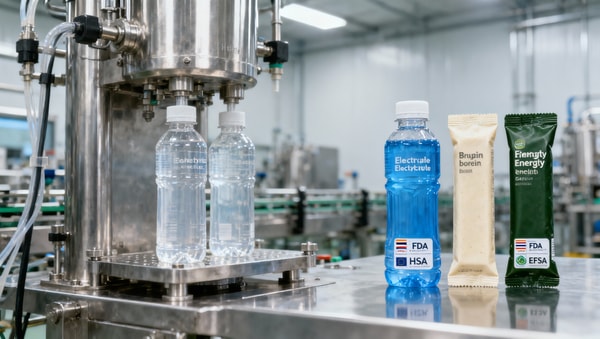
 Red Bull SA15 Uses Tiantai Energy Solutions: China OEM Compliance Gains ASEAN AttentionRed Bull SA15 adopts Tiantai’s China OEM energy solutions—triple-registered (TH FDA, SG HSA, EU EFSA). A benchmark for ASEAN importers & nutraceutical manufacturers seeking compliant, scalable sourcing.
 China’s New GB 4343.1-2026 Mobile Power Bank Standard Takes Effect Nov 2026GB 4343.1-2026 mobile power bank standard takes effect Nov 2026—learn key compliance steps, dual-protocol requirements & global certification strategy.
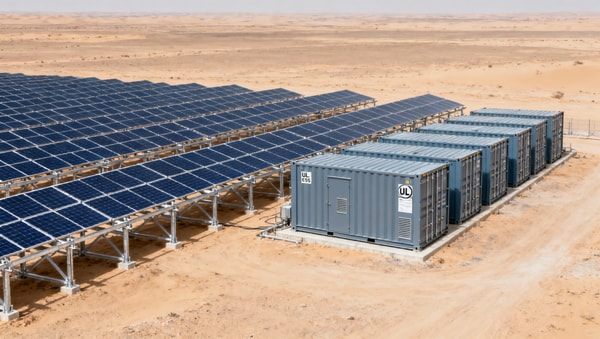
 Morocco Ranks 4th in EU Africa Energy Aid; China PV Mounting & ESS Export Path WidensMorocco ranks 4th in EU Africa energy aid—unlocking new PV mounting & ESS export opportunities for certified Chinese suppliers. Act now to leverage the white-list advantage.
 China Holds 68% of Global Autonomous Sanitation Vehicle PatentsChina holds 68% of global autonomous sanitation vehicle patents—key for smart infrastructure exporters, AI developers & edge hardware suppliers targeting GCC tenders.
") China’s Petrochemical Plant Upgrade Policy (2026–2029)China’s Petrochemical Plant Upgrade Policy (2026–2029) mandates safety assessments & intelligent upgrades for aging equipment—key for exporters, EPC firms, and certified equipment suppliers.
China’s Petrochemical Plant Upgrade Policy (2026–2029)China’s Petrochemical Plant Upgrade Policy (2026–2029) mandates safety assessments & intelligent upgrades for aging equipment—key for exporters, EPC firms, and certified equipment suppliers. U.S. Natural Gas Inventory Rise Below Expectations: Export Cost Pressure on PVC, ABS, CoatingsU.S. natural gas inventory rise fell short—impacting PVC, ABS & coatings exporters. Discover cost risks, mitigation steps & pricing insights now.
 EN 62368-1:2026 Enforced in EU: Thermal Runaway Protection Required for Wearables & Smart Home DevicesEN 62368-1:2026 mandates thermal runaway protection for wearables & smart home devices in the EU—act now to ensure CE compliance and avoid market access delays.
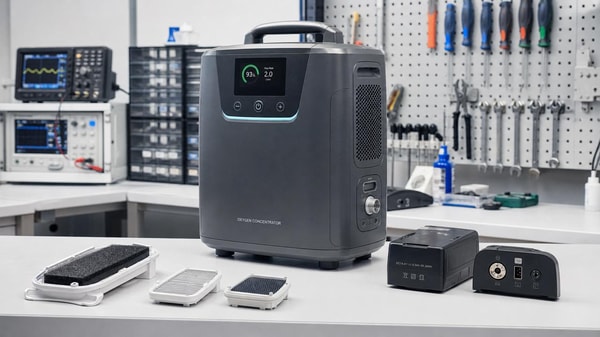
 Portable oxygen concentrators are quieter now, but are they easier to maintain?Portable oxygen concentrators are quieter, but are they easier to maintain? Explore service challenges, scenario-based insights, and smart ways to reduce downtime.
 Interactive whiteboards are underused when training stops after installationInteractive whiteboards often underperform when training ends at installation. Learn how continuous, role-based support boosts adoption, productivity, and ROI.
 Medical diagnostic equipment buying mistakes often start with workflow mismatchMedical diagnostic equipment buying mistakes often stem from workflow mismatch. Learn how to assess fit, avoid hidden costs, and choose scalable systems that support real clinical operations.
![]() Eco-friendly building materials can add compliance work, not just green valueEco-friendly building materials can boost sustainability but also add compliance work. Learn how they affect approvals, costs, timelines, and risk across key project scenarios.
Eco-friendly building materials can add compliance work, not just green valueEco-friendly building materials can boost sustainability but also add compliance work. Learn how they affect approvals, costs, timelines, and risk across key project scenarios. Ergonomic workspace design fails when posture is treated as the whole answerErgonomic workspace design fails when posture is the only focus. Learn how integrated planning improves productivity, retention, and workplace performance.
 Outdoor garden supplies demand changes faster than seasonal forecasts suggestOutdoor garden supplies demand is changing faster than seasonal forecasts. Discover key signals, sourcing strategies, and inventory tactics to stay competitive and capture growth.
 Sustainable home decor sells better when the material story is verifiableSustainable home decor wins more buyers when material claims are verifiable. Discover how traceable sourcing, certifications, and clear proof build trust and drive sales.
 Modern office furniture choices can raise complaints instead of comfortModern office furniture can improve productivity—or trigger costly complaints. Learn how to choose ergonomic, durable, flexible office solutions that support comfort and long-term value.
 Smart street lighting saves energy only when controls are tuned properlySmart street lighting saves energy only when controls are tuned to real traffic, safety, and maintenance needs. Learn how proper settings turn connected lighting into measurable ROI.
 Solid-state battery breakthroughs are real, but scaling is another storySolid-state battery breakthroughs are real, but scaling remains the real test. Explore where commercialization starts first, what limits adoption, and which markets may gain the earliest edge.
![]() Commercial LED lighting upgrades often disappoint in high-heat spacesCommercial LED lighting often underperforms in high-heat spaces. Learn the hidden causes, warning signs, and smart upgrade choices to improve reliability, safety, and long-term value.
Commercial LED lighting upgrades often disappoint in high-heat spacesCommercial LED lighting often underperforms in high-heat spaces. Learn the hidden causes, warning signs, and smart upgrade choices to improve reliability, safety, and long-term value.















Popular Tags
Global Trade Insights & Industry
Our mission is to empower global exporters and importers with data-driven insights that foster strategic growth.
Search News
Popular Tags
Industry Overview
The global commercial kitchen equipment market is projected to reach $112 billion by 2027. Driven by urbanization, the rise of e-commerce food delivery, and strict hygiene regulations.