

Foldable screen technology still faces a trust gap on long-term durability
Foldable screen technology has transformed smartphone design with sleek, futuristic appeal, but many consumers still question whether it can withstand years of daily use. From crease visibility to hinge reliability and screen durability, the excitement around innovation is often tempered by concerns over long-term performance. Understanding this trust gap is essential to evaluating whether foldable devices are truly ready for mainstream adoption.
For end users, the issue is no longer whether foldable phones look innovative. The real question is whether the product can survive 2 to 4 years of commuting, pocket pressure, frequent opening and closing, accidental drops, and changing temperature conditions without becoming a costly repair risk. In a market where flagship smartphones often sit in the premium price band, confidence in durability has become as important as display quality, camera performance, or battery life.
From a broader industry perspective, the trust gap around Foldable screen technology also affects supply chains, after-sales planning, resale value, and purchase timing. Consumers want proof that flexible OLED panels, ultra-thin glass layers, and hinge assemblies can perform consistently under repeated stress. That demand for proof is shaping how brands communicate product design, warranty terms, repair support, and long-term reliability.
Why Foldable Screen Technology Still Faces Consumer Skepticism
The hesitation around Foldable screen technology comes from a simple pattern: buyers see a premium product, but they also see more moving parts, more surface complexity, and more failure points than on a conventional slab smartphone. Even when engineering has improved, consumer memory of earlier fragile designs can last 3 to 5 product cycles.
Durability concerns start with visible wear
One of the most common complaints is crease visibility. While many users accept a slight center crease after several weeks, long-term concern begins when that crease becomes more noticeable under bright light, during video playback, or while scrolling across white backgrounds. A design can be technically functional and still feel worn too early in the ownership cycle.
Consumers also worry about surface softness. Flexible internal displays are often more vulnerable to pressure marks, fingernail dents, and debris damage than traditional hardened cover glass. Even small imperfections can undermine confidence because people compare foldables to standard phones that often maintain a clean screen appearance for 24 to 36 months.
The hinge remains the symbolic trust point
For many buyers, the hinge is the single most important indicator of quality. If the opening angle changes, if resistance becomes uneven, or if dust intrusion creates noise after 6 to 12 months, users immediately question overall reliability. A foldable device may have a strong processor and premium cameras, but poor hinge consistency can dominate customer perception.
This matters because the hinge is not only mechanical. It directly affects display tension, closure gap, pocket lint exposure, and one-handed usability. When consumers hear claims about 200,000 or 300,000 folds, they still ask practical questions: does that count under laboratory conditions, and how does it translate into 80 to 120 folds per day in ordinary life?
Real-life stress differs from lab-cycle testing
A durability figure can sound impressive, but user behavior is rarely controlled. A device may be opened with one hand, used in humid weather, pressed inside a bag, or exposed to fine dust during travel. Repeated micro-stress, not one dramatic event, often shapes long-term user trust. That is why consumers now pay closer attention to warranty scope, screen replacement pricing, and repair turnaround times than to headline fold-cycle numbers alone.
The table below highlights the main areas where consumer perception and engineering claims often diverge in Foldable screen technology.
The key insight is that trust is not built by a single durability claim. It is built by aligning technical performance, real-world resilience, and transparent ownership costs. Foldable screen technology becomes easier to accept when buyers can connect engineering language with everyday usage outcomes.
What Long-Term Durability Really Means in Everyday Ownership
For most consumers, long-term durability is not defined by surviving an extreme test video. It is defined by whether the phone still feels dependable after 12, 18, and 24 months. That includes smooth folding, stable brightness, consistent touch response, and no major cosmetic deterioration that makes the device feel prematurely aged.
Four practical durability checkpoints
- Screen integrity after repeated folds, especially around the center crease zone.
- Hinge consistency, including resistance balance and stable opening positions.
- Outer frame and protective layer wear under pocket friction, case pressure, and drops.
- Serviceability, including spare part availability and typical repair windows of 5 to 10 business days.
Usage pattern changes the risk profile
Not all owners stress a foldable in the same way. A commuter who opens the device 60 times a day for messaging, maps, and content viewing creates a different wear profile from a hybrid user who opens it only 20 to 30 times daily. Frequent multitasking, gaming heat, and urban dust exposure can accelerate visible wear even if the device remains fully functional.
Climate also matters. High humidity, sand, winter cold, and sudden temperature changes can all influence adhesives, protective films, and hinge behavior over time. This is why some consumers remain cautious even when formal specifications look strong on paper.
Expected ownership questions before purchase
- How often do I plan to unfold the device each day?
- Will I use it mostly indoors, or in travel-heavy and dusty environments?
- Am I comfortable with screen protector maintenance or replacement?
- Is local service support available within 7 to 14 days if damage occurs?
These questions help buyers move from excitement to realistic ownership planning. Foldable screen technology is far more mature than it was in early generations, but maturity does not remove the need for use-case matching.
How Consumers Can Evaluate Foldable Phones More Carefully
A better buying decision starts with comparing durability indicators in a structured way. Premium pricing alone does not guarantee confidence. End users should review design details, service terms, and handling requirements together rather than focusing on appearance or promotional demos.
A practical evaluation framework
Before choosing a device based on Foldable screen technology, consumers can assess five areas: hinge engineering, screen feel, closure design, repair economics, and software optimization for large-screen use. If two or more of these areas feel uncertain, waiting for a later generation may be the better decision.
The comparison below can help translate product marketing into clearer purchase criteria.
This framework shows that purchase confidence often depends as much on support infrastructure as on hardware design. A foldable with transparent care guidelines and predictable service costs may feel safer than one with stronger marketing but weaker ownership clarity.
Who is ready for foldables today
Foldable screen technology already makes sense for some groups. Heavy mobile multitaskers, content readers, frequent travelers, and users replacing both a phone and a small tablet can extract real value from a larger flexible display. For these users, the productivity gain can outweigh the remaining durability trade-offs.
However, the technology may still be less ideal for buyers who keep phones for 4 to 5 years, work in dust-heavy environments, or want minimal maintenance. These consumers are not rejecting innovation. They are simply applying a stricter reliability standard, which is reasonable at premium price levels.
Three smart buying behaviors
- Test the hinge and screen in person for at least 10 to 15 open-close cycles before purchase.
- Review first-year and second-year repair terms, not just launch-day specifications.
- Budget for protective accessories and possible film maintenance over a 24-month period.
What the Industry Must Do to Close the Trust Gap
The future of Foldable screen technology depends on more than thinner hinges and brighter panels. Brands, suppliers, and retail channels need to make durability evidence easier to understand. Consumers respond better to clear ownership information than to abstract innovation claims.
Better trust signals matter
Several actions can narrow the confidence gap within the next 2 to 3 product generations. First, manufacturers should publish realistic care guidance with plain-language limitations. Second, retailers should explain repair pathways before purchase, not after a problem occurs. Third, review ecosystems should separate short-term excitement from 12-month reliability feedback.
The broader trade and information ecosystem also plays a role. Industry intelligence platforms, supply chain observers, and global market publishers help users understand whether improved materials, hinge designs, and service models are becoming standard across regions. That visibility supports better decision-making for both consumers and brands.
A more mature market is possible
If foldables continue to improve in 3 areas—mechanical reliability, repair affordability, and long-term user education—the category can move from niche appeal to wider mainstream credibility. The technology does not need to become risk-free. It needs to become predictable enough that ordinary buyers understand the trade-off before they spend.
At that point, Foldable screen technology will be judged less as a novelty and more as a practical device format. That shift will be driven by trust earned over time, not by launch-stage excitement alone.
Foldable phones have already proven that flexible displays can reshape mobile design, but long-term consumer confidence still depends on consistent real-world durability, service transparency, and better purchase guidance. Buyers who value multitasking and larger-screen mobility may find strong value today, while more cautious users should compare hinge quality, screen resilience, and repair support with extra care. For more market insight, product evaluation guidance, and data-driven updates on emerging device trends, contact us today to learn more solutions and get tailored industry intelligence.
Recommended News
 China's Smart Electric Wheelchair Exports Face EU MDR Compliance Shift from Q3 2026China's smart electric wheelchair exports must meet EU MDR + CE dual certification by Q3 2026 — only 12 manufacturers comply. Act now to secure market access.
 Apple Opens AI Service Hub to Third Parties: New Export Path for Chinese AIoT HardwareApple's AI Service Hub opens new export opportunities for Chinese AIoT hardware—enabling iFLYTEK, SenseTime & others to power HomeKit, CarPlay & HealthKit with on-device AI.
 GPT-5.5 Instant Rollout Impacts AI SaaS Exporters’ SLAsGPT-5.5 Instant rollout reshapes AI SaaS exporters’ SLAs—learn how P95 latency, multimodal context, and contract compliance impact your global clients now.
 Red Bull SA15 Uses Tiantai Energy Solutions: China OEM Compliance Gains ASEAN AttentionRed Bull SA15 adopts Tiantai’s China OEM energy solutions—triple-registered (TH FDA, SG HSA, EU EFSA). A benchmark for ASEAN importers & nutraceutical manufacturers seeking compliant, scalable sourcing.
 China’s New GB 4343.1-2026 Mobile Power Bank Standard Takes Effect Nov 2026GB 4343.1-2026 mobile power bank standard takes effect Nov 2026—learn key compliance steps, dual-protocol requirements & global certification strategy.
 Morocco Ranks 4th in EU Africa Energy Aid; China PV Mounting & ESS Export Path WidensMorocco ranks 4th in EU Africa energy aid—unlocking new PV mounting & ESS export opportunities for certified Chinese suppliers. Act now to leverage the white-list advantage.
 China Holds 68% of Global Autonomous Sanitation Vehicle PatentsChina holds 68% of global autonomous sanitation vehicle patents—key for smart infrastructure exporters, AI developers & edge hardware suppliers targeting GCC tenders.
") China’s Petrochemical Plant Upgrade Policy (2026–2029)China’s Petrochemical Plant Upgrade Policy (2026–2029) mandates safety assessments & intelligent upgrades for aging equipment—key for exporters, EPC firms, and certified equipment suppliers.
China’s Petrochemical Plant Upgrade Policy (2026–2029)China’s Petrochemical Plant Upgrade Policy (2026–2029) mandates safety assessments & intelligent upgrades for aging equipment—key for exporters, EPC firms, and certified equipment suppliers. U.S. Natural Gas Inventory Rise Below Expectations: Export Cost Pressure on PVC, ABS, CoatingsU.S. natural gas inventory rise fell short—impacting PVC, ABS & coatings exporters. Discover cost risks, mitigation steps & pricing insights now.
 EN 62368-1:2026 Enforced in EU: Thermal Runaway Protection Required for Wearables & Smart Home DevicesEN 62368-1:2026 mandates thermal runaway protection for wearables & smart home devices in the EU—act now to ensure CE compliance and avoid market access delays.
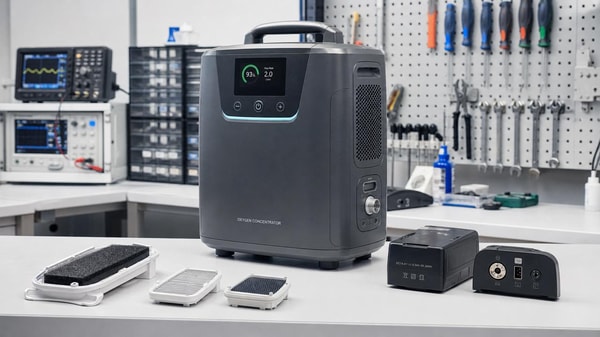
 Portable oxygen concentrators are quieter now, but are they easier to maintain?Portable oxygen concentrators are quieter, but are they easier to maintain? Explore service challenges, scenario-based insights, and smart ways to reduce downtime.
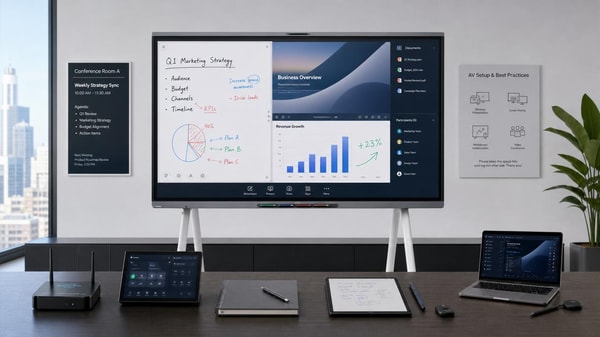
 Interactive whiteboards are underused when training stops after installationInteractive whiteboards often underperform when training ends at installation. Learn how continuous, role-based support boosts adoption, productivity, and ROI.
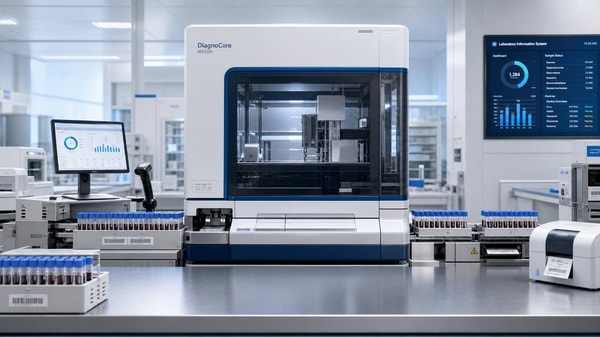
 Medical diagnostic equipment buying mistakes often start with workflow mismatchMedical diagnostic equipment buying mistakes often stem from workflow mismatch. Learn how to assess fit, avoid hidden costs, and choose scalable systems that support real clinical operations.
![]() Eco-friendly building materials can add compliance work, not just green valueEco-friendly building materials can boost sustainability but also add compliance work. Learn how they affect approvals, costs, timelines, and risk across key project scenarios.
Eco-friendly building materials can add compliance work, not just green valueEco-friendly building materials can boost sustainability but also add compliance work. Learn how they affect approvals, costs, timelines, and risk across key project scenarios. Ergonomic workspace design fails when posture is treated as the whole answerErgonomic workspace design fails when posture is the only focus. Learn how integrated planning improves productivity, retention, and workplace performance.
 Outdoor garden supplies demand changes faster than seasonal forecasts suggestOutdoor garden supplies demand is changing faster than seasonal forecasts. Discover key signals, sourcing strategies, and inventory tactics to stay competitive and capture growth.
 Sustainable home decor sells better when the material story is verifiableSustainable home decor wins more buyers when material claims are verifiable. Discover how traceable sourcing, certifications, and clear proof build trust and drive sales.
 Modern office furniture choices can raise complaints instead of comfortModern office furniture can improve productivity—or trigger costly complaints. Learn how to choose ergonomic, durable, flexible office solutions that support comfort and long-term value.
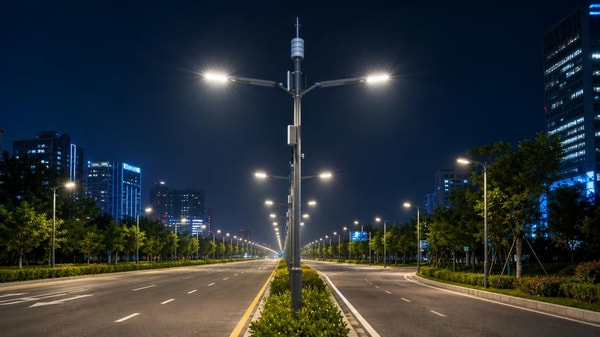
 Smart street lighting saves energy only when controls are tuned properlySmart street lighting saves energy only when controls are tuned to real traffic, safety, and maintenance needs. Learn how proper settings turn connected lighting into measurable ROI.
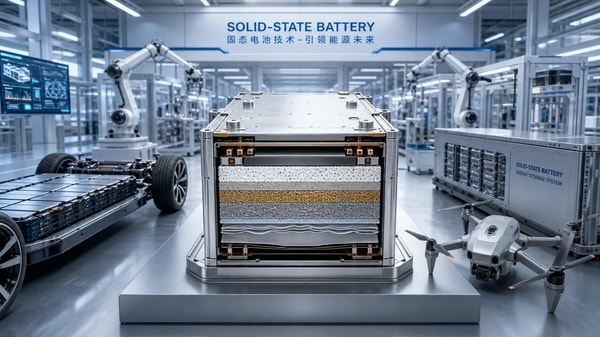
 Solid-state battery breakthroughs are real, but scaling is another storySolid-state battery breakthroughs are real, but scaling remains the real test. Explore where commercialization starts first, what limits adoption, and which markets may gain the earliest edge.
![]() Commercial LED lighting upgrades often disappoint in high-heat spacesCommercial LED lighting often underperforms in high-heat spaces. Learn the hidden causes, warning signs, and smart upgrade choices to improve reliability, safety, and long-term value.
Commercial LED lighting upgrades often disappoint in high-heat spacesCommercial LED lighting often underperforms in high-heat spaces. Learn the hidden causes, warning signs, and smart upgrade choices to improve reliability, safety, and long-term value.











Popular Tags
Global Trade Insights & Industry
Our mission is to empower global exporters and importers with data-driven insights that foster strategic growth.
Search News
Popular Tags
Industry Overview
The global commercial kitchen equipment market is projected to reach $112 billion by 2027. Driven by urbanization, the rise of e-commerce food delivery, and strict hygiene regulations.