

Next-gen wireless charging sounds convenient, but what slows real rollout?
Next-gen wireless charging promises a cable-free future, yet large-scale adoption remains slower than expected. For business evaluators tracking emerging technologies, the real question is not just convenience but commercial readiness—cost, interoperability, infrastructure, and regulatory alignment all shape deployment timelines. Understanding what holds next-gen wireless charging back is essential for assessing market potential, investment risk, and cross-industry adoption opportunities.
What next-gen wireless charging really means
In market discussions, Next-gen wireless charging usually refers to systems that go beyond today’s simple contact-based charging pads. It includes higher-power solutions, spatial or over-the-air concepts, multi-device charging, resonant charging, dynamic charging for vehicles, and embedded charging built into furniture, vehicles, retail counters, factories, and public infrastructure. The promise is clear: less cable clutter, better user convenience, improved device sealing, and more seamless power delivery across consumer, commercial, and industrial settings.
However, technical possibility is not the same as market readiness. Business evaluators need to separate demonstration success from scalable deployment. A prototype that works in a lab or premium pilot location may still face difficult economics, fragmented standards, safety reviews, and ecosystem dependency. That gap between technical achievement and operational rollout explains why adoption can appear slower than media narratives suggest.
Why the industry keeps paying attention
Interest in Next-gen wireless charging remains high because it sits at the intersection of several large trends: smart devices, electric mobility, Industry 4.0, connected homes, and premium user experience. For hardware brands, it can become a differentiator. For infrastructure operators, it may support new service models. For commercial property owners, it can improve amenity value. For manufacturers and exporters, it opens a path to component sales, integration services, and standards-driven partnerships.
The broader supply chain also sees strategic value. Charging interfaces influence product design, aftermarket accessories, maintenance needs, durability, and even branding opportunities. In a trade and industrial intelligence context, this makes Next-gen wireless charging more than a gadget topic. It is a cross-sector decision area affecting electronics, automotive, materials, semiconductors, testing equipment, smart furniture, logistics, and regulatory services.
The central reasons real rollout is still slow
The first constraint is efficiency. Traditional wired charging still offers a strong baseline in energy transfer, speed, and predictability. While wireless systems continue to improve, power losses, heat generation, alignment sensitivity, and inconsistent charging performance remain practical concerns. In consumer applications, those trade-offs may be tolerated for convenience. In fleet, industrial, or public settings, they directly affect operating cost and system reliability.
The second barrier is interoperability. A fragmented standards landscape slows confidence. Buyers do not want to invest in infrastructure that may not support future devices or cross-brand compatibility. Manufacturers hesitate when standard shifts could make hardware obsolete. This is especially relevant in automotive, public facilities, and enterprise procurement, where replacement cycles are long and compatibility risks can undermine return on investment.
Third, deployment costs remain uneven. Integrating Next-gen wireless charging into desks, vehicles, hotel rooms, airports, medical carts, or factory equipment requires redesign, validation, shielding considerations, installation work, and support services. The charging module itself may be only one part of the budget. Civil works, certification, maintenance, and system integration often determine whether a project moves beyond pilot stage.
Fourth, regulatory and safety review cannot be treated as a side issue. Electromagnetic exposure, foreign object detection, thermal management, medical device interference, and localized compliance requirements all influence commercialization. For public or high-traffic environments, acceptable technical performance is not enough; operators need documented safety assurance and ongoing compliance processes.
Finally, customer behavior changes more slowly than technology roadmaps. If users already have fast wired charging or acceptable pad-based charging, the incremental value of newer wireless formats may not justify immediate switching. In business markets, adoption tends to happen only when convenience, maintenance reduction, branding value, and long-term economics create a clear combined case.
Industry overview: where promise is strongest and where barriers are highest
For evaluators, the best approach is to compare sectors by deployment logic rather than by headline excitement. Some segments can absorb cost for experience value, while others require strict performance and compliance certainty.
Why interoperability is more important than many forecasts admit
Interoperability is not just a technical preference; it is a commercial trust signal. In emerging infrastructure markets, decision-makers ask whether devices from different suppliers will work together over time, whether firmware or standard updates will break compatibility, and whether multi-vendor procurement is realistic. If those answers remain unclear, rollout slows because buyers prefer to wait for consolidation.
This matters especially for cross-border trade. Exporters entering global markets need products that align with recognized standards and can pass local testing. Importers and distributors want fewer support disputes and lower return rates. Platforms that track industrial trends and supplier developments can add value here by monitoring standard maturity, ecosystem participation, and regional adoption signals rather than focusing only on product launches.
The economics behind adoption decisions
For business evaluators, the adoption story of Next-gen wireless charging depends on total value, not novelty. A realistic model should include hardware cost, installation cost, expected energy loss, maintenance profile, replacement cycle, user adoption rate, and strategic upside such as stronger brand positioning or better customer retention. In some environments, cable reduction and sealed-device durability create meaningful savings. In others, the financial case remains weak because wired systems are already cheap, fast, and familiar.
Premium consumer segments can often move earlier because branding and convenience carry commercial weight. Industrial and public infrastructure settings move later because their threshold is higher: they need measurable uptime improvement, lower maintenance, or operational simplification. This difference explains why eye-catching demos may not translate into broad procurement across sectors at the same pace.
Where practical value is already visible
Despite the barriers, Next-gen wireless charging is not an empty concept. It already shows practical value in environments where connector wear is costly, waterproofing matters, or user friction reduces compliance. Wearables, medical tools, industrial handheld devices, and certain vehicle interiors benefit because physical ports can fail, collect debris, or complicate design. In these use cases, wireless power is less about futuristic appeal and more about durability, hygiene, and maintenance control.
Another promising area is embedded infrastructure. Offices, hospitality venues, and public waiting areas can integrate charging into furniture and surfaces. The commercial benefit here may come less from direct charging revenue and more from experience quality, longer dwell time, and brand perception. Still, success depends on easy compatibility and clear user expectations; poor performance can damage the experience instead of improving it.
Application categories that deserve separate evaluation
Not all wireless charging models should be evaluated with the same criteria. Segmenting them helps avoid misleading conclusions.
What business evaluators should examine before assigning growth potential
A disciplined review of Next-gen wireless charging should start with use-case specificity. Ask what problem is being solved: convenience, durability, waterproofing, aesthetics, sanitation, autonomous operation, or infrastructure modernization. If the use case is vague, the investment thesis is usually weak.
Next, assess ecosystem readiness. That means standard support, supplier diversity, module availability, testing resources, and regional compliance pathways. Markets with stronger ecosystem backing tend to commercialize faster than markets relying on isolated innovation.
Then review economics over the full lifecycle. Initial hardware pricing can be misleading if maintenance savings, energy losses, installation complexity, and support requirements are ignored. In B2B settings, lifecycle clarity often matters more than first-year excitement.
Finally, measure strategic timing. Entering too early may expose a company to standard uncertainty and slow demand. Entering too late may forfeit partnerships and visibility in a growing ecosystem. The best timing often lies in adjacent opportunities such as components, testing services, embedded integration, or market education rather than headline device launches alone.
A practical market-reading framework
For organizations tracking global trade and industrial development, Next-gen wireless charging should be monitored through four indicators. First is standard convergence: are major brands and suppliers aligning? Second is infrastructure repeatability: can pilots be reproduced at acceptable cost? Third is buyer confidence: are enterprise and public-sector purchasers moving from trial to scaled procurement? Fourth is supply chain depth: are there enough certified components, integrators, and test partners to support expansion?
These indicators provide a more reliable picture than trend headlines alone. They also help exporters, importers, and market analysts identify where value is forming across the chain—from core modules and power management components to certified furniture integration, automotive systems, and compliance consulting.
Conclusion and next-step perspective
Next-gen wireless charging is convenient in principle, but real rollout is slowed by a mix of efficiency limits, cost pressure, standards fragmentation, safety oversight, and uncertain customer payback. That does not reduce its long-term relevance. Instead, it means adoption will be selective, phased, and highly dependent on use case. For business evaluators, the strongest opportunities are likely to emerge where wireless power solves a concrete operational problem rather than merely replacing a cable.
A measured view is essential. Track the sector-specific signals, compare infrastructure readiness across regions, and evaluate suppliers based on compatibility, compliance, and lifecycle value. In global B2B markets, the winners around Next-gen wireless charging may not be the loudest innovators, but the companies that convert technical promise into dependable, standards-aligned, commercially scalable solutions.
Recommended News
 China's Smart Electric Wheelchair Exports Face EU MDR Compliance Shift from Q3 2026China's smart electric wheelchair exports must meet EU MDR + CE dual certification by Q3 2026 — only 12 manufacturers comply. Act now to secure market access.
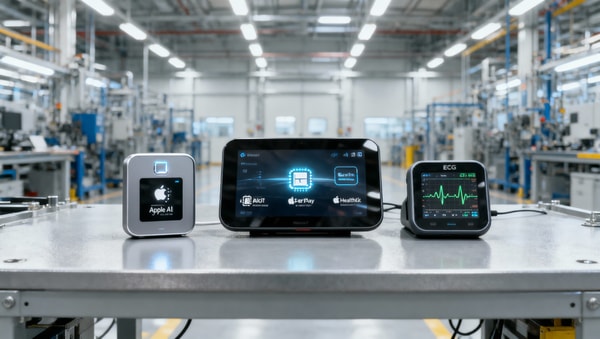
 Apple Opens AI Service Hub to Third Parties: New Export Path for Chinese AIoT HardwareApple's AI Service Hub opens new export opportunities for Chinese AIoT hardware—enabling iFLYTEK, SenseTime & others to power HomeKit, CarPlay & HealthKit with on-device AI.
 GPT-5.5 Instant Rollout Impacts AI SaaS Exporters’ SLAsGPT-5.5 Instant rollout reshapes AI SaaS exporters’ SLAs—learn how P95 latency, multimodal context, and contract compliance impact your global clients now.
 Red Bull SA15 Uses Tiantai Energy Solutions: China OEM Compliance Gains ASEAN AttentionRed Bull SA15 adopts Tiantai’s China OEM energy solutions—triple-registered (TH FDA, SG HSA, EU EFSA). A benchmark for ASEAN importers & nutraceutical manufacturers seeking compliant, scalable sourcing.
 China’s New GB 4343.1-2026 Mobile Power Bank Standard Takes Effect Nov 2026GB 4343.1-2026 mobile power bank standard takes effect Nov 2026—learn key compliance steps, dual-protocol requirements & global certification strategy.
 Morocco Ranks 4th in EU Africa Energy Aid; China PV Mounting & ESS Export Path WidensMorocco ranks 4th in EU Africa energy aid—unlocking new PV mounting & ESS export opportunities for certified Chinese suppliers. Act now to leverage the white-list advantage.
 China Holds 68% of Global Autonomous Sanitation Vehicle PatentsChina holds 68% of global autonomous sanitation vehicle patents—key for smart infrastructure exporters, AI developers & edge hardware suppliers targeting GCC tenders.
") China’s Petrochemical Plant Upgrade Policy (2026–2029)China’s Petrochemical Plant Upgrade Policy (2026–2029) mandates safety assessments & intelligent upgrades for aging equipment—key for exporters, EPC firms, and certified equipment suppliers.
China’s Petrochemical Plant Upgrade Policy (2026–2029)China’s Petrochemical Plant Upgrade Policy (2026–2029) mandates safety assessments & intelligent upgrades for aging equipment—key for exporters, EPC firms, and certified equipment suppliers. U.S. Natural Gas Inventory Rise Below Expectations: Export Cost Pressure on PVC, ABS, CoatingsU.S. natural gas inventory rise fell short—impacting PVC, ABS & coatings exporters. Discover cost risks, mitigation steps & pricing insights now.
 EN 62368-1:2026 Enforced in EU: Thermal Runaway Protection Required for Wearables & Smart Home DevicesEN 62368-1:2026 mandates thermal runaway protection for wearables & smart home devices in the EU—act now to ensure CE compliance and avoid market access delays.
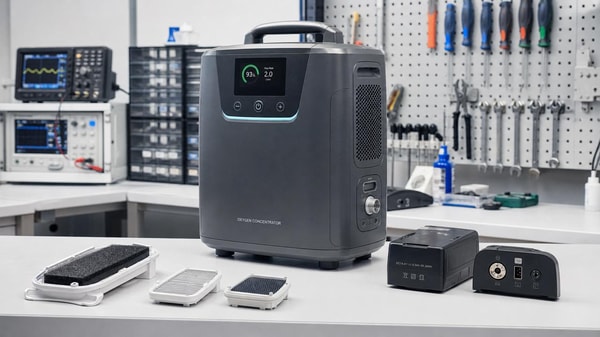
 Portable oxygen concentrators are quieter now, but are they easier to maintain?Portable oxygen concentrators are quieter, but are they easier to maintain? Explore service challenges, scenario-based insights, and smart ways to reduce downtime.
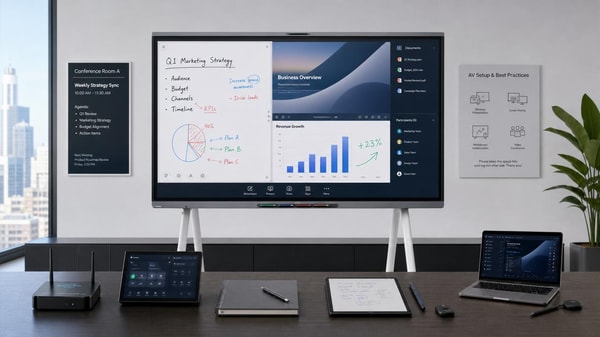
 Interactive whiteboards are underused when training stops after installationInteractive whiteboards often underperform when training ends at installation. Learn how continuous, role-based support boosts adoption, productivity, and ROI.
 Medical diagnostic equipment buying mistakes often start with workflow mismatchMedical diagnostic equipment buying mistakes often stem from workflow mismatch. Learn how to assess fit, avoid hidden costs, and choose scalable systems that support real clinical operations.
![]() Eco-friendly building materials can add compliance work, not just green valueEco-friendly building materials can boost sustainability but also add compliance work. Learn how they affect approvals, costs, timelines, and risk across key project scenarios.
Eco-friendly building materials can add compliance work, not just green valueEco-friendly building materials can boost sustainability but also add compliance work. Learn how they affect approvals, costs, timelines, and risk across key project scenarios. Ergonomic workspace design fails when posture is treated as the whole answerErgonomic workspace design fails when posture is the only focus. Learn how integrated planning improves productivity, retention, and workplace performance.
 Outdoor garden supplies demand changes faster than seasonal forecasts suggestOutdoor garden supplies demand is changing faster than seasonal forecasts. Discover key signals, sourcing strategies, and inventory tactics to stay competitive and capture growth.
 Sustainable home decor sells better when the material story is verifiableSustainable home decor wins more buyers when material claims are verifiable. Discover how traceable sourcing, certifications, and clear proof build trust and drive sales.
 Modern office furniture choices can raise complaints instead of comfortModern office furniture can improve productivity—or trigger costly complaints. Learn how to choose ergonomic, durable, flexible office solutions that support comfort and long-term value.
 Smart street lighting saves energy only when controls are tuned properlySmart street lighting saves energy only when controls are tuned to real traffic, safety, and maintenance needs. Learn how proper settings turn connected lighting into measurable ROI.
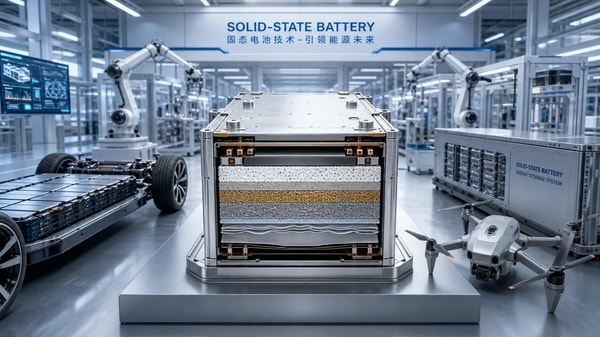
 Solid-state battery breakthroughs are real, but scaling is another storySolid-state battery breakthroughs are real, but scaling remains the real test. Explore where commercialization starts first, what limits adoption, and which markets may gain the earliest edge.
![]() Commercial LED lighting upgrades often disappoint in high-heat spacesCommercial LED lighting often underperforms in high-heat spaces. Learn the hidden causes, warning signs, and smart upgrade choices to improve reliability, safety, and long-term value.
Commercial LED lighting upgrades often disappoint in high-heat spacesCommercial LED lighting often underperforms in high-heat spaces. Learn the hidden causes, warning signs, and smart upgrade choices to improve reliability, safety, and long-term value.
















Popular Tags
Global Trade Insights & Industry
Our mission is to empower global exporters and importers with data-driven insights that foster strategic growth.
Search News
Popular Tags
Industry Overview
The global commercial kitchen equipment market is projected to reach $112 billion by 2027. Driven by urbanization, the rise of e-commerce food delivery, and strict hygiene regulations.