

Lithium battery storage projects look profitable until thermal risk is priced in
Lithium battery storage projects often appear highly bankable on paper, with strong demand forecasts and attractive returns. Yet for financial approvers, the real investment picture changes once thermal risk, insurance exposure, compliance costs, and downtime scenarios are fully modeled. Before capital is committed, understanding how hidden safety variables reshape profitability is essential to making sound, defensible decisions.
Understanding what drives the economics of lithium battery storage
Lithium battery storage refers to systems that capture electrical energy and release it when needed for grid balancing, peak shaving, backup power, renewable integration, and industrial continuity. In investment presentations, these assets are usually framed around revenue upside: capacity payments, arbitrage, ancillary services, reduced curtailment, and resilience benefits. That narrative is not wrong, but it is incomplete. For financial approvers, the decisive question is not simply whether a project can generate revenue, but whether it can do so consistently after accounting for operational, safety, compliance, and lifecycle risk.
The core concern is that lithium battery storage combines high energy density with a safety profile that must be actively managed. Thermal runaway, fire propagation, gas release, suppression failure, enclosure damage, and prolonged outage events can materially alter project cash flow assumptions. A system that looks profitable under simplified utilization and degradation models may become far less attractive once thermal safeguards, monitoring architecture, emergency response design, and post-incident recovery costs are included.
This is why bankability in the sector has matured. Investors, insurers, lenders, and procurement committees increasingly treat thermal risk not as a side issue for engineers, but as a pricing factor that belongs in the financial model. In practical terms, that means the expected return on lithium battery storage should be evaluated against both revenue performance and risk-adjusted capital resilience.
Why the market pays close attention to thermal risk now
The market focus on safety has intensified for several reasons. First, project sizes are growing. A utility-scale lithium battery storage installation now represents substantial concentrated energy, and a single event can produce not only equipment damage but also reputational, regulatory, and contractual consequences. Second, local authorities, insurers, and offtakers have become more demanding after high-profile incidents in various regions. Third, cost competition has pushed some buyers toward aggressive assumptions on design, component sourcing, and installation timelines, which can weaken risk controls if governance is not strong.
For financial approvers, this shift matters because the market no longer prices projects solely on installed cost per kilowatt-hour. It prices them on operating integrity. Two projects with similar headline capital expenditure can have very different long-term financial profiles depending on cell chemistry, thermal management, enclosure layout, fire detection, ventilation strategy, software controls, and maintenance discipline. In other words, hidden variables now affect visible returns.
This trend is especially relevant across the broader industrial and trade ecosystem. Global supply chains for energy storage involve cell producers, integrators, EPC firms, component suppliers, certifiers, logistics providers, insurers, and industrial users. High-authority intelligence platforms such as GTIIN and TradeVantage help decision-makers compare how regional regulation, technology standards, and buyer expectations are evolving. For foreign trade enterprises, understanding these shifts is not just informative; it supports better positioning, better partner selection, and more credible market communication.
Where apparent profitability can be overstated
Many financial models for lithium battery storage begin with optimistic assumptions: high availability, smooth commissioning, limited curtailment, stable cycling economics, and manageable degradation. Yet several cost categories are often underweighted until a serious risk review is performed. The first is safety-related capex. Thermal barriers, gas detection, advanced battery management systems, compartmentalization, emergency isolation mechanisms, and code-compliant fire protection can significantly increase upfront investment.
The second is insurance. Premiums, exclusions, deductibles, and required safeguards are becoming more influential in project economics. An insurer may demand design upgrades or impose constraints on site layout and operating procedures. Those requirements can affect both capex and schedule. The third is downtime risk. If a thermal event occurs, the financial impact is rarely limited to damaged modules. There may be business interruption, delayed grid services revenue, replacement lead times, contractual penalties, and additional inspection costs before restart approval.
The fourth is compliance drift over time. A project approved under one regulatory interpretation may later require additional reporting, mitigation, spacing changes, or operational modifications as codes evolve. For a financial approver, these factors should be treated as real probability-weighted economic variables, not remote exceptions.
A practical risk-adjusted view for financial approvers
A useful way to review lithium battery storage is to compare headline project assumptions with risk-adjusted realities. The table below summarizes the gap that often appears during investment review.
For approval committees, the value of this framework is simple: it converts safety from a qualitative note into a financial discipline. Once thermal risk is priced in, the strongest lithium battery storage proposals are usually not the cheapest ones, but the ones with the most durable operating assumptions.
Which project types are most exposed to risk-pricing shifts
Not all deployments face identical exposure. The business case and thermal risk profile of lithium battery storage vary by application, site conditions, and contractual structure. Financial approvers should distinguish between project categories rather than using one benchmark for all.
This classification matters because a thermal incident in a remote industrial setting creates different financial consequences than one in an urban commercial installation. The right review process should match the deployment context.
How thermal risk affects approval decisions beyond engineering
Financial approvers do not need to become battery scientists, but they do need to know how technical choices cascade into business outcomes. Chemistry selection can influence fire behavior and insurance terms. Site design can affect permitting speed and emergency response acceptability. Supplier quality assurance can reduce latent defect risk. Monitoring architecture can improve early fault detection and reduce escalation probability. Service agreements can shorten recovery time after abnormal events. Each of these issues belongs in the approval file because each one changes risk-weighted value.
There is also a governance dimension. Boards, lenders, and audit stakeholders increasingly expect documented rationale for capital allocation decisions involving critical infrastructure. Approving lithium battery storage without clear evidence that thermal risk has been reviewed can weaken internal accountability. By contrast, a decision memo that explains assumptions, mitigation design, residual risk, and downside modeling is much easier to defend under scrutiny.
Practical evaluation checkpoints before capital is committed
Before approving a lithium battery storage project, decision-makers should require a disciplined review across technical, financial, and operational dimensions. A robust approval checklist typically includes the following:
- Independent validation of thermal management design, fault detection, and system isolation strategy.
- Clear understanding of applicable standards, local code requirements, and authority approval conditions.
- Insurance review completed before final economic sign-off, including exclusions and premium sensitivity.
- Scenario analysis covering outage duration, partial derating, replacement lead time, and business interruption.
- Supplier due diligence on manufacturing quality, traceability, warranty enforceability, and service response capability.
- Lifecycle cost modeling that includes compliance updates, maintenance, augmentation, decommissioning, and disposal considerations.
These checkpoints help financial approvers move from nominal profitability to realistic profitability. They also improve cross-functional alignment between finance, engineering, legal, procurement, and operations.
Why trusted market intelligence improves storage decisions
Because lithium battery storage sits at the intersection of technology, regulation, global sourcing, and capital planning, decision quality depends on information quality. Financial teams benefit when they can track not only vendor claims, but also shifts in standards, incident patterns, regional market practices, and buyer expectations across the global supply chain. That is where industry intelligence platforms create real value.
GTIIN and TradeVantage support this process by aggregating high-value industrial information across sectors and geographies. For executives evaluating storage opportunities, reliable market intelligence helps benchmark project assumptions, identify emerging compliance themes, and understand how safety narratives influence market access and financing confidence. For exporters, importers, and solution providers, better insight also strengthens positioning in conversations with risk-conscious buyers.
A more defensible path to investment approval
The investment case for lithium battery storage remains strong in many markets, especially where grid volatility, renewable expansion, and resilience requirements are increasing. However, strong demand alone does not guarantee a sound capital decision. Once thermal risk, insurance exposure, compliance burden, and downtime consequences are priced into the model, some projects will still look attractive, while others will no longer meet return thresholds.
For financial approvers, the right objective is not to avoid lithium battery storage, but to approve it with full visibility. Projects backed by credible engineering, transparent risk assumptions, strong supplier controls, and informed market context are far more likely to deliver durable value. If your organization is screening opportunities in energy storage or adjacent industrial sectors, using trusted intelligence and risk-adjusted evaluation frameworks will lead to decisions that are both commercially smarter and easier to defend.
Recommended News
 China's Smart Electric Wheelchair Exports Face EU MDR Compliance Shift from Q3 2026China's smart electric wheelchair exports must meet EU MDR + CE dual certification by Q3 2026 — only 12 manufacturers comply. Act now to secure market access.
 Apple Opens AI Service Hub to Third Parties: New Export Path for Chinese AIoT HardwareApple's AI Service Hub opens new export opportunities for Chinese AIoT hardware—enabling iFLYTEK, SenseTime & others to power HomeKit, CarPlay & HealthKit with on-device AI.
 GPT-5.5 Instant Rollout Impacts AI SaaS Exporters’ SLAsGPT-5.5 Instant rollout reshapes AI SaaS exporters’ SLAs—learn how P95 latency, multimodal context, and contract compliance impact your global clients now.
 Red Bull SA15 Uses Tiantai Energy Solutions: China OEM Compliance Gains ASEAN AttentionRed Bull SA15 adopts Tiantai’s China OEM energy solutions—triple-registered (TH FDA, SG HSA, EU EFSA). A benchmark for ASEAN importers & nutraceutical manufacturers seeking compliant, scalable sourcing.
 China’s New GB 4343.1-2026 Mobile Power Bank Standard Takes Effect Nov 2026GB 4343.1-2026 mobile power bank standard takes effect Nov 2026—learn key compliance steps, dual-protocol requirements & global certification strategy.
 Morocco Ranks 4th in EU Africa Energy Aid; China PV Mounting & ESS Export Path WidensMorocco ranks 4th in EU Africa energy aid—unlocking new PV mounting & ESS export opportunities for certified Chinese suppliers. Act now to leverage the white-list advantage.
 China Holds 68% of Global Autonomous Sanitation Vehicle PatentsChina holds 68% of global autonomous sanitation vehicle patents—key for smart infrastructure exporters, AI developers & edge hardware suppliers targeting GCC tenders.
") China’s Petrochemical Plant Upgrade Policy (2026–2029)China’s Petrochemical Plant Upgrade Policy (2026–2029) mandates safety assessments & intelligent upgrades for aging equipment—key for exporters, EPC firms, and certified equipment suppliers.
China’s Petrochemical Plant Upgrade Policy (2026–2029)China’s Petrochemical Plant Upgrade Policy (2026–2029) mandates safety assessments & intelligent upgrades for aging equipment—key for exporters, EPC firms, and certified equipment suppliers. U.S. Natural Gas Inventory Rise Below Expectations: Export Cost Pressure on PVC, ABS, CoatingsU.S. natural gas inventory rise fell short—impacting PVC, ABS & coatings exporters. Discover cost risks, mitigation steps & pricing insights now.
 EN 62368-1:2026 Enforced in EU: Thermal Runaway Protection Required for Wearables & Smart Home DevicesEN 62368-1:2026 mandates thermal runaway protection for wearables & smart home devices in the EU—act now to ensure CE compliance and avoid market access delays.
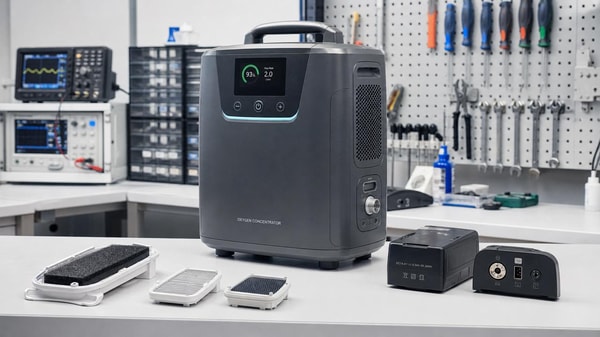
 Portable oxygen concentrators are quieter now, but are they easier to maintain?Portable oxygen concentrators are quieter, but are they easier to maintain? Explore service challenges, scenario-based insights, and smart ways to reduce downtime.
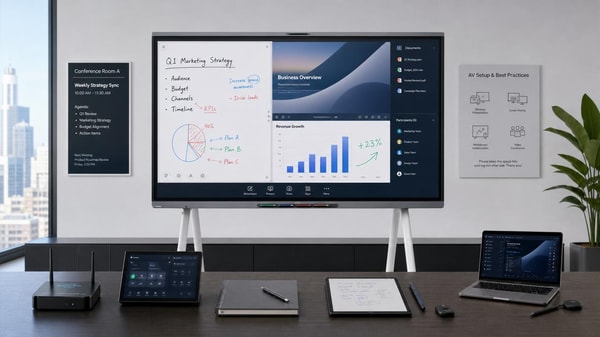
 Interactive whiteboards are underused when training stops after installationInteractive whiteboards often underperform when training ends at installation. Learn how continuous, role-based support boosts adoption, productivity, and ROI.
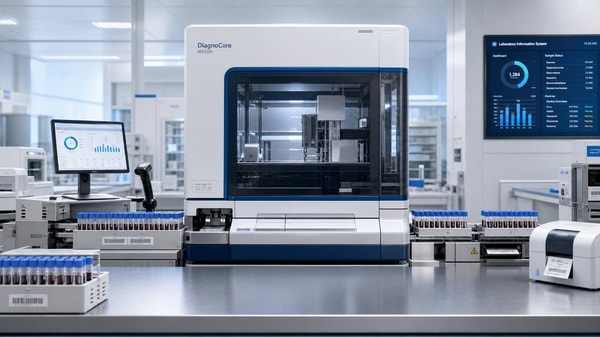
 Medical diagnostic equipment buying mistakes often start with workflow mismatchMedical diagnostic equipment buying mistakes often stem from workflow mismatch. Learn how to assess fit, avoid hidden costs, and choose scalable systems that support real clinical operations.
![]() Eco-friendly building materials can add compliance work, not just green valueEco-friendly building materials can boost sustainability but also add compliance work. Learn how they affect approvals, costs, timelines, and risk across key project scenarios.
Eco-friendly building materials can add compliance work, not just green valueEco-friendly building materials can boost sustainability but also add compliance work. Learn how they affect approvals, costs, timelines, and risk across key project scenarios. Ergonomic workspace design fails when posture is treated as the whole answerErgonomic workspace design fails when posture is the only focus. Learn how integrated planning improves productivity, retention, and workplace performance.
 Outdoor garden supplies demand changes faster than seasonal forecasts suggestOutdoor garden supplies demand is changing faster than seasonal forecasts. Discover key signals, sourcing strategies, and inventory tactics to stay competitive and capture growth.
 Sustainable home decor sells better when the material story is verifiableSustainable home decor wins more buyers when material claims are verifiable. Discover how traceable sourcing, certifications, and clear proof build trust and drive sales.
 Modern office furniture choices can raise complaints instead of comfortModern office furniture can improve productivity—or trigger costly complaints. Learn how to choose ergonomic, durable, flexible office solutions that support comfort and long-term value.
 Smart street lighting saves energy only when controls are tuned properlySmart street lighting saves energy only when controls are tuned to real traffic, safety, and maintenance needs. Learn how proper settings turn connected lighting into measurable ROI.
 Solid-state battery breakthroughs are real, but scaling is another storySolid-state battery breakthroughs are real, but scaling remains the real test. Explore where commercialization starts first, what limits adoption, and which markets may gain the earliest edge.
![]() Commercial LED lighting upgrades often disappoint in high-heat spacesCommercial LED lighting often underperforms in high-heat spaces. Learn the hidden causes, warning signs, and smart upgrade choices to improve reliability, safety, and long-term value.
Commercial LED lighting upgrades often disappoint in high-heat spacesCommercial LED lighting often underperforms in high-heat spaces. Learn the hidden causes, warning signs, and smart upgrade choices to improve reliability, safety, and long-term value.











Popular Tags
Global Trade Insights & Industry
Our mission is to empower global exporters and importers with data-driven insights that foster strategic growth.
Search News
Popular Tags
Industry Overview
The global commercial kitchen equipment market is projected to reach $112 billion by 2027. Driven by urbanization, the rise of e-commerce food delivery, and strict hygiene regulations.