

Solid-state battery breakthroughs are real, but scaling is another story
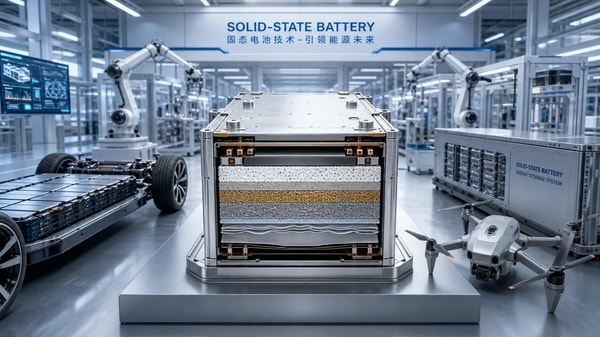
Solid-state battery breakthroughs are moving from lab headlines to real industrial discussion, promising safer cells, higher energy density, and faster charging. Yet for researchers, buyers, and market watchers, the bigger question is no longer whether the technology works, but how quickly it can scale. This article explores what these advances really mean for supply chains, commercialization, and competitive positioning.
Why scenario-based evaluation matters more than headline excitement
The recent wave of Solid-state battery breakthroughs has created a familiar market pattern: technical success in one setting is often interpreted as near-term readiness for every setting. For information researchers, that is where mistakes begin. A cell that performs well in a controlled pilot line may still struggle in high-volume automotive production, consumer electronics miniaturization, or grid-scale storage economics. In other words, the same breakthrough can be highly relevant for one application and only marginally useful for another.
This is why scenario analysis matters. Different use cases place different demands on energy density, cycle life, thermal safety, charging speed, manufacturability, operating temperature, and cost per kilowatt-hour. A premium electric vehicle maker may tolerate higher early costs if range and safety improve enough to support brand differentiation. A mass-market battery supplier cannot. A drone manufacturer may value lighter packs more than long-duration cycle stability. A stationary storage operator may care less about absolute energy density and more about durability, maintenance, and bankable cost models.
For B2B decision-makers, the key question is not simply whether Solid-state battery breakthroughs are real. It is which breakthroughs matter for which commercial path, and what conditions must be met before the technology becomes operationally meaningful. That practical lens is especially important across global supply chains, where sourcing, certification, production equipment, and partnership timing often determine winners more than scientific announcements alone.
Where Solid-state battery breakthroughs are showing up first
The most visible progress is emerging across four recurring business scenarios: premium electric vehicles, specialty mobility platforms, consumer electronics, and strategic industrial or defense applications. Each has a different tolerance for price, production risk, and qualification time. Understanding those differences helps researchers separate realistic commercialization paths from overly broad claims.
This table shows why market timing will not be uniform. Solid-state battery breakthroughs may enter smaller, higher-value markets first, then move toward larger-volume segments only after process stability and materials availability improve.
Scenario 1: Premium EV programs seeking range, safety, and differentiation
Automotive remains the most watched arena because it offers the largest potential demand. Yet it is also the hardest scale-up environment. Premium EV manufacturers are the most likely early adopters because they can position Solid-state battery breakthroughs as a product advantage rather than a cost burden. In this scenario, even modest gains in energy density or charging performance can support a higher selling price, stronger brand storytelling, and a safer thermal profile.
However, automotive buyers should evaluate more than prototype metrics. They need to examine whether the supplier can maintain interface stability, avoid dendrite-related failures, achieve acceptable cycle life, and manufacture cells consistently at line speed. A breakthrough material is not enough if the production route requires expensive dry rooms, tight pressure management, or difficult stack alignment that undermines throughput.
For this scenario, the best-fit use case is often a flagship vehicle or limited-volume premium model. The worst-fit use case is a price-sensitive mass-market platform that depends on fully mature supply chains. Researchers tracking OEM strategy should therefore watch for pilot fleet testing, strategic joint ventures, and equipment investments rather than relying on launch press releases alone.
What automotive teams should verify first
- Cell performance under realistic fast-charging conditions
- Cycle life at pack-relevant temperature ranges
- Compatibility with existing module and pack architectures
- Pilot-line yield, scrap rate, and quality consistency
- Roadmap for raw material sourcing and regional manufacturing
Scenario 2: Drones, robotics, and specialty mobility where weight matters most
One of the most practical near-term implications of Solid-state battery breakthroughs is in applications where every gram affects mission value. Drones, advanced robotics, e-bikes, aviation-adjacent platforms, and specialty mobility systems care deeply about energy density because extra runtime or payload translates directly into commercial utility. In these cases, the economics can work earlier than in mainstream EVs because the value of better performance is easier to quantify.
This scenario also benefits from lower absolute production volume. Suppliers do not need automotive-scale output to serve it effectively. That makes specialty mobility a useful bridge market: real deployment can happen before full industrial scaling is achieved. For information researchers, this is one of the clearest signs that commercialization does not have to start at the biggest market to be meaningful.
Still, caution is necessary. Some specialty systems operate in harsh vibration, wide temperature swings, or demanding duty cycles. A lab-proven solid electrolyte may not retain the same reliability in field conditions. Buyers in this scenario should insist on application-specific testing rather than accepting cross-market claims borrowed from automotive announcements.
Scenario 3: Consumer electronics looking for safe miniaturization and longer runtime
Consumer electronics is another often-discussed destination for Solid-state battery breakthroughs, especially where thin designs, premium safety positioning, and longer device runtime create product value. Smartphones, wearables, laptops, and next-generation compact devices could all benefit if solid-state formats deliver better packaging efficiency and lower thermal risk.
Yet this scenario has hidden complexity. Electronics supply chains are extremely cost-sensitive, integration cycles are fast, and product reliability expectations are unforgiving. Manufacturers may welcome improved energy density, but only if the cells fit existing design constraints and can be sourced in stable volumes. A battery technology that requires a major redesign of enclosures, charging logic, or thermal management may face slower adoption than market narratives suggest.
The stronger initial fit is likely in premium devices, specialized wearables, or products where safety and compactness justify a higher bill of materials. For market watchers, the important signal is not just technical readiness but whether top-tier OEMs begin allocating design resources around the chemistry. That is often a better commercialization indicator than isolated prototype news.
Scenario 4: Industrial, defense, and strategic systems with high tolerance for premium pricing
Some of the most viable early markets for Solid-state battery breakthroughs may sit outside consumer-facing sectors. Industrial systems, defense-adjacent equipment, critical remote operations, and strategic infrastructure often value safety, performance, and mission reliability more than lowest-cost energy storage. In these settings, the business case can support premium cell pricing if the technology reduces hazard risk or improves endurance.
This scenario is important because it can provide commercialization learning without requiring immediate mass-market economics. Suppliers can refine packaging, quality control, and field validation in lower-volume but high-value environments. The downside is that qualification timelines can be long, and procurement processes may be highly conservative. That means opportunity exists, but revenue ramps may be slower than technology headlines imply.
How demand priorities change from one scenario to another
Not every buyer should ask the same first question. Solid-state battery breakthroughs need to be interpreted through the lens of operational priority. The table below offers a practical comparison for researchers and sourcing teams.
What scaling really means beyond the cell itself
A major reason Solid-state battery breakthroughs remain difficult to commercialize is that scaling is not only a chemistry issue. It is a manufacturing systems issue. Companies must align materials supply, equipment design, process control, testing methods, packaging strategy, and downstream certification. Even when electrochemical performance is strong, bottlenecks can appear in ceramic processing, interface engineering, moisture sensitivity, lamination, or pressure management during assembly.
For sourcing teams and market analysts, this means the most credible companies are often not those with the boldest claims, but those with transparent scale-up milestones. Signs of real progress include repeatable pilot output, disclosed partnerships with equipment makers, qualification work with end users, and staged expansion plans tied to specific application scenarios. These factors matter because they indicate whether a breakthrough can survive the transition from demonstration to dependable supply.
Common scenario mistakes researchers and buyers should avoid
The first mistake is assuming all solid-state approaches are equivalent. Sulfide, oxide, polymer, and hybrid pathways may differ greatly in manufacturability, operating profile, and cost structure. The second mistake is treating a single KPI, such as energy density, as decisive. In reality, a commercially viable battery must balance several variables at once. The third mistake is ignoring the channel strategy: some companies are building for licensing, some for niche supply, and some for full-scale manufacturing. Those paths lead to very different timelines.
Another frequent oversight is not matching forecast language to actual deployment stage. Terms such as pilot production, qualification sample, limited release, or strategic partnership are often interpreted too optimistically. For information researchers, careful reading of production language is essential. Solid-state battery breakthroughs may be genuine while still being years away from broad availability in a given market segment.
Practical fit-check: when the technology is worth active monitoring
The technology deserves close attention if your scenario depends on safety-sensitive design, premium performance, reduced weight, or strategic differentiation. It deserves cautious monitoring if your business runs on thin margins, high-volume standardization, or short qualification windows. In practical terms, companies should ask five questions: Does the application truly monetize better energy density? Can the buyer absorb early-stage pricing? Is there enough flexibility to validate a new form factor? Are there regulatory or safety benefits that improve the business case? Can supply risk be managed during ramp-up?
If the answer to most of these questions is yes, Solid-state battery breakthroughs may already be relevant to your roadmap. If not, the technology may still matter strategically, but more as a medium-term trend than an immediate sourcing option.
FAQ: scenario-focused questions about Solid-state battery breakthroughs
Which industries should track Solid-state battery breakthroughs most closely right now?
Premium EVs, drones, robotics, advanced consumer electronics, and strategic industrial systems are the most relevant near-term watchers because performance gains can justify early adoption costs.
Are Solid-state battery breakthroughs ready for mass-market deployment?
Not uniformly. Some niche and premium scenarios may see earlier rollout, but broad mass-market deployment depends on manufacturing yield, stable supply chains, and lower costs.
What is the biggest scaling challenge?
The biggest challenge is translating strong lab performance into repeatable industrial production without losing reliability, affordability, or throughput.
Final takeaway for researchers, buyers, and market observers
Solid-state battery breakthroughs are real, but their commercial value is highly scenario-dependent. The most useful way to assess them is not through broad trend language, but through application fit: which markets can absorb early costs, which products gain enough value from better safety or density, and which supply chains are ready to support qualification and ramp-up. For information researchers, the strongest insight comes from connecting technical progress with actual business deployment conditions.
For companies operating across global trade and industrial intelligence networks, this is where disciplined monitoring creates advantage. Watch pilot manufacturing, customer validation, supply partnerships, and scenario-specific adoption signals. Solid-state battery breakthroughs will not scale at the same speed everywhere, but in the right application context, they are already shaping competitive positioning and future sourcing decisions.
Recommended News
 China's Smart Electric Wheelchair Exports Face EU MDR Compliance Shift from Q3 2026China's smart electric wheelchair exports must meet EU MDR + CE dual certification by Q3 2026 — only 12 manufacturers comply. Act now to secure market access.
 Apple Opens AI Service Hub to Third Parties: New Export Path for Chinese AIoT HardwareApple's AI Service Hub opens new export opportunities for Chinese AIoT hardware—enabling iFLYTEK, SenseTime & others to power HomeKit, CarPlay & HealthKit with on-device AI.
 GPT-5.5 Instant Rollout Impacts AI SaaS Exporters’ SLAsGPT-5.5 Instant rollout reshapes AI SaaS exporters’ SLAs—learn how P95 latency, multimodal context, and contract compliance impact your global clients now.
 Red Bull SA15 Uses Tiantai Energy Solutions: China OEM Compliance Gains ASEAN AttentionRed Bull SA15 adopts Tiantai’s China OEM energy solutions—triple-registered (TH FDA, SG HSA, EU EFSA). A benchmark for ASEAN importers & nutraceutical manufacturers seeking compliant, scalable sourcing.
 China’s New GB 4343.1-2026 Mobile Power Bank Standard Takes Effect Nov 2026GB 4343.1-2026 mobile power bank standard takes effect Nov 2026—learn key compliance steps, dual-protocol requirements & global certification strategy.
 Morocco Ranks 4th in EU Africa Energy Aid; China PV Mounting & ESS Export Path WidensMorocco ranks 4th in EU Africa energy aid—unlocking new PV mounting & ESS export opportunities for certified Chinese suppliers. Act now to leverage the white-list advantage.
 China Holds 68% of Global Autonomous Sanitation Vehicle PatentsChina holds 68% of global autonomous sanitation vehicle patents—key for smart infrastructure exporters, AI developers & edge hardware suppliers targeting GCC tenders.
") China’s Petrochemical Plant Upgrade Policy (2026–2029)China’s Petrochemical Plant Upgrade Policy (2026–2029) mandates safety assessments & intelligent upgrades for aging equipment—key for exporters, EPC firms, and certified equipment suppliers.
China’s Petrochemical Plant Upgrade Policy (2026–2029)China’s Petrochemical Plant Upgrade Policy (2026–2029) mandates safety assessments & intelligent upgrades for aging equipment—key for exporters, EPC firms, and certified equipment suppliers. U.S. Natural Gas Inventory Rise Below Expectations: Export Cost Pressure on PVC, ABS, CoatingsU.S. natural gas inventory rise fell short—impacting PVC, ABS & coatings exporters. Discover cost risks, mitigation steps & pricing insights now.
 EN 62368-1:2026 Enforced in EU: Thermal Runaway Protection Required for Wearables & Smart Home DevicesEN 62368-1:2026 mandates thermal runaway protection for wearables & smart home devices in the EU—act now to ensure CE compliance and avoid market access delays.
 Portable oxygen concentrators are quieter now, but are they easier to maintain?Portable oxygen concentrators are quieter, but are they easier to maintain? Explore service challenges, scenario-based insights, and smart ways to reduce downtime.
 Interactive whiteboards are underused when training stops after installationInteractive whiteboards often underperform when training ends at installation. Learn how continuous, role-based support boosts adoption, productivity, and ROI.
 Medical diagnostic equipment buying mistakes often start with workflow mismatchMedical diagnostic equipment buying mistakes often stem from workflow mismatch. Learn how to assess fit, avoid hidden costs, and choose scalable systems that support real clinical operations.
![]() Eco-friendly building materials can add compliance work, not just green valueEco-friendly building materials can boost sustainability but also add compliance work. Learn how they affect approvals, costs, timelines, and risk across key project scenarios.
Eco-friendly building materials can add compliance work, not just green valueEco-friendly building materials can boost sustainability but also add compliance work. Learn how they affect approvals, costs, timelines, and risk across key project scenarios. Ergonomic workspace design fails when posture is treated as the whole answerErgonomic workspace design fails when posture is the only focus. Learn how integrated planning improves productivity, retention, and workplace performance.
 Outdoor garden supplies demand changes faster than seasonal forecasts suggestOutdoor garden supplies demand is changing faster than seasonal forecasts. Discover key signals, sourcing strategies, and inventory tactics to stay competitive and capture growth.
 Sustainable home decor sells better when the material story is verifiableSustainable home decor wins more buyers when material claims are verifiable. Discover how traceable sourcing, certifications, and clear proof build trust and drive sales.
 Modern office furniture choices can raise complaints instead of comfortModern office furniture can improve productivity—or trigger costly complaints. Learn how to choose ergonomic, durable, flexible office solutions that support comfort and long-term value.
 Smart street lighting saves energy only when controls are tuned properlySmart street lighting saves energy only when controls are tuned to real traffic, safety, and maintenance needs. Learn how proper settings turn connected lighting into measurable ROI.
 Solid-state battery breakthroughs are real, but scaling is another storySolid-state battery breakthroughs are real, but scaling remains the real test. Explore where commercialization starts first, what limits adoption, and which markets may gain the earliest edge.
![]() Commercial LED lighting upgrades often disappoint in high-heat spacesCommercial LED lighting often underperforms in high-heat spaces. Learn the hidden causes, warning signs, and smart upgrade choices to improve reliability, safety, and long-term value.
Commercial LED lighting upgrades often disappoint in high-heat spacesCommercial LED lighting often underperforms in high-heat spaces. Learn the hidden causes, warning signs, and smart upgrade choices to improve reliability, safety, and long-term value.













Popular Tags
Global Trade Insights & Industry
Our mission is to empower global exporters and importers with data-driven insights that foster strategic growth.
Search News
Popular Tags
Industry Overview
The global commercial kitchen equipment market is projected to reach $112 billion by 2027. Driven by urbanization, the rise of e-commerce food delivery, and strict hygiene regulations.