

EN IEC 62471-2:2026 Effective Oct 2026 for EU LED Lighting Exports
EU has published EN IEC 62471-2:2026, mandating full-spectrum photobiological safety assessment (200–3000 nm) for all LED lighting products exported to the EU, effective 1 October 2026. Exporters of LED luminaires, smart lighting modules, and energy-saving lighting products — particularly those based in China — must now reassess compliance pathways and type-testing timelines.
Event Overview
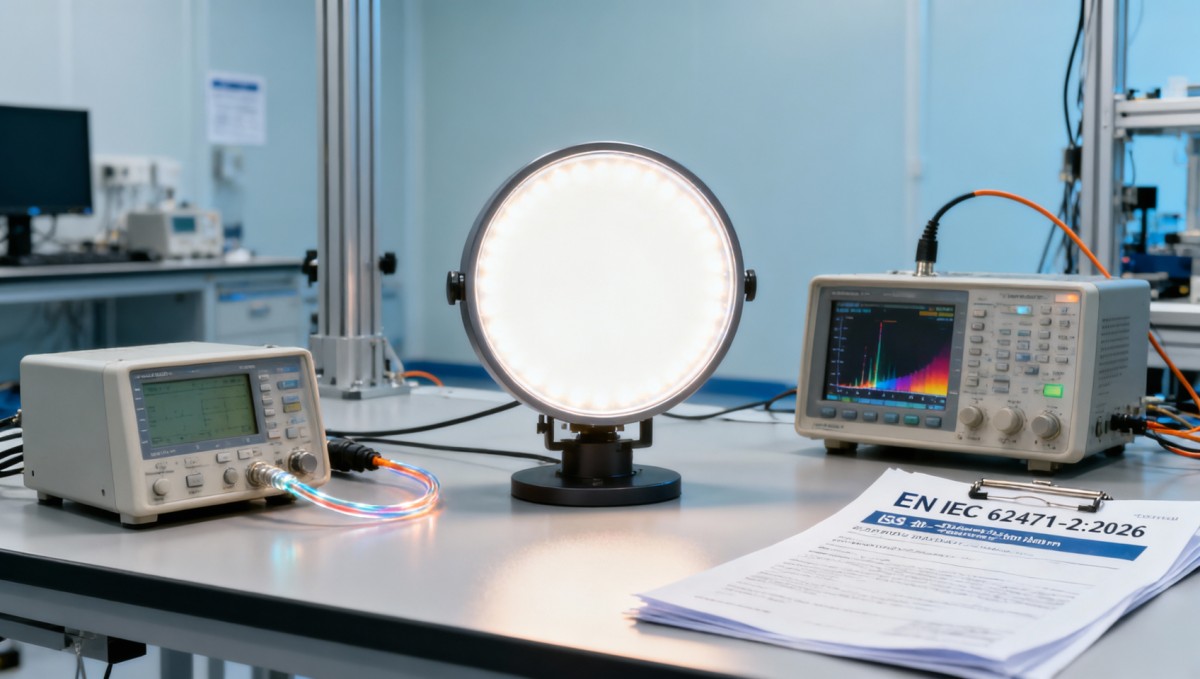
The Official Journal of the European Union (OJEU) published EN IEC 62471-2:2026 on 19 April 2026. This standard replaces EN 62471:2008 and applies to all LED-based lighting products placed on the EU market from 1 October 2026. It requires photobiological hazard classification across the full spectral range of 200–3000 nm, introduces a new limit for blue-light peak radiance, and mandates transient testing for pulsed light sources.
Industries Affected
Direct Exporters (LED Luminaires & Smart Modules)
These enterprises face immediate impact because the standard directly governs product conformity for CE marking. Compliance now requires updated test reports covering extended spectral range and pulse-response evaluation — not covered under prior EN 62471:2008 assessments.
Energy-Saving Lighting Manufacturers (China-based)
As highlighted in the event summary, Chinese manufacturers exporting under the ‘energy-saving lighting’ category are explicitly named as affected. Their existing type-test certificates will lapse upon enforcement; retesting under EN IEC 62471-2:2026 is mandatory before 1 October 2026 to maintain market access.
Third-Party Testing & Certification Providers
Testing labs and Notified Bodies must validate their measurement capabilities for the 200–3000 nm range, including calibrated spectroradiometers and transient detection setups. Capacity constraints or accreditation gaps may delay certification turnaround times for clients.
Supply Chain Integrators (e.g., OEM/ODM Service Providers)
Companies integrating LED modules into larger systems (e.g., architectural lighting, IoT-enabled fixtures) must verify upstream component-level compliance. Sub-assemblies previously cleared under EN 62471:2008 may require re-evaluation if embedded in new end-products placed on the EU market post-October 2026.
Key Focus Areas and Recommended Actions
Monitor official interpretations from EU Commission and CENELEC
While EN IEC 62471-2:2026 is harmonised under the EU’s Radio Equipment Directive (RED) and Ecodesign framework, its precise application scope — especially for hybrid devices (e.g., lighting + connectivity) — remains subject to guidance updates. Stakeholders should track CENELEC’s implementation notes and EU Commission’s FAQs.
Prioritise testing for high-risk product categories
Products with high blue-light content (e.g., cool-white LEDs >5000 K), narrow-band emitters, or pulsed drive schemes (e.g., LiFi-integrated lights, strobe-enabled emergency modules) are most likely to exceed revised limits. These should be scheduled for early assessment to identify design or control adjustments.
Distinguish between regulatory signal and enforceable obligation
The OJEU publication confirms formal adoption, but enforcement relies on national market surveillance authorities. Non-compliant products already in EU distribution channels pre-1 October 2026 are not automatically recalled; however, no new units may be placed on the market without EN IEC 62471-2:2026 compliance.
Update procurement and technical documentation workflows
Importers and authorised representatives should revise technical file checklists to include full-spectrum radiance data, pulse waveform parameters, and uncertainty statements per IEC TR 62778:2014. Suppliers must provide updated Declarations of Conformity referencing EN IEC 62471-2:2026 — not legacy versions.
Editorial Observation / Industry Perspective
From industry perspective, EN IEC 62471-2:2026 signals a structural shift toward tighter photobiological oversight — moving beyond static blue-light hazard (BLH) to dynamic, broadband risk profiling. Analysis来看, this reflects growing regulatory attention to non-visual biological effects of artificial light, particularly for consumer-facing and long-duration exposure applications. It is better understood as both a compliance milestone and an early indicator of future harmonisation trends — e.g., potential alignment with IEC TR 62778 updates or integration into upcoming EU Artificial Light Ecodesign requirements. Continuous monitoring is warranted, as interpretation of ‘pulsed source’ thresholds and lab-to-lab measurement variability remain open for clarification.
Conclusion
EN IEC 62471-2:2026 does not introduce wholly new hazard categories, but significantly raises the evidentiary bar for photobiological safety claims in EU-bound LED lighting. Its practical effect is to extend testing scope, increase test duration and cost, and compress time-to-market for newly developed products. Currently, it is more accurately interpreted as an enforceable regulatory requirement — not merely a technical recommendation — with clear deadlines and defined scope. Enterprises should treat it as a fixed compliance gate, not a flexible guideline.
Source Attribution
Main source: Official Journal of the European Union (OJEU), publication date 19 April 2026, standard reference EN IEC 62471-2:2026.
Points requiring ongoing observation: Application scope clarifications for multi-function devices (e.g., lighting + wireless charging), and national market surveillance enforcement practices post-1 October 2026.
Recommended News
 China’s 10 Agencies Issue AI Export Ethics Review RulesChina’s 10 agencies launch AI export ethics rules—mandating bias reviews for visual inspection, warehouse AI & defect detection systems. Stay compliant & competitive.
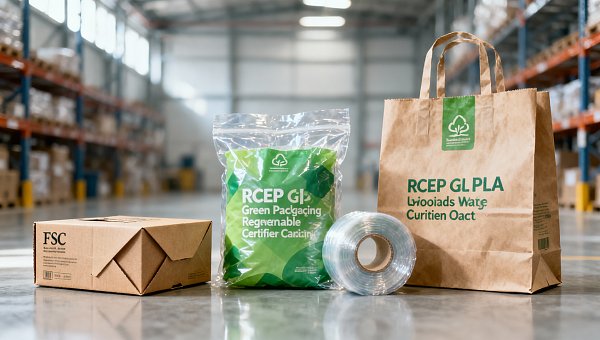
 RCEP Green Packaging Mutual Recognition Takes EffectRCEP Green Packaging Mutual Recognition is now in effect—unlock faster customs clearance in Australia, NZ, Japan & Korea for GB/T 37659–2019-certified eco-packaging.
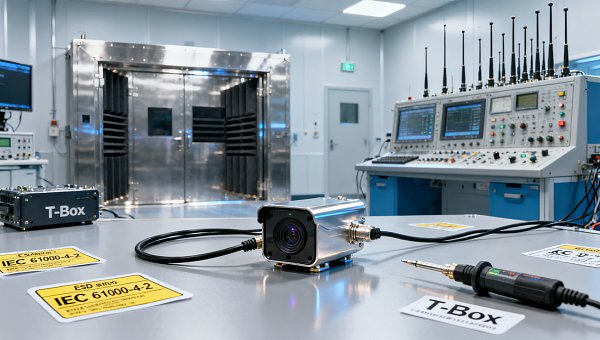
 Mexico NOM-019-SCFI-2026 Effective Apr 10, 2026: EMC Certification Required for Automotive ElectronicsNOM-019-SCFI-2026 EMC certification is now mandatory for automotive electronics entering Mexico — act before the July 1, 2026 customs ban.
 Red Sea Rerouting Normalized, EBA at $1,850/TEURed Sea rerouting normalized with EBA fixed at $1,850/TEU—learn how this structural shift impacts Asia-Europe freight costs, lead times & supply chain strategy.
 FDA AI Diagnostic Device Draft Rules: Bias Assessment for ImportsFDA AI diagnostic device draft rules require bias assessment for imports—learn how portable ultrasound, glucose, and dermatoscopic AI devices are affected & what to do next.
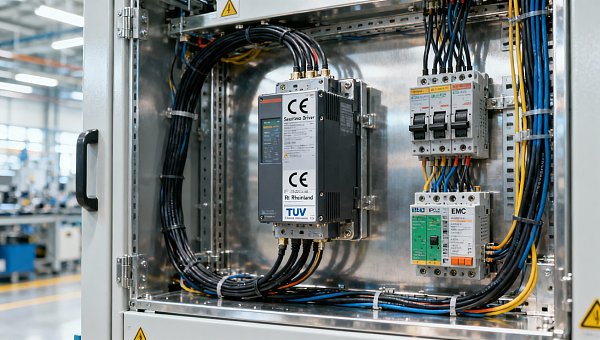
") TÜV Rheinland Updates CE Requirements for Servo Drives (PLd + EMC)TÜV Rheinland updates CE requirements for servo drives: PLd (ISO 13849-1) + EMC immunity (IEC 61000-6-2 Ed.4) now mandatory together — act now to avoid EU market delays!
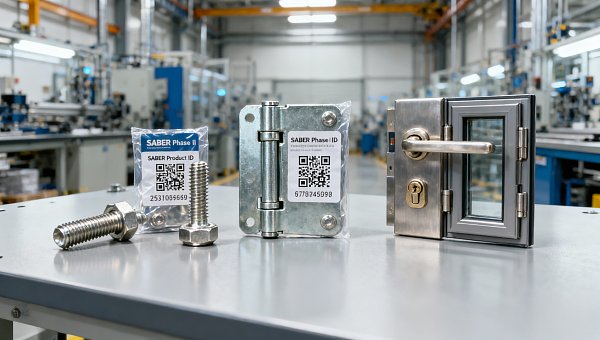
TÜV Rheinland Updates CE Requirements for Servo Drives (PLd + EMC)TÜV Rheinland updates CE requirements for servo drives: PLd (ISO 13849-1) + EMC immunity (IEC 61000-6-2 Ed.4) now mandatory together — act now to avoid EU market delays! SABER Phase II Launch: Building Hardware Must Submit Digital Type Test Reports & Unique Product IDSABER Phase II now mandates digital type test reports & unique product IDs for building hardware—fasteners, scaffolding, door/window components. Ensure compliance to avoid customs rejection & SCOC delays.
 Vietnam Suspends SASO Mutual Recognition for Chinese Irrigation EquipmentVietnam suspends SASO mutual recognition for Chinese irrigation equipment—TCVN testing now mandatory. Act now to avoid 8–12 week delays and customs holdups.
 IMDG Code 41-24 Enforced: UN3480 Lithium Battery Labeling UpdateIMDG Code 41-24 enforcement starts April 2026: UN3480 lithium battery labeling updates are mandatory for global maritime shipments — avoid port delays, detention & penalties.
 EU CBAM Enters Full Enforcement on Jan 1, 2026EU CBAM full enforcement starts Jan 1, 2026 — mandatory quarterly reporting & certificate purchases for batteries, steel, cement, aluminum, fertilizers & chemicals. Act now to ensure EU market access.
 EU CBAM Carbon Tariff Starts Oct 2026 for Chinese Battery, Cement, Chemical ExportsEU CBAM carbon tariff hits Chinese battery, cement & chemical exports from Oct 2026 — mandatory emissions reporting starts now. Avoid €98/t default fees.
 Mexico NOM-019-SCFI-2026 Effective: Automotive Electronics Require New EMC CertificationMexico NOM-019-SCFI-2026 takes effect May 1, 2026 — new EMC certification mandatory for automotive electronics, EV accessories & aftermarket parts entering Mexico.
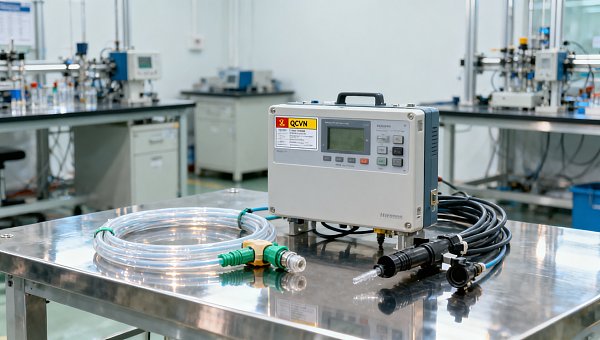
 Vietnam Suspends China Irrigation Equipment SASO Mutual RecognitionVietnam suspends China irrigation equipment SASO mutual recognition—urgent QCVN certification now required for drip tapes, sprinklers & smart controllers.
 Red Sea Diversion Normalized; Asia-Europe Freight Premium at $1,850/TEURed Sea diversion normalized: Asia-Europe freight premium holds at $1,850/TEU — impacting manufacturing, retail & procurement. Act now to optimize costs & resilience.
 FDA Drafts AI Bias Assessment Rule for Imported Medical DevicesFDA's new AI bias assessment rule for imported medical devices demands third-party verified fairness reports—act now to prep your 510(k)/De Novo submissions.
 TÜV Rheinland Updates CE Requirements for Servo DrivesTÜV Rheinland updates CE requirements for servo drives: integrated PLd + EN 61800-3 validation mandatory from July 1, 2026. Act now to avoid EU market delays!
 SABER Phase II Launch: Building Hardware Must Submit Digital Type Test Reports & Unique Product IDsSABER Phase II is live: Building hardware exporters must now submit digital type test reports & secure unique SABER Product IDs—avoid customs delays. Act now!
 IMDG Code 41-24 Enforced: New UN3480 Class 9 Label for Lithium Battery Sea FreightIMDG Code 41-24 enforced: UN3480 Class 9 label now mandatory for lithium battery sea freight — avoid delays in US, EU, UAE & Chile ports.
 RCEP Green Packaging Mutual Recognition Takes EffectRCEP Green Packaging Mutual Recognition takes effect Apr 21, 2026—unlock faster customs clearance for compostable, recycled & bio-based packaging in AU, NZ, JP, KR.
 China’s 10-Dept AI Ethics Review Rule for Exported AI DevicesChina’s 10-dept AI ethics review rule mandates algorithmic bias assessments for exported AI devices—key for EU, ME & SEA markets. Stay compliant ahead of enforcement.
 US CPSC Updates Child Sleep Sack Standard Effective July 2026US CPSC updates child sleep sack standard with new DSST test—mandatory for all U.S.-bound infant sleep sacks from July 2026. Act now to ensure compliance and market access.















Popular Tags
Global Trade Insights & Industry
Our mission is to empower global exporters and importers with data-driven insights that foster strategic growth.
Search News
Popular Tags
Industry Overview
The global commercial kitchen equipment market is projected to reach $112 billion by 2027. Driven by urbanization, the rise of e-commerce food delivery, and strict hygiene regulations.