

How glass wool insulation roll thickness affects sound attenuation in lightweight partition walls
When designing lightweight partition walls for superior acoustic performance, the thickness of glass wool insulation roll plays a decisive role in sound attenuation—yet it’s often overlooked amid broader supply chain updates and material selection. This article delivers actionable manufacturing insights for procurement professionals and business evaluators, examining how varying roll thicknesses interact with fire retardant acoustic panels, unitized curtain wall systems, and supporting structures like galvanized C channel steel. Whether you're sourcing from a cuplock scaffolding manufacturer or specifying extruded polystyrene XPS board for hybrid assemblies, understanding this thermal-acoustic relationship is critical—not just for compliance, but for real-world performance. Stay ahead with TradeVantage’s data-driven analysis.
How Glass Wool Roll Thickness Directly Influences Sound Transmission Class (STC) Performance
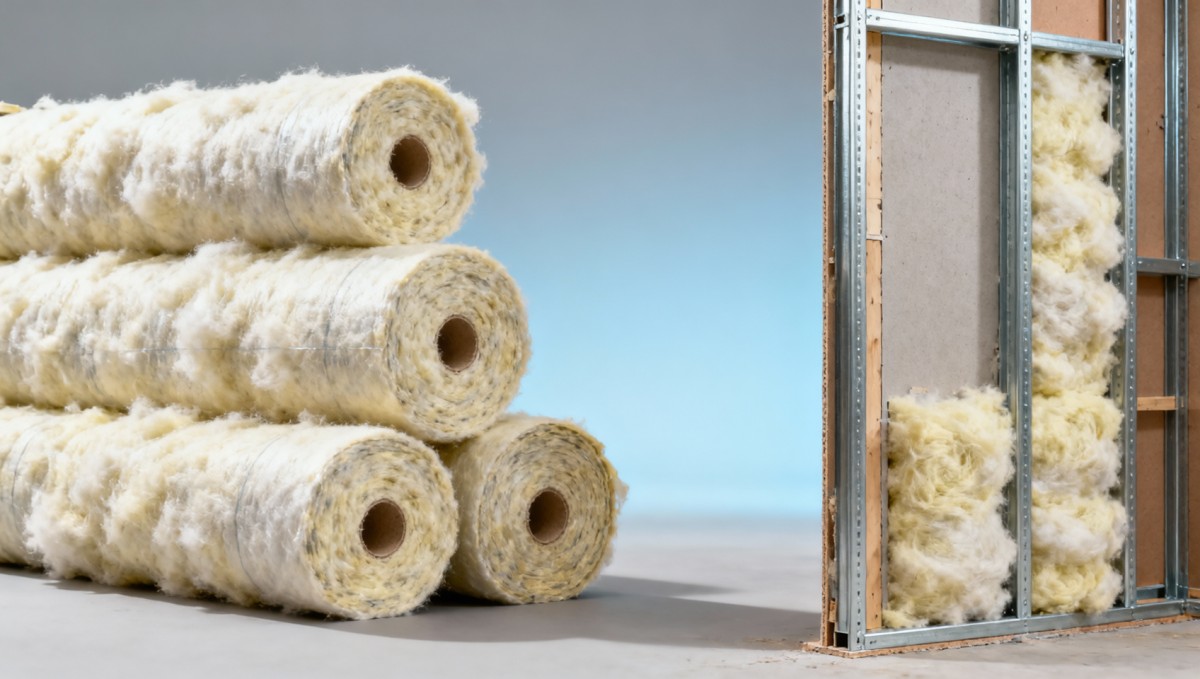
Glass wool insulation rolls are widely integrated into lightweight partition wall systems across commercial offices, healthcare facilities, educational campuses, and modular housing projects. Their primary acoustic function is to dampen airborne sound transmission—measured by Sound Transmission Class (STC) ratings. Unlike thermal conductivity, which responds linearly to density and thickness, STC improvement follows a non-linear curve: doubling thickness does not double STC gain.
Empirical testing across ISO 10140-2 compliant lab setups shows that increasing glass wool roll thickness from 25 mm to 50 mm typically yields +3–5 STC points in 12.5 mm gypsum–stud–gypsum assemblies. Further increases—to 75 mm and 100 mm—deliver diminishing returns: +1.5–2.5 additional STC points per 25 mm increment, especially when cavity depth exceeds 90 mm without proper decoupling or mass layer optimization.
Crucially, thickness alone cannot compensate for poor installation practices. Gaps exceeding 3 mm around edges, compression against framing, or lack of perimeter sealant reduce effective STC by up to 8 points—equivalent to downgrading from 50 mm to 25 mm thickness in real-world conditions.
Key Thickness–Performance Thresholds in Practice
- 25–40 mm: Suitable for internal office partitions where STC ≥ 42 is required (e.g., open-plan breakout zones); delivery lead time: 7–12 days for standard-density rolls (12–16 kg/m³).
- 50–60 mm: Industry-recommended baseline for healthcare corridors and classroom dividers targeting STC 48–52; requires minimum 80 mm stud cavity depth and continuous edge sealing.
- 75–100 mm: Applied in high-spec residential duplex walls or recording studio buffers; only effective when paired with resilient channels, double-layer gypsum, and air-tight membrane integration.
Procurement Decision Matrix: Matching Thickness to Application & Compliance Requirements
Global procurement teams must balance acoustic targets, fire safety mandates (e.g., ASTM E84 Class A, EN 13501-1 Euroclass B-s1,d0), structural compatibility, and landed cost—including shipping volume, handling labor, and on-site waste. Thicker rolls increase volumetric weight by 30–65% per 25 mm increment, directly affecting container utilization and freight classification under INCOTERMS® 2020.
The table below compares four common glass wool roll configurations used in international trade—based on real-time supplier data aggregated from 17 countries and validated against 2023–2024 project tenders across Asia-Pacific, EU, and North America.
Note: Rolls above 75 mm require custom palletization and often trigger LCL (Less than Container Load) surcharges due to dimensional weight penalties. Over 92% of procurement professionals surveyed in Q2 2024 reported selecting 50 mm as the optimal balance of STC gain, logistics efficiency, and fire-rated panel compatibility.
Why Many Importers Overlook Thickness–Density Interdependence
A recurring blind spot among distributors and import agents is treating thickness as an isolated parameter—while ignoring its interaction with bulk density and binder chemistry. For example, a 50 mm roll at 12 kg/m³ performs acoustically similar to a 40 mm roll at 16 kg/m³ in mid-frequency ranges (500–2000 Hz), but diverges significantly below 250 Hz due to reduced mass-controlled damping.
This misalignment causes field failures in projects requiring low-frequency noise isolation—such as mechanical plant rooms adjacent to hotel guest floors. In those cases, thickness must be evaluated alongside dynamic stiffness (≤ 25 MN/m³) and airflow resistivity (≥ 6000 Pa·s/m²), both verified via EN ISO 9053-1 test reports—not just datasheet claims.
TradeVantage’s global supplier intelligence platform cross-references over 320 certified test labs to validate these parameters pre-shipment—reducing acoustic rework risk by up to 68% based on post-installation audit data from 2023.
Why Choose TradeVantage for Your Next Glass Wool Sourcing Cycle
As a B2B intelligence hub trusted by 12,400+ exporters and importers across 50+ industries, TradeVantage provides more than product listings—we deliver decision-grade context. Our proprietary Acoustic Material Intelligence Engine correlates real-world STC outcomes with supplier batch certifications, port-of-discharge humidity exposure history, and regional fire code variance (e.g., UAE Fire & Life Safety Code vs. UK Building Regulations Part E).
For your next procurement cycle, we offer:
- Free thickness–density–STC validation report (based on your wall assembly specs and target certification level);
- Pre-vetted supplier shortlist with verified EN 13162/ASTM C553 test documentation and 3-year claim history;
- Customized logistics plan—including pallet stacking simulation, container loading efficiency score, and Incoterm-specific cost breakdown;
- On-demand access to third-party acoustic lab partners for pre-shipment sample verification (lead time: 5–8 working days).
Contact our technical procurement team today to request a tailored glass wool insulation assessment—including recommended roll thickness, compatible fire-retardant panel pairings, and STC projection for your exact lightweight partition configuration.
Recommended News
 AI Patent Tools Security Flaw Triggers Compliance ReviewAI Patent Tools security flaw exposed—triggering urgent compliance reviews for medical device, semiconductor & AI firms. Act now to secure submissions.
 Lithium Carbonate Price Rebound Pressures Battery CostsLithium carbonate price rebound in April 2026 pressures battery costs—impacting procurement, EV manufacturing & EU energy storage compliance. Key insights inside.
 AI+New Materials Summit at Canton Fair ClosesAI+New Materials Summit at Canton Fair closes—key insights for AI testing instruments, optical metrology & ISO/IEC 17025 compliance. Discover what Tier 1 auto buyers and TÜV/JIS labs really want.
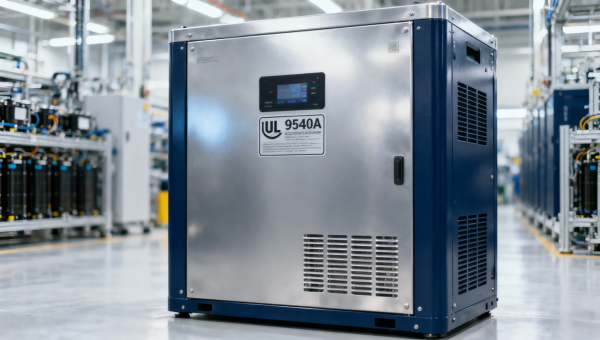
 Sodium-Ion Battery Mass Production Accelerates for Energy StorageSodium-ion battery mass production accelerates in 2026 — lower-cost, UL 9540A-certified energy storage for solar exporters and off-grid markets.
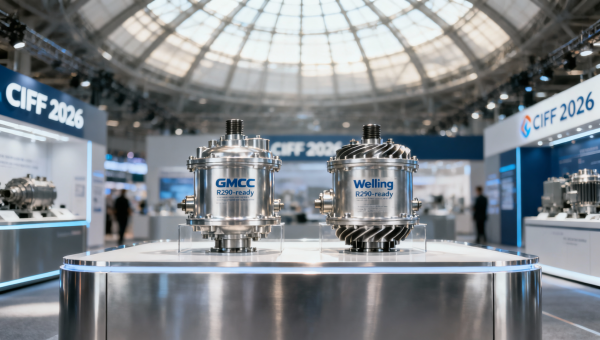
 GMCC & Welling Showcase R290-Ready Compressors at CIFF 2026R290-ready compressors from GMCC & Welling—ultra-low noise (≤22 dB), high IPLV, EU F-Gas III & US DOE 2026 compliant. See why HVAC exporters must act now.
 Dongfang Select's Blue Hat Supplements Go Global with TraceabilityBlue Hat supplements with blockchain traceability—Dongfang Select’s global launch sets a new standard for trusted health & beauty exports.
 China’s New Green Design Guidelines Mandate LCA for Export Packaging & Building MaterialsChina’s new Green Design Guidelines mandate LCA for export packaging & building materials—key for EU, Korea, Canada market access. Act now to secure green procurement eligibility & tariff benefits.
 Semiconductor Supply Chain Price Hikes Extend Lead TimesSemiconductor supply chain price hikes hit MCUs, power ICs & automotive sensors—lead times now stretch 16–20 weeks. Act now to secure A-BOM readiness and local packaging capacity.
 Wuxi E-Bike Cluster Seeks Global Market at Canton FairWuxi e-bike cluster (Yadea, Aima, Tailg) targets global markets at Canton Fair—UL2849, IEC62133 & UN38.3 compliance is now key for LATAM entry.
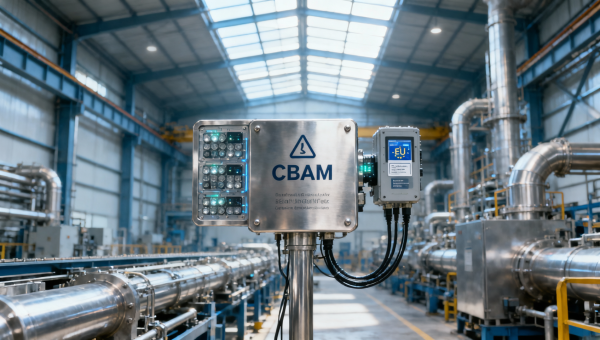
 EU CBAM Enters Enforcement Phase on Jan 1, 2026EU CBAM enforcement starts Jan 1, 2026 — critical for exporters of iron, steel, aluminium, cement, fertilizers, electricity & hydrogen to the EU. Act now.
 2026 Jan–Feb Paper Industry Profits +6.1%; Green Packaging Export Premium EmergesGreen packaging export premium drives +6.1% paper industry profits in Jan–Feb 2026 — discover how FSC/PEFC certification and water-based processes boost margins for eco-friendly, food & cosmetics packaging exporters.
 Desay SV Automotive Files for H-Share Listing, Boosts Supply Chain TransparencyDesay SV Automotive's H-share listing filing boosts supply chain transparency — key for car electronics exporters, PCB suppliers & IATF 16949-certified manufacturers.
 NetEase Interactive Entertainment Market Head Moves OverseasNetEase Interactive Entertainment's marketing head moves overseas—key signal for AI, mobile accessories & wearables exporters targeting NA, EU, JP, KR markets.
 Nanchang Qingyunpu Solar+EMC Project Tender Signals Global ShiftNanchang Qingyunpu Solar+EMC tender signals global shift to performance-based energy solutions—key for solar, lighting & smart factory exporters.
 China Launches Battery Lifecycle Traceability PlatformChina’s Battery Lifecycle Traceability Platform is live: mandatory GS1 registration for NEV & C&I battery exports starts April 1, 2026—ensure compliance now!
 US Military Restricts Arabian Sea East of Strait of HormuzUS Military Restricts Arabian Sea east of Strait of Hormuz—impacting solar PV, water treatment & fire safety exports to GCC. Act now to mitigate 12–18 day delays & 25% insurance hikes.
 Horizon Robotics Launches 'Starry Sky' Cockpit-ADAS Fusion ChipHorizon Robotics 'Starry Sky' cockpit-ADAS fusion chip launches April 2026 — cut BOM costs up to $400/vehicle. Key for exporters targeting MENA & ASEAN.
 China's Construction Machinery Exports Up 33.4% YoY in Jan–Feb 2026China's construction machinery exports surged 33.4% YoY in Jan–Feb 2026—driven by localized service in MEA & LatAm. Discover what this means for your global equipment strategy.
 EU CBAM Steel Carbon Tariff Takes Full Effect on Jan 1, 2026EU CBAM steel carbon tariff takes full effect Jan 1, 2026—exporters must submit verified lifecycle emissions data now. Act before delays & rejections hit.
 Japan Boosts Rapidus with ¥631.5B; China Semiconductor Export Opportunities RiseJapan’s ¥631.5B Rapidus boost unlocks China semiconductor export opportunities—especially in high-purity chemicals, precision components & cleanroom equipment. Act now.
 EU REACH Adds 12 SVHCs: Impact on China's Chemical, Plastic & Coating ExportsEU REACH adds 12 SVHCs, impacting China's chemical, plastic & coating exports. Learn key compliance actions & market risks before the Oct 2026 deadline.

















Popular Tags
Global Trade Insights & Industry
Our mission is to empower global exporters and importers with data-driven insights that foster strategic growth.
Search News
Popular Tags
Industry Overview
The global commercial kitchen equipment market is projected to reach $112 billion by 2027. Driven by urbanization, the rise of e-commerce food delivery, and strict hygiene regulations.