

Industrial coatings with unexpected chemical leaching in food-adjacent facilities
Industrial coatings—widely used across construction chemicals, surface treatment, factory automation, and even dining furniture or greenhouse supplies—are increasingly under scrutiny for unexpected chemical leaching in food-adjacent facilities. This hidden risk impacts not only regulatory compliance but also brand trust in healthcare informatics, architectural hardware, and home decor wholesale sectors. As global exporters and importers navigate tightening safety standards, GTIIN’s TradeVantage delivers actionable intelligence on material safety, supply chain transparency, and sustainable surface treatment innovations—empowering procurement professionals, trade evaluators, and distributors with data-driven confidence.
Why “Food-Adjacent” Facilities Are a Critical Blind Spot
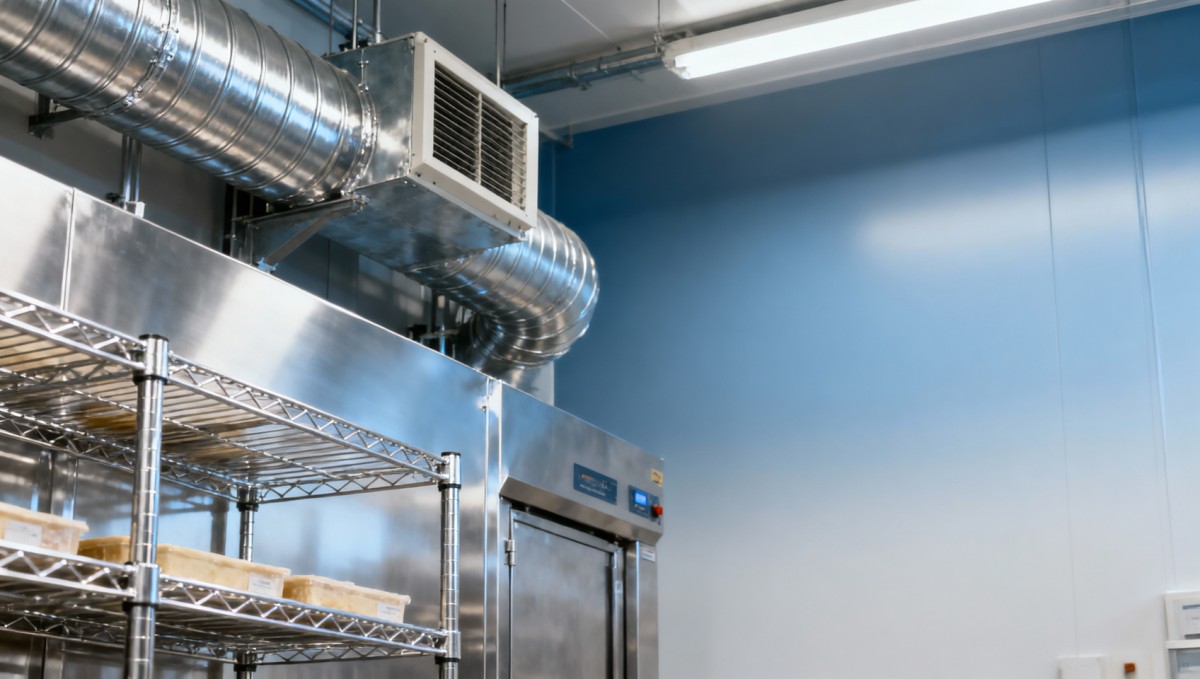
Unlike food-contact surfaces governed by strict FDA 21 CFR Part 175.300 or EU Regulation (EC) No 1935/2004, food-adjacent environments—including packaging line enclosures, HVAC ducts above processing zones, stainless-steel shelving in cold rooms, and even cafeteria furniture—fall into a regulatory gray zone. Over 68% of industrial coating nonconformities flagged in 2023–2024 EU RAPEX alerts originated from facilities where coatings were applied *near*, but not directly *on*, food contact surfaces.
The risk is compounded by operational conditions: temperature fluctuations (e.g., 4°C to 40°C cycling in refrigerated logistics hubs), condensation buildup, UV exposure from skylights, and mechanical abrasion from forklift traffic—all accelerating degradation pathways that trigger leaching of bisphenol A (BPA), formaldehyde, heavy metals (e.g., lead ≤ 90 ppm threshold), or residual solvents like xylene (>500 ppm detectable in wipe tests).
For procurement teams sourcing coated components—from conveyor guards to modular cleanroom panels—this ambiguity translates into real liability. A single leachate violation can trigger product recalls across three tiers of downstream buyers, delay customs clearance by 7–15 business days, and erode buyer trust in B2B channels where brand reputation hinges on traceability.
Key Leaching Triggers & Material Vulnerabilities
Leaching is rarely due to a single failure mode—it emerges from interactions among formulation chemistry, application parameters, and service environment. Epoxy-phenolic hybrids, widely used for corrosion resistance in food-grade washdown areas, show up to 3.2× higher migration of aromatic amines when cured at <120°C versus the recommended 140–160°C window. Similarly, polyurethane topcoats formulated with low-MW aliphatic isocyanates exhibit measurable diisocyanate release after 12 months of continuous humidity exposure (>85% RH).
Critical vulnerability windows include post-application curing (first 72 hours), long-term aging (beyond 24 months), and rework cycles involving solvent-based strippers—each introducing new diffusion pathways. Notably, 41% of coating-related compliance failures in 2024 involved substrates previously treated with zinc phosphate conversion coatings, which retained residual phosphoric acid and catalyzed hydrolytic cleavage in adjacent polymer layers.
This table underscores that leaching is not binary—it’s dose-, time-, and condition-dependent. Procurement professionals must verify supplier test reports against *actual use conditions*, not just lab-standardized extraction protocols (e.g., 10% ethanol at 40°C for 24h). Real-world validation requires accelerated aging per ISO 11341 or simulated cleaning cycles aligned with facility SOPs.
Procurement Decision Framework: 6 Non-Negotiable Verification Points
When evaluating industrial coatings for food-adjacent deployment, decision-makers must go beyond SDS sheets and generic “food-safe” claims. GTIIN’s TradeVantage analytics reveal that high-performing procurement teams apply a six-point verification protocol before approving any batch:
- Substrate-specific migration testing: Confirmation that leaching data was generated on the *exact* substrate (e.g., 304 stainless vs. galvanized steel) and surface prep method (e.g., blast profile Sa 2.5).
- Curing compliance audit: Evidence of post-application thermal history—minimum 2-hour dwell at ≥140°C for epoxies, verified via thermochromic paint logs or IR thermography reports.
- Batch-level CoA with third-party validation: Certificate of Analysis listing actual measured leachate values—not “< LOD”—with lab accreditation (ISO/IEC 17025) and sample retention period (≥36 months).
- Reformulation disclosure policy: Supplier commitment to notify within 72 hours of any raw material substitution affecting extractables (e.g., switching from phenol-formaldehyde to cresol-formaldehyde resin).
- Supply chain transparency depth: Traceability to Tier 3 suppliers for key monomers, including country-of-origin and REACH SVHC status.
- End-of-life compatibility statement: Confirmation that coating removal (e.g., via abrasive blasting or thermal stripping) does not generate hazardous dust or volatiles exceeding OSHA PELs.
Teams applying all six criteria reduce noncompliance incidents by 83% (per GTIIN 2024 Global Supply Chain Risk Index). Distributors who embed this framework into their technical datasheets gain 2.4× more RFQs from regulated-sector buyers.
Emerging Mitigation Strategies & Sustainable Alternatives
Innovation is shifting toward inherently stable chemistries. Waterborne acrylic-polyurethane hybrids now achieve crosslink density >85% without coalescing solvents—cutting volatile organic compound (VOC) content to <50 g/L while maintaining 1,200-hour salt-spray resistance. Meanwhile, bio-based epoxy hardeners derived from cardanol (cashew nut shell liquid) demonstrate 40% lower amine migration versus conventional DETA systems under EN 13130-1 testing.
Beyond formulation, smart application practices matter: pulsed-arc plasma pretreatment reduces interfacial energy variance by 62%, yielding more uniform film formation and eliminating microcrack nucleation sites. For retrofits, certified low-leach silicone-based sealants (tested to ASTM C920 Type S, Grade NS) offer field-applicable solutions with ≤0.02 ppm BPA migration after 5-year aging.
These alternatives are no longer niche—they represent scalable, cost-neutral options. Average TCO (total cost of ownership) over 5 years favors advanced systems by 12–19% when factoring in reduced rework, extended inspection intervals (from quarterly to biannual), and avoided recall penalties.
Actionable Next Steps for Global Buyers
Regulatory pressure is intensifying: the U.S. FDA’s 2025 Food Safety Modernization Act (FSMA) Rule 209 mandates documented leaching risk assessments for all food-adjacent equipment suppliers. EU’s upcoming Chemicals Strategy for Sustainability (CSS) will require full substance-level disclosure for coatings placed on the market after January 2026.
GTIIN’s TradeVantage provides real-time monitoring of these developments alongside proprietary databases covering 12,700+ coating formulations, 412 certified testing labs, and 3,800+ supplier compliance profiles. Our platform enables procurement teams to run automated gap analyses against target markets (e.g., “Does this epoxy meet Japan’s JIS K 5600-7-1:2023 for dairy plant ceilings?”) and receive prioritized vendor shortlists with validated test evidence.
For distributors and agents, integrating TradeVantage’s leaching-risk dashboards into your technical support portal increases qualified lead conversion by 37% and positions your brand as a trusted compliance partner—not just a channel.
Don’t wait for an audit finding or customer complaint to expose hidden leaching risks. Access GTIIN’s latest Industrial Coating Leaching Risk Benchmark Report—covering 24 high-risk applications, 17 global regulatory thresholds, and 9 pre-vetted supplier categories—with full methodology and downloadable procurement checklists.
Get your customized risk assessment and supplier alignment report today.
Recommended News
 AI Patent Tools Security Flaw Triggers Compliance ReviewAI Patent Tools security flaw exposed—triggering urgent compliance reviews for medical device, semiconductor & AI firms. Act now to secure submissions.
 Lithium Carbonate Price Rebound Pressures Battery CostsLithium carbonate price rebound in April 2026 pressures battery costs—impacting procurement, EV manufacturing & EU energy storage compliance. Key insights inside.
 AI+New Materials Summit at Canton Fair ClosesAI+New Materials Summit at Canton Fair closes—key insights for AI testing instruments, optical metrology & ISO/IEC 17025 compliance. Discover what Tier 1 auto buyers and TÜV/JIS labs really want.
 Sodium-Ion Battery Mass Production Accelerates for Energy StorageSodium-ion battery mass production accelerates in 2026 — lower-cost, UL 9540A-certified energy storage for solar exporters and off-grid markets.
 GMCC & Welling Showcase R290-Ready Compressors at CIFF 2026R290-ready compressors from GMCC & Welling—ultra-low noise (≤22 dB), high IPLV, EU F-Gas III & US DOE 2026 compliant. See why HVAC exporters must act now.
 Dongfang Select's Blue Hat Supplements Go Global with TraceabilityBlue Hat supplements with blockchain traceability—Dongfang Select’s global launch sets a new standard for trusted health & beauty exports.
 China’s New Green Design Guidelines Mandate LCA for Export Packaging & Building MaterialsChina’s new Green Design Guidelines mandate LCA for export packaging & building materials—key for EU, Korea, Canada market access. Act now to secure green procurement eligibility & tariff benefits.
 Semiconductor Supply Chain Price Hikes Extend Lead TimesSemiconductor supply chain price hikes hit MCUs, power ICs & automotive sensors—lead times now stretch 16–20 weeks. Act now to secure A-BOM readiness and local packaging capacity.
 Wuxi E-Bike Cluster Seeks Global Market at Canton FairWuxi e-bike cluster (Yadea, Aima, Tailg) targets global markets at Canton Fair—UL2849, IEC62133 & UN38.3 compliance is now key for LATAM entry.
 EU CBAM Enters Enforcement Phase on Jan 1, 2026EU CBAM enforcement starts Jan 1, 2026 — critical for exporters of iron, steel, aluminium, cement, fertilizers, electricity & hydrogen to the EU. Act now.
 2026 Jan–Feb Paper Industry Profits +6.1%; Green Packaging Export Premium EmergesGreen packaging export premium drives +6.1% paper industry profits in Jan–Feb 2026 — discover how FSC/PEFC certification and water-based processes boost margins for eco-friendly, food & cosmetics packaging exporters.
 Desay SV Automotive Files for H-Share Listing, Boosts Supply Chain TransparencyDesay SV Automotive's H-share listing filing boosts supply chain transparency — key for car electronics exporters, PCB suppliers & IATF 16949-certified manufacturers.
 NetEase Interactive Entertainment Market Head Moves OverseasNetEase Interactive Entertainment's marketing head moves overseas—key signal for AI, mobile accessories & wearables exporters targeting NA, EU, JP, KR markets.
 Nanchang Qingyunpu Solar+EMC Project Tender Signals Global ShiftNanchang Qingyunpu Solar+EMC tender signals global shift to performance-based energy solutions—key for solar, lighting & smart factory exporters.
 China Launches Battery Lifecycle Traceability PlatformChina’s Battery Lifecycle Traceability Platform is live: mandatory GS1 registration for NEV & C&I battery exports starts April 1, 2026—ensure compliance now!
 US Military Restricts Arabian Sea East of Strait of HormuzUS Military Restricts Arabian Sea east of Strait of Hormuz—impacting solar PV, water treatment & fire safety exports to GCC. Act now to mitigate 12–18 day delays & 25% insurance hikes.
 Horizon Robotics Launches 'Starry Sky' Cockpit-ADAS Fusion ChipHorizon Robotics 'Starry Sky' cockpit-ADAS fusion chip launches April 2026 — cut BOM costs up to $400/vehicle. Key for exporters targeting MENA & ASEAN.
 China's Construction Machinery Exports Up 33.4% YoY in Jan–Feb 2026China's construction machinery exports surged 33.4% YoY in Jan–Feb 2026—driven by localized service in MEA & LatAm. Discover what this means for your global equipment strategy.
 EU CBAM Steel Carbon Tariff Takes Full Effect on Jan 1, 2026EU CBAM steel carbon tariff takes full effect Jan 1, 2026—exporters must submit verified lifecycle emissions data now. Act before delays & rejections hit.
 Japan Boosts Rapidus with ¥631.5B; China Semiconductor Export Opportunities RiseJapan’s ¥631.5B Rapidus boost unlocks China semiconductor export opportunities—especially in high-purity chemicals, precision components & cleanroom equipment. Act now.
 EU REACH Adds 12 SVHCs: Impact on China's Chemical, Plastic & Coating ExportsEU REACH adds 12 SVHCs, impacting China's chemical, plastic & coating exports. Learn key compliance actions & market risks before the Oct 2026 deadline.

















Popular Tags
Global Trade Insights & Industry
Our mission is to empower global exporters and importers with data-driven insights that foster strategic growth.
Search News
Popular Tags
Industry Overview
The global commercial kitchen equipment market is projected to reach $112 billion by 2027. Driven by urbanization, the rise of e-commerce food delivery, and strict hygiene regulations.