

China Enforces Dual Certification for Lithium Battery Exports
Effective April 18, 2026, China’s General Administration of Customs and the Ministry of Industry and Information Technology jointly issued the Lithium Battery Export Compliance Guidance (Pilot Version 2026), mandating UN38.3 transport safety testing reports and IEC 62133-2:2025 safety certification declarations for all lithium-ion and lithium-metal battery exports—including power banks, e-tool cells, and energy storage modules. This requirement directly affects exporters, manufacturers, and supply chain service providers serving global markets.
Event Overview
On April 18, 2026, China’s General Administration of Customs and the Ministry of Industry and Information Technology released the Lithium Battery Export Compliance Guidance (Pilot Version 2026). The guidance states that, effective immediately, all lithium-ion and lithium-metal battery exports—including mobile power banks, electric tool cells, and energy storage modules—must be accompanied at customs declaration by: (1) a UN38.3 transport safety test report issued by a CNAS-accredited laboratory; and (2) a safety certification declaration based on IEC 62133-2:2025. IEC 62133-2:2017 is no longer accepted.
Industries Affected
Direct Exporters and Trading Enterprises
These entities are directly responsible for customs declaration and must submit both required documents before shipment clearance. Non-compliance results in delayed or rejected export declarations. Since the requirement applies to all battery-containing goods—not just bare cells—the scope extends beyond traditional battery traders to OEM/ODM exporters integrating batteries into finished devices.
Cell and Pack Manufacturers
Manufacturers supplying batteries to exporters must now align production and quality documentation with IEC 62133-2:2025—not just internal standards or legacy certifications. Testing cycles may lengthen due to updated test conditions (e.g., revised overcharge, forced discharge, and thermal cycling requirements), potentially affecting delivery timelines for export-bound batches.
Supply Chain and Logistics Service Providers
Fulfillment centers, third-party logistics operators, and freight forwarders handling battery-laden consignments must verify document completeness prior to booking or loading. Inaccurate or incomplete submissions trigger rework, detention, or port rejection—increasing operational friction and cost exposure for clients reliant on just-in-time delivery.
Key Focus Areas and Recommended Actions
Monitor official implementation updates and interpretation notices
The guidance is labeled “pilot version,” indicating potential phased rollout or clarifications ahead. Exporters should track announcements from both the General Administration of Customs and the MIIT, especially regarding transitional arrangements, acceptable lab accreditation scopes, and whether pre-2026 test reports can be grandfathered under limited conditions.
Identify high-risk product categories and target markets
Products with integrated batteries—such as portable medical devices, e-bikes, and consumer electronics—are particularly exposed, given their frequent classification under HS codes subject to stricter scrutiny. Markets with stringent import controls (e.g., EU, US, Japan, South Korea) may impose additional verification layers, making dual-certification compliance non-negotiable for market access.
Distinguish between policy signal and operational readiness
While the rule took effect April 18, 2026, actual enforcement rigor may vary across ports and customs branches during the pilot phase. Companies should treat the mandate as binding but verify local customs office expectations—especially for mixed shipments or battery-subassemblies not yet fully assembled into final products.
Prepare documentation and lab coordination in advance
UN38.3 testing typically requires 4–6 weeks; IEC 62133-2:2025 testing may involve updated protocols not yet widely adopted by all CNAS labs. Exporters should engage accredited laboratories early, confirm reporting formats meet customs’ digital submission requirements, and maintain version-controlled records linking each batch to its corresponding test report and declaration.
Editorial Perspective / Industry Observation
From an industry perspective, this mandate is best understood not as a one-off regulatory adjustment, but as a structural tightening aligned with evolving global transport and product safety expectations. Analysis来看, the shift from IEC 62133-2:2017 to IEC 62133-2:2025 reflects China’s intent to harmonize with international best practices—particularly enhanced requirements for battery management system (BMS) interaction and fault tolerance under abnormal conditions. Observation来看, the simultaneous enforcement of UN38.3 and IEC 62133-2:2025 signals growing convergence between transport safety and end-use safety accountability. Current more appropriate understanding is that this is both a compliance threshold and a de facto benchmark for quality differentiation among Chinese battery suppliers in overseas markets.
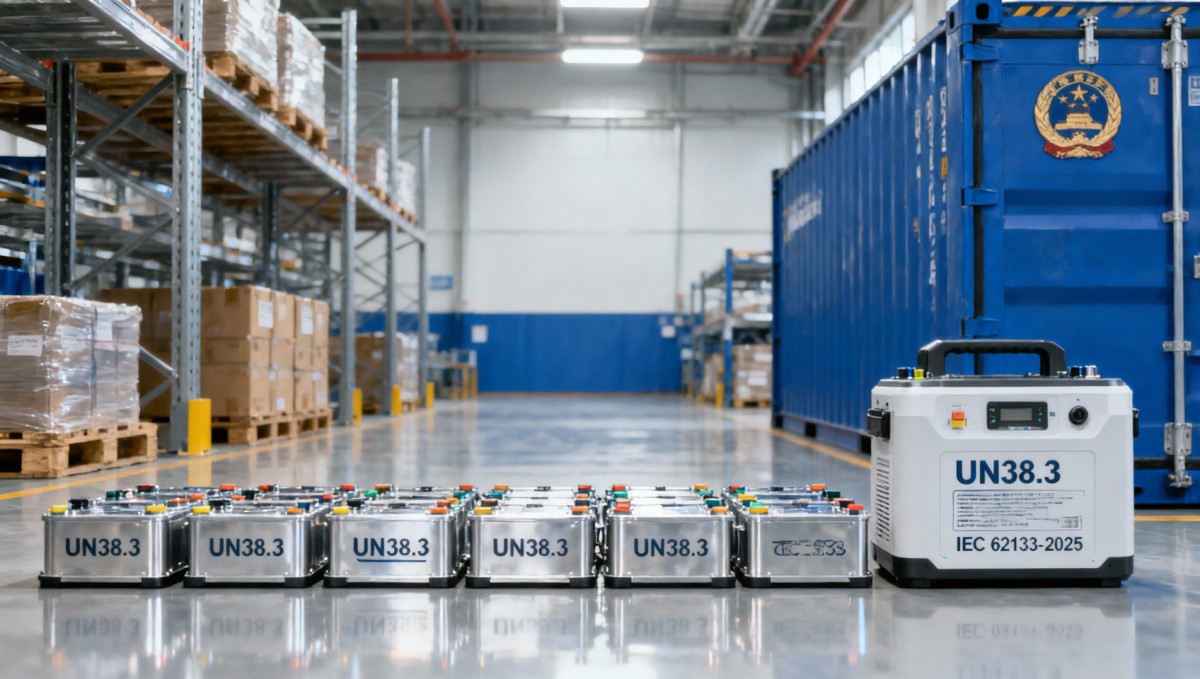
In summary, the new requirement establishes a higher, standardized baseline for lithium battery exports from China—impacting documentation workflows, testing lead times, and cross-border supply chain coordination. It does not introduce entirely novel safety concepts, but consolidates and enforces two critical verification points that were previously managed separately or inconsistently. For stakeholders, it is less about reacting to a sudden change and more about institutionalizing rigorous, traceable safety validation across the export lifecycle.
Source: General Administration of Customs of the People’s Republic of China, Ministry of Industry and Information Technology of the People’s Republic of China — Lithium Battery Export Compliance Guidance (Pilot Version 2026), issued April 18, 2026. Note: Implementation details, enforcement consistency, and potential amendments remain under observation.
Recommended News
 China’s 10 Agencies Issue AI Export Ethics Review RulesChina’s 10 agencies launch AI export ethics rules—mandating bias reviews for visual inspection, warehouse AI & defect detection systems. Stay compliant & competitive.
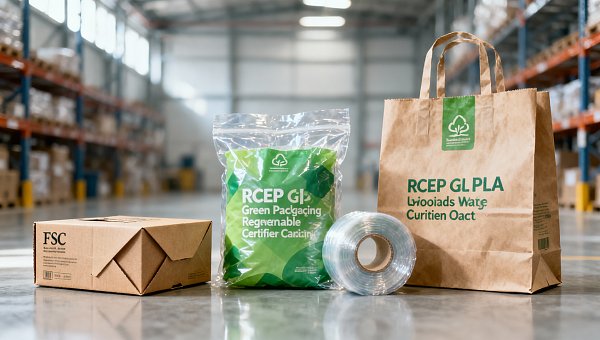
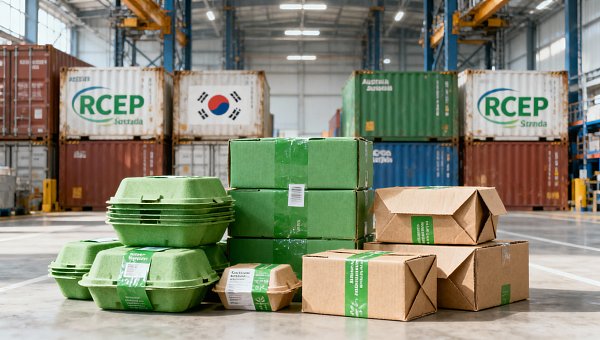
 RCEP Green Packaging Mutual Recognition Takes EffectRCEP Green Packaging Mutual Recognition is now in effect—unlock faster customs clearance in Australia, NZ, Japan & Korea for GB/T 37659–2019-certified eco-packaging.
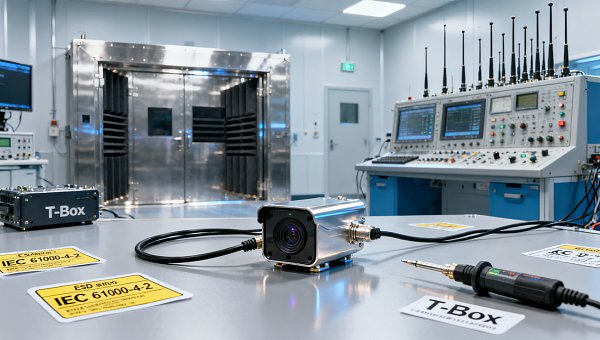
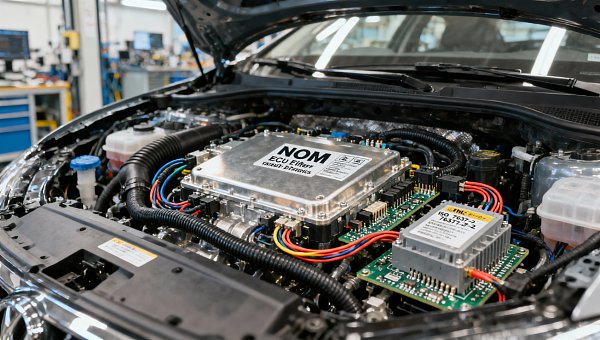
 Mexico NOM-019-SCFI-2026 Effective Apr 10, 2026: EMC Certification Required for Automotive ElectronicsNOM-019-SCFI-2026 EMC certification is now mandatory for automotive electronics entering Mexico — act before the July 1, 2026 customs ban.
 Red Sea Rerouting Normalized, EBA at $1,850/TEURed Sea rerouting normalized with EBA fixed at $1,850/TEU—learn how this structural shift impacts Asia-Europe freight costs, lead times & supply chain strategy.
 FDA AI Diagnostic Device Draft Rules: Bias Assessment for ImportsFDA AI diagnostic device draft rules require bias assessment for imports—learn how portable ultrasound, glucose, and dermatoscopic AI devices are affected & what to do next.
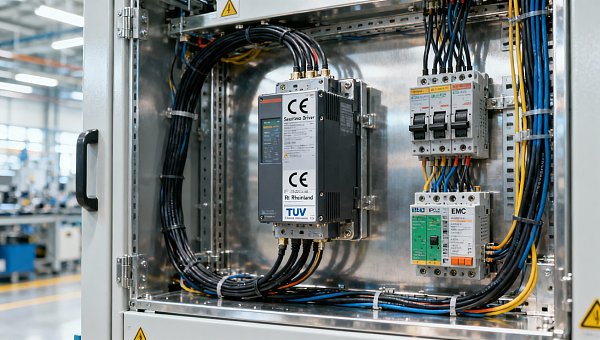
") TÜV Rheinland Updates CE Requirements for Servo Drives (PLd + EMC)TÜV Rheinland updates CE requirements for servo drives: PLd (ISO 13849-1) + EMC immunity (IEC 61000-6-2 Ed.4) now mandatory together — act now to avoid EU market delays!
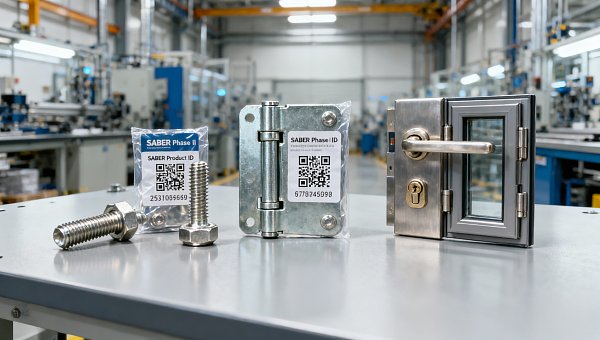
TÜV Rheinland Updates CE Requirements for Servo Drives (PLd + EMC)TÜV Rheinland updates CE requirements for servo drives: PLd (ISO 13849-1) + EMC immunity (IEC 61000-6-2 Ed.4) now mandatory together — act now to avoid EU market delays! SABER Phase II Launch: Building Hardware Must Submit Digital Type Test Reports & Unique Product IDSABER Phase II now mandates digital type test reports & unique product IDs for building hardware—fasteners, scaffolding, door/window components. Ensure compliance to avoid customs rejection & SCOC delays.
 Vietnam Suspends SASO Mutual Recognition for Chinese Irrigation EquipmentVietnam suspends SASO mutual recognition for Chinese irrigation equipment—TCVN testing now mandatory. Act now to avoid 8–12 week delays and customs holdups.
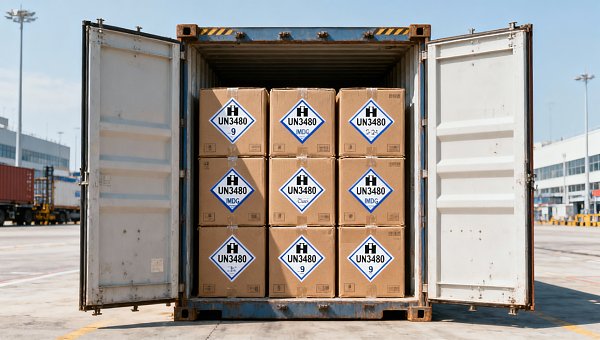
 IMDG Code 41-24 Enforced: UN3480 Lithium Battery Labeling UpdateIMDG Code 41-24 enforcement starts April 2026: UN3480 lithium battery labeling updates are mandatory for global maritime shipments — avoid port delays, detention & penalties.
 EU CBAM Enters Full Enforcement on Jan 1, 2026EU CBAM full enforcement starts Jan 1, 2026 — mandatory quarterly reporting & certificate purchases for batteries, steel, cement, aluminum, fertilizers & chemicals. Act now to ensure EU market access.
 EU CBAM Carbon Tariff Starts Oct 2026 for Chinese Battery, Cement, Chemical ExportsEU CBAM carbon tariff hits Chinese battery, cement & chemical exports from Oct 2026 — mandatory emissions reporting starts now. Avoid €98/t default fees.
 Mexico NOM-019-SCFI-2026 Effective: Automotive Electronics Require New EMC CertificationMexico NOM-019-SCFI-2026 takes effect May 1, 2026 — new EMC certification mandatory for automotive electronics, EV accessories & aftermarket parts entering Mexico.
 Vietnam Suspends China Irrigation Equipment SASO Mutual RecognitionVietnam suspends China irrigation equipment SASO mutual recognition—urgent QCVN certification now required for drip tapes, sprinklers & smart controllers.
 Red Sea Diversion Normalized; Asia-Europe Freight Premium at $1,850/TEURed Sea diversion normalized: Asia-Europe freight premium holds at $1,850/TEU — impacting manufacturing, retail & procurement. Act now to optimize costs & resilience.
 FDA Drafts AI Bias Assessment Rule for Imported Medical DevicesFDA's new AI bias assessment rule for imported medical devices demands third-party verified fairness reports—act now to prep your 510(k)/De Novo submissions.
 TÜV Rheinland Updates CE Requirements for Servo DrivesTÜV Rheinland updates CE requirements for servo drives: integrated PLd + EN 61800-3 validation mandatory from July 1, 2026. Act now to avoid EU market delays!
 SABER Phase II Launch: Building Hardware Must Submit Digital Type Test Reports & Unique Product IDsSABER Phase II is live: Building hardware exporters must now submit digital type test reports & secure unique SABER Product IDs—avoid customs delays. Act now!
 IMDG Code 41-24 Enforced: New UN3480 Class 9 Label for Lithium Battery Sea FreightIMDG Code 41-24 enforced: UN3480 Class 9 label now mandatory for lithium battery sea freight — avoid delays in US, EU, UAE & Chile ports.
 RCEP Green Packaging Mutual Recognition Takes EffectRCEP Green Packaging Mutual Recognition takes effect Apr 21, 2026—unlock faster customs clearance for compostable, recycled & bio-based packaging in AU, NZ, JP, KR.
 China’s 10-Dept AI Ethics Review Rule for Exported AI DevicesChina’s 10-dept AI ethics review rule mandates algorithmic bias assessments for exported AI devices—key for EU, ME & SEA markets. Stay compliant ahead of enforcement.
 US CPSC Updates Child Sleep Sack Standard Effective July 2026US CPSC updates child sleep sack standard with new DSST test—mandatory for all U.S.-bound infant sleep sacks from July 2026. Act now to ensure compliance and market access.













Popular Tags
Global Trade Insights & Industry
Our mission is to empower global exporters and importers with data-driven insights that foster strategic growth.
Search News
Popular Tags
Industry Overview
The global commercial kitchen equipment market is projected to reach $112 billion by 2027. Driven by urbanization, the rise of e-commerce food delivery, and strict hygiene regulations.