

China's PV Mounting Structure Supply Tightens, Delay Risks for US-Mexico-Canada Imports
Chinese upstream supply of photovoltaic (PV) mounting structures is tightening, with delivery lead times extending for U.S., Mexican, and Canadian importers amid constrained aluminum export quotas and persistent ocean freight capacity shortages. As of April 17, 2026, this development directly affects international solar project developers, EPC contractors, and procurement teams managing cross-border supply chains — making it a timely signal for stakeholders in global solar infrastructure deployment.
Event Overview
According to Qianzhan Network’s analysis dated April 17, 2026, aluminum extrusion capacity for PV mounting structures — including surface treatment — is operating at full utilization in China. Domestic aluminum export quotas have been tightened, and maritime container space remains scarce. As a result, leading Chinese manufacturers report Q3 2026 order backlogs exceeding 120%. Importers in the United States, Mexico, and Canada report standard mounting structure lead times extended to 14–18 weeks. Some customers are shifting procurement toward Chinese suppliers offering integrated solutions combining hot-dip galvanizing and modular pre-assembly to reduce on-site installation time.
Impact on Specific Industry Segments
Direct Trading Enterprises
Importers and trading companies sourcing PV mounting structures from China face longer planning cycles and increased logistics coordination complexity. The primary impact lies in delayed project commissioning timelines and higher working capital requirements due to extended order-to-delivery windows.
Raw Material Procurement Entities
Firms responsible for sourcing aluminum extrusions or surface-treated components are encountering tighter availability and less flexibility in negotiating delivery terms. Capacity constraints extend beyond finished goods to upstream material processing — particularly for anodized or galvanized aluminum profiles meeting North American corrosion standards.
Manufacturing & Assembly Firms
OEMs and contract manufacturers integrating mounting structures into larger balance-of-system (BOS) packages must reassess build schedules and buffer stock levels. Extended lead times for core structural components may trigger cascading delays in final assembly, especially where just-in-time inventory models are applied.
Supply Chain Service Providers
Freight forwarders, customs brokers, and third-party logistics providers supporting North American solar imports are observing elevated demand for documentation support, customs classification verification (e.g., HTS codes for galvanized vs. non-galvanized mounts), and expedited documentation turnaround — particularly for shipments requiring U.S. CBP or Canadian CBSA compliance checks.
What Relevant Companies or Practitioners Should Monitor and Do Now
Track official updates on aluminum export quota allocations
Current quota restrictions are policy-driven; any revision — even incremental adjustments — could meaningfully affect near-term production scheduling. Stakeholders should monitor announcements from China’s Ministry of Commerce and General Administration of Customs.
Assess exposure to standard vs. integrated mounting solutions
Given growing client interest in hot-dip galvanized + pre-assembled units, procurement teams should benchmark lead time differentials, landed cost implications, and compatibility with local installation labor practices — not just unit pricing.
Distinguish between policy signals and operational reality
The reported 120%+ Q3 order backlog reflects current booking momentum but does not confirm delivery certainty. Actual shipment execution depends on port throughput, vessel availability, and customs clearance efficiency — all subject to volatility.
Initiate contingency planning for Q3 2026 project milestones
Project developers and EPC firms should review critical path dependencies involving mounting structures. Where feasible, consider early purchase commitments, alternative regional suppliers (e.g., Southeast Asian fabricators), or design adaptations that allow phased delivery or on-site assembly.
Editorial Perspective / Industry Observation
Analysis来看, this situation is less a sudden disruption and more a cumulative effect of overlapping constraints: regulatory (export quotas), industrial (aluminum extrusion capacity), and logistical (ocean freight). It is currently functioning as both a near-term operational signal — affecting Q3 delivery reliability — and a medium-term structural indicator of tightening integration between raw material policy and downstream clean energy hardware supply chains. From industry角度看, the shift toward integrated, pre-finished mounting solutions reflects an adaptation to systemic bottlenecks rather than a transient trend. Current more appropriate interpretation is that this represents an inflection point where procurement strategy must align more closely with macro-level material flow policies — not just component specifications.
This development underscores how upstream industrial policy in one country can propagate tangible schedule and cost impacts across solar infrastructure projects in multiple markets. It is not yet a systemic crisis, but it is a measurable constraint demanding proactive coordination across procurement, engineering, and logistics functions.
Information Source: Qianzhan Network (April 17, 2026). Ongoing monitoring is advised for official updates on China’s aluminum export quota implementation and U.S./Mexico/Canada customs clearance patterns for galvanized structural components.
Recommended News
 AI Patent Tools Security Flaw Triggers Compliance ReviewAI Patent Tools security flaw exposed—triggering urgent compliance reviews for medical device, semiconductor & AI firms. Act now to secure submissions.
 Lithium Carbonate Price Rebound Pressures Battery CostsLithium carbonate price rebound in April 2026 pressures battery costs—impacting procurement, EV manufacturing & EU energy storage compliance. Key insights inside.
 AI+New Materials Summit at Canton Fair ClosesAI+New Materials Summit at Canton Fair closes—key insights for AI testing instruments, optical metrology & ISO/IEC 17025 compliance. Discover what Tier 1 auto buyers and TÜV/JIS labs really want.
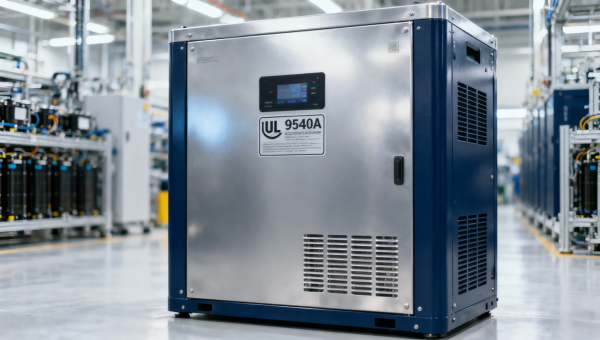
 Sodium-Ion Battery Mass Production Accelerates for Energy StorageSodium-ion battery mass production accelerates in 2026 — lower-cost, UL 9540A-certified energy storage for solar exporters and off-grid markets.
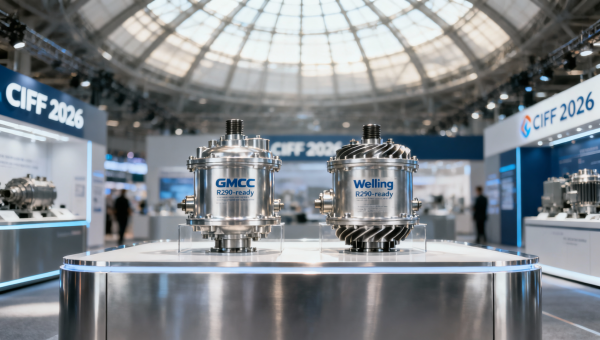
 GMCC & Welling Showcase R290-Ready Compressors at CIFF 2026R290-ready compressors from GMCC & Welling—ultra-low noise (≤22 dB), high IPLV, EU F-Gas III & US DOE 2026 compliant. See why HVAC exporters must act now.
 Dongfang Select's Blue Hat Supplements Go Global with TraceabilityBlue Hat supplements with blockchain traceability—Dongfang Select’s global launch sets a new standard for trusted health & beauty exports.
 China’s New Green Design Guidelines Mandate LCA for Export Packaging & Building MaterialsChina’s new Green Design Guidelines mandate LCA for export packaging & building materials—key for EU, Korea, Canada market access. Act now to secure green procurement eligibility & tariff benefits.
 Semiconductor Supply Chain Price Hikes Extend Lead TimesSemiconductor supply chain price hikes hit MCUs, power ICs & automotive sensors—lead times now stretch 16–20 weeks. Act now to secure A-BOM readiness and local packaging capacity.
 Wuxi E-Bike Cluster Seeks Global Market at Canton FairWuxi e-bike cluster (Yadea, Aima, Tailg) targets global markets at Canton Fair—UL2849, IEC62133 & UN38.3 compliance is now key for LATAM entry.
 EU CBAM Enters Enforcement Phase on Jan 1, 2026EU CBAM enforcement starts Jan 1, 2026 — critical for exporters of iron, steel, aluminium, cement, fertilizers, electricity & hydrogen to the EU. Act now.
 2026 Jan–Feb Paper Industry Profits +6.1%; Green Packaging Export Premium EmergesGreen packaging export premium drives +6.1% paper industry profits in Jan–Feb 2026 — discover how FSC/PEFC certification and water-based processes boost margins for eco-friendly, food & cosmetics packaging exporters.
 Desay SV Automotive Files for H-Share Listing, Boosts Supply Chain TransparencyDesay SV Automotive's H-share listing filing boosts supply chain transparency — key for car electronics exporters, PCB suppliers & IATF 16949-certified manufacturers.
 NetEase Interactive Entertainment Market Head Moves OverseasNetEase Interactive Entertainment's marketing head moves overseas—key signal for AI, mobile accessories & wearables exporters targeting NA, EU, JP, KR markets.
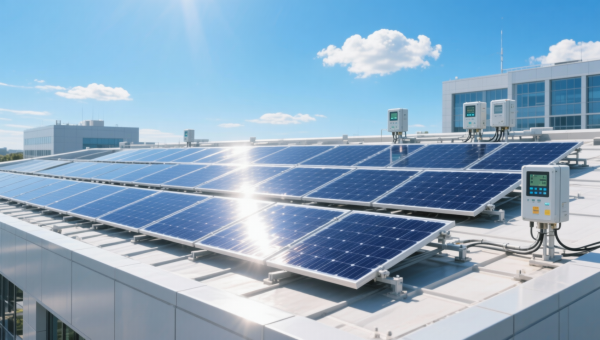
 Nanchang Qingyunpu Solar+EMC Project Tender Signals Global ShiftNanchang Qingyunpu Solar+EMC tender signals global shift to performance-based energy solutions—key for solar, lighting & smart factory exporters.
 China Launches Battery Lifecycle Traceability PlatformChina’s Battery Lifecycle Traceability Platform is live: mandatory GS1 registration for NEV & C&I battery exports starts April 1, 2026—ensure compliance now!
 US Military Restricts Arabian Sea East of Strait of HormuzUS Military Restricts Arabian Sea east of Strait of Hormuz—impacting solar PV, water treatment & fire safety exports to GCC. Act now to mitigate 12–18 day delays & 25% insurance hikes.
 Horizon Robotics Launches 'Starry Sky' Cockpit-ADAS Fusion ChipHorizon Robotics 'Starry Sky' cockpit-ADAS fusion chip launches April 2026 — cut BOM costs up to $400/vehicle. Key for exporters targeting MENA & ASEAN.
 China's Construction Machinery Exports Up 33.4% YoY in Jan–Feb 2026China's construction machinery exports surged 33.4% YoY in Jan–Feb 2026—driven by localized service in MEA & LatAm. Discover what this means for your global equipment strategy.
 EU CBAM Steel Carbon Tariff Takes Full Effect on Jan 1, 2026EU CBAM steel carbon tariff takes full effect Jan 1, 2026—exporters must submit verified lifecycle emissions data now. Act before delays & rejections hit.
 Japan Boosts Rapidus with ¥631.5B; China Semiconductor Export Opportunities RiseJapan’s ¥631.5B Rapidus boost unlocks China semiconductor export opportunities—especially in high-purity chemicals, precision components & cleanroom equipment. Act now.
 EU REACH Adds 12 SVHCs: Impact on China's Chemical, Plastic & Coating ExportsEU REACH adds 12 SVHCs, impacting China's chemical, plastic & coating exports. Learn key compliance actions & market risks before the Oct 2026 deadline.


















Popular Tags
Global Trade Insights & Industry
Our mission is to empower global exporters and importers with data-driven insights that foster strategic growth.
Search News
Popular Tags
Industry Overview
The global commercial kitchen equipment market is projected to reach $112 billion by 2027. Driven by urbanization, the rise of e-commerce food delivery, and strict hygiene regulations.