

FDA AI Medical Imaging Rules: Cloud PACS Must Meet 21 CFR Part 11
On April 18, 2026, the U.S. Food and Drug Administration (FDA) updated its Guidance for AI-Assisted Diagnostic Software, mandating that all cloud-based Picture Archiving and Communication Systems (PACS) and AI-powered imaging platforms marketed in the United States must comply with 21 CFR Part 11 requirements for electronic records and electronic signatures (ERES). This development directly affects Chinese cloud PACS vendors, medical AI software developers, and U.S.-bound digital health exporters — signaling a new compliance threshold for market access.
Event Overview
On April 18, 2026, the FDA issued an updated version of its Guidance for AI-Assisted Diagnostic Software. The revision explicitly requires that any cloud-based PACS or AI image interpretation platform intended for sale or distribution in the U.S. must pass formal validation against 21 CFR Part 11. Compliance includes verification of 12 mandatory criteria: audit trails, role-based access control, non-repudiation of electronic signatures, system integrity controls, and others. Systems failing to meet these requirements will not be eligible for 510(k) clearance.
Industries Affected by This Requirement
Cloud-Based PACS Vendors (e.g., Chinese SaaS Providers)
These vendors are directly subject to the requirement because their products fall under the defined scope of regulated AI-assisted diagnostic software. Impact manifests in product certification timelines, engineering resource allocation, and post-market surveillance infrastructure — especially where signature workflows, user authentication, and immutable audit logs were previously implemented for domestic or regional compliance only.
AI Medical Imaging Software Developers
Developers embedding AI models into PACS or standalone阅片 platforms must ensure their software architecture supports Part 11–compliant signature binding, timestamped action logging, and secure identity management. Non-compliance may delay integration into FDA-cleared PACS ecosystems or invalidate intended use claims in submission documentation.
U.S. Regulatory Affairs & Submission Service Providers
Firms offering FDA submission support — including 510(k) preparation, quality system audits, or validation consulting — now face increased demand for Part 11–specific expertise. Their service scope must explicitly cover ERES validation protocols, not just general software verification per ISO 13485 or IEC 62304.
What Stakeholders Should Focus On — And How to Respond Now
Monitor FDA’s Public Feedback Channels for Clarification
The guidance is newly issued; no official Q&A or industry webinar has been announced as of April 2026. Stakeholders should track FDA’s Digital Health Center of Excellence updates and subscribe to the Federal Register notices for potential revisions, FAQs, or enforcement discretion statements.
Prioritize Validation Readiness for Core ERES Functions
Organizations should assess whether their current cloud PACS or AI platform already implements auditable, time-stamped, role-gated electronic signature workflows — particularly around report finalization, image annotation approval, and user credential lifecycle management. Gaps here represent high-risk items for 510(k) review.
Distinguish Between Policy Signal and Enforceable Requirement
This guidance reflects FDA’s current expectations but does not constitute a new regulation. Enforcement will occur through premarket review (e.g., refusal to accept 510(k) submissions) rather than retroactive penalties. Companies without active U.S. submissions may defer full validation until readiness for market entry — but should not assume grandfathering.
Align Internal QA/QC Processes with Part 11 Documentation Standards
Validation documentation — including risk assessments, test scripts, traceability matrices, and summary reports — must follow FDA-recognized standards (e.g., GAMP 5). Teams should begin compiling evidence for signature integrity, system change control, and administrator oversight capabilities before initiating formal submission.
Editorial Perspective / Industry Observation
From an industry perspective, this update is best understood as a procedural hardening — not a sudden regulatory pivot. The FDA has long applied Part 11 to electronic health record modules and clinical decision support tools; extending it to cloud PACS reflects the agency’s consistent stance that data integrity and accountability are inseparable from diagnostic reliability. Analysis来看, this signals growing scrutiny of distributed, multi-tenant architectures in regulated healthcare software — particularly where user actions directly influence clinical interpretation. It is less a new barrier than a formalized expectation: companies treating electronic signatures as a ‘feature’ rather than a foundational control layer will need to reframe their development and validation posture. Current more appropriate framing is ‘operational alignment’, not ‘regulatory shock’.
Conclusion
This FDA guidance marks a formalization of existing expectations around data trustworthiness in AI-enabled imaging systems. Its practical significance lies not in introducing novel concepts, but in codifying minimum technical and procedural benchmarks for U.S. market access. For stakeholders, it is more accurately interpreted as a calibration point — clarifying what ‘ready for FDA review’ means in practice for cloud-native diagnostic software — rather than an abrupt policy shift requiring immediate overhaul across all deployed systems.
Information Sources
Main source: U.S. FDA, Guidance for AI-Assisted Diagnostic Software, updated April 18, 2026. No supplementary documents, enforcement memos, or stakeholder letters have been published as of this date. Ongoing observation is warranted for FDA-issued FAQs or related draft guidance on cloud-based SaMD validation.
Recommended News
 China’s 10 Agencies Issue AI Export Ethics Review RulesChina’s 10 agencies launch AI export ethics rules—mandating bias reviews for visual inspection, warehouse AI & defect detection systems. Stay compliant & competitive.
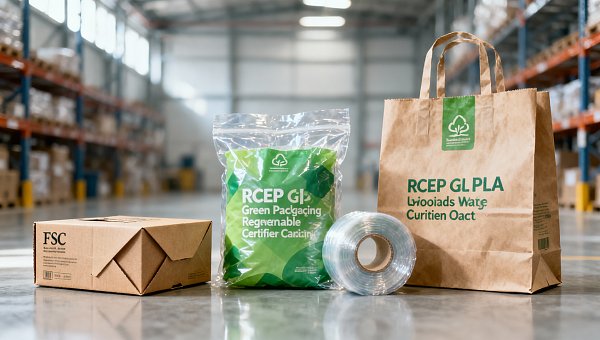
 RCEP Green Packaging Mutual Recognition Takes EffectRCEP Green Packaging Mutual Recognition is now in effect—unlock faster customs clearance in Australia, NZ, Japan & Korea for GB/T 37659–2019-certified eco-packaging.
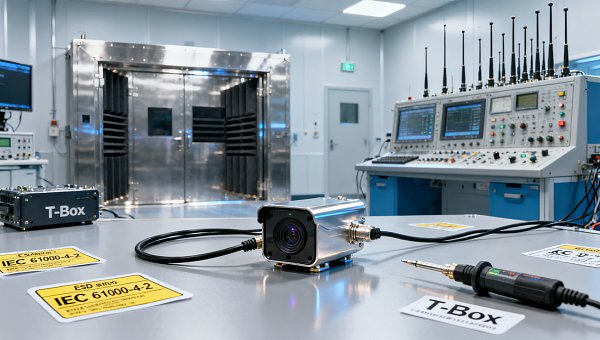
 Mexico NOM-019-SCFI-2026 Effective Apr 10, 2026: EMC Certification Required for Automotive ElectronicsNOM-019-SCFI-2026 EMC certification is now mandatory for automotive electronics entering Mexico — act before the July 1, 2026 customs ban.
 Red Sea Rerouting Normalized, EBA at $1,850/TEURed Sea rerouting normalized with EBA fixed at $1,850/TEU—learn how this structural shift impacts Asia-Europe freight costs, lead times & supply chain strategy.
 FDA AI Diagnostic Device Draft Rules: Bias Assessment for ImportsFDA AI diagnostic device draft rules require bias assessment for imports—learn how portable ultrasound, glucose, and dermatoscopic AI devices are affected & what to do next.
") TÜV Rheinland Updates CE Requirements for Servo Drives (PLd + EMC)TÜV Rheinland updates CE requirements for servo drives: PLd (ISO 13849-1) + EMC immunity (IEC 61000-6-2 Ed.4) now mandatory together — act now to avoid EU market delays!
TÜV Rheinland Updates CE Requirements for Servo Drives (PLd + EMC)TÜV Rheinland updates CE requirements for servo drives: PLd (ISO 13849-1) + EMC immunity (IEC 61000-6-2 Ed.4) now mandatory together — act now to avoid EU market delays! SABER Phase II Launch: Building Hardware Must Submit Digital Type Test Reports & Unique Product IDSABER Phase II now mandates digital type test reports & unique product IDs for building hardware—fasteners, scaffolding, door/window components. Ensure compliance to avoid customs rejection & SCOC delays.
 Vietnam Suspends SASO Mutual Recognition for Chinese Irrigation EquipmentVietnam suspends SASO mutual recognition for Chinese irrigation equipment—TCVN testing now mandatory. Act now to avoid 8–12 week delays and customs holdups.
 IMDG Code 41-24 Enforced: UN3480 Lithium Battery Labeling UpdateIMDG Code 41-24 enforcement starts April 2026: UN3480 lithium battery labeling updates are mandatory for global maritime shipments — avoid port delays, detention & penalties.
 EU CBAM Enters Full Enforcement on Jan 1, 2026EU CBAM full enforcement starts Jan 1, 2026 — mandatory quarterly reporting & certificate purchases for batteries, steel, cement, aluminum, fertilizers & chemicals. Act now to ensure EU market access.
 EU CBAM Carbon Tariff Starts Oct 2026 for Chinese Battery, Cement, Chemical ExportsEU CBAM carbon tariff hits Chinese battery, cement & chemical exports from Oct 2026 — mandatory emissions reporting starts now. Avoid €98/t default fees.
 Mexico NOM-019-SCFI-2026 Effective: Automotive Electronics Require New EMC CertificationMexico NOM-019-SCFI-2026 takes effect May 1, 2026 — new EMC certification mandatory for automotive electronics, EV accessories & aftermarket parts entering Mexico.
 Vietnam Suspends China Irrigation Equipment SASO Mutual RecognitionVietnam suspends China irrigation equipment SASO mutual recognition—urgent QCVN certification now required for drip tapes, sprinklers & smart controllers.
 Red Sea Diversion Normalized; Asia-Europe Freight Premium at $1,850/TEURed Sea diversion normalized: Asia-Europe freight premium holds at $1,850/TEU — impacting manufacturing, retail & procurement. Act now to optimize costs & resilience.
 FDA Drafts AI Bias Assessment Rule for Imported Medical DevicesFDA's new AI bias assessment rule for imported medical devices demands third-party verified fairness reports—act now to prep your 510(k)/De Novo submissions.
 TÜV Rheinland Updates CE Requirements for Servo DrivesTÜV Rheinland updates CE requirements for servo drives: integrated PLd + EN 61800-3 validation mandatory from July 1, 2026. Act now to avoid EU market delays!
 SABER Phase II Launch: Building Hardware Must Submit Digital Type Test Reports & Unique Product IDsSABER Phase II is live: Building hardware exporters must now submit digital type test reports & secure unique SABER Product IDs—avoid customs delays. Act now!
 IMDG Code 41-24 Enforced: New UN3480 Class 9 Label for Lithium Battery Sea FreightIMDG Code 41-24 enforced: UN3480 Class 9 label now mandatory for lithium battery sea freight — avoid delays in US, EU, UAE & Chile ports.
 RCEP Green Packaging Mutual Recognition Takes EffectRCEP Green Packaging Mutual Recognition takes effect Apr 21, 2026—unlock faster customs clearance for compostable, recycled & bio-based packaging in AU, NZ, JP, KR.
 China’s 10-Dept AI Ethics Review Rule for Exported AI DevicesChina’s 10-dept AI ethics review rule mandates algorithmic bias assessments for exported AI devices—key for EU, ME & SEA markets. Stay compliant ahead of enforcement.
 US CPSC Updates Child Sleep Sack Standard Effective July 2026US CPSC updates child sleep sack standard with new DSST test—mandatory for all U.S.-bound infant sleep sacks from July 2026. Act now to ensure compliance and market access.


















Popular Tags
Global Trade Insights & Industry
Our mission is to empower global exporters and importers with data-driven insights that foster strategic growth.
Search News
Popular Tags
Industry Overview
The global commercial kitchen equipment market is projected to reach $112 billion by 2027. Driven by urbanization, the rise of e-commerce food delivery, and strict hygiene regulations.