

What to Check in a First Aid Kits Supplier
Choosing a reliable first aid kits supplier requires more than comparing prices. For procurement teams, distributors, and business evaluators, supplier credibility, compliance, customization ability, and delivery stability all matter. In today’s cross-industry sourcing environment—where buyers may also compare radiators price, sheet metal ductwork, or even high performance spark plugs—making informed decisions starts with a clear checklist. This guide outlines the key factors to review before selecting a supplier that supports quality, safety, and long-term business value.
What buyers should check first
If you are evaluating a first aid kits supplier, the fastest way to narrow the field is to verify four things upfront: product compliance, manufacturing reliability, customization capability, and supply consistency. These factors matter more than a low unit price because first aid kits are safety-related products. A supplier that cannot prove quality control, meet labeling requirements, or deliver on time can create compliance risk, customer complaints, and unnecessary cost across your supply chain.
For most buyers, the best supplier is not simply the cheapest one. It is the one that can consistently provide compliant products, clear documentation, stable lead times, and the flexibility to match your sales channel, market, or application scenario.
Does the supplier meet the right compliance and safety standards?
This is usually the first and most important checkpoint. A first aid kit may contain bandages, antiseptic wipes, scissors, tapes, gloves, and other medical-adjacent components. Depending on the destination market, the supplier may need to meet specific requirements for materials, packaging, labeling, and sometimes product registration.
Ask the supplier to provide:
- Relevant certifications for production or quality systems, such as ISO-related documentation where applicable
- Product test reports for kit components
- Material safety details for items such as wipes, creams, or gels
- Labeling compliance support for your target market
- Declarations related to latex-free, sterile, CE, FDA, or other market-specific claims if they are being used in sales materials
Do not assume compliance based on catalog language alone. A credible supplier should be able to explain which standards apply to each SKU and which do not. This is especially important for importers and distributors who sell into multiple countries, where one packaging format may not fit every regulatory environment.
Can the supplier prove consistent product quality?
Quality consistency is a major concern for procurement teams and distributors because first aid kits are often purchased in volume and then resold under retail, industrial, automotive, travel, or workplace categories. Inconsistent contents, poor packaging seals, missing components, or weak case materials can damage your brand and increase return rates.
Key quality questions to ask include:
- How are incoming materials inspected?
- Are there batch records for each production run?
- How does the supplier prevent missing or incorrect kit contents?
- What is the defect rate over the last 6 to 12 months?
- Can they provide pre-shipment inspection reports?
- Do they retain samples for traceability?
If possible, request samples from multiple production batches rather than a single showroom sample. One attractive sample does not guarantee manufacturing consistency. Buyers should also review closure strength, pouch durability, print quality, count accuracy, and the shelf-life marking of time-sensitive contents.
Is the supplier a manufacturer, assembler, or trading company?
This matters because it affects price, control, lead time, and problem resolution. Some first aid kits suppliers operate their own factories, while others source components and assemble kits through partner facilities. Others are pure trading companies that coordinate supply from multiple sources.
None of these models is automatically bad, but you should know which one you are dealing with. Ask:
- Who manufactures the kit case and who sources the medical contents?
- Where does final assembly take place?
- Can the supplier arrange factory audits or virtual inspections?
- Who controls packaging and labeling?
- Who is responsible if components fail compliance checks?
A factory-direct supplier may offer better control and pricing, while an experienced trading partner may be more flexible for mixed sourcing, smaller MOQs, or cross-category procurement. The right choice depends on your business model, but transparency is essential in either case.
How strong is the supplier’s customization capability?
Many buyers do not want generic first aid kits. They may need private label packaging, custom case colors, multilingual instructions, market-specific contents, or application-based kits for workplaces, vehicles, schools, outdoor use, or promotional campaigns. This is where supplier capability becomes a competitive factor.
Review whether the supplier can support:
- OEM and private label branding
- Custom inserts and kit configurations
- Retail-ready packaging and barcode labeling
- Multilingual manuals or compliance text
- Custom carton marking for distribution efficiency
- Different quality tiers for different market segments
Ask to see previous customization projects. A supplier with real experience should be able to show examples of branded kits, explain minimum order requirements, and identify which parts of the kit are easy to customize versus which changes may affect lead time or compliance.
What are the MOQ, lead time, and replenishment risks?
For business evaluators and sourcing teams, supply continuity is often as important as product quality. A supplier may offer a good price on the first order but struggle with repeat orders, peak-season demand, or component shortages. That is why you should assess operational reliability early.
Important questions include:
- What is the minimum order quantity for standard and custom kits?
- What is the normal lead time and peak-season lead time?
- Which components are most vulnerable to supply disruption?
- Does the supplier keep safety stock of common items?
- Can they support forecast-based production planning?
- How do they handle urgent replenishment requests?
Pay attention to whether the supplier gives vague answers. Reliable suppliers usually understand their capacity limits and can explain production scheduling clearly. If your business depends on recurring orders, it is wise to test them with a smaller trial order before committing to a larger annual program.
How transparent are pricing and total sourcing costs?
Price matters, but the quoted unit cost rarely tells the full story. Buyers should compare total sourcing cost, including packaging upgrades, private labeling, testing, shipping terms, and rework risk. A low initial quote can become expensive if the supplier adds charges later or if defect rates increase downstream costs.
When reviewing pricing, check:
- What is included in the quote: kit contents, packaging, artwork, cartons, and manuals
- Whether pricing changes with content substitutions
- Tooling or setup fees for private label orders
- Sample charges and refund conditions
- Incoterms and freight assumptions
- Payment terms and currency risk
For distributors and agents, margin protection matters. A supplier that provides clear, stable pricing frameworks is usually easier to scale with than one that negotiates every detail inconsistently from order to order.
Can the supplier support documentation, audits, and after-sales issues?
A capable first aid kits supplier should do more than ship cartons. They should also support the documentation and communication processes that reduce friction in international trade. This becomes especially important when you are importing into regulated markets or supplying institutional buyers.
Look for support in the following areas:
- Commercial invoices, packing lists, and origin documents
- Test reports and compliance files
- Factory audit cooperation
- Inspection support before shipment
- Claims handling and corrective action reporting
- Responsiveness during urgent quality or logistics issues
If a supplier becomes difficult to reach once technical questions arise, that is a warning sign. Good after-sales support reduces risk and helps maintain customer trust if issues occur.
What warning signs should buyers not ignore?
Even if the quote looks attractive, certain red flags should slow down your decision:
- Inconsistent company information across website, documents, and email signatures
- Unwillingness to share product specifications or test records
- Overpromising on every customization request without technical explanation
- Very short lead time claims that do not match order complexity
- Frequent changes in pricing or payment conditions
- Poor sample quality compared with catalog images
- Limited understanding of destination market labeling requirements
These issues do not always mean the supplier is unusable, but they do indicate a higher verification burden. For strategic sourcing, it is often better to prioritize stable execution over aggressive promises.
A practical checklist for evaluating a first aid kits supplier
Before final selection, procurement teams can use this simple checklist:
- Verify company identity, business model, and production role.
- Review certifications, test reports, and market-specific compliance claims.
- Request samples from actual production batches.
- Assess customization options, MOQ, and artwork process.
- Confirm lead times, capacity, and replenishment planning.
- Break down full landed cost, not just unit price.
- Evaluate communication speed and documentation quality.
- Run a trial order before long-term commitment.
This process helps buyers compare suppliers objectively and avoid decisions based only on presentation or price.
Conclusion
When choosing a first aid kits supplier, the best decision usually comes from risk control, not just cost comparison. Buyers should focus on compliance, quality consistency, customization ability, delivery reliability, and service transparency. These are the factors that protect margins, reduce sourcing friction, and support long-term commercial success.
For procurement professionals, distributors, and business evaluators, a reliable supplier is one that can prove capability with documents, samples, processes, and consistent execution. If a supplier performs well across those areas, they are far more likely to deliver lasting value than one that competes on price alone.
Recommended News
 US CPSC Updates Child Sleep Sack Standard Effective July 2026US CPSC updates child sleep sack standard with new DSST test—mandatory for all U.S.-bound infant sleep sacks from July 2026. Act now to ensure compliance and market access.
 Red Sea Rerouting Pushes Asia-Europe Freight Premium to $1,850/TEURed Sea rerouting pushes Asia-Europe freight premium to $1,850/TEU—impacting importers, manufacturers & logistics providers. Act now to reassess costs, lead times & contracts.
 Mexico NOM-019-SCFI-2026 Effective May 1, 2026: EMC Certification Mandatory for Auto ElectronicsNOM-019-SCFI-2026 EMC certification is now mandatory for auto electronics in Mexico—effective May 1, 2026. Ensure compliance for infotainment, ADAS, OBD-II & more.
") TÜV Rheinland Updates CE Requirements for Servo Drives (PLd + EMC Class 3)TÜV Rheinland updates CE requirements for servo drives: PLd + EMC Class 3 joint validation mandatory from Q3 2026. Act now to avoid delays, rejections, or compliance risks.
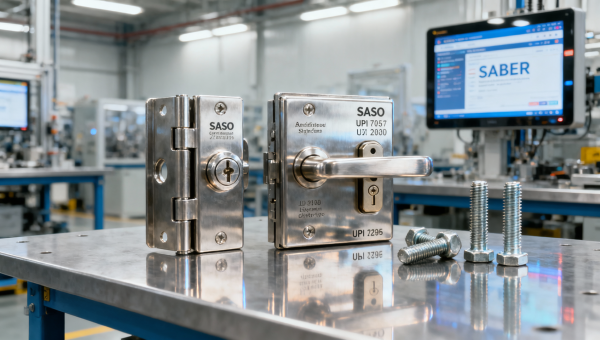
TÜV Rheinland Updates CE Requirements for Servo Drives (PLd + EMC Class 3)TÜV Rheinland updates CE requirements for servo drives: PLd + EMC Class 3 joint validation mandatory from Q3 2026. Act now to avoid delays, rejections, or compliance risks. SABER Phase II Launch: Building Hardware Must Submit Digital e-CoC & UPISABER Phase II mandates digital e-CoC & UPI for building hardware imports to Saudi Arabia—act now to ensure customs clearance and market access.
 FDA AI Diagnostic Device Draft Rules: Bias Assessment for ImportsFDA AI diagnostic device draft rules mandate bias assessment for imports — discover how algorithmic fairness impacts 510(k)/De Novo submissions and what to do now.
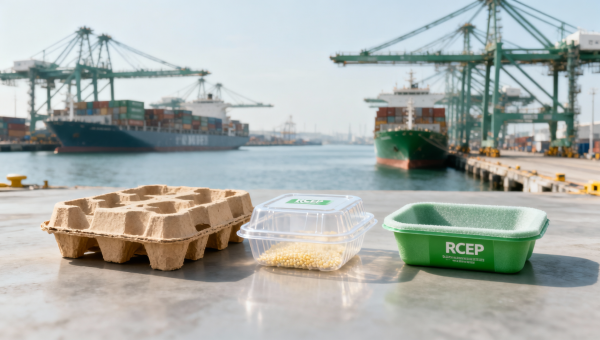
 RCEP Green Packaging Mutual Recognition Starts June 1, 2026RCEP Green Packaging Mutual Recognition starts June 1, 2026 — unlock faster exports to Australia, NZ, Japan & Korea with GB/T 37572-2025 certification.
 Vietnam Suspends SASO Mutual Recognition for Chinese Irrigation EquipmentVietnam suspends SASO mutual recognition for Chinese irrigation equipment—impacting exporters, testers & suppliers. Act now to avoid 6–8 week delays & 35% cost hikes.
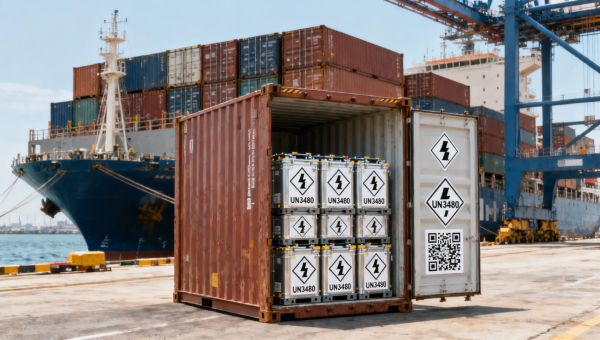
 IMDG Code 41-24 Enforces UN3480 Class 9 Labeling for Li-ion Battery Sea FreightIMDG Code 41-24 enforces UN3480 Class 9 labeling for Li-ion battery sea freight—learn mandatory QR labels, compliance actions & port enforcement risks.
 EU CBAM Enters Enforcement Phase on April 1, 2026EU CBAM enforcement starts April 1, 2026 — critical for Chinese battery materials, construction profiles & industrial coatings exporters. Act now to avoid customs delays.
 Mexico Enforces NOM-019-SCFI-2026 EMC Certification for Auto Electronics from May 2026Mexico enforces NOM-019-SCFI-2026 EMC certification for auto electronics from May 2026 — mandatory local testing, stricter standards, and urgent compliance action required.
 Global Port Congestion Eases, but Red Sea Rerouting PersistsRed Sea rerouting persists amid easing port congestion—Shanghai–Rotterdam freight rates surge 4.2% to $5,280/TEU. Critical insights for exporters, importers & logistics leaders.
 RCEP Green Packaging Mutual Recognition Starts June 2026RCEP Green Packaging Mutual Recognition starts June 2026 — streamline exports to Australia, NZ, Japan & SK with GB/T 37572-2025 certification. Save time & costs!
 FDA AI Diagnostic Device Rules: ABIA Required from Q3 2026FDA AI diagnostic device rules now require ABIA reports from Q3 2026 — essential for 510(k)/De Novo submissions. Stay compliant, avoid delays & secure U.S. market access.
 Vietnam Suspends SASO Mutual Recognition for Chinese Irrigation EquipmentVietnam suspends SASO mutual recognition for Chinese irrigation equipment—sprinkler systems, drip controllers & irrigation systems now require local QUATEST 3 testing. Act now to avoid 12-week delays & 35% cost hikes.
") TÜV Rheinland Updates CE Certification for Industrial Robot Drives (2026 Q3)TÜV Rheinland’s 2026 Q3 CE certification update for industrial robot drives mandates PLd safety + EN 61800-3 EMC — act now to avoid EU market delays.
TÜV Rheinland Updates CE Certification for Industrial Robot Drives (2026 Q3)TÜV Rheinland’s 2026 Q3 CE certification update for industrial robot drives mandates PLd safety + EN 61800-3 EMC — act now to avoid EU market delays. IMDG Code Amendment 41-24 Takes Effect for Lithium Battery Sea FreightIMDG Code Amendment 41-24 is live: New QR labels, bilingual handling tags & SOC disclosure required for UN3480 lithium battery sea freight—act now to avoid delays.
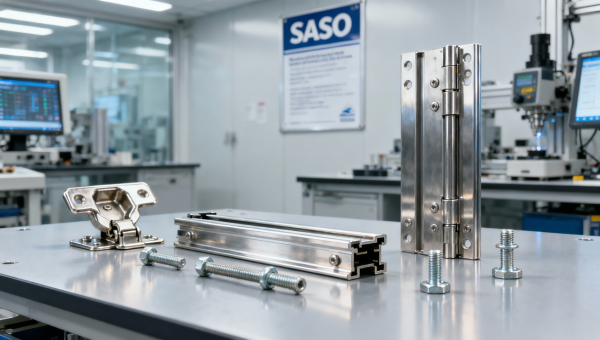
 SASO SABER Phase II: Digital Type Test Reports Required for Building Hardware from Jun 2026SASO SABER Phase II requires digital type test reports & unique product IDs for building hardware exports to Saudi Arabia — effective June 2026. Act now to ensure compliance and avoid customs delays.
 CPSC Updates 16 CFR Part 1236: New Suffocation Test for Children's Sleep Sacks Effective July 2026CPSC Updates 16 CFR Part 1236: New suffocation test for children's sleep sacks takes effect July 2026 — ensure compliance, avoid delays & protect your U.S. market access.
 EN IEC 62471-2:2026 Effective Oct 2026 for EU LED Lighting ExportsEN IEC 62471-2:2026 mandates full-spectrum photobiological safety testing (200–3000 nm) for all EU-bound LED lighting — effective 1 Oct 2026. Act now to secure CE marking & avoid market access delays.
 AI Patent Tools Security Flaw Triggers Compliance ReviewAI Patent Tools security flaw exposed—triggering urgent compliance reviews for medical device, semiconductor & AI firms. Act now to secure submissions.
















Popular Tags
Global Trade Insights & Industry
Our mission is to empower global exporters and importers with data-driven insights that foster strategic growth.
Search News
Popular Tags
Industry Overview
The global commercial kitchen equipment market is projected to reach $112 billion by 2027. Driven by urbanization, the rise of e-commerce food delivery, and strict hygiene regulations.