

Why MRI Scanners Cost More Than the Quoted Purchase Price
When buyers compare MRI scanners price across suppliers, the quoted figure is rarely the full cost. In practice, an MRI system often requires major spending on site preparation, shielding, power upgrades, software, training, compliance, service contracts, and future maintenance. For procurement teams, distributors, and market researchers, the key takeaway is simple: the purchase price is only one part of the total investment. The smarter question is not “What does the scanner cost?” but “What will it cost to install, operate, maintain, and keep competitive over its useful life?”
Why the Quoted MRI Scanner Price Is Only the Starting Point
A supplier’s initial quotation usually covers the core imaging system, but not always the full package needed to make that system clinically usable. This is why two MRI offers that look similar on paper can lead to very different total budgets.
For buyers evaluating MRI scanners cost, the real financial picture typically includes:
- Equipment base price
- Shipping and insurance
- Import duties, taxes, and customs-related charges
- Site planning and room renovation
- RF shielding and magnetic shielding
- Power supply, cooling, and HVAC adaptation
- Installation and system calibration
- Application software and optional upgrades
- Staff training
- Warranty extension and service contracts
- Helium management and cryogen-related support
- Downtime risk and replacement part costs
This matters especially in B2B sourcing, where procurement decisions are often compared across multiple countries and supplier types. A lower upfront quote may ultimately produce a higher total cost of ownership if post-purchase requirements are not clearly defined in advance.
What Hidden Costs Usually Add the Most to MRI Scanner Ownership?
Among all non-quoted expenses, a few categories consistently have the biggest impact on final spend.
1. Site Preparation and Construction
MRI systems are not plug-and-play devices. Facilities often need structural review before installation because of floor loading, room dimensions, access routes, and vibration control. In many cases, walls, doors, ceilings, and adjacent areas must be modified.
Buyers may also need to budget for:
- Equipment room renovation
- Patient access redesign
- Control room setup
- Fire safety adjustments
- Quench pipe routing
These costs can be significant, especially in older hospitals, clinics, or retrofitted diagnostic centers.
2. Shielding Requirements
MRI installation often requires both RF shielding and, in some cases, magnetic shielding. The exact specification depends on scanner type, room location, nearby equipment, and local building conditions. If shielding needs were underestimated during pre-sale evaluation, the budget can rise quickly after purchase.
3. Power, Cooling, and Utilities
Many facilities underestimate the electrical and environmental demands of an MRI suite. Stable power supply, backup systems, grounding, dedicated transformers, air conditioning, and cooling systems all affect both installation cost and operating reliability.
4. Software Licenses and Clinical Applications
The base system may not include all advanced imaging functions. Cardiac packages, oncology workflows, AI-assisted tools, post-processing applications, or specialty coils may be quoted separately. Buyers who focus only on hardware risk under-budgeting for the actual clinical use case.
5. Service and Maintenance
Long-term service is often one of the biggest cost drivers. MRI systems are complex, and downtime can directly affect revenue, patient scheduling, and service reputation. A cheap scanner with weak service coverage may become more expensive than a premium option backed by strong support.
How Installation Conditions Change the True MRI Scanners Cost
No two MRI projects are identical. The same model can cost very different amounts to deploy depending on where and how it will be used.
Key variables include:
- New facility vs. retrofit project: Retrofitting existing buildings is often more expensive and less predictable.
- Urban vs. remote location: Logistics, technician travel, and service access can raise costs in remote regions.
- Ground floor vs. upper floor installation: Crane work, reinforcement, and transport complexity add expense.
- Local regulatory requirements: Certification, radiation-adjacent planning, and construction approvals vary by market.
- Import market conditions: Freight volatility, customs delays, and currency exchange risk influence final landed cost.
For international sourcing teams, this is why comparing vendor quotes without matching installation assumptions often leads to poor procurement decisions.
Why Maintenance, Downtime, and Lifecycle Costs Matter More Than Buyers Expect
Many buyers focus heavily on acquisition price because it is easy to compare. However, over the life of the equipment, maintenance and operating continuity often matter more.
A realistic MRI cost review should consider:
- Annual preventive maintenance fees
- Emergency repair response time
- Spare parts availability
- Replacement coil or accessory costs
- Software update fees
- Helium refill or low-helium technology implications
- Expected uptime performance
- End-of-life support limitations
For distributors and facility operators, downtime is not just a technical issue. It can reduce patient throughput, delay contracts, damage customer confidence, and create hidden financial losses that never appear in the original purchase quote.
This is also where established brands often justify a higher initial price: better service networks, more predictable parts support, and stronger resale confidence can lower lifecycle risk.
What Procurement Teams Should Ask Suppliers Before Comparing MRI Quotes
To avoid misleading comparisons, buyers should request a more complete commercial breakdown. A detailed quote review should answer the following questions:
- What exactly is included in the base equipment price?
- Which coils, software modules, and accessories are optional?
- Is installation included, and under what site conditions?
- Who is responsible for shielding, construction, and utility upgrades?
- Does the quote include training for operators and engineers?
- What warranty terms apply, and what is excluded?
- What are the annual service contract options?
- How quickly can field service respond in our region?
- What is the expected helium consumption or cryogen management requirement?
- Are software upgrades included in the first years of use?
- What are the estimated consumable and replacement part costs?
- Can the supplier provide a total cost of ownership estimate over 5 to 10 years?
These questions help procurement teams move from headline pricing to decision-grade evaluation.
How Distributors and B2B Buyers Can Evaluate MRI Value Beyond Price
For distributors, agents, and sourcing professionals, the best MRI purchase is not always the cheapest or the most advanced. It is the system that fits market demand, service capability, budget tolerance, and expected return.
Practical evaluation criteria include:
- Clinical fit: Does the configuration match the intended patient mix and diagnostic workload?
- Service ecosystem: Is local technical support strong enough to sustain uptime?
- Scalability: Can the system be upgraded later instead of overbought today?
- Operating efficiency: Will scan speed, workflow design, and ease of use support revenue goals?
- Brand and resale value: Will the system retain market credibility over time?
- Commercial transparency: Does the supplier clearly define what is included and excluded?
Market researchers and business evaluators should also pay attention to how suppliers position entry-level, mid-range, and premium systems. In many cases, a mid-tier MRI delivers the best balance of cost control and long-term practicality.
A Practical Way to Estimate the Real Cost Before You Buy
If your team is comparing multiple MRI scanner offers, use a structured cost model instead of relying on headline quotes. A simple framework can include five layers:
- Acquisition cost: scanner, coils, software, accessories
- Landed cost: shipping, insurance, duties, taxes
- Deployment cost: construction, shielding, utilities, installation
- Operational cost: staffing, training, energy, helium, consumables
- Lifecycle cost: maintenance, repairs, upgrades, downtime, replacement planning
This approach gives stakeholders a clearer basis for supplier comparison, internal budget approval, and ROI forecasting. It also reduces the chance of project delays caused by costs that were known by the seller but not fully understood by the buyer.
Conclusion: Smart MRI Sourcing Requires Total Cost Thinking
The reason MRI scanners cost more than the quoted purchase price is straightforward: the scanner itself is only one component of a much larger operational system. Installation conditions, shielding, utilities, software, training, maintenance, and downtime exposure all shape the final investment.
For procurement teams, distributors, and business evaluators, the most effective strategy is to compare MRI offers based on total cost of ownership, not just initial quote value. A lower sticker price may look attractive, but a transparent, well-supported solution often delivers better long-term economics, lower risk, and stronger business performance.
Before making a final sourcing decision, ensure every supplier quote is tested against real deployment requirements. That is the difference between buying an MRI scanner and making a sound MRI investment.
Recommended News
 China’s 10 Agencies Issue AI Export Ethics Review RulesChina’s 10 agencies launch AI export ethics rules—mandating bias reviews for visual inspection, warehouse AI & defect detection systems. Stay compliant & competitive.
 RCEP Green Packaging Mutual Recognition Takes EffectRCEP Green Packaging Mutual Recognition is now in effect—unlock faster customs clearance in Australia, NZ, Japan & Korea for GB/T 37659–2019-certified eco-packaging.
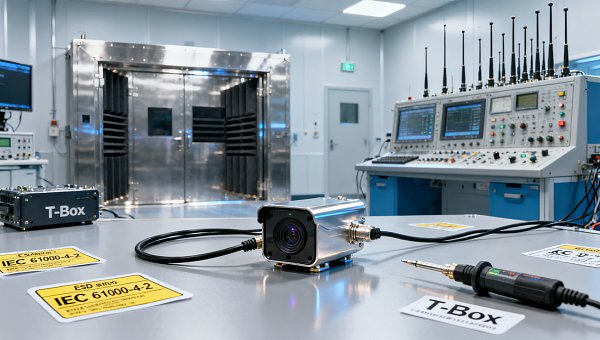
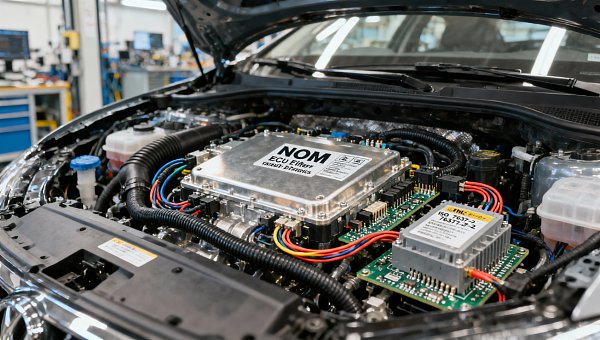
 Mexico NOM-019-SCFI-2026 Effective Apr 10, 2026: EMC Certification Required for Automotive ElectronicsNOM-019-SCFI-2026 EMC certification is now mandatory for automotive electronics entering Mexico — act before the July 1, 2026 customs ban.
 Red Sea Rerouting Normalized, EBA at $1,850/TEURed Sea rerouting normalized with EBA fixed at $1,850/TEU—learn how this structural shift impacts Asia-Europe freight costs, lead times & supply chain strategy.
 FDA AI Diagnostic Device Draft Rules: Bias Assessment for ImportsFDA AI diagnostic device draft rules require bias assessment for imports—learn how portable ultrasound, glucose, and dermatoscopic AI devices are affected & what to do next.
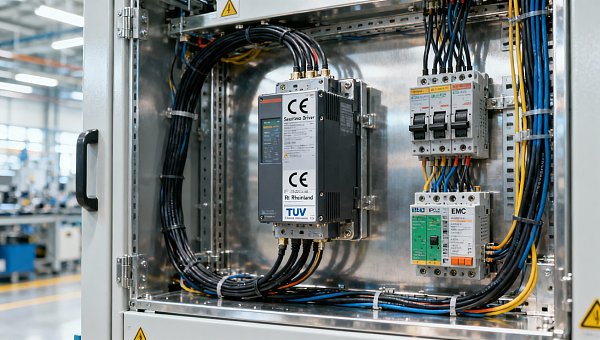
") TÜV Rheinland Updates CE Requirements for Servo Drives (PLd + EMC)TÜV Rheinland updates CE requirements for servo drives: PLd (ISO 13849-1) + EMC immunity (IEC 61000-6-2 Ed.4) now mandatory together — act now to avoid EU market delays!
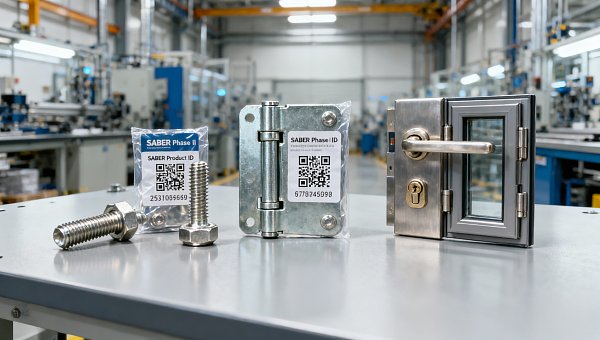
TÜV Rheinland Updates CE Requirements for Servo Drives (PLd + EMC)TÜV Rheinland updates CE requirements for servo drives: PLd (ISO 13849-1) + EMC immunity (IEC 61000-6-2 Ed.4) now mandatory together — act now to avoid EU market delays! SABER Phase II Launch: Building Hardware Must Submit Digital Type Test Reports & Unique Product IDSABER Phase II now mandates digital type test reports & unique product IDs for building hardware—fasteners, scaffolding, door/window components. Ensure compliance to avoid customs rejection & SCOC delays.
 Vietnam Suspends SASO Mutual Recognition for Chinese Irrigation EquipmentVietnam suspends SASO mutual recognition for Chinese irrigation equipment—TCVN testing now mandatory. Act now to avoid 8–12 week delays and customs holdups.
 IMDG Code 41-24 Enforced: UN3480 Lithium Battery Labeling UpdateIMDG Code 41-24 enforcement starts April 2026: UN3480 lithium battery labeling updates are mandatory for global maritime shipments — avoid port delays, detention & penalties.
 EU CBAM Enters Full Enforcement on Jan 1, 2026EU CBAM full enforcement starts Jan 1, 2026 — mandatory quarterly reporting & certificate purchases for batteries, steel, cement, aluminum, fertilizers & chemicals. Act now to ensure EU market access.
 EU CBAM Carbon Tariff Starts Oct 2026 for Chinese Battery, Cement, Chemical ExportsEU CBAM carbon tariff hits Chinese battery, cement & chemical exports from Oct 2026 — mandatory emissions reporting starts now. Avoid €98/t default fees.
 Mexico NOM-019-SCFI-2026 Effective: Automotive Electronics Require New EMC CertificationMexico NOM-019-SCFI-2026 takes effect May 1, 2026 — new EMC certification mandatory for automotive electronics, EV accessories & aftermarket parts entering Mexico.
 Vietnam Suspends China Irrigation Equipment SASO Mutual RecognitionVietnam suspends China irrigation equipment SASO mutual recognition—urgent QCVN certification now required for drip tapes, sprinklers & smart controllers.
 Red Sea Diversion Normalized; Asia-Europe Freight Premium at $1,850/TEURed Sea diversion normalized: Asia-Europe freight premium holds at $1,850/TEU — impacting manufacturing, retail & procurement. Act now to optimize costs & resilience.
 FDA Drafts AI Bias Assessment Rule for Imported Medical DevicesFDA's new AI bias assessment rule for imported medical devices demands third-party verified fairness reports—act now to prep your 510(k)/De Novo submissions.
 TÜV Rheinland Updates CE Requirements for Servo DrivesTÜV Rheinland updates CE requirements for servo drives: integrated PLd + EN 61800-3 validation mandatory from July 1, 2026. Act now to avoid EU market delays!
 SABER Phase II Launch: Building Hardware Must Submit Digital Type Test Reports & Unique Product IDsSABER Phase II is live: Building hardware exporters must now submit digital type test reports & secure unique SABER Product IDs—avoid customs delays. Act now!
 IMDG Code 41-24 Enforced: New UN3480 Class 9 Label for Lithium Battery Sea FreightIMDG Code 41-24 enforced: UN3480 Class 9 label now mandatory for lithium battery sea freight — avoid delays in US, EU, UAE & Chile ports.
 RCEP Green Packaging Mutual Recognition Takes EffectRCEP Green Packaging Mutual Recognition takes effect Apr 21, 2026—unlock faster customs clearance for compostable, recycled & bio-based packaging in AU, NZ, JP, KR.
 China’s 10-Dept AI Ethics Review Rule for Exported AI DevicesChina’s 10-dept AI ethics review rule mandates algorithmic bias assessments for exported AI devices—key for EU, ME & SEA markets. Stay compliant ahead of enforcement.
 US CPSC Updates Child Sleep Sack Standard Effective July 2026US CPSC updates child sleep sack standard with new DSST test—mandatory for all U.S.-bound infant sleep sacks from July 2026. Act now to ensure compliance and market access.
















Popular Tags
Global Trade Insights & Industry
Our mission is to empower global exporters and importers with data-driven insights that foster strategic growth.
Search News
Popular Tags
Industry Overview
The global commercial kitchen equipment market is projected to reach $112 billion by 2027. Driven by urbanization, the rise of e-commerce food delivery, and strict hygiene regulations.