

China Leads First International Zero-Carbon City Standard
On April 14, 2026, China-led ISO/NP 14067-2 ‘Evaluation Framework for Zero-Carbon Cities’ was officially registered — marking the first international standard to mandate disclosure of building embodied carbon (EPD). With the EU Green Deal set to require EPD as a prerequisite for CE marking of construction materials from 2027, this development directly affects exporters and manufacturers of aluminum profiles, precast concrete components, and other green building products.
Event Overview
On April 14, 2026, the International Organization for Standardization (ISO) registered ISO/NP 14067-2 ‘Evaluation Framework for Zero-Carbon Cities’, a standard led by China. The draft standard explicitly includes embodied carbon in buildings (via Environmental Product Declarations, EPDs) as a mandatory disclosure requirement. Separately, the European Commission’s Green Deal proposal indicates that EPD submission will become a prerequisite for CE marking of construction products starting in 2027. As of the announcement date, 27 Chinese enterprises — specializing in aluminum extrusions and precast concrete elements — have completed ISO 14067 certification and are capable of delivering integrated ‘zero-carbon building material packages’ for overseas infrastructure and real estate projects.
Industries Affected
Direct Exporters of Construction Materials
Exporters of aluminum profiles and precast concrete components face new technical entry barriers in EU markets post-2027. Since EPD compliance will be embedded in CE marking, failure to provide verified, ISO 14067-aligned declarations may delay or block customs clearance and project acceptance.
Manufacturers of Building Components
Producers supplying upstream to export-oriented fabricators must now support EPD generation — requiring traceable data on raw material sourcing, energy inputs, and process emissions. This shifts internal reporting responsibilities from sales or QA teams to production planning and procurement units.
Supply Chain Service Providers
Third-party verification bodies, LCA (life cycle assessment) software vendors, and carbon data platform operators see increased demand for ISO 14067-compliant EPD development support — particularly for multi-product portfolios and cross-border data harmonization between Chinese and EU regulatory expectations.
What Enterprises and Practitioners Should Monitor and Do Now
Track official updates on ISO/NP 14067-2’s progression to Committee Draft (CD) and Final Draft (FDIS) stages
The current status is ‘New Proposal’ (NP); its content may evolve during technical committee review. Stakeholders should subscribe to ISO TC 207/SC 7 notifications and monitor parallel developments in CEN/TC 350 (responsible for EN 15804 and future EPD mandates under EU CPR).
Assess EPD readiness for top three export SKUs — especially those bound for EU public tenders or certified green buildings
Not all products require immediate EPD; priority lies with items where buyers explicitly reference environmental performance criteria (e.g., BREEAM, DGNB, or national low-carbon public procurement rules). Focus validation efforts on high-volume, high-value lines first.
Distinguish between policy signal and enforceable requirement
The EU’s 2027 EPD-CE linkage remains part of the proposed revision to Regulation (EU) No 305/2011 (Construction Products Regulation). It is not yet law. Until adoption and transposition into national legislation, contractual EPD clauses — not regulatory mandates — drive early adoption.
Initiate internal alignment between procurement, production, and export documentation teams
EPD generation requires consistent input data across suppliers (e.g., electricity grid mix, clinker factor, alloy composition). Cross-departmental working groups should map data ownership, define minimum reporting thresholds, and test pilot EPDs using existing product lines before scaling.
Editorial Perspective / Industry Observation
From an industry perspective, this milestone is best understood as a strong regulatory signal — not an immediate operational mandate. While ISO/NP 14067-2 has no legal force, its alignment with EU policy direction and early adoption by 27 Chinese firms indicate growing convergence between international standard-setting and regional compliance pathways. Analysis来看, it reflects a shift from voluntary sustainability reporting toward standardized, auditable carbon accounting at the product level — particularly for capital-intensive, long-life-cycle construction materials. Observation来看, the timing suggests market differentiation is already underway: firms with ISO 14067 certification are positioning themselves ahead of formal regulatory deadlines, signaling readiness to global developers and EPC contractors seeking assured decarbonization pathways.

Conclusion
This development signals a structural tightening of environmental transparency requirements for construction material exports — especially to Europe. It does not yet constitute a binding obligation, but rather establishes a clear trajectory for mandatory EPD integration into conformity assessment frameworks. Current stakeholders are advised to treat it as an advance notice of evolving technical barriers — one requiring coordinated data governance, selective prioritization, and close monitoring of both ISO standard development and EU legislative implementation timelines.
Information Sources
Main source: Official ISO registration record for ISO/NP 14067-2 (April 14, 2026); Publicly announced scope of EU Green Deal construction sector measures; Verified count of ISO 14067-certified Chinese enterprises (as disclosed in joint press release by SAC and CNAS, April 2026).
Note: The exact enforcement timeline and technical specifications of the EU’s EPD-CE linkage remain subject to final adoption of the revised Construction Products Regulation — ongoing consultation and legislative procedure warrant continued observation.
Recommended News
 AI Patent Tools Security Flaw Triggers Compliance ReviewAI Patent Tools security flaw exposed—triggering urgent compliance reviews for medical device, semiconductor & AI firms. Act now to secure submissions.
 Lithium Carbonate Price Rebound Pressures Battery CostsLithium carbonate price rebound in April 2026 pressures battery costs—impacting procurement, EV manufacturing & EU energy storage compliance. Key insights inside.
 AI+New Materials Summit at Canton Fair ClosesAI+New Materials Summit at Canton Fair closes—key insights for AI testing instruments, optical metrology & ISO/IEC 17025 compliance. Discover what Tier 1 auto buyers and TÜV/JIS labs really want.
 Sodium-Ion Battery Mass Production Accelerates for Energy StorageSodium-ion battery mass production accelerates in 2026 — lower-cost, UL 9540A-certified energy storage for solar exporters and off-grid markets.
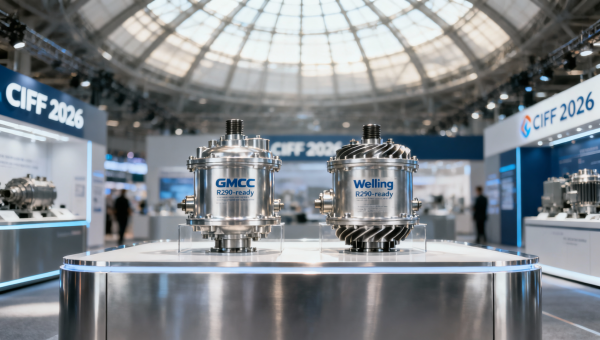
 GMCC & Welling Showcase R290-Ready Compressors at CIFF 2026R290-ready compressors from GMCC & Welling—ultra-low noise (≤22 dB), high IPLV, EU F-Gas III & US DOE 2026 compliant. See why HVAC exporters must act now.
 Dongfang Select's Blue Hat Supplements Go Global with TraceabilityBlue Hat supplements with blockchain traceability—Dongfang Select’s global launch sets a new standard for trusted health & beauty exports.
 China’s New Green Design Guidelines Mandate LCA for Export Packaging & Building MaterialsChina’s new Green Design Guidelines mandate LCA for export packaging & building materials—key for EU, Korea, Canada market access. Act now to secure green procurement eligibility & tariff benefits.
 Semiconductor Supply Chain Price Hikes Extend Lead TimesSemiconductor supply chain price hikes hit MCUs, power ICs & automotive sensors—lead times now stretch 16–20 weeks. Act now to secure A-BOM readiness and local packaging capacity.
 Wuxi E-Bike Cluster Seeks Global Market at Canton FairWuxi e-bike cluster (Yadea, Aima, Tailg) targets global markets at Canton Fair—UL2849, IEC62133 & UN38.3 compliance is now key for LATAM entry.
 EU CBAM Enters Enforcement Phase on Jan 1, 2026EU CBAM enforcement starts Jan 1, 2026 — critical for exporters of iron, steel, aluminium, cement, fertilizers, electricity & hydrogen to the EU. Act now.
 2026 Jan–Feb Paper Industry Profits +6.1%; Green Packaging Export Premium EmergesGreen packaging export premium drives +6.1% paper industry profits in Jan–Feb 2026 — discover how FSC/PEFC certification and water-based processes boost margins for eco-friendly, food & cosmetics packaging exporters.
 Desay SV Automotive Files for H-Share Listing, Boosts Supply Chain TransparencyDesay SV Automotive's H-share listing filing boosts supply chain transparency — key for car electronics exporters, PCB suppliers & IATF 16949-certified manufacturers.
 NetEase Interactive Entertainment Market Head Moves OverseasNetEase Interactive Entertainment's marketing head moves overseas—key signal for AI, mobile accessories & wearables exporters targeting NA, EU, JP, KR markets.
 Nanchang Qingyunpu Solar+EMC Project Tender Signals Global ShiftNanchang Qingyunpu Solar+EMC tender signals global shift to performance-based energy solutions—key for solar, lighting & smart factory exporters.
 China Launches Battery Lifecycle Traceability PlatformChina’s Battery Lifecycle Traceability Platform is live: mandatory GS1 registration for NEV & C&I battery exports starts April 1, 2026—ensure compliance now!
 US Military Restricts Arabian Sea East of Strait of HormuzUS Military Restricts Arabian Sea east of Strait of Hormuz—impacting solar PV, water treatment & fire safety exports to GCC. Act now to mitigate 12–18 day delays & 25% insurance hikes.
 Horizon Robotics Launches 'Starry Sky' Cockpit-ADAS Fusion ChipHorizon Robotics 'Starry Sky' cockpit-ADAS fusion chip launches April 2026 — cut BOM costs up to $400/vehicle. Key for exporters targeting MENA & ASEAN.
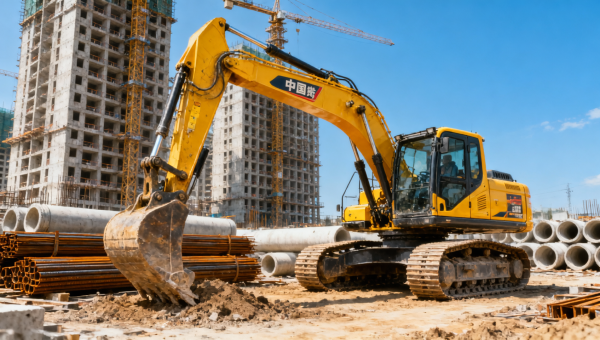
 China's Construction Machinery Exports Up 33.4% YoY in Jan–Feb 2026China's construction machinery exports surged 33.4% YoY in Jan–Feb 2026—driven by localized service in MEA & LatAm. Discover what this means for your global equipment strategy.
 EU CBAM Steel Carbon Tariff Takes Full Effect on Jan 1, 2026EU CBAM steel carbon tariff takes full effect Jan 1, 2026—exporters must submit verified lifecycle emissions data now. Act before delays & rejections hit.
 Japan Boosts Rapidus with ¥631.5B; China Semiconductor Export Opportunities RiseJapan’s ¥631.5B Rapidus boost unlocks China semiconductor export opportunities—especially in high-purity chemicals, precision components & cleanroom equipment. Act now.
 EU REACH Adds 12 SVHCs: Impact on China's Chemical, Plastic & Coating ExportsEU REACH adds 12 SVHCs, impacting China's chemical, plastic & coating exports. Learn key compliance actions & market risks before the Oct 2026 deadline.



















Popular Tags
Global Trade Insights & Industry
Our mission is to empower global exporters and importers with data-driven insights that foster strategic growth.
Search News
Popular Tags
Industry Overview
The global commercial kitchen equipment market is projected to reach $112 billion by 2027. Driven by urbanization, the rise of e-commerce food delivery, and strict hygiene regulations.