

EN 62368-1:2026 Effective Oct 2026: Arc Fault Testing for Wearables & Small Appliances
On April 12, 2026, CENELEC announced the mandatory implementation date of EN 62368-1:2026 as October 1, 2026 — introducing new arc fault protection requirements for smart wearables and small household appliances exported to the EU. This update directly affects manufacturers of Bluetooth earbud charging cases, portable beauty devices, and USB-C fast-charging sockets, requiring compatibility testing with Type B Arc Fault Detection Devices (AFDDs). With 32% of Chinese SME contract manufacturers yet to complete production line upgrades, certification costs are projected to rise by 18%.
Event Overview
CENELEC issued official notice on April 12, 2026, confirming that EN 62368-1:2026 becomes mandatory for CE marking of applicable audio/video, IT and communication technology equipment in the EU from October 1, 2026. The revision adds specific test requirements for compatibility with Type B arc fault detection devices (AFDDs), applicable to all products incorporating power adapters — including but not limited to Bluetooth earbud charging cases, portable beauty instruments, and USB-C fast-charging wall sockets.
Industries Affected
Contract manufacturing enterprises (especially SMEs in China)
These firms produce finished goods for international brands under OEM/ODM arrangements. They are directly responsible for product compliance and certification. The new AFDD compatibility testing requires hardware-level design adjustments — such as revised PCB layouts, updated isolation components, or modified adapter firmware — making retrofitting difficult without retooling. As noted, 32% of Chinese SME manufacturers have not yet completed necessary production line modifications.
Export-oriented electronics brands and trade companies
Brands placing products on the EU market must ensure conformity before October 1, 2026. Non-compliant stock may be blocked at EU customs or recalled post-market. The requirement applies regardless of brand ownership, meaning even private-label sellers sourcing from third-party factories bear legal responsibility under EU market surveillance rules.
Power adapter and component suppliers
Suppliers providing AC-DC adapters, USB-C PD modules, or internal power supplies must now verify and document AFDD interoperability — particularly regarding transient response behavior during arc initiation and suppression. This affects both upstream component qualification and downstream system-level validation.
What Enterprises and Practitioners Should Focus On Now
Confirm current certification status against EN 62368-1:2026 timelines
Verify whether existing type approvals reference EN 62368-1:2014/A11:2017 or earlier editions. Certificates issued under pre-2026 versions will expire on October 1, 2026 — no grandfathering applies. Re-testing is required even for unchanged designs if the certificate predates the new edition.
Prioritize high-volume, adapter-integrated SKUs for immediate assessment
Focus first on products with integrated or bundled AC adapters — especially Bluetooth earbud charging cases, handheld beauty tools, and multi-port USB-C sockets — as these fall squarely within the scope of the new AFDD compatibility tests. Avoid delaying evaluation until Q3 2026, given typical lab lead times and potential redesign cycles.
Engage notified bodies early to clarify test methodology
While the standard mandates AFDD compatibility, it does not prescribe a single test protocol. Notified bodies may apply different interpretations of immunity verification (e.g., arc injection location, duration, or waveform). Early consultation helps align expectations and avoid rework due to divergent test approaches.
Review supply chain documentation for adapter subcomponents
Ensure adapter suppliers provide updated declarations of conformity referencing EN 62368-1:2026, along with evidence of AFDD co-testing — not just standalone safety certification. Incomplete or generic supplier statements may invalidate full-system certification.
Editorial Observation / Industry Perspective
From an industry perspective, this update is less a sudden regulatory shock and more a formalized escalation of long-discussed electrical fire risk mitigation — especially for compact, high-power-density consumer electronics. Analysis来看, the inclusion of Type B AFDD compatibility reflects growing EU emphasis on system-level resilience, moving beyond component-level safety to include interaction between devices and protective infrastructure. Current more appropriate understanding is that EN 62368-1:2026 signals a structural shift toward interoperability-driven compliance — where meeting basic safety thresholds is no longer sufficient without verified coordination with external protection devices. It is not yet a fully matured enforcement regime, as field-level guidance and lab harmonization remain works in progress.
Conclusion
This revision marks a concrete step in the EU’s broader strategy to reduce electrical fire incidents linked to low-voltage electronic devices. Its significance lies not in novelty alone, but in its binding timeline and direct impact on widely exported product categories. For affected stakeholders, it is best understood not as a one-time compliance checkpoint, but as an indicator of increasing technical interdependence between end-products and building-level safety systems — a trend likely to influence future standards beyond the EU.
Information Sources
Main source: CENELEC Official Notice (Ref. CENELEC/TC 108/2026/N1243), published April 12, 2026.
Observation note: Implementation readiness among Chinese SME manufacturers and notified body test protocol alignment remain areas requiring ongoing monitoring.
Recommended News
 AI Patent Tools Security Flaw Triggers Compliance ReviewAI Patent Tools security flaw exposed—triggering urgent compliance reviews for medical device, semiconductor & AI firms. Act now to secure submissions.
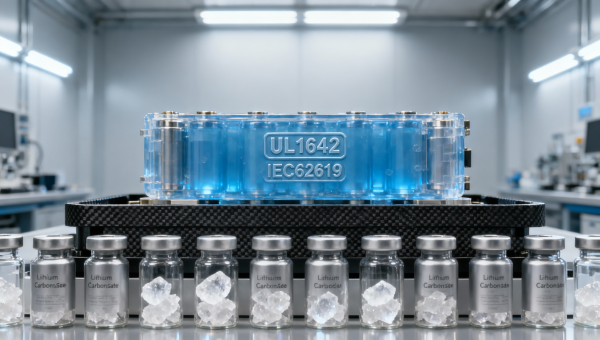
 Lithium Carbonate Price Rebound Pressures Battery CostsLithium carbonate price rebound in April 2026 pressures battery costs—impacting procurement, EV manufacturing & EU energy storage compliance. Key insights inside.
 AI+New Materials Summit at Canton Fair ClosesAI+New Materials Summit at Canton Fair closes—key insights for AI testing instruments, optical metrology & ISO/IEC 17025 compliance. Discover what Tier 1 auto buyers and TÜV/JIS labs really want.
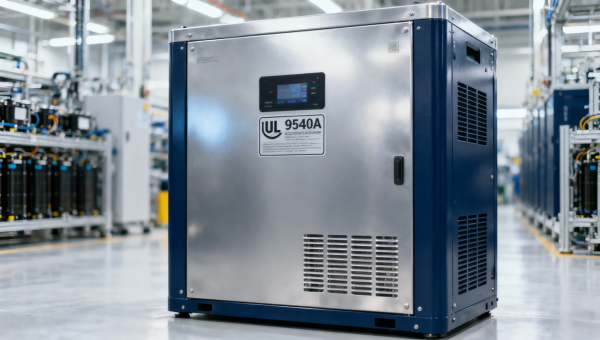
 Sodium-Ion Battery Mass Production Accelerates for Energy StorageSodium-ion battery mass production accelerates in 2026 — lower-cost, UL 9540A-certified energy storage for solar exporters and off-grid markets.
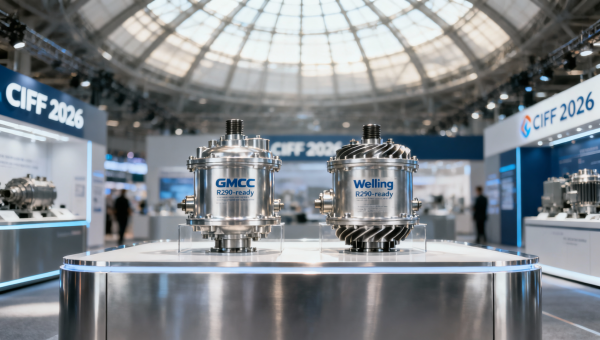
 GMCC & Welling Showcase R290-Ready Compressors at CIFF 2026R290-ready compressors from GMCC & Welling—ultra-low noise (≤22 dB), high IPLV, EU F-Gas III & US DOE 2026 compliant. See why HVAC exporters must act now.
 Dongfang Select's Blue Hat Supplements Go Global with TraceabilityBlue Hat supplements with blockchain traceability—Dongfang Select’s global launch sets a new standard for trusted health & beauty exports.
 China’s New Green Design Guidelines Mandate LCA for Export Packaging & Building MaterialsChina’s new Green Design Guidelines mandate LCA for export packaging & building materials—key for EU, Korea, Canada market access. Act now to secure green procurement eligibility & tariff benefits.
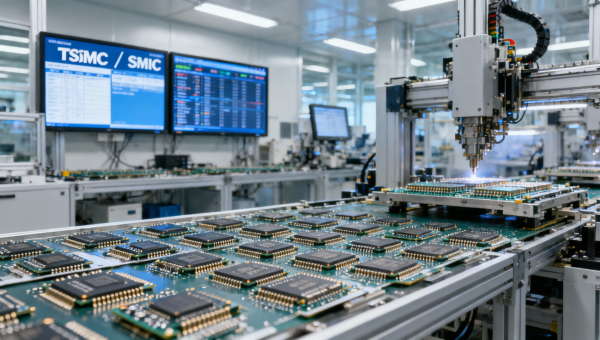
 Semiconductor Supply Chain Price Hikes Extend Lead TimesSemiconductor supply chain price hikes hit MCUs, power ICs & automotive sensors—lead times now stretch 16–20 weeks. Act now to secure A-BOM readiness and local packaging capacity.
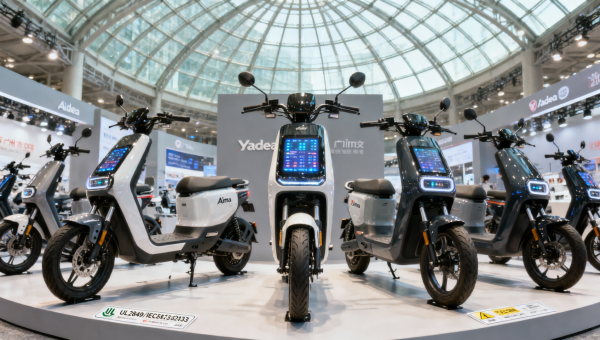
 Wuxi E-Bike Cluster Seeks Global Market at Canton FairWuxi e-bike cluster (Yadea, Aima, Tailg) targets global markets at Canton Fair—UL2849, IEC62133 & UN38.3 compliance is now key for LATAM entry.
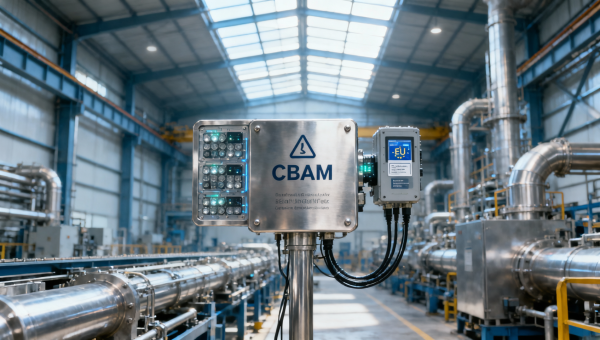
 EU CBAM Enters Enforcement Phase on Jan 1, 2026EU CBAM enforcement starts Jan 1, 2026 — critical for exporters of iron, steel, aluminium, cement, fertilizers, electricity & hydrogen to the EU. Act now.
 2026 Jan–Feb Paper Industry Profits +6.1%; Green Packaging Export Premium EmergesGreen packaging export premium drives +6.1% paper industry profits in Jan–Feb 2026 — discover how FSC/PEFC certification and water-based processes boost margins for eco-friendly, food & cosmetics packaging exporters.
 Desay SV Automotive Files for H-Share Listing, Boosts Supply Chain TransparencyDesay SV Automotive's H-share listing filing boosts supply chain transparency — key for car electronics exporters, PCB suppliers & IATF 16949-certified manufacturers.
 NetEase Interactive Entertainment Market Head Moves OverseasNetEase Interactive Entertainment's marketing head moves overseas—key signal for AI, mobile accessories & wearables exporters targeting NA, EU, JP, KR markets.
 Nanchang Qingyunpu Solar+EMC Project Tender Signals Global ShiftNanchang Qingyunpu Solar+EMC tender signals global shift to performance-based energy solutions—key for solar, lighting & smart factory exporters.
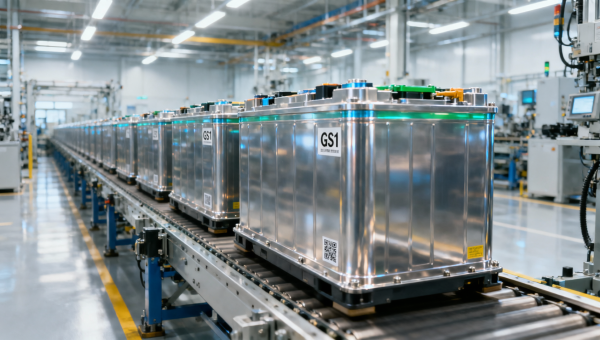
 China Launches Battery Lifecycle Traceability PlatformChina’s Battery Lifecycle Traceability Platform is live: mandatory GS1 registration for NEV & C&I battery exports starts April 1, 2026—ensure compliance now!
 US Military Restricts Arabian Sea East of Strait of HormuzUS Military Restricts Arabian Sea east of Strait of Hormuz—impacting solar PV, water treatment & fire safety exports to GCC. Act now to mitigate 12–18 day delays & 25% insurance hikes.
 Horizon Robotics Launches 'Starry Sky' Cockpit-ADAS Fusion ChipHorizon Robotics 'Starry Sky' cockpit-ADAS fusion chip launches April 2026 — cut BOM costs up to $400/vehicle. Key for exporters targeting MENA & ASEAN.
 China's Construction Machinery Exports Up 33.4% YoY in Jan–Feb 2026China's construction machinery exports surged 33.4% YoY in Jan–Feb 2026—driven by localized service in MEA & LatAm. Discover what this means for your global equipment strategy.
 EU CBAM Steel Carbon Tariff Takes Full Effect on Jan 1, 2026EU CBAM steel carbon tariff takes full effect Jan 1, 2026—exporters must submit verified lifecycle emissions data now. Act before delays & rejections hit.
 Japan Boosts Rapidus with ¥631.5B; China Semiconductor Export Opportunities RiseJapan’s ¥631.5B Rapidus boost unlocks China semiconductor export opportunities—especially in high-purity chemicals, precision components & cleanroom equipment. Act now.
 EU REACH Adds 12 SVHCs: Impact on China's Chemical, Plastic & Coating ExportsEU REACH adds 12 SVHCs, impacting China's chemical, plastic & coating exports. Learn key compliance actions & market risks before the Oct 2026 deadline.












Popular Tags
Global Trade Insights & Industry
Our mission is to empower global exporters and importers with data-driven insights that foster strategic growth.
Search News
Popular Tags
Industry Overview
The global commercial kitchen equipment market is projected to reach $112 billion by 2027. Driven by urbanization, the rise of e-commerce food delivery, and strict hygiene regulations.