

Sodium-ion Battery Mass Production Accelerates for Global Energy Storage
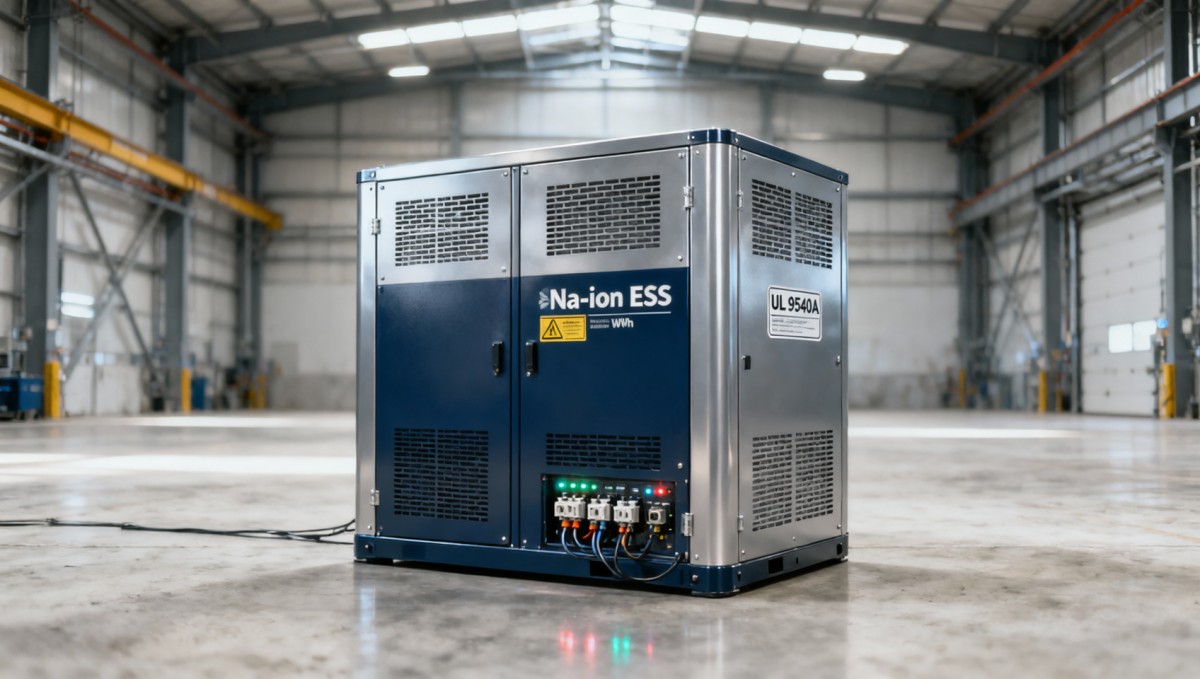
On April 18, 2026, leading Chinese battery and energy storage system providers—including CATL and HiNa Battery—achieved GWh-scale mass production of sodium-ion (Na-ion) battery-based energy storage systems. With an energy density of 145 Wh/kg, a 22% lower cost versus lithium-ion alternatives, and UL 9540A thermal runaway certification, these systems are gaining traction in off-grid energy projects across Europe and North America—particularly for telecom base stations and rural microgrids. Direct trade enterprises, supply chain service providers, and manufacturers serving these end-use segments should monitor implications for procurement lead times, safety compliance expectations, and regional substitution trends.
Event Overview
According to a report published by Qianzhan.com on April 18, 2026, CATL and HiNa Battery have commenced GWh-level mass production of sodium-ion battery energy storage systems. Verified specifications include an energy density of 145 Wh/kg, a cost reduction of 22% relative to lithium-ion batteries, and successful completion of the UL 9540A thermal runaway test. Market feedback from European and North American off-grid energy project buyers indicates that Na-ion solutions are rapidly replacing lead-acid batteries in telecom base stations and rural microgrid applications. Order fulfillment cycles are consistently reported at 10 weeks.
Impact on Specific Industry Segments
Direct Trade Enterprises
These firms—especially those exporting energy storage systems or components to EU and North American off-grid markets—are directly affected due to shifting buyer preferences. The verified 10-week delivery cycle and UL 9540A certification create new baseline expectations for technical compliance and logistics reliability. Buyers are now evaluating Na-ion systems not as experimental alternatives but as drop-in replacements for lead-acid in cost- and safety-sensitive deployments.
Supply Chain Service Providers
Logistics, customs brokerage, and testing certification services face increased demand for documentation supporting UL 9540A compliance and sodium-ion-specific safety declarations. Unlike lithium-ion shipments, which often require UN 38.3 testing and Class 9 hazardous goods handling, Na-ion systems may qualify for simplified transport classifications—though this remains subject to jurisdictional interpretation and is not yet codified in all major markets.
Manufacturers Serving Telecom & Rural Microgrid End Markets
Original equipment manufacturers (OEMs) integrating storage into telecom shelters or village-level power hubs must reassess bill-of-materials (BOM) strategies. The 22% cost advantage and demonstrated thermal safety profile make Na-ion a viable candidate for redesigning legacy lead-acid–based enclosures—provided mechanical integration, BMS compatibility, and low-temperature performance meet site-specific requirements.
What Relevant Enterprises or Practitioners Should Monitor and Act On
Track regulatory updates on sodium-ion classification in key export markets
Current UL 9540A validation supports safety claims, but formal inclusion in IEC 62619, UN 38.3, or regional grid interconnection standards remains pending. Enterprises should monitor official notices from bodies such as CENELEC, CSA Group, and the U.S. DOE’s Energy Storage Division—not just vendor announcements.
Assess lead-time stability against actual order intake patterns
The reported 10-week delivery window reflects current production capacity under GWh-scale output. However, this does not indicate unlimited scalability. Firms planning volume ramp-up should verify whether lead times hold across varying order sizes and configurations—especially for custom voltage or form-factor requests.
Validate BMS and thermal management interoperability before integration
While Na-ion cells pass UL 9540A, system-level safety depends on compatible battery management and cooling design. Manufacturers should confirm whether existing BMS firmware supports sodium-ion voltage curves, state-of-charge estimation, and fault-response logic—rather than assuming lithium-ion–derived software can be reused without validation.
Prepare for dual-technology procurement scenarios in RFPs
European telecom operators and rural electrification contractors are beginning to specify Na-ion as an approved alternative in tender documents. Procurement teams should update internal qualification checklists to include UL 9540A reports, cost-per-kWh benchmarks versus lead-acid and lithium-ion, and documented field deployment references—not just lab test summaries.
Editorial Perspective / Industry Observation
From an industry perspective, this development is better understood as a maturation signal—not yet a full-market inflection point. GWh-scale production confirms industrial readiness for defined use cases (e.g., stationary, moderate-power, safety-critical off-grid applications), but it does not imply broad substitution across EVs, UPS, or high-power grid-scale BESS. The 22% cost advantage is meaningful only where cycle life and energy density requirements align with Na-ion’s current capabilities; for example, telecom backup duty cycles typically demand <3,000 cycles and operate within 15–35°C ambient ranges—well within Na-ion’s validated envelope. Observers should therefore distinguish between ‘technical feasibility’ (now confirmed) and ‘commercial dominance’ (not indicated by current data).
Analysis来看, the consistent 10-week delivery window suggests supply chain coordination has matured beyond pilot-stage bottlenecks—but it does not guarantee resilience against raw material volatility (e.g., hard carbon anode sourcing or sodium carbonate pricing). Current more relevant than speculative expansion plans is verification of real-world field performance across diverse climates and duty cycles.
Current more appropriate understanding is that sodium-ion storage has transitioned from laboratory validation to early commercial deployment in niche, high-value segments—where safety certification, predictable lead times, and total cost of ownership outweigh absolute energy density constraints.
Conclusion
This milestone signals a concrete, near-term option for cost-sensitive, safety-driven stationary storage applications—particularly where lead-acid replacement is urgent and lithium-ion cost or supply risk is prohibitive. It does not displace lithium-ion in high-performance or mobile applications, nor does it eliminate technical due diligence requirements for integrators. For stakeholders, the value lies not in declaring a ‘new era,’ but in recognizing a newly viable, standardized, and certifiably safe component for specific infrastructure projects.
Source Attribution
Main source: Qianzhan.com report dated April 18, 2026.
Areas requiring ongoing observation: Formal inclusion of sodium-ion systems in IEC/UL grid-code frameworks; evolution of international transport regulations; and public field performance data beyond manufacturer-provided case studies.
Recommended News
 AI Patent Tools Security Flaw Triggers Compliance ReviewAI Patent Tools security flaw exposed—triggering urgent compliance reviews for medical device, semiconductor & AI firms. Act now to secure submissions.
 Lithium Carbonate Price Rebound Pressures Battery CostsLithium carbonate price rebound in April 2026 pressures battery costs—impacting procurement, EV manufacturing & EU energy storage compliance. Key insights inside.
 AI+New Materials Summit at Canton Fair ClosesAI+New Materials Summit at Canton Fair closes—key insights for AI testing instruments, optical metrology & ISO/IEC 17025 compliance. Discover what Tier 1 auto buyers and TÜV/JIS labs really want.
 Sodium-Ion Battery Mass Production Accelerates for Energy StorageSodium-ion battery mass production accelerates in 2026 — lower-cost, UL 9540A-certified energy storage for solar exporters and off-grid markets.
 GMCC & Welling Showcase R290-Ready Compressors at CIFF 2026R290-ready compressors from GMCC & Welling—ultra-low noise (≤22 dB), high IPLV, EU F-Gas III & US DOE 2026 compliant. See why HVAC exporters must act now.
 Dongfang Select's Blue Hat Supplements Go Global with TraceabilityBlue Hat supplements with blockchain traceability—Dongfang Select’s global launch sets a new standard for trusted health & beauty exports.
 China’s New Green Design Guidelines Mandate LCA for Export Packaging & Building MaterialsChina’s new Green Design Guidelines mandate LCA for export packaging & building materials—key for EU, Korea, Canada market access. Act now to secure green procurement eligibility & tariff benefits.
 Semiconductor Supply Chain Price Hikes Extend Lead TimesSemiconductor supply chain price hikes hit MCUs, power ICs & automotive sensors—lead times now stretch 16–20 weeks. Act now to secure A-BOM readiness and local packaging capacity.
 Wuxi E-Bike Cluster Seeks Global Market at Canton FairWuxi e-bike cluster (Yadea, Aima, Tailg) targets global markets at Canton Fair—UL2849, IEC62133 & UN38.3 compliance is now key for LATAM entry.
 EU CBAM Enters Enforcement Phase on Jan 1, 2026EU CBAM enforcement starts Jan 1, 2026 — critical for exporters of iron, steel, aluminium, cement, fertilizers, electricity & hydrogen to the EU. Act now.
 2026 Jan–Feb Paper Industry Profits +6.1%; Green Packaging Export Premium EmergesGreen packaging export premium drives +6.1% paper industry profits in Jan–Feb 2026 — discover how FSC/PEFC certification and water-based processes boost margins for eco-friendly, food & cosmetics packaging exporters.
 Desay SV Automotive Files for H-Share Listing, Boosts Supply Chain TransparencyDesay SV Automotive's H-share listing filing boosts supply chain transparency — key for car electronics exporters, PCB suppliers & IATF 16949-certified manufacturers.
 NetEase Interactive Entertainment Market Head Moves OverseasNetEase Interactive Entertainment's marketing head moves overseas—key signal for AI, mobile accessories & wearables exporters targeting NA, EU, JP, KR markets.
 Nanchang Qingyunpu Solar+EMC Project Tender Signals Global ShiftNanchang Qingyunpu Solar+EMC tender signals global shift to performance-based energy solutions—key for solar, lighting & smart factory exporters.
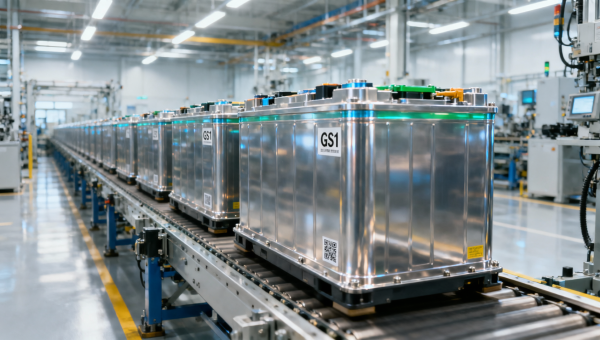
 China Launches Battery Lifecycle Traceability PlatformChina’s Battery Lifecycle Traceability Platform is live: mandatory GS1 registration for NEV & C&I battery exports starts April 1, 2026—ensure compliance now!
 US Military Restricts Arabian Sea East of Strait of HormuzUS Military Restricts Arabian Sea east of Strait of Hormuz—impacting solar PV, water treatment & fire safety exports to GCC. Act now to mitigate 12–18 day delays & 25% insurance hikes.
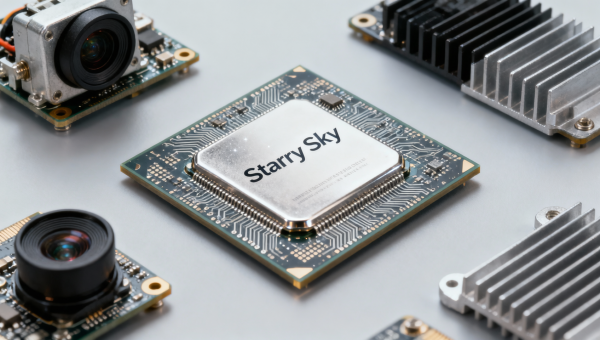
 Horizon Robotics Launches 'Starry Sky' Cockpit-ADAS Fusion ChipHorizon Robotics 'Starry Sky' cockpit-ADAS fusion chip launches April 2026 — cut BOM costs up to $400/vehicle. Key for exporters targeting MENA & ASEAN.
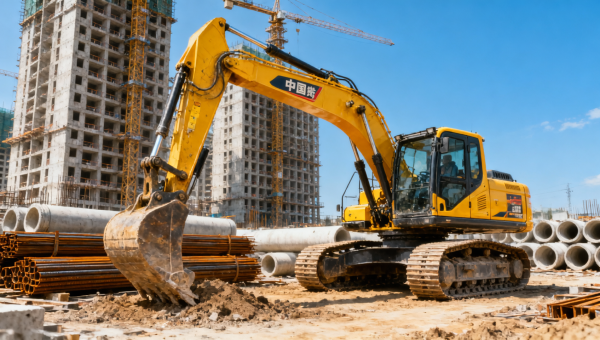
 China's Construction Machinery Exports Up 33.4% YoY in Jan–Feb 2026China's construction machinery exports surged 33.4% YoY in Jan–Feb 2026—driven by localized service in MEA & LatAm. Discover what this means for your global equipment strategy.
 EU CBAM Steel Carbon Tariff Takes Full Effect on Jan 1, 2026EU CBAM steel carbon tariff takes full effect Jan 1, 2026—exporters must submit verified lifecycle emissions data now. Act before delays & rejections hit.
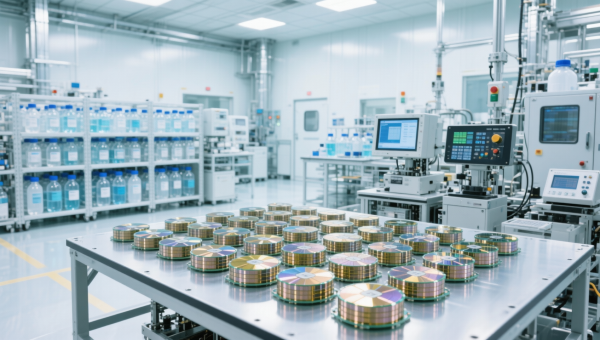
 Japan Boosts Rapidus with ¥631.5B; China Semiconductor Export Opportunities RiseJapan’s ¥631.5B Rapidus boost unlocks China semiconductor export opportunities—especially in high-purity chemicals, precision components & cleanroom equipment. Act now.
 EU REACH Adds 12 SVHCs: Impact on China's Chemical, Plastic & Coating ExportsEU REACH adds 12 SVHCs, impacting China's chemical, plastic & coating exports. Learn key compliance actions & market risks before the Oct 2026 deadline.






Popular Tags
Global Trade Insights & Industry
Our mission is to empower global exporters and importers with data-driven insights that foster strategic growth.
Search News
Popular Tags
Industry Overview
The global commercial kitchen equipment market is projected to reach $112 billion by 2027. Driven by urbanization, the rise of e-commerce food delivery, and strict hygiene regulations.