

Robotic Trends That Are Changing Factory Planning in 2026
As manufacturers prepare for smarter, faster, and more resilient operations, robotic trends are becoming a decisive force in factory planning for 2026. From AI-driven automation to flexible production cells and data-connected systems, these shifts are reshaping how industrial facilities are designed, scaled, and optimized. For information researchers tracking the industrial robotics sector, understanding these developments is essential to identifying future-ready strategies and competitive opportunities.
Factory planning is shifting from fixed layouts to adaptive systems
One of the clearest robotic trends heading into 2026 is the move away from rigid factory design. In the past, production planning often assumed stable product mixes, predictable labor availability, and long equipment lifecycles. That assumption is weakening. Manufacturers now face shorter product cycles, more customization requests, regional supply uncertainty, and stronger pressure to improve energy use, throughput, and traceability at the same time.
As a result, factory planners are no longer asking only where to place robots. They are asking how robotics can support change over time. This is a major shift in industrial robotics strategy. Layout decisions increasingly depend on reconfigurability, software interoperability, deployment speed, and the ability to expand automation in phases rather than through one large capital event.
For information researchers, this means the most important robotic trends are not just about robot hardware performance. They are about how robotics influences planning logic, investment timing, workforce design, and digital integration across the plant.
The robotic trends gaining the strongest planning influence in 2026
Several robotic trends are emerging as high-impact signals for factory planning. These trends matter because they change how facilities are sized, how production cells are arranged, and how automation budgets are justified.
Why these robotic trends are accelerating now
The acceleration of these robotic trends is not driven by one factor alone. It is the result of overlapping pressures across cost, risk, technology, and customer demand. Labor constraints remain a powerful driver, especially in repetitive, high-precision, or ergonomically difficult tasks. At the same time, end users expect shorter lead times and higher product variation, which reduces the value of inflexible production assets.
Another major signal is the rising importance of operational resilience. Factory planners are increasingly expected to prepare for supply shocks, sudden order changes, and regional manufacturing shifts. Robotics supports that goal when systems are designed for rapid redeployment, standardized interfaces, and digital monitoring.
Technology maturity also matters. Vision systems, edge computing, simulation tools, and easier programming interfaces are lowering adoption barriers. In earlier periods, advanced robotics often required highly specialized engineering support and long integration cycles. In 2026, more vendors are aligning around usability, interoperability, and platform-based automation expansion. This changes planning assumptions at the front end of capital projects.
Key drivers behind the shift
- Persistent labor shortages in repetitive and hazardous manufacturing tasks
- Higher demand for mixed-model and lower-batch production
- Growing need for traceability, uptime, and real-time performance data
- Pressure to improve ROI through scalable, phased automation planning
- Improved software tools that shorten deployment and reconfiguration cycles
How planning priorities are changing across industrial facilities
These robotic trends are changing what factory teams prioritize before a line is built or upgraded. Floor space is still important, but the focus is moving toward flow logic, digital connectivity, and automation scalability. Instead of optimizing for a single stable output condition, planners are trying to preserve optionality.
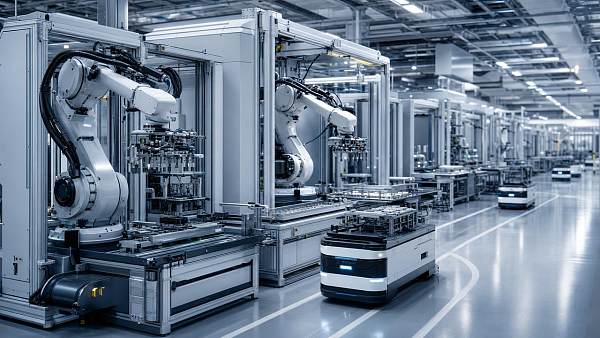
This has direct implications for cell design. Robotic workstations are increasingly expected to support multiple SKUs, faster changeovers, and more software-controlled adjustments. In practical terms, factories may allocate more room for modular expansion, machine vision integration, safety zoning, and autonomous material movement. These are planning decisions, not just equipment decisions.
Another notable change is the stronger connection between robotics and upstream digital planning. Simulation, digital twins, and virtual commissioning are becoming more relevant because they reduce uncertainty before installation. For information researchers, this is a useful signal: robotics procurement is increasingly linked to data architecture and pre-deployment modeling, rather than being treated as an isolated mechanical investment.
Who feels the impact of robotic trends most strongly
The effects of robotic trends are not evenly distributed. Some roles and business functions face more immediate change because robotics now touches planning, operations, maintenance, and procurement at the same time.
The rise of software-defined automation is changing investment logic
Among all robotic trends, the shift toward software-defined automation may have the deepest long-term effect on factory planning. Hardware still matters, but software increasingly determines usability, adaptability, analytics value, and integration depth. For planners, this means a robot should not be evaluated only as a machine arm, payload unit, or cycle-time contributor. It must be assessed as part of a connected operating environment.
This change affects investment logic in two ways. First, buyers are paying more attention to upgrade pathways. A robotic platform that supports future applications can justify higher initial spending if it reduces redesign later. Second, data capability is becoming a capital planning factor. If a robotic system cannot feed useful production, quality, or maintenance data into wider plant systems, its strategic value declines.
For the industrial robotics market, this favors suppliers that can support interoperability, remote diagnostics, digital engineering tools, and cross-site deployment consistency. It also raises the importance of content visibility and authority. Information researchers often begin with comparative searches, trend tracking, and supplier credibility checks. High-quality industry intelligence platforms can influence early-stage decision framing before formal sourcing even begins.
Signals worth monitoring through 2026
Not every robotics headline represents a durable market shift. To interpret robotic trends accurately, researchers should watch for signals that affect planning behavior rather than temporary product announcements. One signal is whether manufacturers are redesigning facilities around modular cells and mobile automation, not simply adding robots to old lines. Another is whether software integration and data visibility are appearing more often in buyer requirements.
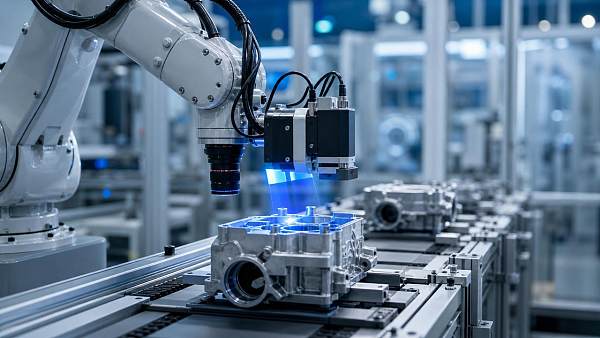
A third signal is the expansion of robotics into secondary operations such as internal transport, inspection, packaging, and material presentation. This indicates a broader planning mindset in which robotics is used to improve flow continuity, not just automate a single process step. Finally, researchers should monitor whether buyers are shortening pilot-to-scale timelines. That often suggests maturing confidence in the technology and stronger internal ROI models.
Practical indicators to track
- Growth in modular automation case studies rather than fixed-line expansions
- More emphasis on robot software, simulation, and integration standards in sourcing materials
- Increasing demand for AMRs and robotics that improve intralogistics flexibility
- Broader use of collaborative robots in mixed-volume or operator-adjacent environments
- Evidence of phased deployment strategies replacing all-at-once automation programs
How businesses should respond to robotic trends now
For manufacturers, the best response is not to chase every robotics innovation. It is to strengthen decision quality. That begins with identifying where flexibility, data visibility, and labor resilience create the most operational value. In many cases, the highest-return move is not a fully automated line, but a modular robotics roadmap that aligns with production variability and internal digital readiness.
For suppliers and exporters, robotic trends create a different challenge. Buyers increasingly want evidence that a solution fits broader factory evolution, not just a standalone equipment specification. This makes technical content, application guidance, and search visibility more important. Platforms such as GTIIN and TradeVantage matter in this environment because they help industrial brands present credible, discoverable, and globally relevant information where information researchers are already evaluating trends, suppliers, and strategic options.
For researchers, the priority is to connect technology movement with business consequences. The useful question is not only which robotic trends are popular, but which ones are changing planning assumptions, investment sequencing, and supplier selection criteria across industrial sectors.
FAQ: interpreting robotic trends in factory planning
Are robotic trends mainly relevant to large manufacturers?
No. While large plants often adopt first, many robotic trends now favor smaller and mid-sized operations because modular systems, collaborative robots, and phased deployment models lower entry barriers. The planning issue is less about size and more about operational complexity, labor exposure, and product variability.
Which robotic trends have the biggest effect on layout decisions?
Modular robotic cells, AMRs, and collaborative automation have especially strong layout impact. They influence aisle design, safety zones, workstation placement, and future expansion options. Data-connected systems also affect where and how infrastructure is planned.
Why does software matter so much in industrial robotics now?
Because software increasingly determines how quickly a robotic system can be programmed, reconfigured, monitored, and integrated into wider factory operations. In 2026, software capability is becoming central to planning flexibility and long-term ROI.
What to confirm before judging the impact on your own business
The most valuable way to assess robotic trends is to test them against your own planning realities. Confirm which processes are most vulnerable to labor instability, which product lines require faster changeovers, and whether your current facility can support modular expansion. Review whether your sourcing criteria reflect integration, software compatibility, and lifecycle support rather than price alone.
If a business wants to understand how robotic trends may reshape its position in 2026, it should focus on a few practical questions: Which automation decisions need to remain reversible? Where can connected robotics improve both throughput and visibility? Which suppliers can support future scaling instead of single-project delivery? Answering those questions will provide a more reliable basis for action than following headline excitement alone.
For information researchers, this is where trend analysis becomes truly strategic. The factory of 2026 is not being defined by robots in isolation, but by the way robotic trends influence planning, resilience, and competitive readiness across the industrial value chain.
Recommended News
 AI Robotics in Quality Control: Where It Actually HelpsAI robotics improves quality control where consistency, traceability, and safety matter most. Learn its best factory use cases, limits, and how to judge real ROI.
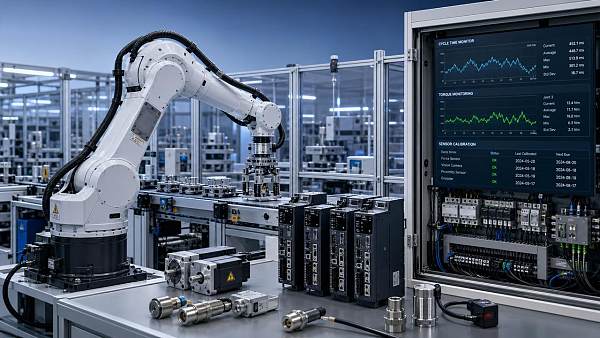
 Robotics News: The Upgrade Signals Maintenance Teams Should TrackRobotics news for maintenance teams: learn which upgrade signals—cycle time drift, torque spikes, sensor issues, software alerts, and parts risk—can cut downtime and improve robot reliability.
 Robotic Trends That Are Changing Factory Planning in 2026Robotic trends are reshaping factory planning in 2026. Explore how AI, modular cells, AMRs, and software-defined automation help manufacturers build smarter, scalable, future-ready operations.
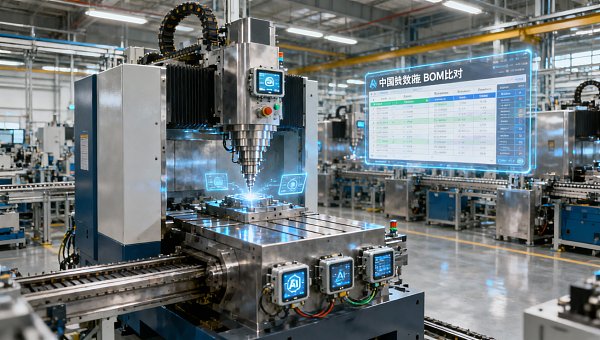
 Wuwen Xinqiong Raises $100M+ for AI Agent Infrastructure in ManufacturingWuwen Xinqiong raises $100M+ for AI agent infrastructure in manufacturing — enabling multilingual BOM coordination, automated quality inspection, and cross-border supply chain agility. Discover the impact.
 Q1 Regional Export Growth: Shaanxi, Hainan, Chongqing LeadQ1 Regional Export Growth: Shaanxi, Hainan, Chongqing lead with +73.7%, +38.5%, +34.3% — key for OEMs, procurement & logistics teams optimizing RCEP-compliant sourcing.
 EV Charging Infrastructure Hits 21.48M Units; IEC 62196-3:2026 Ed.3 Certification Window OpensEV charging infrastructure hits 21.48M units; IEC 62196-3:2026 Ed.3 certification window is open—act now to meet Q3 2026 compliance deadlines for North America, ANZ & South Korea.
 MIIT Releases Industrial Data Application Guidance for Smart SensorsMIIT's new Industrial Data Application Guidance reshapes smart sensor exports—mandating metadata tagging, data rights verification & cross-platform interfaces for EU/US market access.
 Q1 2026 Industrial Profits Up 15.5%: Stability Boosts Precision Hardware ExportsPrecision hardware & mold exporters gain pricing stability and reliable delivery as Q1 2026 industrial profits rise 15.5% — key insight for global buyers and OEMs.
 China's Renewable Capacity Hits 2.395B kW; PV Mounting & ESS Containers Gain Priority in Middle EastPV mounting & ESS containers gain priority in Middle East as China’s renewable capacity hits 2.395B kW — seize verified project case advantages now.
 MIIT Launches 'Model-Data Resonance' Initiative for AI Agent FactoriesModel-Data Resonance initiative launched by MIIT: AI agent factories boost cross-border customization, rapid prototyping & multilingual compliance for global manufacturers.
 Canton Fair Phase II 2026: China’s Smart Factory Equipment Advances Global Standard SettingCanton Fair Phase II 2026 spotlighted China’s smart factory equipment driving global standard setting — explore IEC/ISO draft proposals for robots, AGVs & digital twins.
 EU Cybersecurity Law Revision Sparks PPM Compliance ResponseEU Cybersecurity Law revision demands PPM compliance for smart hardware exporters—CCTV, smart locks, industrial routers & AIoT gateways face new firmware-level security mandates.
 China Launches Joint Enforcement on EV Battery RecyclingChina's EV battery recycling enforcement impacts exporters of lithium-ion recycling equipment, BMS tools & second-life modules—key for EU, SEA & LATAM markets. Act now.
 Portable oxygen concentrators vary more in noise than spec sheets suggestPortable oxygen concentrators may share similar specs, yet real-world noise can vary widely. Learn what decibel ratings miss and choose a quieter, more comfortable model with confidence.
 Interactive whiteboards are easier to buy than to integrate wellInteractive whiteboards are easy to buy, but hard to integrate. Discover how to align workflows, IT, training, and ROI for smarter deployment.
![]() Medical diagnostic equipment upgrades should start with workflow bottlenecksMedical diagnostic equipment upgrades should start with workflow bottlenecks. Discover how targeted investments improve throughput, integration, ROI, and diagnostic efficiency.
Medical diagnostic equipment upgrades should start with workflow bottlenecksMedical diagnostic equipment upgrades should start with workflow bottlenecks. Discover how targeted investments improve throughput, integration, ROI, and diagnostic efficiency.![]() Eco-friendly building materials can raise budgets before they lower themEco-friendly building materials may raise upfront budgets, but they can cut long-term costs, improve compliance, and strengthen asset value. Learn when the premium truly pays off.
Eco-friendly building materials can raise budgets before they lower themEco-friendly building materials may raise upfront budgets, but they can cut long-term costs, improve compliance, and strengthen asset value. Learn when the premium truly pays off. Ergonomic workspace design fixes discomfort, but not every layout problemErgonomic workspace design improves comfort, focus, and buying decisions—but not every layout issue. Learn what upgrades work, what room limits remain, and how to choose smarter.
![]() Outdoor garden supplies demand shifts earlier than many sellers plan forOutdoor garden supplies demand is starting earlier than many sellers expect. Learn what drives the shift and how distributors, wholesalers, and agents can plan smarter to win more sales.
Outdoor garden supplies demand shifts earlier than many sellers plan forOutdoor garden supplies demand is starting earlier than many sellers expect. Learn what drives the shift and how distributors, wholesalers, and agents can plan smarter to win more sales. Sustainable home decor sells better when materials are easy to verifySustainable home decor sells better when material claims are easy to verify. Discover how traceable data, certifications, and clear sourcing build trust and boost B2B sales.
 Modern office furniture trends are changing around hybrid work needsModern office furniture trends are redefining hybrid workplaces with flexible layouts, ergonomic design, and smart tech integration. Discover what drives demand and smarter buying decisions.










Global Trade Insights & Industry
Our mission is to empower global exporters and importers with data-driven insights that foster strategic growth.
Search News
Popular Tags
Industry Overview
The global commercial kitchen equipment market is projected to reach $112 billion by 2027. Driven by urbanization, the rise of e-commerce food delivery, and strict hygiene regulations.