

AI Robotics in Quality Control: Where It Actually Helps
AI robotics is reshaping quality control, but the most important question for quality and safety managers is not whether the technology is impressive. It is whether it solves real inspection problems better than existing methods. In practice, AI robotics delivers the strongest value in repetitive, high-volume, visually demanding, or safety-sensitive inspection tasks where consistency matters more than improvisation.
That means the answer is nuanced. AI robotics does not replace experienced quality staff across the board, and it is not a universal fix for poor process discipline. What it can do, when applied correctly, is improve defect detection, reduce variation between inspectors, document results more reliably, and keep people away from hazardous inspection points.
For factories evaluating automation investments, the practical issue is fit. The best use cases are not the ones with the most futuristic marketing. They are the ones where defects are hard to catch at speed, manual inspection is tiring or inconsistent, traceability requirements are rising, and production losses from escapes or false rejects are expensive. In those conditions, AI robotics can move from a pilot project to a measurable operational asset.
What quality and safety managers are really trying to find out
When people search for insights on AI robotics in quality control, they are usually not looking for a broad overview of artificial intelligence. They want to know where it actually works, what problems it solves, what limitations to expect, and how to judge whether an application is worth the cost and change effort.
For quality control teams, the first concern is inspection performance. Can the system detect defects more accurately than humans or standard machine vision? Can it maintain that performance over long shifts, different batches, and changing lighting or material conditions? Can it reduce false positives that disrupt production while still preventing defects from reaching customers?
For safety managers, the concern is slightly different. They want to know whether AI robotics can remove workers from exposure to sharp edges, hot surfaces, moving equipment, chemicals, radiation, or awkward inspection positions. They also need to understand whether adding robots introduces new safety risks, such as cell access, emergency stop integration, and human-robot interaction issues.
A third concern connects both groups: governance. Managers need confidence that an AI-enabled inspection system is explainable enough to support audits, reliable enough for daily use, and disciplined enough to fit into quality management systems rather than operating as an isolated technical experiment.
Where AI robotics helps most in real factory quality control
The most valuable role of AI robotics is not “doing quality” in a general sense. It is performing specific inspection motions, sensing tasks, and decision support functions with a level of repeatability that manual inspection often struggles to maintain. The strongest gains usually appear in environments where product volume is high and defect criteria are clear but difficult to check consistently by eye.
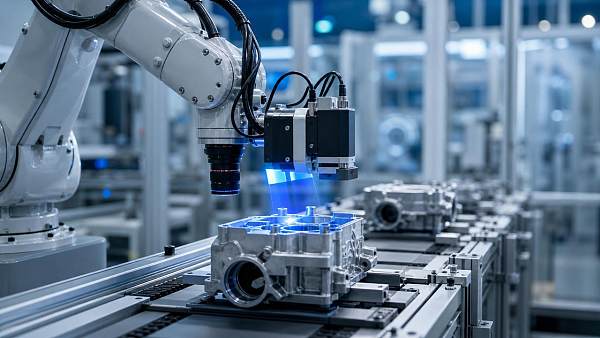
One of the clearest use cases is surface defect inspection. Scratches, dents, weld irregularities, coating flaws, sealant gaps, and cosmetic defects are often subjective in manual review, especially when inspectors are fatigued or when production speed is high. AI robotics combined with vision systems can inspect the same zones at the same angle and distance every cycle, reducing variability in how products are judged.
Another strong application is dimensional and presence verification in complex assemblies. Robots can position cameras, lasers, or structured-light sensors around parts more precisely than fixed systems in cases where geometry varies or multiple viewpoints are required. AI models can then identify missing components, misalignment, incorrect fit, or assembly deviations that might be hard to standardize manually.
AI robotics is also useful in hazardous inspection environments. For example, checking castings near heat sources, examining heavy fabricated parts, inspecting battery components, or reviewing parts in areas with fumes or sharp edges can expose workers to avoidable risks. In those settings, the safety benefit may be as important as the quality benefit.
Finally, AI robotics helps in traceable, documented inspection workflows. Systems can capture images, time stamps, defect classifications, pass-fail data, and trend records automatically. For industries facing customer audits, warranty pressure, or strict compliance requirements, that digital record can be as valuable as the immediate defect decision.
Tasks where traditional automation may still be the better choice
Not every quality problem needs AI robotics. In fact, one of the biggest mistakes companies make is applying advanced technology where simpler automation would perform better, cost less, and be easier to maintain. If a defect is stable, binary, and easy to detect with conventional sensors or rule-based vision, adding AI may create unnecessary complexity.
For example, if the task is checking whether a cap is present, a label is in the right location, or a hole count matches a known pattern under controlled conditions, a standard vision setup may be enough. In these cases, the main issue is not intelligence but reliable fixturing, lighting, and process control. AI robotics adds more value when defect patterns vary, visual conditions are less predictable, or products require flexible camera positioning.
Manual inspection may also remain appropriate for low-volume, high-mix production where parts change frequently, acceptance standards are still evolving, or defect judgment relies heavily on contextual expertise. If the process itself is unstable, automating inspection too early can simply automate confusion. The better sequence is often to stabilize the process, define the defect taxonomy, and only then evaluate AI-enabled robotics.
This is why quality leaders should begin with a use-case filter, not a technology-first mindset. The question is not “Can we use AI robotics here?” but “What inspection failure mode are we trying to eliminate, and is robotics the best path?”
How AI robotics improves consistency more than headline accuracy
Many vendors emphasize detection accuracy, but on the factory floor, consistency often matters more. A system that performs at a predictable level every shift can be more valuable than one that achieves excellent lab results but drifts in daily production. This is especially true in quality control, where inconsistent decisions create rework, disputes between shifts, production delays, and unclear accountability.
Human inspectors are capable of excellent judgment, but they are affected by fatigue, training differences, line speed, distraction, and environmental factors. AI robotics does not get tired in the same way, and it can inspect each unit using the same programmed path, timing, and measurement logic. That consistency is often the real operational win.
For quality managers, this matters because many expensive defects are not caused by complete inspection failure. They are caused by variation. One shift catches a flaw and another passes it. One operator interprets the standard narrowly, another broadly. AI robotics can narrow that variation when the inspection criteria are translated into a disciplined model and workflow.
That said, consistency only helps if the system is consistently correct enough. A stable but poorly tuned model can institutionalize bad decisions. This is why validation, ongoing retraining policy, and clear escalation rules remain essential. The goal is not blind automation. It is controlled consistency with human oversight where uncertainty is high.
The safety value: removing people from the wrong inspection tasks
In many factories, inspection is treated mainly as a quality activity, but it is often a safety exposure point as well. Workers may lean into machines, handle sharp or heavy parts, inspect hot surfaces, or enter awkward spaces to verify conditions. These actions may be routine, but they accumulate ergonomic and incident risk over time.
AI robotics helps most when it removes workers from inspection tasks that are dangerous, repetitive, or physically stressful without reducing control over quality outcomes. A robotic arm can present sensors to confined or hard-to-reach areas, maintain safe distance from moving equipment, and inspect parts immediately after processes that would still be unsafe for direct human contact.
For safety managers, however, the benefit should be evaluated at the system level. Replacing a hazardous manual task with a robotic cell is positive only if guarding, access control, lockout procedures, and emergency response are properly designed. Collaborative robots may reduce some physical barriers, but they do not eliminate risk analysis requirements. AI does not replace safety engineering.
A balanced assessment asks two questions. First, what worker exposure is being reduced? Second, what new hazards are being introduced by the robot, sensors, and cell layout? The best projects deliver a net reduction in risk while also improving inspection reliability.
What a good AI robotics business case looks like
For most industrial teams, adoption depends less on technical possibility than on a credible business case. Quality and safety managers need to show not only that AI robotics can work, but that it will solve a costly enough problem to justify equipment, integration, validation, training, and lifecycle support.
The strongest business cases usually involve one or more of the following: high scrap or rework costs from missed defects, customer complaints or returns tied to inconsistent inspection, labor shortages in quality roles, throughput limits caused by manual checks, or significant worker exposure in the inspection process. When several of these pressures exist at once, the economics become much more favorable.
It is also important to look beyond labor replacement. In many successful deployments, the biggest value does not come from reducing headcount. It comes from fewer escapes, less over-rejection, faster containment, stronger traceability, and more stable process feedback. These benefits can be substantial, especially in sectors where a single escaped defect can trigger warranty claims, line stoppages, or reputational damage.
Managers should ask vendors and internal stakeholders for baseline numbers before approving a project. What is the current defect escape rate? What is the false reject rate? How many inspection hours are spent on this task? What is the cost of one serious quality incident? What safety exposure is currently tolerated? Without that baseline, ROI discussions remain vague and easy to overstate.
Common implementation mistakes that reduce value
Many AI robotics projects underperform not because the technology is useless, but because the deployment logic is weak. One common mistake is poor defect definition. If teams cannot agree on what counts as a defect, what severity levels matter, and what examples represent borderline conditions, the AI model will reflect that ambiguity rather than remove it.
Another mistake is bad production data. AI systems need representative images and defect examples from real conditions, not only ideal samples from test environments. Changes in lighting, material finish, part orientation, supplier variation, and contamination can all affect performance. If the training set is too narrow, the system may appear strong during trials and then degrade in live production.
A third issue is trying to automate a broken process. If upstream variation is excessive, fixtures are unstable, or product presentation is inconsistent, even a strong AI robotics system will struggle. Inspection automation should not be expected to compensate for weak process control. In many cases, modest process improvements create the foundation that makes the robotics investment worthwhile.
Finally, some teams neglect change management. Operators, inspectors, and supervisors need to understand how the system makes decisions, when to trust it, when to override it, and how to handle uncertain cases. Resistance often comes not from anti-automation attitudes, but from unclear roles and fear of losing control over quality decisions.
How to evaluate whether a use case is a good fit
A practical evaluation framework can prevent expensive misalignment. Start with defect economics. Is the current inspection problem costly enough in scrap, customer risk, labor, downtime, or safety exposure to deserve automation? If the impact is minor, AI robotics may not be the right priority.
Next, assess task structure. Is the inspection repetitive? Can the robot access the part reliably? Are defect classes definable? Is there enough data to train and validate a model? Does the process run often enough to generate value from automation? Repetitive, standardized, high-frequency tasks are usually better candidates than irregular ones.
Then evaluate environment and integration. Can lighting, positioning, and part flow be controlled? Can results be linked to MES, SPC, or quality records? Will the cell fit into existing safety requirements and maintenance routines? The technical model may work in isolation, but operational value depends on how well it fits the broader production system.
Finally, define success criteria before launch. These should include not only detection rate, but also false reject rate, cycle time impact, uptime, escalation handling, auditability, and safety outcomes. Projects succeed more often when everyone agrees in advance on what “better” actually means.
What the next few years will likely look like
In industrial robotics, the role of AI in quality control will probably expand steadily, but unevenly. Adoption will be strongest where manufacturers face a combination of labor pressure, tighter traceability demands, more product complexity, and greater sensitivity to defect costs. Sectors with repetitive visual inspection needs and strong digital infrastructure will move fastest.
At the same time, the market will become more pragmatic. Buyers are increasingly less interested in generic claims about smart factories and more focused on deployable solutions with clear validation paths. This favors AI robotics applications that can prove value on narrow, well-defined inspection tasks rather than broad promises of autonomous quality management.
For quality control and safety professionals, that shift is positive. It means decisions can be based on measurable outcomes instead of hype. It also means cross-functional evaluation will matter more, with quality, safety, engineering, operations, and IT all involved in defining realistic use cases and governance standards.
In short, AI robotics will not make every inspection process autonomous. But it will become a more practical and trusted tool for factories that approach it with discipline, clear economics, and a strong understanding of where it truly helps.
Conclusion: focus on problems, not promises
AI robotics is most useful in quality control when it addresses specific inspection and safety problems that manual methods struggle to manage consistently. Its strongest value appears in repetitive visual checks, multi-angle inspection tasks, hazardous environments, and workflows where traceability and uniform judgment are critical.
For quality and safety managers, the right question is not whether AI robotics is the future. It is whether a given application can reduce escapes, lower variation, improve documentation, and remove people from unnecessary risk with acceptable complexity and cost. When the answer is yes, the technology can deliver meaningful results. When the fit is weak, simpler solutions often perform better.
The factories that benefit most will be the ones that stay practical. They will define defects clearly, validate with real production data, integrate safety from the start, and measure outcomes against business and operational goals. That is where AI robotics stops being a trend and starts becoming a reliable quality control tool.
Recommended News
 AI Robotics in Quality Control: Where It Actually HelpsAI robotics improves quality control where consistency, traceability, and safety matter most. Learn its best factory use cases, limits, and how to judge real ROI.
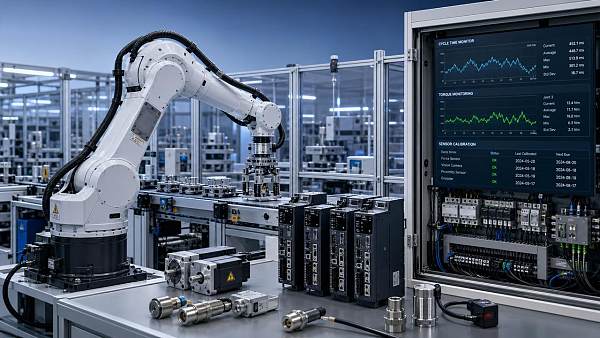
 Robotics News: The Upgrade Signals Maintenance Teams Should TrackRobotics news for maintenance teams: learn which upgrade signals—cycle time drift, torque spikes, sensor issues, software alerts, and parts risk—can cut downtime and improve robot reliability.
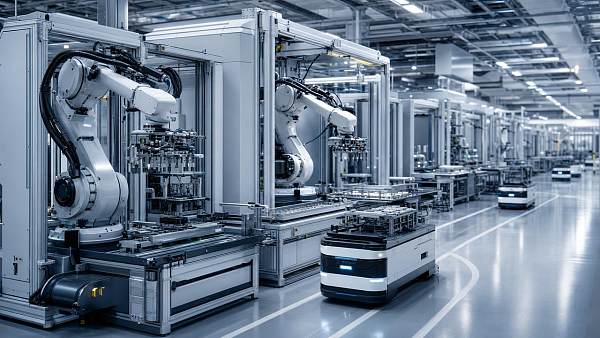
 Robotic Trends That Are Changing Factory Planning in 2026Robotic trends are reshaping factory planning in 2026. Explore how AI, modular cells, AMRs, and software-defined automation help manufacturers build smarter, scalable, future-ready operations.
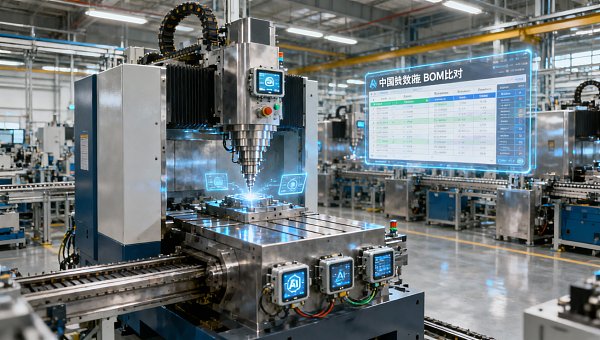
 Wuwen Xinqiong Raises $100M+ for AI Agent Infrastructure in ManufacturingWuwen Xinqiong raises $100M+ for AI agent infrastructure in manufacturing — enabling multilingual BOM coordination, automated quality inspection, and cross-border supply chain agility. Discover the impact.
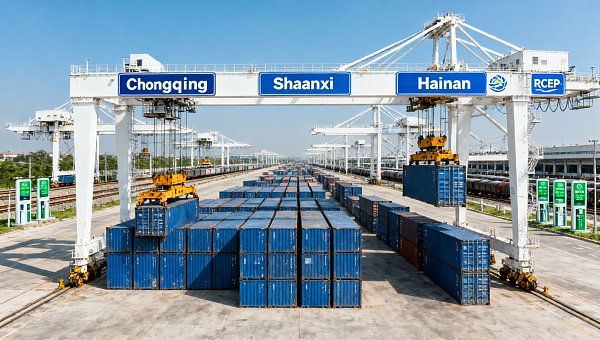
 Q1 Regional Export Growth: Shaanxi, Hainan, Chongqing LeadQ1 Regional Export Growth: Shaanxi, Hainan, Chongqing lead with +73.7%, +38.5%, +34.3% — key for OEMs, procurement & logistics teams optimizing RCEP-compliant sourcing.
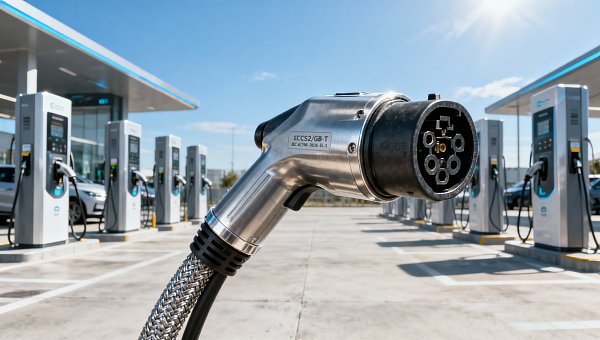
 EV Charging Infrastructure Hits 21.48M Units; IEC 62196-3:2026 Ed.3 Certification Window OpensEV charging infrastructure hits 21.48M units; IEC 62196-3:2026 Ed.3 certification window is open—act now to meet Q3 2026 compliance deadlines for North America, ANZ & South Korea.
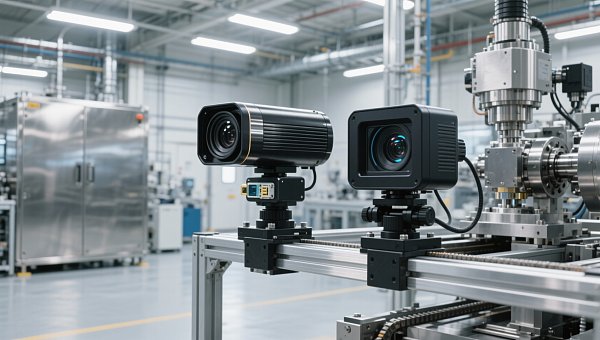
 MIIT Releases Industrial Data Application Guidance for Smart SensorsMIIT's new Industrial Data Application Guidance reshapes smart sensor exports—mandating metadata tagging, data rights verification & cross-platform interfaces for EU/US market access.
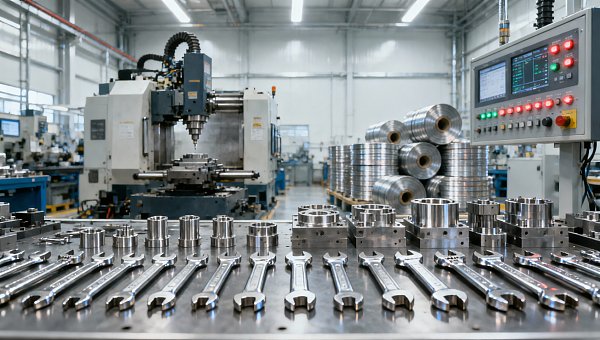
 Q1 2026 Industrial Profits Up 15.5%: Stability Boosts Precision Hardware ExportsPrecision hardware & mold exporters gain pricing stability and reliable delivery as Q1 2026 industrial profits rise 15.5% — key insight for global buyers and OEMs.
 China's Renewable Capacity Hits 2.395B kW; PV Mounting & ESS Containers Gain Priority in Middle EastPV mounting & ESS containers gain priority in Middle East as China’s renewable capacity hits 2.395B kW — seize verified project case advantages now.
 MIIT Launches 'Model-Data Resonance' Initiative for AI Agent FactoriesModel-Data Resonance initiative launched by MIIT: AI agent factories boost cross-border customization, rapid prototyping & multilingual compliance for global manufacturers.
 Canton Fair Phase II 2026: China’s Smart Factory Equipment Advances Global Standard SettingCanton Fair Phase II 2026 spotlighted China’s smart factory equipment driving global standard setting — explore IEC/ISO draft proposals for robots, AGVs & digital twins.
 EU Cybersecurity Law Revision Sparks PPM Compliance ResponseEU Cybersecurity Law revision demands PPM compliance for smart hardware exporters—CCTV, smart locks, industrial routers & AIoT gateways face new firmware-level security mandates.
 China Launches Joint Enforcement on EV Battery RecyclingChina's EV battery recycling enforcement impacts exporters of lithium-ion recycling equipment, BMS tools & second-life modules—key for EU, SEA & LATAM markets. Act now.
 Portable oxygen concentrators vary more in noise than spec sheets suggestPortable oxygen concentrators may share similar specs, yet real-world noise can vary widely. Learn what decibel ratings miss and choose a quieter, more comfortable model with confidence.
 Interactive whiteboards are easier to buy than to integrate wellInteractive whiteboards are easy to buy, but hard to integrate. Discover how to align workflows, IT, training, and ROI for smarter deployment.
![]() Medical diagnostic equipment upgrades should start with workflow bottlenecksMedical diagnostic equipment upgrades should start with workflow bottlenecks. Discover how targeted investments improve throughput, integration, ROI, and diagnostic efficiency.
Medical diagnostic equipment upgrades should start with workflow bottlenecksMedical diagnostic equipment upgrades should start with workflow bottlenecks. Discover how targeted investments improve throughput, integration, ROI, and diagnostic efficiency.![]() Eco-friendly building materials can raise budgets before they lower themEco-friendly building materials may raise upfront budgets, but they can cut long-term costs, improve compliance, and strengthen asset value. Learn when the premium truly pays off.
Eco-friendly building materials can raise budgets before they lower themEco-friendly building materials may raise upfront budgets, but they can cut long-term costs, improve compliance, and strengthen asset value. Learn when the premium truly pays off. Ergonomic workspace design fixes discomfort, but not every layout problemErgonomic workspace design improves comfort, focus, and buying decisions—but not every layout issue. Learn what upgrades work, what room limits remain, and how to choose smarter.
![]() Outdoor garden supplies demand shifts earlier than many sellers plan forOutdoor garden supplies demand is starting earlier than many sellers expect. Learn what drives the shift and how distributors, wholesalers, and agents can plan smarter to win more sales.
Outdoor garden supplies demand shifts earlier than many sellers plan forOutdoor garden supplies demand is starting earlier than many sellers expect. Learn what drives the shift and how distributors, wholesalers, and agents can plan smarter to win more sales. Sustainable home decor sells better when materials are easy to verifySustainable home decor sells better when material claims are easy to verify. Discover how traceable data, certifications, and clear sourcing build trust and boost B2B sales.
 Modern office furniture trends are changing around hybrid work needsModern office furniture trends are redefining hybrid workplaces with flexible layouts, ergonomic design, and smart tech integration. Discover what drives demand and smarter buying decisions.







Global Trade Insights & Industry
Our mission is to empower global exporters and importers with data-driven insights that foster strategic growth.
Search News
Popular Tags
Industry Overview
The global commercial kitchen equipment market is projected to reach $112 billion by 2027. Driven by urbanization, the rise of e-commerce food delivery, and strict hygiene regulations.