

China's Renewable Capacity Hits 2.395B kW; PV Mounting & ESS Containers Gain Priority in Middle East
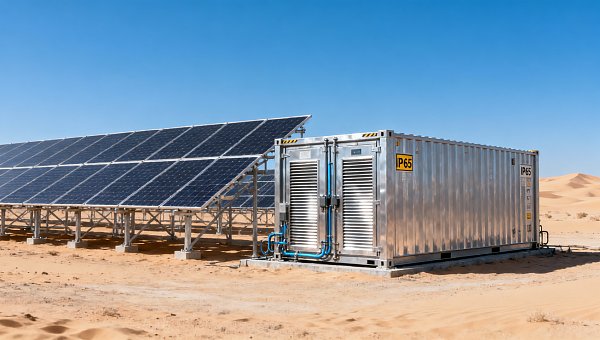
On April 27, 2026, China’s National Energy Administration reported that renewable energy installed capacity reached 2.395 billion kW — accounting for 60.4% of total national power capacity as of March 2026. This milestone coincides with a notable shift in Middle Eastern infrastructure tenders: major projects including NEOM City Phase II (Saudi Arabia) and Al Dhafra Solar Plant (UAE) now explicitly require bidders to demonstrate mature, large-scale application cases from China — especially those integrating high-density PV mounting structures and liquid-cooled energy storage containers. The development signals growing technical recognition for Chinese hardware solutions in international utility-scale deployments, making it relevant for PV mounting system manufacturers, energy storage system integrators, export-oriented engineering contractors, and supply chain service providers.
Event Overview
On April 27, 2026, the National Energy Administration of China announced that as of the end of March 2026, the country’s cumulative installed capacity of renewable energy reached 2.395 billion kW, representing 60.4% of total national power generation capacity. Concurrently, official tender documents for NEOM City Phase II (Saudi Arabia) and the Al Dhafra Photovoltaic Power Station (UAE) specified that qualified bidders must provide verified, large-scale application references from China — with particular preference given to suppliers whose offerings incorporate high-density PV mounting arrays and integrated liquid-cooled energy storage container systems.
Industries Affected
Direct Exporters of PV Mounting Structures
These enterprises face intensified demand validation requirements. Tender eligibility now hinges not only on product compliance but also on documented field performance in China’s high-utilization, high-density deployment environments. Impact includes tighter pre-qualification scrutiny and longer bid preparation cycles due to mandatory case documentation.
Energy Storage System Integrators (Focusing on Containerized ESS)
Integrators supplying liquid-cooled, containerized battery systems are encountering differentiated market access conditions. The explicit preference for liquid-cooling architecture — validated through Chinese operational data — elevates technical differentiation but also raises evidentiary thresholds for international bids.
Engineering, Procurement & Construction (EPC) Contractors Serving Overseas Projects
EPC firms bidding on Middle Eastern solar-plus-storage projects must now align sub-supplier selections with tender-specified technical prerequisites. This affects procurement workflows, subcontractor vetting, and project-level technical assurance planning — particularly where mounting density and thermal management integration are contractually mandated.
Supply Chain Service Providers (Logistics, Certification, Local Representation)
Service providers supporting cross-border hardware deployment face increased demand for documentation verification, localized technical translation of Chinese operational reports, and third-party validation support for ‘mature application’ claims — especially for mounting structural load testing records and ESS thermal performance logs from Chinese sites.
What Relevant Enterprises or Practitioners Should Monitor and Act On
Track Official Tender Clarifications and Technical Addenda
NEOM and Al Dhafra procurement authorities may issue further guidance on acceptable formats for ‘Chinese mature application cases’. Exporters should monitor official portals for updates on required evidence scope — e.g., whether operation duration, grid interconnection certification, or O&M performance metrics will be weighted.
Verify Readiness of Key Documentation Packages
Companies should audit existing project documentation for export-readiness: high-density mounting array layout schematics, site-specific wind/snow load test reports from Chinese installations, and verifiable 12+ month operational logs from liquid-cooled ESS containers deployed in China’s northwest or northwest-inland regions.
Distinguish Between Policy Signal and Contractual Requirement
The current preference language reflects a procurement criterion — not a regulatory mandate. Its enforceability depends on individual tender terms. Firms should avoid assuming universal applicability across GCC markets until similar clauses appear in additional RFPs beyond NEOM and Al Dhafra.
Prepare for Enhanced Coordination with Chinese Project Owners or Operators
Where third-party verification is needed, early engagement with Chinese power generation groups or provincial grid companies may facilitate access to anonymized operational datasets — provided such sharing complies with domestic data governance rules.
Editorial Perspective / Industry Observation
Observably, this development represents an early-stage technical recognition signal rather than a fully institutionalized market access mechanism. It reflects growing confidence in China’s domestic deployment scale as a proxy for system reliability — particularly where environmental stressors (e.g., sand loading, ambient temperature extremes) overlap with Middle Eastern conditions. Analysis shows that the emphasis lies less on brand origin and more on empirical validation: the requirement for ‘mature, large-scale application cases’ functions as a de facto performance benchmark. From an industry perspective, this trend highlights how domestic infrastructure scale can translate into internationally recognized technical credibility — but only when accompanied by transparent, auditable operational evidence. Continued observation is warranted to assess whether similar criteria expand to other GCC jurisdictions or evolve into standardized regional procurement templates.
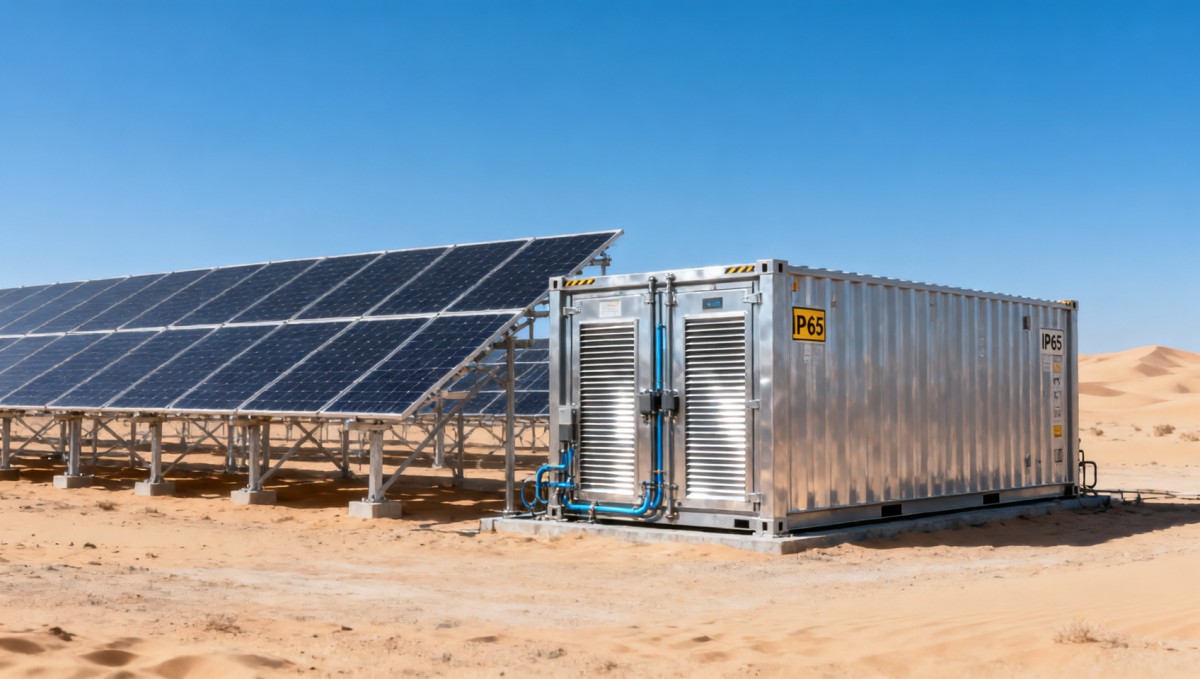
In summary, this update does not signify immediate market expansion, but rather a narrowing of technical entry conditions for specific hardware categories in select high-profile tenders. It underscores that international competitiveness increasingly depends on demonstrable real-world performance — not just product specifications. Current interpretation should emphasize selective opportunity alignment over broad-based market assumptions.
Source: National Energy Administration of China (April 27, 2026 announcement); publicly released tender requirements for NEOM City Phase II and Al Dhafra Photovoltaic Power Station (Q1 2026).
Note: Expansion of similar technical prerequisites to other Gulf Cooperation Council (GCC) projects remains under observation and has not been confirmed.
Recommended News
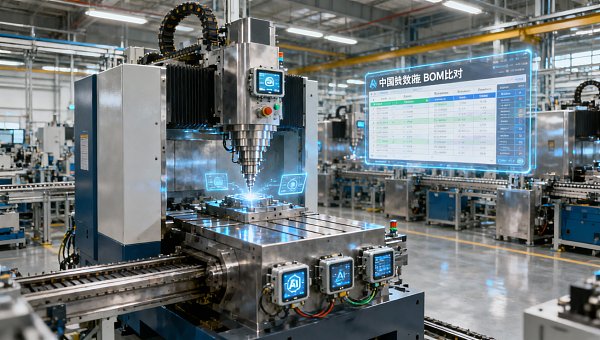
 Wuwen Xinqiong Raises $100M+ for AI Agent Infrastructure in ManufacturingWuwen Xinqiong raises $100M+ for AI agent infrastructure in manufacturing — enabling multilingual BOM coordination, automated quality inspection, and cross-border supply chain agility. Discover the impact.
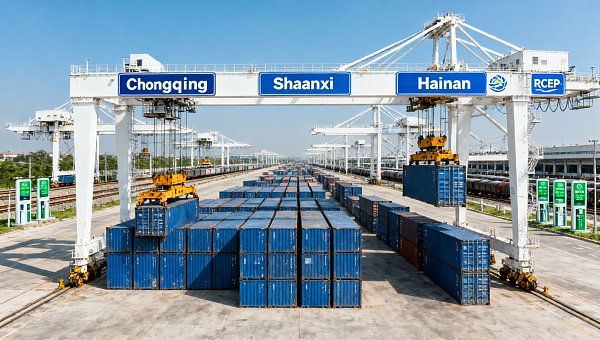
 Q1 Regional Export Growth: Shaanxi, Hainan, Chongqing LeadQ1 Regional Export Growth: Shaanxi, Hainan, Chongqing lead with +73.7%, +38.5%, +34.3% — key for OEMs, procurement & logistics teams optimizing RCEP-compliant sourcing.
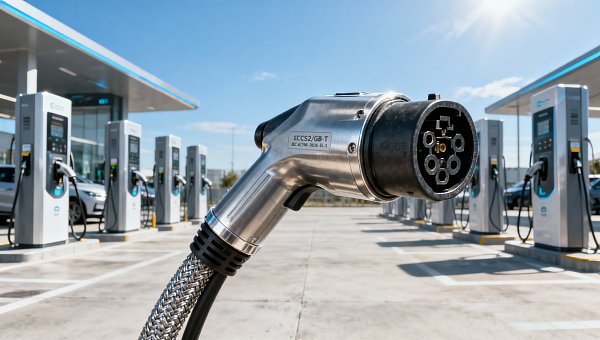
 EV Charging Infrastructure Hits 21.48M Units; IEC 62196-3:2026 Ed.3 Certification Window OpensEV charging infrastructure hits 21.48M units; IEC 62196-3:2026 Ed.3 certification window is open—act now to meet Q3 2026 compliance deadlines for North America, ANZ & South Korea.
 MIIT Releases Industrial Data Application Guidance for Smart SensorsMIIT's new Industrial Data Application Guidance reshapes smart sensor exports—mandating metadata tagging, data rights verification & cross-platform interfaces for EU/US market access.
 Q1 2026 Industrial Profits Up 15.5%: Stability Boosts Precision Hardware ExportsPrecision hardware & mold exporters gain pricing stability and reliable delivery as Q1 2026 industrial profits rise 15.5% — key insight for global buyers and OEMs.
 China's Renewable Capacity Hits 2.395B kW; PV Mounting & ESS Containers Gain Priority in Middle EastPV mounting & ESS containers gain priority in Middle East as China’s renewable capacity hits 2.395B kW — seize verified project case advantages now.
 MIIT Launches 'Model-Data Resonance' Initiative for AI Agent FactoriesModel-Data Resonance initiative launched by MIIT: AI agent factories boost cross-border customization, rapid prototyping & multilingual compliance for global manufacturers.
 Canton Fair Phase II 2026: China’s Smart Factory Equipment Advances Global Standard SettingCanton Fair Phase II 2026 spotlighted China’s smart factory equipment driving global standard setting — explore IEC/ISO draft proposals for robots, AGVs & digital twins.
 EU Cybersecurity Law Revision Sparks PPM Compliance ResponseEU Cybersecurity Law revision demands PPM compliance for smart hardware exporters—CCTV, smart locks, industrial routers & AIoT gateways face new firmware-level security mandates.
 China Launches Joint Enforcement on EV Battery RecyclingChina's EV battery recycling enforcement impacts exporters of lithium-ion recycling equipment, BMS tools & second-life modules—key for EU, SEA & LATAM markets. Act now.
 Portable oxygen concentrators vary more in noise than spec sheets suggestPortable oxygen concentrators may share similar specs, yet real-world noise can vary widely. Learn what decibel ratings miss and choose a quieter, more comfortable model with confidence.
 Interactive whiteboards are easier to buy than to integrate wellInteractive whiteboards are easy to buy, but hard to integrate. Discover how to align workflows, IT, training, and ROI for smarter deployment.
![]() Medical diagnostic equipment upgrades should start with workflow bottlenecksMedical diagnostic equipment upgrades should start with workflow bottlenecks. Discover how targeted investments improve throughput, integration, ROI, and diagnostic efficiency.
Medical diagnostic equipment upgrades should start with workflow bottlenecksMedical diagnostic equipment upgrades should start with workflow bottlenecks. Discover how targeted investments improve throughput, integration, ROI, and diagnostic efficiency.![]() Eco-friendly building materials can raise budgets before they lower themEco-friendly building materials may raise upfront budgets, but they can cut long-term costs, improve compliance, and strengthen asset value. Learn when the premium truly pays off.
Eco-friendly building materials can raise budgets before they lower themEco-friendly building materials may raise upfront budgets, but they can cut long-term costs, improve compliance, and strengthen asset value. Learn when the premium truly pays off. Ergonomic workspace design fixes discomfort, but not every layout problemErgonomic workspace design improves comfort, focus, and buying decisions—but not every layout issue. Learn what upgrades work, what room limits remain, and how to choose smarter.
![]() Outdoor garden supplies demand shifts earlier than many sellers plan forOutdoor garden supplies demand is starting earlier than many sellers expect. Learn what drives the shift and how distributors, wholesalers, and agents can plan smarter to win more sales.
Outdoor garden supplies demand shifts earlier than many sellers plan forOutdoor garden supplies demand is starting earlier than many sellers expect. Learn what drives the shift and how distributors, wholesalers, and agents can plan smarter to win more sales. Sustainable home decor sells better when materials are easy to verifySustainable home decor sells better when material claims are easy to verify. Discover how traceable data, certifications, and clear sourcing build trust and boost B2B sales.
 Modern office furniture trends are changing around hybrid work needsModern office furniture trends are redefining hybrid workplaces with flexible layouts, ergonomic design, and smart tech integration. Discover what drives demand and smarter buying decisions.
 Smart street lighting projects often miss the maintenance sideSmart street lighting projects often overlook maintenance. Learn how diagnostics, spare parts, and scenario-based support improve reliability, reduce downtime, and protect long-term value.
 Solid-state battery breakthroughs are real, but mass rollout is still difficultSolid-state battery breakthroughs are real, but scaling remains difficult. Explore what’s driving progress, what blocks mass rollout, and where commercialization may happen first.
![]() Commercial LED lighting retrofits save money, but not at the same paceCommercial LED lighting can cut costs, but payback varies by warehouse, office, retail, and industrial scenario. Discover how to identify the fastest-return retrofit opportunities.
Commercial LED lighting retrofits save money, but not at the same paceCommercial LED lighting can cut costs, but payback varies by warehouse, office, retail, and industrial scenario. Discover how to identify the fastest-return retrofit opportunities.











Popular Tags
Global Trade Insights & Industry
Our mission is to empower global exporters and importers with data-driven insights that foster strategic growth.
Search News
Popular Tags
Industry Overview
The global commercial kitchen equipment market is projected to reach $112 billion by 2027. Driven by urbanization, the rise of e-commerce food delivery, and strict hygiene regulations.