

EV Charging Infrastructure Hits 21.48M Units; IEC 62196-3:2026 Ed.3 Certification Window Opens
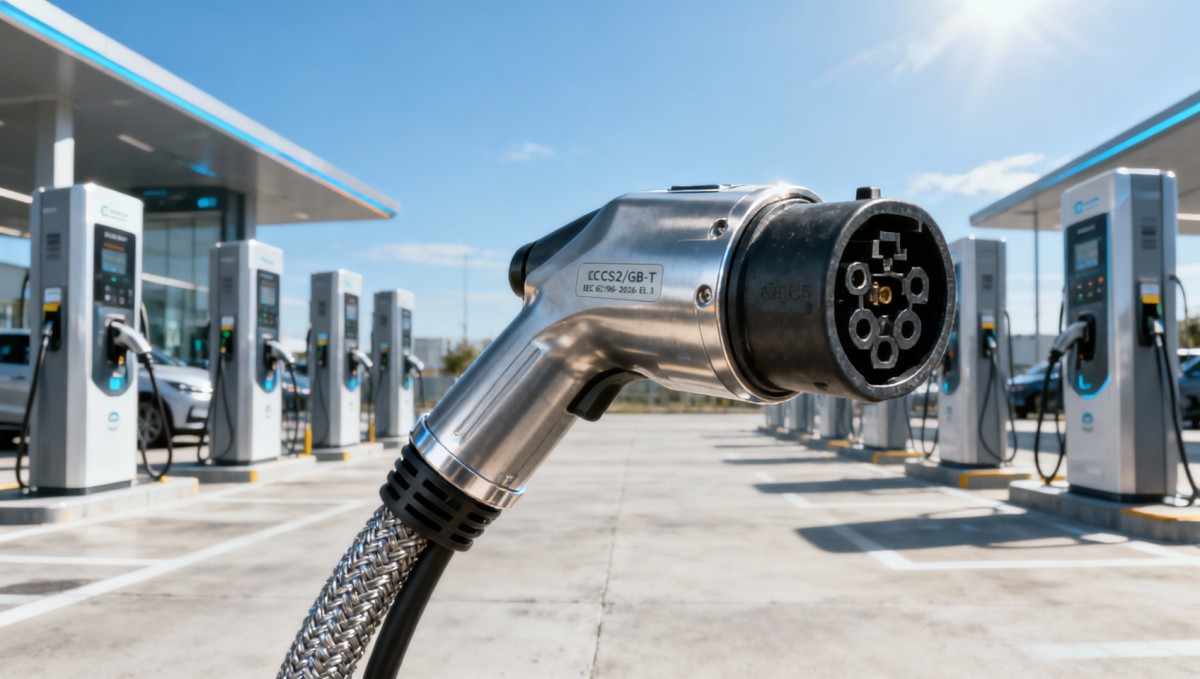
China’s electric vehicle charging infrastructure reached 21.481 million units as of April 27, 2026, with a 46.9% year-on-year growth in total public and private chargers. The update to IEC 62196-3:2026 Ed.3 — introducing new requirements for liquid-cooled connector cable durability and CCS2/GB/T 20234.3 protocol interoperability — has triggered a mandatory transition timeline. Exporters of EV charging equipment, on-board chargers (OBC), and DC-DC converters must complete certification to the revised standard by Q3 2026 to maintain market access in North America, Australia/New Zealand, and South Korea.
Event Overview
On April 27, 2026, China’s National Energy Administration reported that the national total of EV charging infrastructure units stood at 21.481 million, reflecting a 46.9% increase compared to the same period in 2025. Concurrently, the third edition of IEC 62196-3 (published in 2026) entered its mandatory conversion phase. Key technical updates include clauses addressing liquid-cooled gun cable durability and hybrid compatibility between CCS2 and GB/T 20234.3 communication protocols. Exporters of EV charging infrastructure, on-board chargers (OBC), and DC-DC converters are required to obtain certification to this updated standard before the end of Q3 2026 to comply with regulatory requirements in target export markets.
Industries Affected
Direct Exporters (EV Charger & OBC Manufacturers)
These enterprises face direct compliance pressure, as IEC 62196-3:2026 Ed.3 is now referenced in safety and market access regulations across North America, Australia/New Zealand, and South Korea. Non-compliance after Q3 2026 may result in shipment holds, customs rejections, or withdrawal from certified product listings.
Power Electronics Component Suppliers (e.g., SiC MOSFETs, Isolation ICs, Connector Assemblies)
Suppliers providing critical subsystems — such as high-current connectors, thermal management modules, or CAN-FD interface components used in liquid-cooled charging systems — may experience design revision requests. New durability and interoperability testing requirements could necessitate updated qualification reports or material declarations.
Testing & Certification Service Providers
Accredited labs and certification bodies are observing increased demand for IEC 62196-3:2026 Ed.3 test cycles, particularly for combined protocol validation and extended thermal cycling under load. Capacity constraints may emerge if adoption accelerates ahead of the Q3 deadline.
Supply Chain & Logistics Operators
Operators managing cross-border shipments of certified chargers or OBCs must verify documentation alignment with the new standard prior to customs clearance. Discrepancies between declared conformity status and actual certification scope (e.g., legacy vs. Ed.3) may trigger verification delays in destination markets.
What Enterprises Should Focus On and How to Respond
Monitor official implementation guidance from national certification bodies
While IEC 62196-3:2026 Ed.3 is an international standard, its enforcement timelines and transitional arrangements vary by jurisdiction. Enterprises should track updates from UL Solutions (for North America), SAI Global (for Australia/New Zealand), and KATS (for South Korea), as well as CNCA announcements regarding domestic conformity assessment pathways.
Verify protocol stack compatibility for dual-standard products
Products designed for both CCS2 and GB/T 20234.3 interoperability must undergo functional validation under the revised Annex D and Clause 8.5.1 of IEC 62196-3:2026 Ed.3. Firms should prioritize firmware and communication layer testing before initiating full-system safety certification.
Distinguish between policy announcement and operational readiness
The April 27, 2026 announcement confirms the start of the transition window but does not specify grace periods beyond Q3 2026. Enterprises should treat the Q3 deadline as binding unless explicitly extended via formal notice — not as a soft target or indicative of phased enforcement.
Prepare documentation and component traceability in advance
Certification applications require full bill-of-materials (BOM) traceability, especially for connector housings, cable jackets, and thermal interface materials used in liquid-cooled assemblies. Firms should initiate supplier data collection and material declaration reviews now to avoid bottlenecks during submission.
Editorial Perspective / Industry Observation
Observably, this development signals a tightening of technical harmonization at the interface between Chinese EV infrastructure deployment and global market gateways. Analysis shows that the inclusion of liquid-cooling durability and mixed-protocol clauses reflects real-world engineering shifts — not merely theoretical updates. From an industry perspective, the Q3 2026 deadline functions less as a final cutoff and more as a synchronization point: it aligns domestic production cycles with overseas regulatory review calendars. Current certification lead times for complex EV power electronics already exceed 12 weeks; therefore, the window represents a logistical constraint, not just a compliance milestone.
It is more accurate to interpret this as an operational signal than a completed regulatory outcome — the standard is active, but enforcement mechanisms remain jurisdiction-specific and subject to local interpretation. Sustained attention is warranted because downstream impacts (e.g., revised procurement specs from Tier 1 OEMs or updated tender requirements from foreign utilities) often lag formal publication by several months.
Conclusively, this update underscores how rapidly evolving physical infrastructure standards — once considered secondary to battery or vehicle regulation — are now decisive factors in global EV supply chain viability. It is not yet a barrier, but rather a timing-sensitive coordination challenge requiring proactive technical and documentary preparation. Enterprises are better served treating it as a near-term operational priority than a distant regulatory horizon.
Source: National Energy Administration of China (April 27, 2026 announcement); IEC 62196-3:2026 Ed.3 official publication; UL Solutions and KATS public compliance bulletins (Q2 2026).
Parts requiring ongoing observation include: exact enforcement dates in individual jurisdictions beyond Q3 2026, and whether legacy certifications will be grandfathered under transitional provisions.
Recommended News
 Wuwen Xinqiong Raises $100M+ for AI Agent Infrastructure in ManufacturingWuwen Xinqiong raises $100M+ for AI agent infrastructure in manufacturing — enabling multilingual BOM coordination, automated quality inspection, and cross-border supply chain agility. Discover the impact.
 Q1 Regional Export Growth: Shaanxi, Hainan, Chongqing LeadQ1 Regional Export Growth: Shaanxi, Hainan, Chongqing lead with +73.7%, +38.5%, +34.3% — key for OEMs, procurement & logistics teams optimizing RCEP-compliant sourcing.
 EV Charging Infrastructure Hits 21.48M Units; IEC 62196-3:2026 Ed.3 Certification Window OpensEV charging infrastructure hits 21.48M units; IEC 62196-3:2026 Ed.3 certification window is open—act now to meet Q3 2026 compliance deadlines for North America, ANZ & South Korea.
 MIIT Releases Industrial Data Application Guidance for Smart SensorsMIIT's new Industrial Data Application Guidance reshapes smart sensor exports—mandating metadata tagging, data rights verification & cross-platform interfaces for EU/US market access.
 Q1 2026 Industrial Profits Up 15.5%: Stability Boosts Precision Hardware ExportsPrecision hardware & mold exporters gain pricing stability and reliable delivery as Q1 2026 industrial profits rise 15.5% — key insight for global buyers and OEMs.
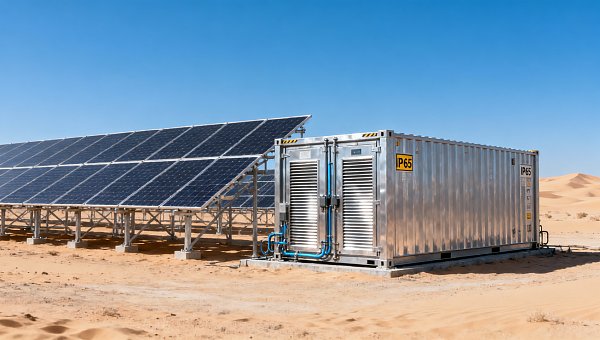
 China's Renewable Capacity Hits 2.395B kW; PV Mounting & ESS Containers Gain Priority in Middle EastPV mounting & ESS containers gain priority in Middle East as China’s renewable capacity hits 2.395B kW — seize verified project case advantages now.
 MIIT Launches 'Model-Data Resonance' Initiative for AI Agent FactoriesModel-Data Resonance initiative launched by MIIT: AI agent factories boost cross-border customization, rapid prototyping & multilingual compliance for global manufacturers.
 Canton Fair Phase II 2026: China’s Smart Factory Equipment Advances Global Standard SettingCanton Fair Phase II 2026 spotlighted China’s smart factory equipment driving global standard setting — explore IEC/ISO draft proposals for robots, AGVs & digital twins.
 EU Cybersecurity Law Revision Sparks PPM Compliance ResponseEU Cybersecurity Law revision demands PPM compliance for smart hardware exporters—CCTV, smart locks, industrial routers & AIoT gateways face new firmware-level security mandates.
 China Launches Joint Enforcement on EV Battery RecyclingChina's EV battery recycling enforcement impacts exporters of lithium-ion recycling equipment, BMS tools & second-life modules—key for EU, SEA & LATAM markets. Act now.
 Portable oxygen concentrators vary more in noise than spec sheets suggestPortable oxygen concentrators may share similar specs, yet real-world noise can vary widely. Learn what decibel ratings miss and choose a quieter, more comfortable model with confidence.
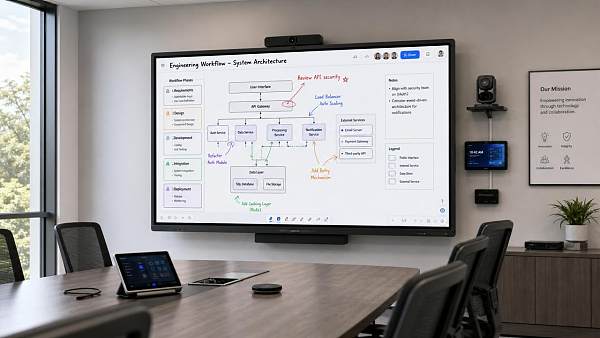
 Interactive whiteboards are easier to buy than to integrate wellInteractive whiteboards are easy to buy, but hard to integrate. Discover how to align workflows, IT, training, and ROI for smarter deployment.
![]() Medical diagnostic equipment upgrades should start with workflow bottlenecksMedical diagnostic equipment upgrades should start with workflow bottlenecks. Discover how targeted investments improve throughput, integration, ROI, and diagnostic efficiency.
Medical diagnostic equipment upgrades should start with workflow bottlenecksMedical diagnostic equipment upgrades should start with workflow bottlenecks. Discover how targeted investments improve throughput, integration, ROI, and diagnostic efficiency.![]() Eco-friendly building materials can raise budgets before they lower themEco-friendly building materials may raise upfront budgets, but they can cut long-term costs, improve compliance, and strengthen asset value. Learn when the premium truly pays off.
Eco-friendly building materials can raise budgets before they lower themEco-friendly building materials may raise upfront budgets, but they can cut long-term costs, improve compliance, and strengthen asset value. Learn when the premium truly pays off. Ergonomic workspace design fixes discomfort, but not every layout problemErgonomic workspace design improves comfort, focus, and buying decisions—but not every layout issue. Learn what upgrades work, what room limits remain, and how to choose smarter.
![]() Outdoor garden supplies demand shifts earlier than many sellers plan forOutdoor garden supplies demand is starting earlier than many sellers expect. Learn what drives the shift and how distributors, wholesalers, and agents can plan smarter to win more sales.
Outdoor garden supplies demand shifts earlier than many sellers plan forOutdoor garden supplies demand is starting earlier than many sellers expect. Learn what drives the shift and how distributors, wholesalers, and agents can plan smarter to win more sales. Sustainable home decor sells better when materials are easy to verifySustainable home decor sells better when material claims are easy to verify. Discover how traceable data, certifications, and clear sourcing build trust and boost B2B sales.
 Modern office furniture trends are changing around hybrid work needsModern office furniture trends are redefining hybrid workplaces with flexible layouts, ergonomic design, and smart tech integration. Discover what drives demand and smarter buying decisions.
 Smart street lighting projects often miss the maintenance sideSmart street lighting projects often overlook maintenance. Learn how diagnostics, spare parts, and scenario-based support improve reliability, reduce downtime, and protect long-term value.
 Solid-state battery breakthroughs are real, but mass rollout is still difficultSolid-state battery breakthroughs are real, but scaling remains difficult. Explore what’s driving progress, what blocks mass rollout, and where commercialization may happen first.
![]() Commercial LED lighting retrofits save money, but not at the same paceCommercial LED lighting can cut costs, but payback varies by warehouse, office, retail, and industrial scenario. Discover how to identify the fastest-return retrofit opportunities.
Commercial LED lighting retrofits save money, but not at the same paceCommercial LED lighting can cut costs, but payback varies by warehouse, office, retail, and industrial scenario. Discover how to identify the fastest-return retrofit opportunities.













Popular Tags
Global Trade Insights & Industry
Our mission is to empower global exporters and importers with data-driven insights that foster strategic growth.
Search News
Popular Tags
Industry Overview
The global commercial kitchen equipment market is projected to reach $112 billion by 2027. Driven by urbanization, the rise of e-commerce food delivery, and strict hygiene regulations.