

MIIT Launches 'Model-Data Resonance' Initiative for AI Agent Factories
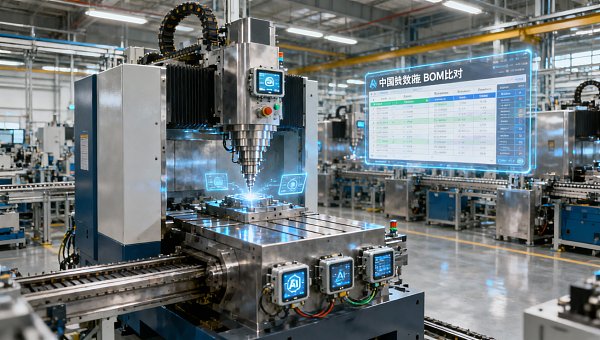
On May 6, 2026, the Ministry of Industry and Information Technology (MIIT) and the National Data Administration jointly launched the ‘Model-Data Resonance’ initiative — a targeted effort to deploy AI agent factories across 20 key manufacturing cities including Shenzhen, Suzhou, and Hefei. The action targets 20 major industrial sectors and aims to strengthen digital responsiveness for cross-border customized production, particularly for enterprises engaged in export-oriented design, rapid prototyping, and multi-market compliance fulfillment.
Event Overview
On May 6, 2026, MIIT and the National Data Administration officially initiated the ‘Model-Data Resonance’ action. The initiative deploys AI agent factories in 20 priority cities, focusing on 20 key manufacturing industries. Confirmed capabilities include small-batch fast-response production, parametric design support, and multilingual process knowledge graphs. Its stated objective is to shorten lead times for Chinese suppliers fulfilling overseas personalized orders — such as custom tooling fixtures, region-specific UI interfaces for home appliances, and multi-country certification label printing — thereby advancing ‘Design-to-Delivery’ as a new benchmark for end-to-end digital delivery in global supply collaboration.
Industries Affected
Direct Exporters & OEM/ODM Manufacturers
These firms face direct pressure to meet tighter overseas delivery windows and more granular customization requirements. The initiative enables faster iteration between design input and physical output — especially for orders requiring localized UI, regulatory labeling, or mechanical adaptations. Impact manifests in revised quoting cycles, increased demand for version-controlled digital assets, and higher expectations around real-time order tracking across geographies.
Contract Manufacturing & Tier-2 Component Suppliers
Suppliers embedded in extended manufacturing networks may receive more frequent, smaller, and technically heterogeneous orders — e.g., fixture sets with country-specific safety markings or PCB assemblies with language-localized firmware. This increases complexity in change management, documentation traceability, and validation handoffs across engineering, production, and QA functions.
Supply Chain Enablers (Logistics, Certification, Localization Services)
Third-party providers supporting cross-border production — such as testing labs, multilingual technical documentation agencies, and regional compliance consultants — are likely to see rising demand for integrated, API-accessible service modules. The emphasis on ‘multilingual process knowledge graphs’ signals a shift toward structured, machine-readable compliance data — not just translated text.
What Enterprises and Practitioners Should Monitor and Act On
Track official rollout timelines and city-specific implementation roadmaps
The initiative names 20 cities and 20 industries but does not yet specify sequencing, eligibility criteria, or access mechanisms for non-state-owned enterprises. Companies should monitor announcements from local MIIT branches and provincial data bureaus for pilot participation windows and technical integration guidelines.
Assess exposure to high-impact order types
Businesses should identify whether their current or near-future export portfolios include products subject to rapid UI localization, multi-certification labeling (e.g., CE, FCC, KC, BIS), or mechanical customization (e.g., jigs, fixtures, mounting hardware). These categories are explicitly cited as early use cases and thus most likely to experience accelerated adoption of AI agent factory workflows.
Distinguish policy signal from operational readiness
While the initiative sets a strategic direction, AI agent factories require integration with existing PLM, MES, and ERP systems — and depend on structured product data inputs. Firms should avoid assuming immediate capability; instead, prioritize internal data hygiene (e.g., standardized BOMs, parameterized CAD models, consistent metadata tagging) as foundational preparation.
Prepare for upstream communication shifts
Overseas buyers may begin referencing ‘Design-to-Delivery’ benchmarks in RFPs or contract renewals — especially for repeat-customization programs. Suppliers should proactively align internal quoting, engineering change, and quality assurance protocols with digital deliverables (e.g., versioned 3D models, automated label PDF generation, UI asset bundles), rather than waiting for formal mandates.
Editorial Perspective / Industry Observation
Observably, the ‘Model-Data Resonance’ initiative functions primarily as a coordination signal — not an immediately executable program. It reflects a deliberate effort to synchronize AI model development (e.g., domain-specific LLMs for manufacturing processes) with industrial data infrastructure (e.g., standardized, semantically tagged production records). Analysis shows this is less about deploying standalone ‘AI factories’ and more about incentivizing interoperable digital twins across fragmented manufacturing ecosystems. From an industry perspective, its significance lies not in immediate capacity expansion, but in the formal elevation of ‘design-integrated delivery’ as a national competitiveness metric — one that will increasingly shape procurement criteria, subsidy frameworks, and export financing conditions over the next 12–24 months.

Conclusion
At present, the ‘Model-Data Resonance’ initiative is best understood as a structural alignment effort — clarifying how AI capabilities will interface with real-world manufacturing constraints and global market demands. It does not replace existing production systems but signals where investment in digital readiness (data structure, API connectivity, multilingual process documentation) will yield increasing strategic advantage. For stakeholders, sustained attention to implementation details — not just the headline — remains essential.
Information Sources
Main source: Official announcement by the Ministry of Industry and Information Technology (MIIT) and the National Data Administration, issued May 6, 2026. Note: Specific rollout schedules, vendor selection criteria, and technical specifications for AI agent factories remain pending and are subject to further official disclosure.
Recommended News
 Wuwen Xinqiong Raises $100M+ for AI Agent Infrastructure in ManufacturingWuwen Xinqiong raises $100M+ for AI agent infrastructure in manufacturing — enabling multilingual BOM coordination, automated quality inspection, and cross-border supply chain agility. Discover the impact.
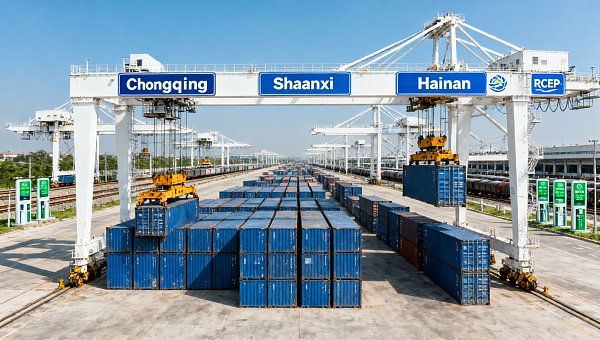
 Q1 Regional Export Growth: Shaanxi, Hainan, Chongqing LeadQ1 Regional Export Growth: Shaanxi, Hainan, Chongqing lead with +73.7%, +38.5%, +34.3% — key for OEMs, procurement & logistics teams optimizing RCEP-compliant sourcing.
 EV Charging Infrastructure Hits 21.48M Units; IEC 62196-3:2026 Ed.3 Certification Window OpensEV charging infrastructure hits 21.48M units; IEC 62196-3:2026 Ed.3 certification window is open—act now to meet Q3 2026 compliance deadlines for North America, ANZ & South Korea.
 MIIT Releases Industrial Data Application Guidance for Smart SensorsMIIT's new Industrial Data Application Guidance reshapes smart sensor exports—mandating metadata tagging, data rights verification & cross-platform interfaces for EU/US market access.
 Q1 2026 Industrial Profits Up 15.5%: Stability Boosts Precision Hardware ExportsPrecision hardware & mold exporters gain pricing stability and reliable delivery as Q1 2026 industrial profits rise 15.5% — key insight for global buyers and OEMs.
 China's Renewable Capacity Hits 2.395B kW; PV Mounting & ESS Containers Gain Priority in Middle EastPV mounting & ESS containers gain priority in Middle East as China’s renewable capacity hits 2.395B kW — seize verified project case advantages now.
 MIIT Launches 'Model-Data Resonance' Initiative for AI Agent FactoriesModel-Data Resonance initiative launched by MIIT: AI agent factories boost cross-border customization, rapid prototyping & multilingual compliance for global manufacturers.
 Canton Fair Phase II 2026: China’s Smart Factory Equipment Advances Global Standard SettingCanton Fair Phase II 2026 spotlighted China’s smart factory equipment driving global standard setting — explore IEC/ISO draft proposals for robots, AGVs & digital twins.
 EU Cybersecurity Law Revision Sparks PPM Compliance ResponseEU Cybersecurity Law revision demands PPM compliance for smart hardware exporters—CCTV, smart locks, industrial routers & AIoT gateways face new firmware-level security mandates.
 China Launches Joint Enforcement on EV Battery RecyclingChina's EV battery recycling enforcement impacts exporters of lithium-ion recycling equipment, BMS tools & second-life modules—key for EU, SEA & LATAM markets. Act now.
 Portable oxygen concentrators vary more in noise than spec sheets suggestPortable oxygen concentrators may share similar specs, yet real-world noise can vary widely. Learn what decibel ratings miss and choose a quieter, more comfortable model with confidence.
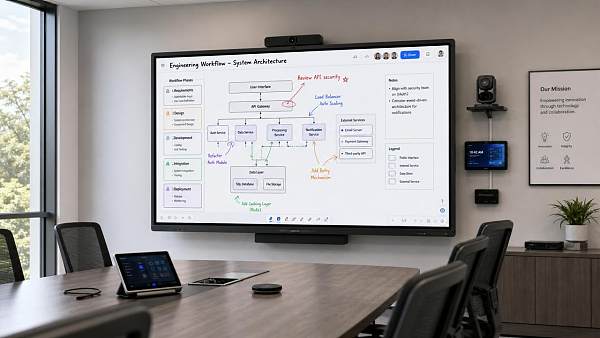
 Interactive whiteboards are easier to buy than to integrate wellInteractive whiteboards are easy to buy, but hard to integrate. Discover how to align workflows, IT, training, and ROI for smarter deployment.
![]() Medical diagnostic equipment upgrades should start with workflow bottlenecksMedical diagnostic equipment upgrades should start with workflow bottlenecks. Discover how targeted investments improve throughput, integration, ROI, and diagnostic efficiency.
Medical diagnostic equipment upgrades should start with workflow bottlenecksMedical diagnostic equipment upgrades should start with workflow bottlenecks. Discover how targeted investments improve throughput, integration, ROI, and diagnostic efficiency.![]() Eco-friendly building materials can raise budgets before they lower themEco-friendly building materials may raise upfront budgets, but they can cut long-term costs, improve compliance, and strengthen asset value. Learn when the premium truly pays off.
Eco-friendly building materials can raise budgets before they lower themEco-friendly building materials may raise upfront budgets, but they can cut long-term costs, improve compliance, and strengthen asset value. Learn when the premium truly pays off. Ergonomic workspace design fixes discomfort, but not every layout problemErgonomic workspace design improves comfort, focus, and buying decisions—but not every layout issue. Learn what upgrades work, what room limits remain, and how to choose smarter.
![]() Outdoor garden supplies demand shifts earlier than many sellers plan forOutdoor garden supplies demand is starting earlier than many sellers expect. Learn what drives the shift and how distributors, wholesalers, and agents can plan smarter to win more sales.
Outdoor garden supplies demand shifts earlier than many sellers plan forOutdoor garden supplies demand is starting earlier than many sellers expect. Learn what drives the shift and how distributors, wholesalers, and agents can plan smarter to win more sales. Sustainable home decor sells better when materials are easy to verifySustainable home decor sells better when material claims are easy to verify. Discover how traceable data, certifications, and clear sourcing build trust and boost B2B sales.
 Modern office furniture trends are changing around hybrid work needsModern office furniture trends are redefining hybrid workplaces with flexible layouts, ergonomic design, and smart tech integration. Discover what drives demand and smarter buying decisions.
 Smart street lighting projects often miss the maintenance sideSmart street lighting projects often overlook maintenance. Learn how diagnostics, spare parts, and scenario-based support improve reliability, reduce downtime, and protect long-term value.
 Solid-state battery breakthroughs are real, but mass rollout is still difficultSolid-state battery breakthroughs are real, but scaling remains difficult. Explore what’s driving progress, what blocks mass rollout, and where commercialization may happen first.
![]() Commercial LED lighting retrofits save money, but not at the same paceCommercial LED lighting can cut costs, but payback varies by warehouse, office, retail, and industrial scenario. Discover how to identify the fastest-return retrofit opportunities.
Commercial LED lighting retrofits save money, but not at the same paceCommercial LED lighting can cut costs, but payback varies by warehouse, office, retail, and industrial scenario. Discover how to identify the fastest-return retrofit opportunities.















Popular Tags
Global Trade Insights & Industry
Our mission is to empower global exporters and importers with data-driven insights that foster strategic growth.
Search News
Popular Tags
Industry Overview
The global commercial kitchen equipment market is projected to reach $112 billion by 2027. Driven by urbanization, the rise of e-commerce food delivery, and strict hygiene regulations.