

Q1 Regional Export Growth: Shaanxi, Hainan, Chongqing Lead
As of April 22, 2026, export growth in Shaanxi (+73.7%), Hainan (+38.5%), and Chongqing (+34.3%) significantly outpaced the national average in Q1 2026 — signaling emerging shifts in electronics assembly, sustainable packaging, and contract manufacturing supply chains. This development is especially relevant for global procurement teams, OEMs, and logistics service providers managing alternative sourcing strategies amid evolving trade compliance and lead-time pressures.
Event Overview
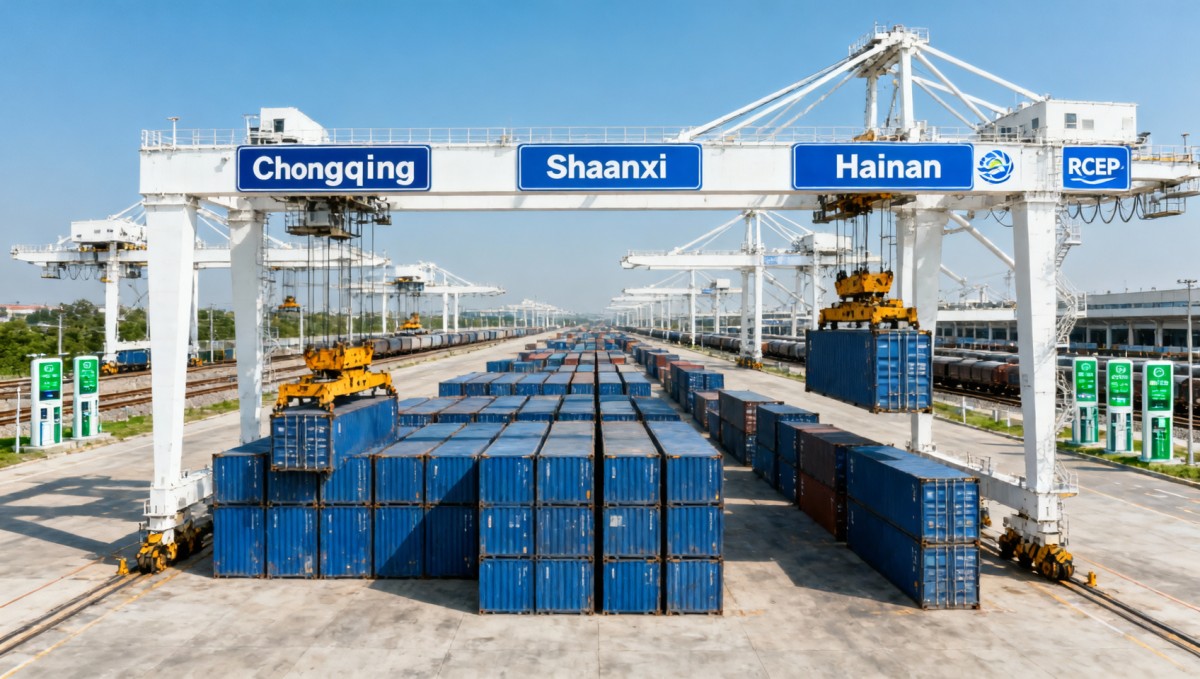
As of April 22, 2026, 29 Chinese provinces had publicly released their Q1 2026 foreign trade statistics. Among them, Shaanxi Province reported export growth of +73.7% year-on-year, Hainan Province +38.5%, and Chongqing Municipality +34.3%. According to official summaries, Shaanxi’s growth was driven by semiconductor wafer-level testing equipment exports; Hainan’s by eco-friendly food packaging (e.g., PLA and bagasse-based materials); and Chongqing’s by smart wearable device contract manufacturing. The data attributes this acceleration to improved inland port clearance efficiency and deeper application of RCEP origin rules.
Which Subsectors Are Affected
Direct Trading Enterprises
These firms — particularly those importing from or exporting to ASEAN, Japan, and South Korea — may experience shorter effective lead times and lower origin certification friction when sourcing from Shaanxi, Hainan, or Chongqing. Impact manifests in faster customs clearance for RCEP-eligible goods and increased availability of compliant documentation.
Raw Material Procurement Firms
Firms sourcing bioplastics (e.g., PLA) or fiber-based packaging substrates may observe rising supplier capacity and competitive pricing from Hainan-based producers. The growth reflects scaling of local upstream processing — not just finished goods — though raw material origin traceability remains subject to verification.
Contract Manufacturing & Electronics Assembly Firms
Companies relying on ODM/OEM partners for semiconductor test equipment (Shaanxi) or wearables (Chongqing) may see expanded vendor options with shorter production cycles. However, this does not imply automatic scalability: current growth reflects specific product lines, not broad industrial capacity expansion.
Supply Chain Service Providers
Logistics, freight forwarding, and trade compliance service providers active in inland China must now accommodate higher volumes of RCEP-certified shipments originating from non-coastal hubs. This includes verifying origin declarations, managing inland container movement, and supporting clients’ rule-of-origin documentation workflows.
What Relevant Firms or Practitioners Should Focus On
Monitor official RCEP implementation updates from provincial customs authorities
Shaanxi, Hainan, and Chongqing have each published localized guidance on RCEP origin certification. Current procedures remain subject to refinement — particularly regarding electronic origin declaration integration and post-clearance audits.
Track shipment-level performance of key categories
Focus on actual transit times, certificate issuance latency, and rejection rates for PLA packaging (Hainan), semiconductor test handlers (Shaanxi), and Bluetooth-enabled wearables (Chongqing). Aggregate growth figures do not guarantee uniform reliability across all SKUs or consignments.
Distinguish between policy enablement and operational readiness
While improved clearance efficiency is confirmed, infrastructure constraints — such as cold-chain handling for perishable packaging or cleanroom capacity for high-precision test equipment — are not addressed in the published data. Due diligence remains essential before shifting volume.
Prepare documentation templates aligned with regional RCEP practices
Some provincial customs offices accept digital origin applications via local platforms rather than the national single window. Early adoption of compatible formats can reduce delays during peak filing periods.
Editorial Perspective / Industry Observation
Observably, this Q1 data reflects a structural shift — not just cyclical rebound. The concentration of growth in three distinct, non-coastal regions, each anchored to different export categories (semiconductor capital goods, green packaging, consumer electronics), suggests diversification beyond traditional coastal manufacturing clusters. Analysis shows this is less about wholesale relocation and more about targeted capability scaling enabled by procedural reforms (e.g., RCEP rule application) and infrastructure upgrades. It is currently best understood as an early-stage signal: evidence of functional adaptation rather than a fully matured alternative supply ecosystem. Sustained monitoring is warranted — particularly of whether growth persists beyond Q1 and whether it extends to broader product categories or deeper tiers of the supply chain.
Conclusion
This data underscores how regional trade facilitation — not just macroeconomic conditions — is reshaping sourcing geography. For international buyers and supply chain planners, it signals opportunity but not immediacy: the value lies in identifying viable, compliant, and scalable alternatives — not assuming parity with established hubs. Current evidence supports selective engagement, not wholesale reconfiguration.
Information Sources
Provincial Customs Authorities (Shaanxi, Hainan, Chongqing); General Administration of Customs of China (Q1 2026 provincial data release, April 22, 2026).
Note: RCEP implementation details and inland port throughput metrics remain under continuous observation and are not yet finalized in public domain reports.
Recommended News
 Wuwen Xinqiong Raises $100M+ for AI Agent Infrastructure in ManufacturingWuwen Xinqiong raises $100M+ for AI agent infrastructure in manufacturing — enabling multilingual BOM coordination, automated quality inspection, and cross-border supply chain agility. Discover the impact.
 Q1 Regional Export Growth: Shaanxi, Hainan, Chongqing LeadQ1 Regional Export Growth: Shaanxi, Hainan, Chongqing lead with +73.7%, +38.5%, +34.3% — key for OEMs, procurement & logistics teams optimizing RCEP-compliant sourcing.
 EV Charging Infrastructure Hits 21.48M Units; IEC 62196-3:2026 Ed.3 Certification Window OpensEV charging infrastructure hits 21.48M units; IEC 62196-3:2026 Ed.3 certification window is open—act now to meet Q3 2026 compliance deadlines for North America, ANZ & South Korea.
 MIIT Releases Industrial Data Application Guidance for Smart SensorsMIIT's new Industrial Data Application Guidance reshapes smart sensor exports—mandating metadata tagging, data rights verification & cross-platform interfaces for EU/US market access.
 Q1 2026 Industrial Profits Up 15.5%: Stability Boosts Precision Hardware ExportsPrecision hardware & mold exporters gain pricing stability and reliable delivery as Q1 2026 industrial profits rise 15.5% — key insight for global buyers and OEMs.
 China's Renewable Capacity Hits 2.395B kW; PV Mounting & ESS Containers Gain Priority in Middle EastPV mounting & ESS containers gain priority in Middle East as China’s renewable capacity hits 2.395B kW — seize verified project case advantages now.
 MIIT Launches 'Model-Data Resonance' Initiative for AI Agent FactoriesModel-Data Resonance initiative launched by MIIT: AI agent factories boost cross-border customization, rapid prototyping & multilingual compliance for global manufacturers.
 Canton Fair Phase II 2026: China’s Smart Factory Equipment Advances Global Standard SettingCanton Fair Phase II 2026 spotlighted China’s smart factory equipment driving global standard setting — explore IEC/ISO draft proposals for robots, AGVs & digital twins.
 EU Cybersecurity Law Revision Sparks PPM Compliance ResponseEU Cybersecurity Law revision demands PPM compliance for smart hardware exporters—CCTV, smart locks, industrial routers & AIoT gateways face new firmware-level security mandates.
 China Launches Joint Enforcement on EV Battery RecyclingChina's EV battery recycling enforcement impacts exporters of lithium-ion recycling equipment, BMS tools & second-life modules—key for EU, SEA & LATAM markets. Act now.
 Portable oxygen concentrators vary more in noise than spec sheets suggestPortable oxygen concentrators may share similar specs, yet real-world noise can vary widely. Learn what decibel ratings miss and choose a quieter, more comfortable model with confidence.
 Interactive whiteboards are easier to buy than to integrate wellInteractive whiteboards are easy to buy, but hard to integrate. Discover how to align workflows, IT, training, and ROI for smarter deployment.
![]() Medical diagnostic equipment upgrades should start with workflow bottlenecksMedical diagnostic equipment upgrades should start with workflow bottlenecks. Discover how targeted investments improve throughput, integration, ROI, and diagnostic efficiency.
Medical diagnostic equipment upgrades should start with workflow bottlenecksMedical diagnostic equipment upgrades should start with workflow bottlenecks. Discover how targeted investments improve throughput, integration, ROI, and diagnostic efficiency.![]() Eco-friendly building materials can raise budgets before they lower themEco-friendly building materials may raise upfront budgets, but they can cut long-term costs, improve compliance, and strengthen asset value. Learn when the premium truly pays off.
Eco-friendly building materials can raise budgets before they lower themEco-friendly building materials may raise upfront budgets, but they can cut long-term costs, improve compliance, and strengthen asset value. Learn when the premium truly pays off. Ergonomic workspace design fixes discomfort, but not every layout problemErgonomic workspace design improves comfort, focus, and buying decisions—but not every layout issue. Learn what upgrades work, what room limits remain, and how to choose smarter.
![]() Outdoor garden supplies demand shifts earlier than many sellers plan forOutdoor garden supplies demand is starting earlier than many sellers expect. Learn what drives the shift and how distributors, wholesalers, and agents can plan smarter to win more sales.
Outdoor garden supplies demand shifts earlier than many sellers plan forOutdoor garden supplies demand is starting earlier than many sellers expect. Learn what drives the shift and how distributors, wholesalers, and agents can plan smarter to win more sales. Sustainable home decor sells better when materials are easy to verifySustainable home decor sells better when material claims are easy to verify. Discover how traceable data, certifications, and clear sourcing build trust and boost B2B sales.
 Modern office furniture trends are changing around hybrid work needsModern office furniture trends are redefining hybrid workplaces with flexible layouts, ergonomic design, and smart tech integration. Discover what drives demand and smarter buying decisions.
 Smart street lighting projects often miss the maintenance sideSmart street lighting projects often overlook maintenance. Learn how diagnostics, spare parts, and scenario-based support improve reliability, reduce downtime, and protect long-term value.
 Solid-state battery breakthroughs are real, but mass rollout is still difficultSolid-state battery breakthroughs are real, but scaling remains difficult. Explore what’s driving progress, what blocks mass rollout, and where commercialization may happen first.
![]() Commercial LED lighting retrofits save money, but not at the same paceCommercial LED lighting can cut costs, but payback varies by warehouse, office, retail, and industrial scenario. Discover how to identify the fastest-return retrofit opportunities.
Commercial LED lighting retrofits save money, but not at the same paceCommercial LED lighting can cut costs, but payback varies by warehouse, office, retail, and industrial scenario. Discover how to identify the fastest-return retrofit opportunities.
















Popular Tags
Global Trade Insights & Industry
Our mission is to empower global exporters and importers with data-driven insights that foster strategic growth.
Search News
Popular Tags
Industry Overview
The global commercial kitchen equipment market is projected to reach $112 billion by 2027. Driven by urbanization, the rise of e-commerce food delivery, and strict hygiene regulations.