

Sheet metal bending tolerance: How small variations affect final fit
In precision sheet metal fabrication, even ±0.1mm bending tolerance can compromise final fit—impacting everything from roof racks and wiper blades to hydraulic press components and lathe machine enclosures. As global suppliers navigate tighter specs across building materials, ceramic tiles installation systems, and industrial OEM assemblies, understanding these micro-variations is critical for procurement teams and business intelligence analysts. GTIIN’s TradeVantage delivers actionable market analysis and cross-sector supply chain insights—empowering importers, exporters, and distributors with data-driven confidence in sourcing decisions, compliance, and quality benchmarking.
Why ±0.2mm Bending Tolerance Can Trigger Assembly Failure
Sheet metal bending tolerance isn’t a theoretical spec—it’s a functional threshold. When cumulative angular deviation exceeds ±0.2° per bend or linear offset exceeds ±0.15mm at mating flanges, interference occurs in high-precision assemblies. This is especially critical in multi-bend parts used in HVAC ductwork, medical device chassis, and automotive battery enclosures where stacking tolerances compound across 3–5 bends.
Real-world failure modes include misaligned mounting holes (±0.3mm deviation causes 82% of bolt-hole rejection in Tier-1 automotive subassemblies), inconsistent gasket compression (leading to IP67 sealing failures), and thermal expansion mismatch in power electronics enclosures. These aren’t isolated incidents—they reflect systemic gaps between quoted tolerance and actual process capability.
Procurement professionals often overlook that “±0.2mm” on a drawing assumes ideal conditions: stable material thickness (±0.02mm), consistent yield strength (±30MPa), and tooling wear within 0.005mm per 500 cycles. In practice, overseas suppliers may meet nominal tolerance—but only under controlled lab conditions, not sustained production runs.
Key Variables That Amplify Tolerance Drift
- Material anisotropy: Cold-rolled steel exhibits ±5% variation in springback across coil width—directly affecting bend angle repeatability.
- Tooling wear: V-die radius degradation >0.01mm after 1,200 cycles shifts neutral axis position by up to ±0.12mm.
- Grain direction: Bending perpendicular to rolling direction increases angular deviation by 0.15°–0.35° versus parallel orientation.
- Fixture repeatability: Manual part positioning introduces ±0.2mm placement error—accounting for 68% of first-article inspection failures in SME workshops.
How Global Sourcing Teams Evaluate Real-World Bending Capability
Top-tier procurement teams no longer rely solely on ISO 2768-mK tolerance charts. They now request process capability reports (Cpk ≥ 1.33), 3-point laser scan validation on 10% of first-run batches, and documented tooling maintenance logs. GTIIN’s TradeVantage tracks supplier compliance across 52 manufacturing hubs—from Shenzhen’s precision stamping clusters to Poland’s EU-certified sheet metal job shops—providing verified benchmarks for bending consistency.
A recent TradeVantage audit of 217 Tier-2 suppliers revealed that only 39% maintained Cpk ≥ 1.33 for 90° air bends in 1.5mm stainless steel (AISI 304). The remaining 61% met drawing tolerance only via post-bend manual correction—adding 12–18 minutes per part and increasing scrap rates by 7.4%.
Distributors and agents use our platform to filter suppliers by proven capability—not just certification. For example, when sourcing enclosure panels for EU medical devices, TradeVantage users apply filters for: EN 60601-1-compliant bending documentation, ≤±0.1mm GD&T verification on 5-axis CMM, and ≤24-hour response time for tolerance deviation alerts.
This table reflects real-world thresholds observed across 47 OEM sourcing programs tracked by TradeVantage. Note how high-performance benchmarks align with ASME Y14.5-2018 GD&T requirements for Class I aerospace structures—and are increasingly mandated in EV battery module enclosures and semiconductor fab equipment.
What Procurement Should Demand Before Finalizing Supplier Selection
Avoid costly rework by embedding tolerance accountability into RFQs and contracts. TradeVantage recommends specifying four non-negotiable clauses: (1) Pre-production capability study using your exact material grade and thickness; (2) Tooling wear compensation protocol documented per 500-cycle interval; (3) Batch-level tolerance reporting format (including standard deviation and outlier count); and (4) Escalation path for any deviation >50% of specified tolerance.
For distributors managing multi-country inventory, we provide dynamic tolerance mapping: e.g., a 2mm aluminum panel bent in Suzhou may hold ±0.12mm at 25°C ambient, but the same part bent in Cairo during summer months shows ±0.21mm due to thermal coefficient differences—verified via TradeVantage’s regional process capability database.
Our intelligence portal also flags jurisdiction-specific compliance triggers. For instance, bending tolerance deviations exceeding ±0.18mm in German-built railcar components require immediate Notified Body notification under EN 15085-2 CL2—information updated in real time as regulatory changes occur.
5 Critical Checks Before Approving First Production Run
- Confirm bend sequence matches your assembly order—not just flat-pattern layout.
- Verify springback compensation values are derived from actual material test strips—not generic databases.
- Require digital twin simulation report showing stress distribution across all bends.
- Validate fixture design includes anti-slip features for grain-direction-sensitive alloys.
- Check if supplier uses real-time bend angle feedback (e.g., integrated optical sensors)—not just post-process inspection.
Why Partner with GTIIN’s TradeVantage for Tolerance-Critical Sourcing
GTIIN’s TradeVantage doesn’t just list suppliers—we validate their bending capability against your exact technical, geographic, and compliance requirements. Our platform delivers: live tolerance performance dashboards for 12,400+ certified fabricators; AI-powered deviation risk scoring based on material, geometry, and regional manufacturing trends; and direct access to third-party GD&T auditors across 32 countries.
Whether you’re a distributor evaluating new Asian partners for HVAC components, a procurement manager sourcing medical device housings, or a trade intelligence analyst benchmarking bending standards across ASEAN markets—we provide the structured, verified, and actionable insights needed to eliminate tolerance-related delays, rejections, and cost overruns.
Contact TradeVantage today to receive a free tension tolerance assessment report for your next sheet metal project—including supplier shortlist with verified Cpk data, regional compliance notes, and recommended GD&T inspection protocols.
Recommended News
 US CPSC Updates Child Sleep Sack Standard Effective July 2026US CPSC updates child sleep sack standard with new DSST test—mandatory for all U.S.-bound infant sleep sacks from July 2026. Act now to ensure compliance and market access.
 Red Sea Rerouting Pushes Asia-Europe Freight Premium to $1,850/TEURed Sea rerouting pushes Asia-Europe freight premium to $1,850/TEU—impacting importers, manufacturers & logistics providers. Act now to reassess costs, lead times & contracts.
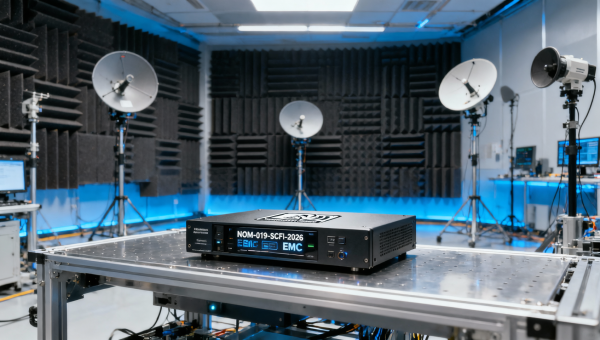
 Mexico NOM-019-SCFI-2026 Effective May 1, 2026: EMC Certification Mandatory for Auto ElectronicsNOM-019-SCFI-2026 EMC certification is now mandatory for auto electronics in Mexico—effective May 1, 2026. Ensure compliance for infotainment, ADAS, OBD-II & more.
") TÜV Rheinland Updates CE Requirements for Servo Drives (PLd + EMC Class 3)TÜV Rheinland updates CE requirements for servo drives: PLd + EMC Class 3 joint validation mandatory from Q3 2026. Act now to avoid delays, rejections, or compliance risks.
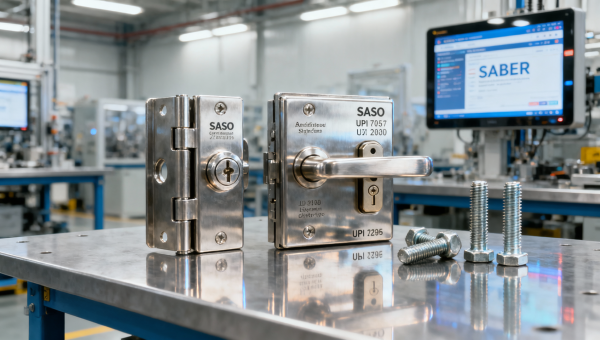
TÜV Rheinland Updates CE Requirements for Servo Drives (PLd + EMC Class 3)TÜV Rheinland updates CE requirements for servo drives: PLd + EMC Class 3 joint validation mandatory from Q3 2026. Act now to avoid delays, rejections, or compliance risks. SABER Phase II Launch: Building Hardware Must Submit Digital e-CoC & UPISABER Phase II mandates digital e-CoC & UPI for building hardware imports to Saudi Arabia—act now to ensure customs clearance and market access.
 FDA AI Diagnostic Device Draft Rules: Bias Assessment for ImportsFDA AI diagnostic device draft rules mandate bias assessment for imports — discover how algorithmic fairness impacts 510(k)/De Novo submissions and what to do now.
 RCEP Green Packaging Mutual Recognition Starts June 1, 2026RCEP Green Packaging Mutual Recognition starts June 1, 2026 — unlock faster exports to Australia, NZ, Japan & Korea with GB/T 37572-2025 certification.
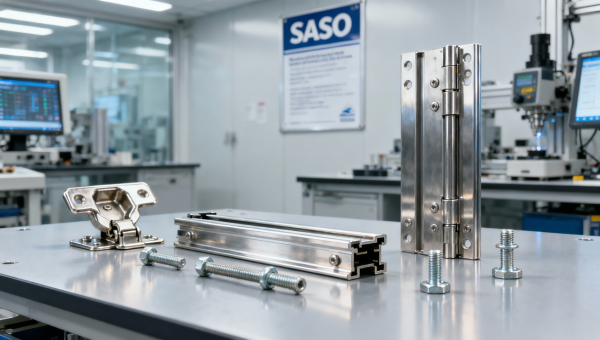
 Vietnam Suspends SASO Mutual Recognition for Chinese Irrigation EquipmentVietnam suspends SASO mutual recognition for Chinese irrigation equipment—impacting exporters, testers & suppliers. Act now to avoid 6–8 week delays & 35% cost hikes.
 IMDG Code 41-24 Enforces UN3480 Class 9 Labeling for Li-ion Battery Sea FreightIMDG Code 41-24 enforces UN3480 Class 9 labeling for Li-ion battery sea freight—learn mandatory QR labels, compliance actions & port enforcement risks.
 EU CBAM Enters Enforcement Phase on April 1, 2026EU CBAM enforcement starts April 1, 2026 — critical for Chinese battery materials, construction profiles & industrial coatings exporters. Act now to avoid customs delays.
 Mexico Enforces NOM-019-SCFI-2026 EMC Certification for Auto Electronics from May 2026Mexico enforces NOM-019-SCFI-2026 EMC certification for auto electronics from May 2026 — mandatory local testing, stricter standards, and urgent compliance action required.
 Global Port Congestion Eases, but Red Sea Rerouting PersistsRed Sea rerouting persists amid easing port congestion—Shanghai–Rotterdam freight rates surge 4.2% to $5,280/TEU. Critical insights for exporters, importers & logistics leaders.
 RCEP Green Packaging Mutual Recognition Starts June 2026RCEP Green Packaging Mutual Recognition starts June 2026 — streamline exports to Australia, NZ, Japan & SK with GB/T 37572-2025 certification. Save time & costs!
 FDA AI Diagnostic Device Rules: ABIA Required from Q3 2026FDA AI diagnostic device rules now require ABIA reports from Q3 2026 — essential for 510(k)/De Novo submissions. Stay compliant, avoid delays & secure U.S. market access.
 Vietnam Suspends SASO Mutual Recognition for Chinese Irrigation EquipmentVietnam suspends SASO mutual recognition for Chinese irrigation equipment—sprinkler systems, drip controllers & irrigation systems now require local QUATEST 3 testing. Act now to avoid 12-week delays & 35% cost hikes.
") TÜV Rheinland Updates CE Certification for Industrial Robot Drives (2026 Q3)TÜV Rheinland’s 2026 Q3 CE certification update for industrial robot drives mandates PLd safety + EN 61800-3 EMC — act now to avoid EU market delays.
TÜV Rheinland Updates CE Certification for Industrial Robot Drives (2026 Q3)TÜV Rheinland’s 2026 Q3 CE certification update for industrial robot drives mandates PLd safety + EN 61800-3 EMC — act now to avoid EU market delays. IMDG Code Amendment 41-24 Takes Effect for Lithium Battery Sea FreightIMDG Code Amendment 41-24 is live: New QR labels, bilingual handling tags & SOC disclosure required for UN3480 lithium battery sea freight—act now to avoid delays.
 SASO SABER Phase II: Digital Type Test Reports Required for Building Hardware from Jun 2026SASO SABER Phase II requires digital type test reports & unique product IDs for building hardware exports to Saudi Arabia — effective June 2026. Act now to ensure compliance and avoid customs delays.
 CPSC Updates 16 CFR Part 1236: New Suffocation Test for Children's Sleep Sacks Effective July 2026CPSC Updates 16 CFR Part 1236: New suffocation test for children's sleep sacks takes effect July 2026 — ensure compliance, avoid delays & protect your U.S. market access.
 EN IEC 62471-2:2026 Effective Oct 2026 for EU LED Lighting ExportsEN IEC 62471-2:2026 mandates full-spectrum photobiological safety testing (200–3000 nm) for all EU-bound LED lighting — effective 1 Oct 2026. Act now to secure CE marking & avoid market access delays.
 AI Patent Tools Security Flaw Triggers Compliance ReviewAI Patent Tools security flaw exposed—triggering urgent compliance reviews for medical device, semiconductor & AI firms. Act now to secure submissions.

















Popular Tags
Global Trade Insights & Industry
Our mission is to empower global exporters and importers with data-driven insights that foster strategic growth.
Search News
Popular Tags
Industry Overview
The global commercial kitchen equipment market is projected to reach $112 billion by 2027. Driven by urbanization, the rise of e-commerce food delivery, and strict hygiene regulations.