

SABER Phase II Launch: Building Hardware Must Submit Digital e-CoC & UPI
Effective 1 June 2026, Saudi Arabia’s SABER platform Phase II mandates digital type-test reports and unique product IDs for imported building materials and hardware — a development directly affecting exporters, manufacturers, and supply chain operators serving the Saudi construction and hardware markets.
Event Overview
On 20 April 2026, the Saudi Standards, Metrology and Quality Organization (SASO) announced the full launch of SABER platform Phase II. As of 1 June 2026, all imported products under the categories of Building Materials and Hardware & Tools — including fasteners, hinges, pivots, locks, and related components — must submit a digital Certificate of Conformity (e-CoC) issued by a SASO-recognized laboratory via the SABER system. Each shipment must be assigned an immutable Unique Product ID (UPI); goods without a valid UPI will be rejected at Saudi customs clearance.
Which Subsectors Are Affected
Direct Exporters & Trading Companies
Exporters shipping hardware into Saudi Arabia must now integrate UPI generation and e-CoC submission into pre-shipment workflows. This adds a mandatory verification step before documentation finalization, potentially delaying shipment timelines if labs or system integration are unprepared.
Manufacturers of Building Hardware
Manufacturers — especially those producing fasteners, hinges, locks, and other mechanical hardware — face new upstream compliance obligations. They must either obtain type-test reports for each product variant or authorize third-party labs to issue e-CoCs linked to specific UPIs. Batch-level traceability becomes operationally binding, not optional.
Supply Chain & Logistics Service Providers
Fulfillment centers, freight forwarders, and customs brokers handling Saudi-bound hardware shipments must verify UPI assignment and e-CoC status prior to cargo release. Their documentation systems now require structured fields for UPI and digital e-CoC reference numbers — a change from legacy paper-based CoC handling.
OEMs & Brand Owners Sourcing from Contract Manufacturers
OEMs managing private-label hardware sourced from Asia or Turkey must ensure their contract manufacturers have access to SASO-recognized testing facilities and can support UPI registration per batch. Brand owners retain ultimate accountability for UPI validity — even when manufacturing and testing occur offshore.
What Relevant Enterprises Should Focus On Now
Monitor official SASO guidance on UPI scope and e-CoC format requirements
SASO has confirmed the requirement but not yet published granular technical specifications for UPI structure, e-CoC metadata fields, or lab data exchange protocols. Enterprises should track updates via the official SABER portal and SASO circulars — particularly any phased enforcement clarifications or transitional allowances beyond 1 June 2026.
Identify high-volume SKUs requiring immediate e-CoC validation
Not all hardware subcategories carry equal risk or lead time. Prioritize fasteners, door locks, and hinges — items frequently flagged during Saudi port inspections and subject to frequent conformity sampling. Confirm whether existing test reports (if any) meet SASO’s digital formatting and lab accreditation criteria.
Distinguish between policy signal and operational readiness
The 1 June 2026 date is a hard enforcement deadline, but system load, lab capacity, and importer familiarity may cause early bottlenecks. A UPI issuance delay does not constitute a policy exception — it reflects execution capacity. Enterprises should treat UPI generation as a time-bound production task, not a documentation afterthought.
Align internal procurement and QA teams with SABER Phase II workflows
Procurement contracts with overseas suppliers should now include clauses specifying responsibility for e-CoC issuance and UPI registration. QA departments need updated checklists covering digital report validation, UPI uniqueness verification, and version control for e-CoC files — all before commercial invoice issuance.
Editorial Perspective / Industry Observation
From industry perspective, this is not merely a procedural update — it signals SASO’s shift toward digitally enforced, product-level traceability across regulated import categories. Analysis来看, the UPI requirement reflects a broader regional trend toward blockchain-adjacent digital product passports, though SASO’s current implementation remains centralized and platform-specific. Observation来看, the timing — just two months after announcement — suggests SASO expects mature readiness among major hardware exporters; however, mid-tier and SME exporters may face steeper learning curves. It is better understood as an enforcement milestone than a new policy proposal: the framework was outlined earlier, and Phase II activates its binding operational layer.
Conclusion
This mandate marks a structural tightening of market access for building hardware in Saudi Arabia. It does not introduce new safety or performance standards, but it materially raises the bar for documentation integrity, lab coordination, and digital process discipline. Currently, it is more accurate to interpret this as a compliance threshold — one that separates operationally prepared exporters from those reliant on manual or legacy conformity processes.
Information Sources
Main source: Official announcement by the Saudi Standards, Metrology and Quality Organization (SASO), dated 20 April 2026. No additional background documents, implementation guidelines, or exemption lists have been publicly released as of the announcement date. The scope of “Hardware & Tools” and exact list of covered sub-items remain subject to ongoing clarification by SASO and require continued monitoring.
Recommended News
 US CPSC Updates Child Sleep Sack Standard Effective July 2026US CPSC updates child sleep sack standard with new DSST test—mandatory for all U.S.-bound infant sleep sacks from July 2026. Act now to ensure compliance and market access.
 Red Sea Rerouting Pushes Asia-Europe Freight Premium to $1,850/TEURed Sea rerouting pushes Asia-Europe freight premium to $1,850/TEU—impacting importers, manufacturers & logistics providers. Act now to reassess costs, lead times & contracts.
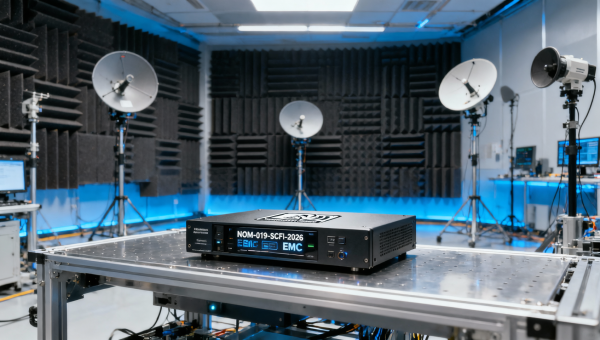
 Mexico NOM-019-SCFI-2026 Effective May 1, 2026: EMC Certification Mandatory for Auto ElectronicsNOM-019-SCFI-2026 EMC certification is now mandatory for auto electronics in Mexico—effective May 1, 2026. Ensure compliance for infotainment, ADAS, OBD-II & more.
") TÜV Rheinland Updates CE Requirements for Servo Drives (PLd + EMC Class 3)TÜV Rheinland updates CE requirements for servo drives: PLd + EMC Class 3 joint validation mandatory from Q3 2026. Act now to avoid delays, rejections, or compliance risks.
TÜV Rheinland Updates CE Requirements for Servo Drives (PLd + EMC Class 3)TÜV Rheinland updates CE requirements for servo drives: PLd + EMC Class 3 joint validation mandatory from Q3 2026. Act now to avoid delays, rejections, or compliance risks. SABER Phase II Launch: Building Hardware Must Submit Digital e-CoC & UPISABER Phase II mandates digital e-CoC & UPI for building hardware imports to Saudi Arabia—act now to ensure customs clearance and market access.
 FDA AI Diagnostic Device Draft Rules: Bias Assessment for ImportsFDA AI diagnostic device draft rules mandate bias assessment for imports — discover how algorithmic fairness impacts 510(k)/De Novo submissions and what to do now.
 RCEP Green Packaging Mutual Recognition Starts June 1, 2026RCEP Green Packaging Mutual Recognition starts June 1, 2026 — unlock faster exports to Australia, NZ, Japan & Korea with GB/T 37572-2025 certification.
 Vietnam Suspends SASO Mutual Recognition for Chinese Irrigation EquipmentVietnam suspends SASO mutual recognition for Chinese irrigation equipment—impacting exporters, testers & suppliers. Act now to avoid 6–8 week delays & 35% cost hikes.
 IMDG Code 41-24 Enforces UN3480 Class 9 Labeling for Li-ion Battery Sea FreightIMDG Code 41-24 enforces UN3480 Class 9 labeling for Li-ion battery sea freight—learn mandatory QR labels, compliance actions & port enforcement risks.
 EU CBAM Enters Enforcement Phase on April 1, 2026EU CBAM enforcement starts April 1, 2026 — critical for Chinese battery materials, construction profiles & industrial coatings exporters. Act now to avoid customs delays.
 Mexico Enforces NOM-019-SCFI-2026 EMC Certification for Auto Electronics from May 2026Mexico enforces NOM-019-SCFI-2026 EMC certification for auto electronics from May 2026 — mandatory local testing, stricter standards, and urgent compliance action required.
 Global Port Congestion Eases, but Red Sea Rerouting PersistsRed Sea rerouting persists amid easing port congestion—Shanghai–Rotterdam freight rates surge 4.2% to $5,280/TEU. Critical insights for exporters, importers & logistics leaders.
 RCEP Green Packaging Mutual Recognition Starts June 2026RCEP Green Packaging Mutual Recognition starts June 2026 — streamline exports to Australia, NZ, Japan & SK with GB/T 37572-2025 certification. Save time & costs!
 FDA AI Diagnostic Device Rules: ABIA Required from Q3 2026FDA AI diagnostic device rules now require ABIA reports from Q3 2026 — essential for 510(k)/De Novo submissions. Stay compliant, avoid delays & secure U.S. market access.
 Vietnam Suspends SASO Mutual Recognition for Chinese Irrigation EquipmentVietnam suspends SASO mutual recognition for Chinese irrigation equipment—sprinkler systems, drip controllers & irrigation systems now require local QUATEST 3 testing. Act now to avoid 12-week delays & 35% cost hikes.
") TÜV Rheinland Updates CE Certification for Industrial Robot Drives (2026 Q3)TÜV Rheinland’s 2026 Q3 CE certification update for industrial robot drives mandates PLd safety + EN 61800-3 EMC — act now to avoid EU market delays.
TÜV Rheinland Updates CE Certification for Industrial Robot Drives (2026 Q3)TÜV Rheinland’s 2026 Q3 CE certification update for industrial robot drives mandates PLd safety + EN 61800-3 EMC — act now to avoid EU market delays. IMDG Code Amendment 41-24 Takes Effect for Lithium Battery Sea FreightIMDG Code Amendment 41-24 is live: New QR labels, bilingual handling tags & SOC disclosure required for UN3480 lithium battery sea freight—act now to avoid delays.
 SASO SABER Phase II: Digital Type Test Reports Required for Building Hardware from Jun 2026SASO SABER Phase II requires digital type test reports & unique product IDs for building hardware exports to Saudi Arabia — effective June 2026. Act now to ensure compliance and avoid customs delays.
 CPSC Updates 16 CFR Part 1236: New Suffocation Test for Children's Sleep Sacks Effective July 2026CPSC Updates 16 CFR Part 1236: New suffocation test for children's sleep sacks takes effect July 2026 — ensure compliance, avoid delays & protect your U.S. market access.
 EN IEC 62471-2:2026 Effective Oct 2026 for EU LED Lighting ExportsEN IEC 62471-2:2026 mandates full-spectrum photobiological safety testing (200–3000 nm) for all EU-bound LED lighting — effective 1 Oct 2026. Act now to secure CE marking & avoid market access delays.
 AI Patent Tools Security Flaw Triggers Compliance ReviewAI Patent Tools security flaw exposed—triggering urgent compliance reviews for medical device, semiconductor & AI firms. Act now to secure submissions.




















Popular Tags
Global Trade Insights & Industry
Our mission is to empower global exporters and importers with data-driven insights that foster strategic growth.
Search News
Popular Tags
Industry Overview
The global commercial kitchen equipment market is projected to reach $112 billion by 2027. Driven by urbanization, the rise of e-commerce food delivery, and strict hygiene regulations.