

Vietnam Suspends SASO Mutual Recognition for Chinese Irrigation Equipment
Vietnam’s Ministry of Industry and Trade announced on April 20, 2026, the immediate suspension of SASO mutual recognition acceptance for Chinese agricultural irrigation equipment—including center pivot sprinklers and drip irrigation controllers. This development directly affects exporters and importers in the agri-machinery trade between China and Vietnam, particularly those relying on streamlined conformity assessment pathways. It signals a tightening of technical market access requirements and introduces new lead time and cost implications for cross-border supply chains.
Event Overview
On April 20, 2026, Vietnam’s Ministry of Industry and Trade issued an official notice stating that, due to non-compliance by certain Chinese agri-machinery enterprises with Saudi Arabia’s latest SASO energy efficiency and electromagnetic compatibility (EMC) testing requirements, the mutual recognition arrangement for SASO certification is suspended for Chinese-made irrigation equipment. Effective immediately, all such products exported to Vietnam must undergo full-type testing at laboratories designated by Vietnamese authorities. The testing cycle is extended to 6–8 weeks, and associated costs are estimated to rise by approximately 35%.
Industries Affected
Direct Exporters & Importers (China–Vietnam Trade Firms)
These firms previously relied on SASO mutual recognition to expedite customs clearance and reduce pre-shipment testing burdens. With the suspension, they now face mandatory local type testing—introducing delays in shipment scheduling, increased compliance overhead, and revised contractual timelines with Vietnamese buyers.
Manufacturers of Irrigation Controllers and Sprinkler Systems (Chinese OEM/ODM Producers)
Manufacturers supplying irrigation hardware to Vietnam—especially those without existing SASO-certified product lines aligned with current energy efficiency and EMC standards—must now allocate additional resources for retesting or redesign. Their ability to maintain order fulfillment cadence and pricing competitiveness may be impacted.
Supply Chain Service Providers (Testing, Certification, Logistics Intermediaries)
Third-party conformity assessment providers active in China–Vietnam trade will see shifting demand: reduced volume for SASO mutual recognition support, but increased inquiries for Vietnam-specific type testing coordination, documentation translation, and lab liaison services. Lead-time management and lab capacity visibility become critical service differentiators.
Key Considerations and Immediate Actions for Stakeholders
Monitor Official Updates from Both Sides
Track further communications from Vietnam’s Ministry of Industry and Trade and China’s General Administration of Customs or Certification and Accreditation Administration (CNCA). Clarifications on scope (e.g., whether only new applications are affected, or if pending cases are grandfathered), list of designated labs, and possible reinstatement conditions remain pending.
Verify Product Coverage and Testing Requirements
Confirm whether your specific models fall under the defined categories (“sprinkler systems”, “drip irrigation controllers”) and review the exact Vietnamese technical specifications referenced in the notice—particularly the updated SASO energy efficiency and EMC benchmarks cited as the basis for non-compliance.
Adjust Procurement and Shipment Timelines
Factor in the 6–8 week testing window when confirming delivery dates with Vietnamese partners. Where feasible, initiate type testing for high-priority SKUs ahead of new orders; avoid treating testing as a post-order activity.
Document Compliance History and Engage Local Partners Early
Gather prior test reports, SASO certificates (if any), and technical files. Share these proactively with Vietnamese importers or local representatives to support smoother communication with designated labs and regulatory authorities.
Editorial Observation / Industry Perspective
This measure is better understood as a procedural recalibration than a broad trade restriction. Analysis来看, it reflects Vietnam’s increasing emphasis on verifying third-country conformity claims—especially where mutual recognition relies on standards administered by a third jurisdiction (Saudi Arabia). From industry角度, the move highlights growing divergence in how ASEAN markets interpret and enforce international standards, even when referencing the same technical frameworks. Current更值得关注的是 whether this signals a broader review of mutual recognition arrangements beyond irrigation equipment—or remains an isolated response to specific non-conformities reported in the SASO system.
It is not yet evident whether this suspension represents a temporary corrective action or the start of a longer-term shift toward localized verification for agricultural machinery. Continued observation of follow-up notices and enforcement patterns over the next 90 days will be essential to assess its durability and scalability.
Conclusion
This notice underscores the operational fragility of reliance on cross-border conformity assessment mechanisms—especially when anchored to standards managed outside the importing country’s jurisdiction. For stakeholders, it reinforces the need to treat technical market access not as a one-time certification event, but as an ongoing, jurisdiction-specific capability requiring proactive alignment with evolving local implementation rules. Currently, it is more appropriately interpreted as a targeted compliance checkpoint than a systemic barrier—but one demanding immediate process adaptation.
Information Sources
Primary source: Official notice issued by Vietnam’s Ministry of Industry and Trade, dated April 20, 2026.
Note: The scope of affected product models, list of authorized Vietnamese testing laboratories, and potential timeline for resumption of mutual recognition remain subject to further official clarification and are under continuous observation.

Recommended News
 US CPSC Updates Child Sleep Sack Standard Effective July 2026US CPSC updates child sleep sack standard with new DSST test—mandatory for all U.S.-bound infant sleep sacks from July 2026. Act now to ensure compliance and market access.
 Red Sea Rerouting Pushes Asia-Europe Freight Premium to $1,850/TEURed Sea rerouting pushes Asia-Europe freight premium to $1,850/TEU—impacting importers, manufacturers & logistics providers. Act now to reassess costs, lead times & contracts.
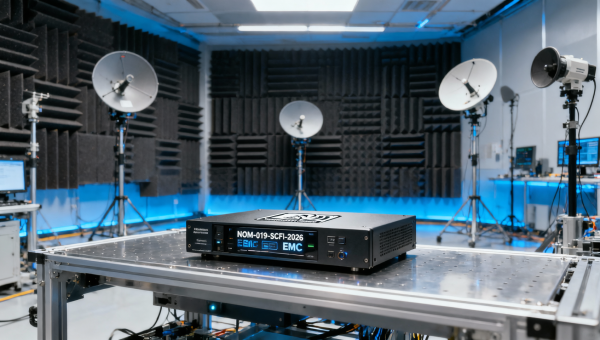
 Mexico NOM-019-SCFI-2026 Effective May 1, 2026: EMC Certification Mandatory for Auto ElectronicsNOM-019-SCFI-2026 EMC certification is now mandatory for auto electronics in Mexico—effective May 1, 2026. Ensure compliance for infotainment, ADAS, OBD-II & more.
") TÜV Rheinland Updates CE Requirements for Servo Drives (PLd + EMC Class 3)TÜV Rheinland updates CE requirements for servo drives: PLd + EMC Class 3 joint validation mandatory from Q3 2026. Act now to avoid delays, rejections, or compliance risks.
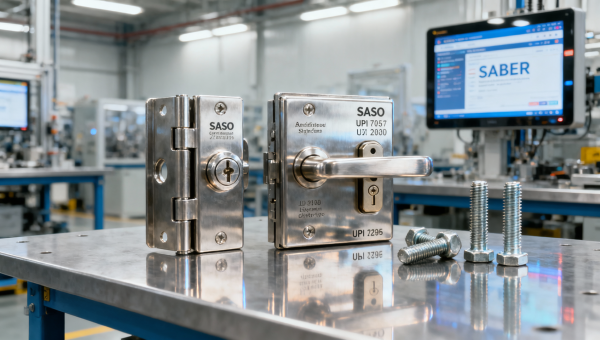
TÜV Rheinland Updates CE Requirements for Servo Drives (PLd + EMC Class 3)TÜV Rheinland updates CE requirements for servo drives: PLd + EMC Class 3 joint validation mandatory from Q3 2026. Act now to avoid delays, rejections, or compliance risks. SABER Phase II Launch: Building Hardware Must Submit Digital e-CoC & UPISABER Phase II mandates digital e-CoC & UPI for building hardware imports to Saudi Arabia—act now to ensure customs clearance and market access.
 FDA AI Diagnostic Device Draft Rules: Bias Assessment for ImportsFDA AI diagnostic device draft rules mandate bias assessment for imports — discover how algorithmic fairness impacts 510(k)/De Novo submissions and what to do now.
 RCEP Green Packaging Mutual Recognition Starts June 1, 2026RCEP Green Packaging Mutual Recognition starts June 1, 2026 — unlock faster exports to Australia, NZ, Japan & Korea with GB/T 37572-2025 certification.
 Vietnam Suspends SASO Mutual Recognition for Chinese Irrigation EquipmentVietnam suspends SASO mutual recognition for Chinese irrigation equipment—impacting exporters, testers & suppliers. Act now to avoid 6–8 week delays & 35% cost hikes.
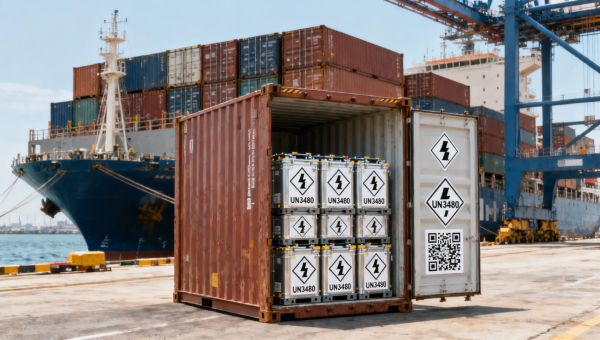
 IMDG Code 41-24 Enforces UN3480 Class 9 Labeling for Li-ion Battery Sea FreightIMDG Code 41-24 enforces UN3480 Class 9 labeling for Li-ion battery sea freight—learn mandatory QR labels, compliance actions & port enforcement risks.
 EU CBAM Enters Enforcement Phase on April 1, 2026EU CBAM enforcement starts April 1, 2026 — critical for Chinese battery materials, construction profiles & industrial coatings exporters. Act now to avoid customs delays.
 Mexico Enforces NOM-019-SCFI-2026 EMC Certification for Auto Electronics from May 2026Mexico enforces NOM-019-SCFI-2026 EMC certification for auto electronics from May 2026 — mandatory local testing, stricter standards, and urgent compliance action required.
 Global Port Congestion Eases, but Red Sea Rerouting PersistsRed Sea rerouting persists amid easing port congestion—Shanghai–Rotterdam freight rates surge 4.2% to $5,280/TEU. Critical insights for exporters, importers & logistics leaders.
 RCEP Green Packaging Mutual Recognition Starts June 2026RCEP Green Packaging Mutual Recognition starts June 2026 — streamline exports to Australia, NZ, Japan & SK with GB/T 37572-2025 certification. Save time & costs!
 FDA AI Diagnostic Device Rules: ABIA Required from Q3 2026FDA AI diagnostic device rules now require ABIA reports from Q3 2026 — essential for 510(k)/De Novo submissions. Stay compliant, avoid delays & secure U.S. market access.
 Vietnam Suspends SASO Mutual Recognition for Chinese Irrigation EquipmentVietnam suspends SASO mutual recognition for Chinese irrigation equipment—sprinkler systems, drip controllers & irrigation systems now require local QUATEST 3 testing. Act now to avoid 12-week delays & 35% cost hikes.
") TÜV Rheinland Updates CE Certification for Industrial Robot Drives (2026 Q3)TÜV Rheinland’s 2026 Q3 CE certification update for industrial robot drives mandates PLd safety + EN 61800-3 EMC — act now to avoid EU market delays.
TÜV Rheinland Updates CE Certification for Industrial Robot Drives (2026 Q3)TÜV Rheinland’s 2026 Q3 CE certification update for industrial robot drives mandates PLd safety + EN 61800-3 EMC — act now to avoid EU market delays. IMDG Code Amendment 41-24 Takes Effect for Lithium Battery Sea FreightIMDG Code Amendment 41-24 is live: New QR labels, bilingual handling tags & SOC disclosure required for UN3480 lithium battery sea freight—act now to avoid delays.
 SASO SABER Phase II: Digital Type Test Reports Required for Building Hardware from Jun 2026SASO SABER Phase II requires digital type test reports & unique product IDs for building hardware exports to Saudi Arabia — effective June 2026. Act now to ensure compliance and avoid customs delays.
 CPSC Updates 16 CFR Part 1236: New Suffocation Test for Children's Sleep Sacks Effective July 2026CPSC Updates 16 CFR Part 1236: New suffocation test for children's sleep sacks takes effect July 2026 — ensure compliance, avoid delays & protect your U.S. market access.
 EN IEC 62471-2:2026 Effective Oct 2026 for EU LED Lighting ExportsEN IEC 62471-2:2026 mandates full-spectrum photobiological safety testing (200–3000 nm) for all EU-bound LED lighting — effective 1 Oct 2026. Act now to secure CE marking & avoid market access delays.
 AI Patent Tools Security Flaw Triggers Compliance ReviewAI Patent Tools security flaw exposed—triggering urgent compliance reviews for medical device, semiconductor & AI firms. Act now to secure submissions.














Popular Tags
Global Trade Insights & Industry
Our mission is to empower global exporters and importers with data-driven insights that foster strategic growth.
Search News
Popular Tags
Industry Overview
The global commercial kitchen equipment market is projected to reach $112 billion by 2027. Driven by urbanization, the rise of e-commerce food delivery, and strict hygiene regulations.