

Global Port Congestion Eases, but Red Sea Rerouting Persists
Global port congestion has eased slightly, yet Red Sea rerouting remains entrenched — with Shanghai–Rotterdam container freight rates rising 4.2% week-on-week to $5,280/TEU during the week of 15–19 April 2026. This development warrants close attention from international trade enterprises, logistics providers, and export-oriented manufacturers, as it signals a structural shift in route reliability and cost dynamics rather than a short-term volatility spike.
Event Overview
According to Drewry’s latest World Container Index, the composite freight rate for the Shanghai–Rotterdam route reached $5,280/TEU for the monitoring period 15–19 April 2026, up 4.2% week-on-week. The rise coincides with continued unreliability of the Suez Canal route: 83% of container shipping lines maintain Cape of Good Hope rerouting. Concurrently, China’s major port container throughput declined 9.2% year-on-year during the same period, reflecting shippers’ strategic pivot toward smaller-batch, higher-frequency shipments to mitigate freight cost uncertainty.

Impact on Specific Industry Segments
Direct Exporting Enterprises
These firms face immediate pressure on landed cost competitiveness in European markets. With average slot premiums reaching $1,850/TEU, margin compression is evident — especially for mid-to-low-margin finished goods. Impact manifests in reduced pricing flexibility, longer quotation lead times, and increased need for forward freight rate locking.
Raw Material Importers
Importers sourcing components or inputs via Asia–Europe routes (e.g., European machinery parts shipped to Chinese assembly plants) experience delayed replenishment cycles and higher landed costs. While less exposed than exporters, their procurement planning must now account for persistent transit time variance — currently averaging +12–14 days versus pre-crisis benchmarks.
Contract Manufacturing & OEMs
Manufacturers operating under fixed-price, just-in-time supply agreements face elevated risk of cost overruns or service-level penalties. The 9.2% YoY drop in Chinese port throughput suggests upstream inventory buffering is being de-prioritized — increasing vulnerability to schedule slippage when vessel delays compound with inland transport bottlenecks.
Supply Chain Service Providers
Freight forwarders, NVOCCs, and multimodal integrators see demand shift toward value-added services: guaranteed space allocation, real-time reroute tracking, and blended ocean-rail solutions. However, margin pressure intensifies as carriers allocate premium capacity selectively — requiring tighter coordination with carrier partners and more granular client segmentation.
What Relevant Enterprises or Practitioners Should Monitor and Do Now
Track carrier routing decisions — not just published schedules
Public sailing schedules increasingly diverge from actual vessel paths. Monitor weekly updates from carrier operational bulletins (e.g., Maersk’s ‘Route Stability Index’, MSC’s ‘Voyage Integrity Reports’) rather than relying solely on port call lists.
Reassess TEU-based cost modeling for key EU destinations
The $1,850/TEU premium to Rotterdam reflects scarcity-driven pricing — not base rate inflation. Evaluate whether alternative discharge ports (e.g., Hamburg, Bremerhaven, or rail-connected hubs like Duisburg) offer better cost–time trade-offs for specific cargo profiles.
Formalize contingency clauses in new commercial contracts
Explicitly define freight cost pass-through mechanisms, minimum guaranteed transit windows, and force majeure triggers tied to Suez Canal closure duration or reroute persistence thresholds — e.g., ‘if >80% of carriers maintain Cape routing for ≥8 consecutive weeks, renegotiation rights activate’.
Validate inland connectivity resilience before committing to new bookings
Extended Cape voyages increase reliance on hinterland rail and barge networks. Confirm current capacity utilization and contractual priority access at key EU inland terminals — particularly for time-sensitive consignments.
Editorial Perspective / Industry Observation
From an industry perspective, this data point is less a temporary disruption and more a consolidation signal: Red Sea rerouting has transitioned from emergency response to operational baseline. Analysis来看, the 4.2% weekly freight increase — occurring alongside falling port volumes — suggests pricing power is shifting toward carriers due to constrained reliable capacity, not surging demand. Current more值得关注的是 how long this ‘new normal’ persists without meaningful infrastructure or diplomatic resolution — and whether the 9.2% throughput decline reflects structural demand softening or tactical shipment fragmentation. It更适合理解为 a recalibration phase, where cost predictability matters more than absolute rate levels.
This is not merely a freight rate update; it marks the point where route risk becomes a permanent input in supply chain design — not a variable to hedge, but a parameter to engineer around.
Conclusion
The April 2026 Shanghai–Rotterdam rate increase reflects entrenchment of Red Sea rerouting as a systemic feature of Asia–Europe trade — not a transient anomaly. Its significance lies not in the magnitude of the weekly change, but in the concurrent evidence of behavioral adaptation: lower port volumes, higher slot premiums, and sustained carrier routing discipline. For stakeholders, the appropriate stance is neither alarm nor complacency, but calibrated recalibration — treating route reliability and freight cost volatility as fixed constraints in network planning, rather than variables awaiting normalization.
Source Attribution
Main source: Drewry’s World Container Index, data covering 15–19 April 2026. Note: Carrier rerouting percentages and port throughput figures are drawn exclusively from this publication. Ongoing observation is warranted for potential shifts in Suez Canal transit feasibility assessments by the International Maritime Organization (IMO) and regional naval coalition statements — none of which are reflected in the current dataset.
Recommended News
 US CPSC Updates Child Sleep Sack Standard Effective July 2026US CPSC updates child sleep sack standard with new DSST test—mandatory for all U.S.-bound infant sleep sacks from July 2026. Act now to ensure compliance and market access.
 Red Sea Rerouting Pushes Asia-Europe Freight Premium to $1,850/TEURed Sea rerouting pushes Asia-Europe freight premium to $1,850/TEU—impacting importers, manufacturers & logistics providers. Act now to reassess costs, lead times & contracts.
 Mexico NOM-019-SCFI-2026 Effective May 1, 2026: EMC Certification Mandatory for Auto ElectronicsNOM-019-SCFI-2026 EMC certification is now mandatory for auto electronics in Mexico—effective May 1, 2026. Ensure compliance for infotainment, ADAS, OBD-II & more.
") TÜV Rheinland Updates CE Requirements for Servo Drives (PLd + EMC Class 3)TÜV Rheinland updates CE requirements for servo drives: PLd + EMC Class 3 joint validation mandatory from Q3 2026. Act now to avoid delays, rejections, or compliance risks.
TÜV Rheinland Updates CE Requirements for Servo Drives (PLd + EMC Class 3)TÜV Rheinland updates CE requirements for servo drives: PLd + EMC Class 3 joint validation mandatory from Q3 2026. Act now to avoid delays, rejections, or compliance risks. SABER Phase II Launch: Building Hardware Must Submit Digital e-CoC & UPISABER Phase II mandates digital e-CoC & UPI for building hardware imports to Saudi Arabia—act now to ensure customs clearance and market access.
 FDA AI Diagnostic Device Draft Rules: Bias Assessment for ImportsFDA AI diagnostic device draft rules mandate bias assessment for imports — discover how algorithmic fairness impacts 510(k)/De Novo submissions and what to do now.
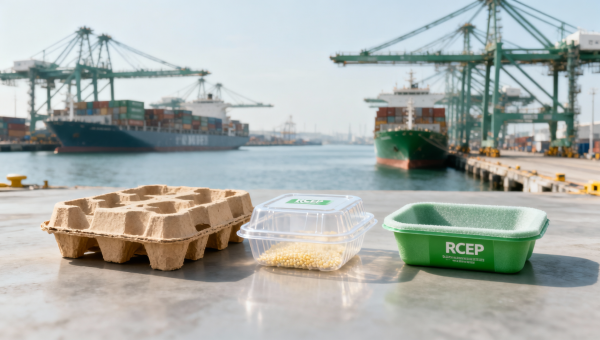
 RCEP Green Packaging Mutual Recognition Starts June 1, 2026RCEP Green Packaging Mutual Recognition starts June 1, 2026 — unlock faster exports to Australia, NZ, Japan & Korea with GB/T 37572-2025 certification.
 Vietnam Suspends SASO Mutual Recognition for Chinese Irrigation EquipmentVietnam suspends SASO mutual recognition for Chinese irrigation equipment—impacting exporters, testers & suppliers. Act now to avoid 6–8 week delays & 35% cost hikes.
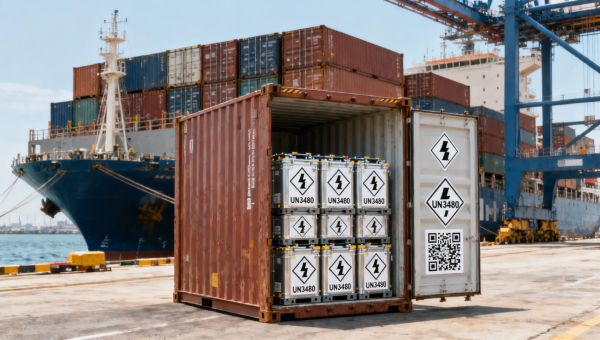
 IMDG Code 41-24 Enforces UN3480 Class 9 Labeling for Li-ion Battery Sea FreightIMDG Code 41-24 enforces UN3480 Class 9 labeling for Li-ion battery sea freight—learn mandatory QR labels, compliance actions & port enforcement risks.
 EU CBAM Enters Enforcement Phase on April 1, 2026EU CBAM enforcement starts April 1, 2026 — critical for Chinese battery materials, construction profiles & industrial coatings exporters. Act now to avoid customs delays.
 Mexico Enforces NOM-019-SCFI-2026 EMC Certification for Auto Electronics from May 2026Mexico enforces NOM-019-SCFI-2026 EMC certification for auto electronics from May 2026 — mandatory local testing, stricter standards, and urgent compliance action required.
 Global Port Congestion Eases, but Red Sea Rerouting PersistsRed Sea rerouting persists amid easing port congestion—Shanghai–Rotterdam freight rates surge 4.2% to $5,280/TEU. Critical insights for exporters, importers & logistics leaders.
 RCEP Green Packaging Mutual Recognition Starts June 2026RCEP Green Packaging Mutual Recognition starts June 2026 — streamline exports to Australia, NZ, Japan & SK with GB/T 37572-2025 certification. Save time & costs!
 FDA AI Diagnostic Device Rules: ABIA Required from Q3 2026FDA AI diagnostic device rules now require ABIA reports from Q3 2026 — essential for 510(k)/De Novo submissions. Stay compliant, avoid delays & secure U.S. market access.
 Vietnam Suspends SASO Mutual Recognition for Chinese Irrigation EquipmentVietnam suspends SASO mutual recognition for Chinese irrigation equipment—sprinkler systems, drip controllers & irrigation systems now require local QUATEST 3 testing. Act now to avoid 12-week delays & 35% cost hikes.
") TÜV Rheinland Updates CE Certification for Industrial Robot Drives (2026 Q3)TÜV Rheinland’s 2026 Q3 CE certification update for industrial robot drives mandates PLd safety + EN 61800-3 EMC — act now to avoid EU market delays.
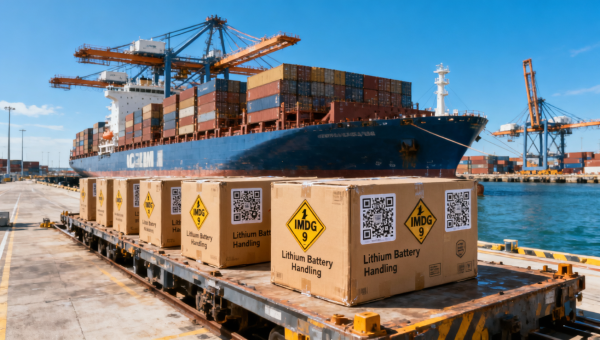
TÜV Rheinland Updates CE Certification for Industrial Robot Drives (2026 Q3)TÜV Rheinland’s 2026 Q3 CE certification update for industrial robot drives mandates PLd safety + EN 61800-3 EMC — act now to avoid EU market delays. IMDG Code Amendment 41-24 Takes Effect for Lithium Battery Sea FreightIMDG Code Amendment 41-24 is live: New QR labels, bilingual handling tags & SOC disclosure required for UN3480 lithium battery sea freight—act now to avoid delays.
 SASO SABER Phase II: Digital Type Test Reports Required for Building Hardware from Jun 2026SASO SABER Phase II requires digital type test reports & unique product IDs for building hardware exports to Saudi Arabia — effective June 2026. Act now to ensure compliance and avoid customs delays.
 CPSC Updates 16 CFR Part 1236: New Suffocation Test for Children's Sleep Sacks Effective July 2026CPSC Updates 16 CFR Part 1236: New suffocation test for children's sleep sacks takes effect July 2026 — ensure compliance, avoid delays & protect your U.S. market access.
 EN IEC 62471-2:2026 Effective Oct 2026 for EU LED Lighting ExportsEN IEC 62471-2:2026 mandates full-spectrum photobiological safety testing (200–3000 nm) for all EU-bound LED lighting — effective 1 Oct 2026. Act now to secure CE marking & avoid market access delays.
 AI Patent Tools Security Flaw Triggers Compliance ReviewAI Patent Tools security flaw exposed—triggering urgent compliance reviews for medical device, semiconductor & AI firms. Act now to secure submissions.


















Popular Tags
Global Trade Insights & Industry
Our mission is to empower global exporters and importers with data-driven insights that foster strategic growth.
Search News
Popular Tags
Industry Overview
The global commercial kitchen equipment market is projected to reach $112 billion by 2027. Driven by urbanization, the rise of e-commerce food delivery, and strict hygiene regulations.