

IMDG Code Amendment 41-24 Takes Effect for Lithium Battery Sea Freight
On April 19, 2026, the International Maritime Organization (IMO)’s revised International Maritime Dangerous Goods Code (IMDG Code Amendment 41-24) entered into force globally, introducing mandatory labeling, bilingual handling requirements, and state-of-charge (SOC) disclosure for UN3480 lithium-ion battery shipments by sea. Exporters, freight forwarders, and battery manufacturers—particularly those engaged in cross-border trade with EU, US, and ASEAN markets—must now reassess packaging, documentation, and logistics workflows to maintain compliance and avoid shipment delays or rejection.
Event Overview
The IMDG Code Amendment 41-24, adopted by the IMO, became fully effective on April 19, 2026. It imposes three binding requirements for all lithium-ion batteries classified under UN3480 transported by sea: (1) mandatory use of a new diamond-shaped Class 9 hazard label featuring a scannable QR code for authenticity verification; (2) outer cartons must display a bilingual ‘Lithium Battery Handling Label’ (English + destination-language equivalent); and (3) for combined air/sea transport declarations, the state of charge (SOC) range must be explicitly declared as a separate data field. These provisions apply to all shipments originating from or transiting through jurisdictions that enforce the IMDG Code—including China, Japan, South Korea, and all IMO contracting states.
Industries Affected by Segment
Direct Exporters and Trading Companies
These entities bear primary responsibility for customs declaration, packaging certification, and carrier coordination. They are directly affected because non-compliant labels or missing SOC data may trigger port inspections, detention, or refusal of loading—especially at major container terminals in Rotterdam, Los Angeles, and Singapore. Impact manifests in increased pre-shipment verification time, potential rework costs for label reprinting, and tighter lead-time pressure ahead of booking deadlines.
Cell and Pack Manufacturers
Manufacturers supplying finished lithium-ion battery packs (e.g., for EVs, energy storage systems, or power tools) must revise their final packaging specifications. The requirement for bilingual handling labels implies coordination with local language service providers or regional compliance teams—particularly when shipping to multilingual markets such as the EU or Southeast Asia. Failure to update printed label templates before April 19, 2026, risks batch-level non-conformance across export orders.
Logistics and Freight Forwarding Providers
Forwarders handling lithium battery cargo must now validate label authenticity via QR scanning during intake and confirm SOC declaration alignment with shipper-provided test reports (e.g., UN 38.3 summary). This adds a procedural checkpoint before bill-of-lading issuance. Impact includes heightened operational scrutiny, possible liability exposure for misdeclared SOC ranges, and need for staff retraining on updated IMDG documentation protocols.
Supply Chain Compliance Officers and QA Teams
Internal compliance roles face expanded scope: verifying label QR functionality, auditing bilingual text accuracy per destination market, and maintaining SOC records traceable to production batches. Impact centers on documentation control systems—existing ERP or WMS modules may lack fields for SOC interval capture or QR metadata logging, requiring near-term configuration updates.
Key Actions for Enterprises and Practitioners
Monitor official implementation guidance from national maritime authorities
While Amendment 41-24 is globally effective, national enforcement timelines and interpretation notes (e.g., China’s MSA circulars or US PHMSA advisories) may vary. Current more appropriate action is to subscribe to regulatory bulletins from competent authorities—not assume uniform application across all ports.
Verify label suppliers’ readiness for QR-enabled Class 9 printing
Not all label vendors currently support tamper-evident, scannable QR codes compliant with ISO/IEC 15415 standards. Enterprises should request sample validation reports and conduct pilot scans using standard mobile readers before scaling production runs.
Distinguish between policy mandate and operational rollout
Although the rule took effect April 19, 2026, some carriers and terminal operators may allow transitional grace periods for documentation corrections. However, this is not codified in the IMDG Code itself—so enterprises should treat the date as absolute for internal planning, while verifying actual port-level tolerance only through direct carrier communication.
Update internal SOPs for SOC documentation and bilingual label approval
SOC intervals (e.g., “30–50%” or “≤30%”) must now appear on both the shipping document and the physical label. This requires aligning engineering test records, warehouse packing instructions, and export documentation workflows—ideally before initiating new export cycles post-April 2026.
Editorial Perspective / Industry Observation
From industry perspective, Amendment 41-24 signals a shift toward digital traceability and granular technical transparency—not just symbolic labeling upgrades. The QR-coded Class 9 label, for instance, is better understood as an early step toward interoperable hazardous goods data exchange, rather than merely a static visual requirement. Observationally, this amendment reflects growing regulatory emphasis on real-time verification capacity at logistics touchpoints, especially following recent incidents involving thermal runaway during maritime transit. Analysis suggests it functions less as a standalone compliance checkpoint and more as a foundational layer for future integration with e-manifest and smart port systems. That said, its immediate impact remains procedural and operational—not technological or infrastructural—requiring no new hardware investment, but demanding precise execution across legacy supply chain systems.
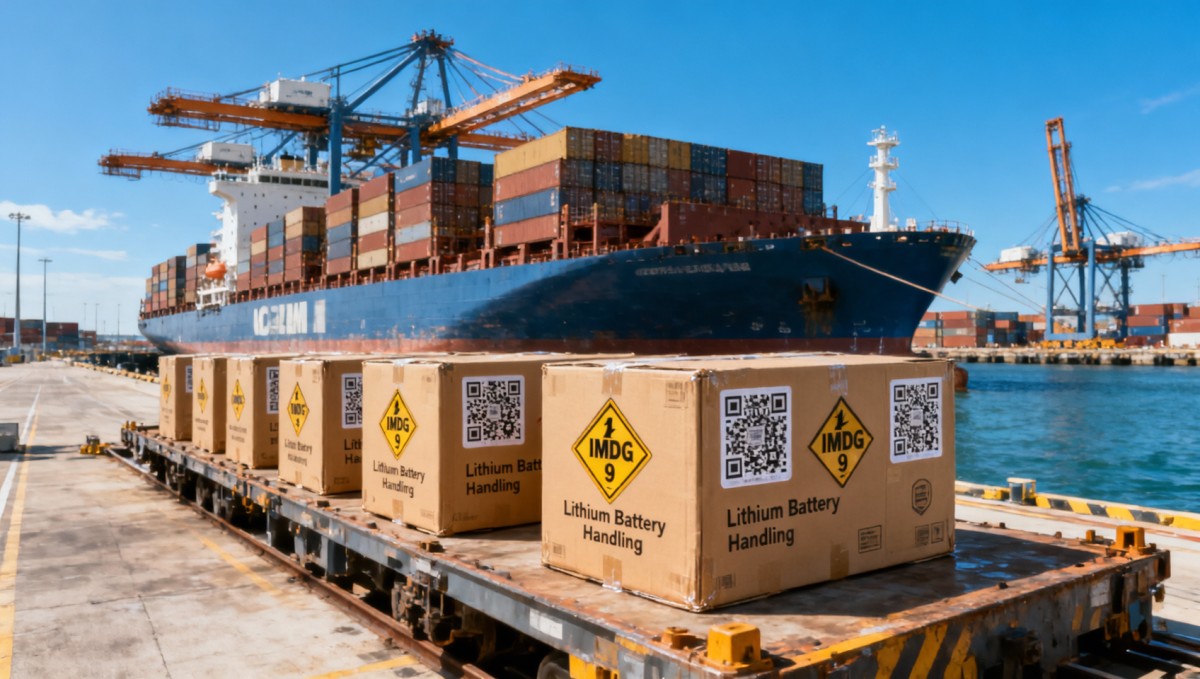
Concluding, this amendment marks a formalization—not a revolution—in lithium battery maritime regulation. Its significance lies in raising the baseline for documentation rigor and label integrity, particularly for exporters operating across fragmented regulatory environments. It is best understood not as a sudden disruption, but as a calibrated tightening of existing obligations: one that rewards proactive alignment over reactive correction, and favors structured compliance processes over ad hoc adaptation.
Source: International Maritime Organization (IMO), IMDG Code Amendment 41-24 (2026 edition), effective April 19, 2026. Note: National enforcement interpretations and transitional arrangements remain subject to ongoing observation and are not yet consolidated across all IMO member states.
Recommended News
 US CPSC Updates Child Sleep Sack Standard Effective July 2026US CPSC updates child sleep sack standard with new DSST test—mandatory for all U.S.-bound infant sleep sacks from July 2026. Act now to ensure compliance and market access.
 Red Sea Rerouting Pushes Asia-Europe Freight Premium to $1,850/TEURed Sea rerouting pushes Asia-Europe freight premium to $1,850/TEU—impacting importers, manufacturers & logistics providers. Act now to reassess costs, lead times & contracts.
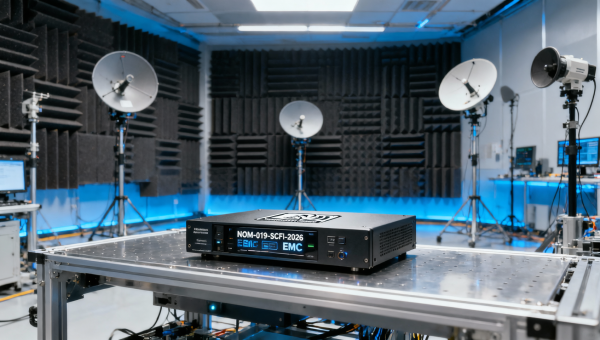
 Mexico NOM-019-SCFI-2026 Effective May 1, 2026: EMC Certification Mandatory for Auto ElectronicsNOM-019-SCFI-2026 EMC certification is now mandatory for auto electronics in Mexico—effective May 1, 2026. Ensure compliance for infotainment, ADAS, OBD-II & more.
") TÜV Rheinland Updates CE Requirements for Servo Drives (PLd + EMC Class 3)TÜV Rheinland updates CE requirements for servo drives: PLd + EMC Class 3 joint validation mandatory from Q3 2026. Act now to avoid delays, rejections, or compliance risks.
TÜV Rheinland Updates CE Requirements for Servo Drives (PLd + EMC Class 3)TÜV Rheinland updates CE requirements for servo drives: PLd + EMC Class 3 joint validation mandatory from Q3 2026. Act now to avoid delays, rejections, or compliance risks. SABER Phase II Launch: Building Hardware Must Submit Digital e-CoC & UPISABER Phase II mandates digital e-CoC & UPI for building hardware imports to Saudi Arabia—act now to ensure customs clearance and market access.
 FDA AI Diagnostic Device Draft Rules: Bias Assessment for ImportsFDA AI diagnostic device draft rules mandate bias assessment for imports — discover how algorithmic fairness impacts 510(k)/De Novo submissions and what to do now.
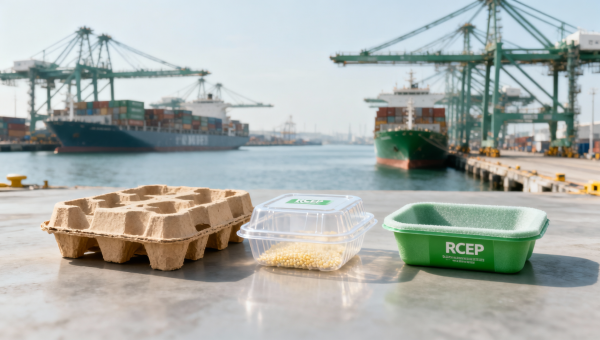
 RCEP Green Packaging Mutual Recognition Starts June 1, 2026RCEP Green Packaging Mutual Recognition starts June 1, 2026 — unlock faster exports to Australia, NZ, Japan & Korea with GB/T 37572-2025 certification.
 Vietnam Suspends SASO Mutual Recognition for Chinese Irrigation EquipmentVietnam suspends SASO mutual recognition for Chinese irrigation equipment—impacting exporters, testers & suppliers. Act now to avoid 6–8 week delays & 35% cost hikes.
 IMDG Code 41-24 Enforces UN3480 Class 9 Labeling for Li-ion Battery Sea FreightIMDG Code 41-24 enforces UN3480 Class 9 labeling for Li-ion battery sea freight—learn mandatory QR labels, compliance actions & port enforcement risks.
 EU CBAM Enters Enforcement Phase on April 1, 2026EU CBAM enforcement starts April 1, 2026 — critical for Chinese battery materials, construction profiles & industrial coatings exporters. Act now to avoid customs delays.
 Mexico Enforces NOM-019-SCFI-2026 EMC Certification for Auto Electronics from May 2026Mexico enforces NOM-019-SCFI-2026 EMC certification for auto electronics from May 2026 — mandatory local testing, stricter standards, and urgent compliance action required.
 Global Port Congestion Eases, but Red Sea Rerouting PersistsRed Sea rerouting persists amid easing port congestion—Shanghai–Rotterdam freight rates surge 4.2% to $5,280/TEU. Critical insights for exporters, importers & logistics leaders.
 RCEP Green Packaging Mutual Recognition Starts June 2026RCEP Green Packaging Mutual Recognition starts June 2026 — streamline exports to Australia, NZ, Japan & SK with GB/T 37572-2025 certification. Save time & costs!
 FDA AI Diagnostic Device Rules: ABIA Required from Q3 2026FDA AI diagnostic device rules now require ABIA reports from Q3 2026 — essential for 510(k)/De Novo submissions. Stay compliant, avoid delays & secure U.S. market access.
 Vietnam Suspends SASO Mutual Recognition for Chinese Irrigation EquipmentVietnam suspends SASO mutual recognition for Chinese irrigation equipment—sprinkler systems, drip controllers & irrigation systems now require local QUATEST 3 testing. Act now to avoid 12-week delays & 35% cost hikes.
") TÜV Rheinland Updates CE Certification for Industrial Robot Drives (2026 Q3)TÜV Rheinland’s 2026 Q3 CE certification update for industrial robot drives mandates PLd safety + EN 61800-3 EMC — act now to avoid EU market delays.
TÜV Rheinland Updates CE Certification for Industrial Robot Drives (2026 Q3)TÜV Rheinland’s 2026 Q3 CE certification update for industrial robot drives mandates PLd safety + EN 61800-3 EMC — act now to avoid EU market delays. IMDG Code Amendment 41-24 Takes Effect for Lithium Battery Sea FreightIMDG Code Amendment 41-24 is live: New QR labels, bilingual handling tags & SOC disclosure required for UN3480 lithium battery sea freight—act now to avoid delays.
 SASO SABER Phase II: Digital Type Test Reports Required for Building Hardware from Jun 2026SASO SABER Phase II requires digital type test reports & unique product IDs for building hardware exports to Saudi Arabia — effective June 2026. Act now to ensure compliance and avoid customs delays.
 CPSC Updates 16 CFR Part 1236: New Suffocation Test for Children's Sleep Sacks Effective July 2026CPSC Updates 16 CFR Part 1236: New suffocation test for children's sleep sacks takes effect July 2026 — ensure compliance, avoid delays & protect your U.S. market access.
 EN IEC 62471-2:2026 Effective Oct 2026 for EU LED Lighting ExportsEN IEC 62471-2:2026 mandates full-spectrum photobiological safety testing (200–3000 nm) for all EU-bound LED lighting — effective 1 Oct 2026. Act now to secure CE marking & avoid market access delays.
 AI Patent Tools Security Flaw Triggers Compliance ReviewAI Patent Tools security flaw exposed—triggering urgent compliance reviews for medical device, semiconductor & AI firms. Act now to secure submissions.



















Popular Tags
Global Trade Insights & Industry
Our mission is to empower global exporters and importers with data-driven insights that foster strategic growth.
Search News
Popular Tags
Industry Overview
The global commercial kitchen equipment market is projected to reach $112 billion by 2027. Driven by urbanization, the rise of e-commerce food delivery, and strict hygiene regulations.