

Mexico NOM-019-SCFI-2026 Effective May 1, 2026: EMC Certification Mandatory for Auto Electronics
Mexico’s NOM-019-SCFI-2026 — a new mandatory electromagnetic compatibility (EMC) regulation for automotive electronics — takes effect on May 1, 2026. Published in the Official Gazette of the Federation on April 20, 2026, the standard applies to aftermarket and vehicle-integrated electronic components including infotainment systems, ADAS camera modules, and OBD-II diagnostic tools. Exporters, importers, and distributors targeting the Mexican market must now prioritize compliance, as uncertified products will be prohibited from sale or distribution.
Event Overview
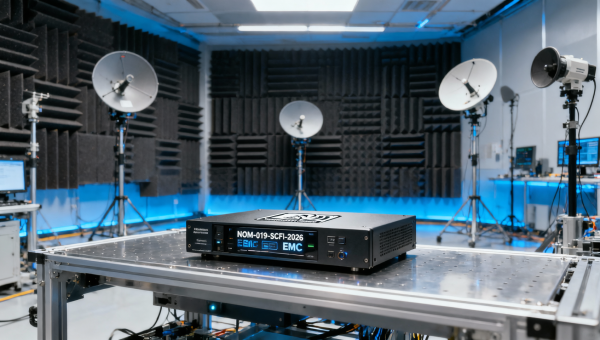
The Mexican Ministry of Economy published NOM-019-SCFI-2026 in the Official Gazette of the Federation on April 20, 2026. The regulation becomes legally enforceable on May 1, 2026. It establishes mandatory EMC requirements for automotive electronic equipment sold in Mexico, specifically covering radiated emission and immunity testing across full frequency bands. All applicable products must be tested by laboratories accredited by Mexico’s National Accreditation Entity (EMA) before market entry. No transitional period or grandfathering clause has been announced in the official text.
Industries Affected
Direct Exporters & Importers: Companies shipping automotive electronics into Mexico face immediate regulatory gatekeeping. Non-compliant shipments may be detained at customs or rejected outright after May 1, 2026. Impact centers on documentation readiness, test report validity, and alignment with EMA-recognized lab protocols.
Aftermarket Parts Manufacturers: Producers of OBD-II scanners, replacement infotainment units, and ADAS camera modules must now embed EMC testing into product development timelines. Unlike voluntary standards, NOM-019-SCFI-2026 requires full-spectrum radiated emission and immunity validation — not just spot-frequency checks — increasing both cost and lead time for certification.
Distribution & Channel Partners: Wholesalers and e-commerce platforms selling auto electronics in Mexico bear liability for compliance verification. Under Mexican consumer protection law, non-certified products placed on the market may trigger administrative sanctions against distributors, even if sourced from certified suppliers.
What Stakeholders Should Monitor and Do Now
Confirm laboratory accreditation status with EMA
Not all internationally accredited labs are recognized under NOM-019-SCFI-2026. Stakeholders must verify that their chosen testing facility appears on the current EMA-accredited list for automotive EMC — updated separately from ISO/IEC 17025 general accreditation.
Prioritize high-volume or high-risk categories for early certification
Infotainment systems and ADAS camera modules involve complex RF behavior and are more likely to fail full-band radiated emission tests. Starting certification for these categories ahead of Q2 2026 helps avoid bottlenecks and aligns with typical 8–12 week lab turnaround times.
Review labeling and technical documentation requirements
NOM-019-SCFI-2026 mandates Spanish-language technical files and conformity labels. Documentation must include test reports, schematics, and operating conditions used during evaluation — all subject to post-market抽查 by PROFEPA (Federal Attorney for Environmental Protection), which enforces NOM compliance.
Track potential amendments through the Mexican Official Gazette
While the regulation is effective May 1, 2026, implementing guidelines or annexes may be published later via decree or normative update. Subscribing to official gazette alerts or engaging local regulatory consultants ensures timely awareness of clarifications — especially regarding exemptions, scope boundaries, or enforcement thresholds.
Editorial Perspective / Industry Observation
From an industry perspective, NOM-019-SCFI-2026 signals Mexico’s tightening of technical barriers for automotive electronics — moving beyond safety and labeling toward functional reliability in real-world electromagnetic environments. Analysis来看, this is less a one-off compliance checkpoint and more part of a broader trend: harmonization with UN ECE R10 and growing alignment with North American EMC expectations, though without mutual recognition yet. Observation来看, the absence of a grace period suggests regulators intend strict initial enforcement — particularly for high-visibility categories like ADAS. Current more suitable interpretation is that this regulation functions primarily as a market access filter, not a quality improvement initiative; its immediate value lies in risk mitigation, not competitive differentiation.
This regulation marks a formal shift in Mexico’s automotive electronics regulatory posture — from reliance on supplier declarations to mandatory third-party verification. Its significance lies not in novelty of EMC principles, but in the binding legal force applied to a previously unregulated segment of the aftermarket supply chain. For stakeholders, it is best understood today as a procedural prerequisite — not a strategic lever — requiring disciplined preparation rather than broad operational overhaul.
Source: Official Gazette of the Federation (Diario Oficial de la Federación), Mexican Ministry of Economy, April 20, 2026.
Note: Implementation guidance, lab recognition updates, and enforcement protocols remain subject to official clarification and are recommended for ongoing monitoring.
Recommended News
 US CPSC Updates Child Sleep Sack Standard Effective July 2026US CPSC updates child sleep sack standard with new DSST test—mandatory for all U.S.-bound infant sleep sacks from July 2026. Act now to ensure compliance and market access.
 Red Sea Rerouting Pushes Asia-Europe Freight Premium to $1,850/TEURed Sea rerouting pushes Asia-Europe freight premium to $1,850/TEU—impacting importers, manufacturers & logistics providers. Act now to reassess costs, lead times & contracts.
 Mexico NOM-019-SCFI-2026 Effective May 1, 2026: EMC Certification Mandatory for Auto ElectronicsNOM-019-SCFI-2026 EMC certification is now mandatory for auto electronics in Mexico—effective May 1, 2026. Ensure compliance for infotainment, ADAS, OBD-II & more.
") TÜV Rheinland Updates CE Requirements for Servo Drives (PLd + EMC Class 3)TÜV Rheinland updates CE requirements for servo drives: PLd + EMC Class 3 joint validation mandatory from Q3 2026. Act now to avoid delays, rejections, or compliance risks.
TÜV Rheinland Updates CE Requirements for Servo Drives (PLd + EMC Class 3)TÜV Rheinland updates CE requirements for servo drives: PLd + EMC Class 3 joint validation mandatory from Q3 2026. Act now to avoid delays, rejections, or compliance risks. SABER Phase II Launch: Building Hardware Must Submit Digital e-CoC & UPISABER Phase II mandates digital e-CoC & UPI for building hardware imports to Saudi Arabia—act now to ensure customs clearance and market access.
 FDA AI Diagnostic Device Draft Rules: Bias Assessment for ImportsFDA AI diagnostic device draft rules mandate bias assessment for imports — discover how algorithmic fairness impacts 510(k)/De Novo submissions and what to do now.
 RCEP Green Packaging Mutual Recognition Starts June 1, 2026RCEP Green Packaging Mutual Recognition starts June 1, 2026 — unlock faster exports to Australia, NZ, Japan & Korea with GB/T 37572-2025 certification.
 Vietnam Suspends SASO Mutual Recognition for Chinese Irrigation EquipmentVietnam suspends SASO mutual recognition for Chinese irrigation equipment—impacting exporters, testers & suppliers. Act now to avoid 6–8 week delays & 35% cost hikes.
 IMDG Code 41-24 Enforces UN3480 Class 9 Labeling for Li-ion Battery Sea FreightIMDG Code 41-24 enforces UN3480 Class 9 labeling for Li-ion battery sea freight—learn mandatory QR labels, compliance actions & port enforcement risks.
 EU CBAM Enters Enforcement Phase on April 1, 2026EU CBAM enforcement starts April 1, 2026 — critical for Chinese battery materials, construction profiles & industrial coatings exporters. Act now to avoid customs delays.
 Mexico Enforces NOM-019-SCFI-2026 EMC Certification for Auto Electronics from May 2026Mexico enforces NOM-019-SCFI-2026 EMC certification for auto electronics from May 2026 — mandatory local testing, stricter standards, and urgent compliance action required.
 Global Port Congestion Eases, but Red Sea Rerouting PersistsRed Sea rerouting persists amid easing port congestion—Shanghai–Rotterdam freight rates surge 4.2% to $5,280/TEU. Critical insights for exporters, importers & logistics leaders.
 RCEP Green Packaging Mutual Recognition Starts June 2026RCEP Green Packaging Mutual Recognition starts June 2026 — streamline exports to Australia, NZ, Japan & SK with GB/T 37572-2025 certification. Save time & costs!
 FDA AI Diagnostic Device Rules: ABIA Required from Q3 2026FDA AI diagnostic device rules now require ABIA reports from Q3 2026 — essential for 510(k)/De Novo submissions. Stay compliant, avoid delays & secure U.S. market access.
 Vietnam Suspends SASO Mutual Recognition for Chinese Irrigation EquipmentVietnam suspends SASO mutual recognition for Chinese irrigation equipment—sprinkler systems, drip controllers & irrigation systems now require local QUATEST 3 testing. Act now to avoid 12-week delays & 35% cost hikes.
") TÜV Rheinland Updates CE Certification for Industrial Robot Drives (2026 Q3)TÜV Rheinland’s 2026 Q3 CE certification update for industrial robot drives mandates PLd safety + EN 61800-3 EMC — act now to avoid EU market delays.
TÜV Rheinland Updates CE Certification for Industrial Robot Drives (2026 Q3)TÜV Rheinland’s 2026 Q3 CE certification update for industrial robot drives mandates PLd safety + EN 61800-3 EMC — act now to avoid EU market delays. IMDG Code Amendment 41-24 Takes Effect for Lithium Battery Sea FreightIMDG Code Amendment 41-24 is live: New QR labels, bilingual handling tags & SOC disclosure required for UN3480 lithium battery sea freight—act now to avoid delays.
 SASO SABER Phase II: Digital Type Test Reports Required for Building Hardware from Jun 2026SASO SABER Phase II requires digital type test reports & unique product IDs for building hardware exports to Saudi Arabia — effective June 2026. Act now to ensure compliance and avoid customs delays.
 CPSC Updates 16 CFR Part 1236: New Suffocation Test for Children's Sleep Sacks Effective July 2026CPSC Updates 16 CFR Part 1236: New suffocation test for children's sleep sacks takes effect July 2026 — ensure compliance, avoid delays & protect your U.S. market access.
 EN IEC 62471-2:2026 Effective Oct 2026 for EU LED Lighting ExportsEN IEC 62471-2:2026 mandates full-spectrum photobiological safety testing (200–3000 nm) for all EU-bound LED lighting — effective 1 Oct 2026. Act now to secure CE marking & avoid market access delays.
 AI Patent Tools Security Flaw Triggers Compliance ReviewAI Patent Tools security flaw exposed—triggering urgent compliance reviews for medical device, semiconductor & AI firms. Act now to secure submissions.
















Popular Tags
Global Trade Insights & Industry
Our mission is to empower global exporters and importers with data-driven insights that foster strategic growth.
Search News
Popular Tags
Industry Overview
The global commercial kitchen equipment market is projected to reach $112 billion by 2027. Driven by urbanization, the rise of e-commerce food delivery, and strict hygiene regulations.