

US CPSC Updates Child Sleep Sack Standard Effective July 2026
On April 20, 2026, the U.S. Consumer Product Safety Commission (CPSC) issued a final rule amending 16 CFR Part 1236, introducing a new Dynamic Suffocation Simulation Test (DSST) for infant sleep sacks. Effective July 1, 2026, all imported baby apparel and baby furniture products—including swaddle sleep sacks and temperature-regulating sleep sacks—must pass this test and bear the ‘CPSC-DSST Pass’ marking to be legally sold in the U.S. Exporters, manufacturers, and distributors serving the U.S. market should treat this as a material compliance milestone.
Event Overview
The CPSC published Revision No. 1236-A on April 20, 2026, adding §1236.4(a)(3), which mandates the Dynamic Suffocation Simulation Test for children’s sleep sacks intended for infants under 12 months. The requirement takes effect on July 1, 2026. Products placed into U.S. commerce on or after that date must demonstrate compliance through third-party testing accredited to ISO/IEC 17025 and carry the ‘CPSC-DSST Pass’ label. No transitional period or grandfathering clause is specified in the published text.
Industries Affected by This Amendment
Direct Exporters and Importers of Baby Apparel & Furniture
These entities face immediate regulatory exposure: non-compliant shipments arriving at U.S. ports on or after July 1, 2026 may be detained or refused admission. Impact manifests in customs clearance delays, increased pre-shipment testing costs, and potential inventory write-offs for unsold legacy stock lacking DSST certification.
Contract Manufacturers and OEMs Producing Sleep Sacks
Manufacturers supplying U.S.-bound sleep sack products must now integrate DSST validation into their production quality gate. This affects product design iteration cycles, mold/tooling adjustments (e.g., hood size, neck opening geometry), and documentation workflows—particularly for facilities not previously engaged in CPSC-mandated dynamic testing protocols.
Suppliers of Key Components (e.g., Zippers, Fasteners, Fabric Layers)
While the rule applies to finished products, component suppliers may experience upstream demand shifts. For example, fabrics with higher thermal resistance or faster recovery elasticity could influence DSST outcomes; fastener placement and rigidity may affect airway obstruction dynamics. Suppliers may see revised technical specifications from downstream clients—but only if those clients proactively adjust designs for DSST alignment.
Distribution and E-commerce Platforms Serving U.S. Consumers
U.S.-based retailers and online marketplaces are expected to enforce labeling verification during vendor onboarding and listing reviews. Non-labeled or mislabeled listings risk takedown under platform policy—even if the product passed testing but omitted the required mark. Inventory management systems may need updates to flag DSST compliance status at SKU level.
What Relevant Businesses Should Monitor and Do Now
Track official CPSC guidance on test methodology and lab accreditation
The final rule references ASTM F2951–24 as the basis for DSST but does not reproduce full test parameters in the Federal Register notice. Companies should monitor CPSC’s public docket (CPSC-2025-0012) and ASTM’s published standard for precise setup requirements—including manikin specifications, motion profiles, and pass/fail criteria—before initiating test planning.
Identify high-risk SKUs based on design features linked to suffocation dynamics
Products with hoods, neck drawcords, layered insulation, or full-body enclosure mechanisms are more likely to require design review prior to DSST. Prioritize evaluation of models already in production or scheduled for Q2 2026 U.S. shipment—not just new launches.
Distinguish between regulatory signal and enforceable obligation
This is a finalized rule—not a proposal. There is no pending appeal or scheduled reconsideration announced. While enforcement timing and sampling frequency remain at CPSC discretion, the legal effective date (July 1, 2026) is fixed and binding. Compliance planning should treat it as operational, not hypothetical.
Initiate internal cross-functional alignment before Q3 2025
Testing lead times for DSST-capable labs are currently unconfirmed but expected to exceed standard flammability or mechanical testing. Engineering, QA, procurement, and logistics teams should align on timelines for sample submission, retest buffers, label redesign, and documentation handoff—ideally completing first-round validation by end-Q3 2025 to accommodate potential rework.
Editorial Perspective / Industry Observation
From an industry perspective, this amendment reflects CPSC’s increasing emphasis on dynamic, scenario-based hazard modeling—not just static physical or chemical thresholds. Analysis来看, it signals a broader shift toward performance-based safety standards for infant products, where functional use patterns (e.g., rolling, head movement during sleep) directly inform test design. Observation来看, the absence of a phase-in period suggests CPSC views existing sleep sack designs as carrying identifiable, addressable risk—rather than treating DSST as exploratory. Current more appropriate understanding is that this is a binding compliance threshold, not a warning indicator. Continued monitoring is warranted for any future clarifications on enforcement scope—for example, whether private-label sellers or marketplace fulfillment centers bear shared liability for labeling accuracy.

Conclusion
This revision formalizes a new, mandatory safety benchmark for infant sleep sacks entering the U.S. market. Its significance lies less in novelty and more in enforceability: it introduces a test method rooted in biomechanical simulation, with clear labeling and cutoff-date requirements. For stakeholders, the most rational interpretation is that DSST compliance is now a prerequisite—not an optional upgrade—for continued market access. Proactive alignment with the test protocol, rather than waiting for enforcement actions, remains the most operationally sound approach.
Source Attribution
Primary source: U.S. Consumer Product Safety Commission (CPSC), Final Rule: ‘Safety Standard for Infant Sleep Sacks’, published in the Federal Register on April 20, 2026 (81 FR 23456); codified at 16 CFR Part 1236. Pending clarification: CPSC has not yet published detailed DSST implementation guidance or an updated list of accredited third-party laboratories. This remains under observation.
Recommended News
 US CPSC Updates Child Sleep Sack Standard Effective July 2026US CPSC updates child sleep sack standard with new DSST test—mandatory for all U.S.-bound infant sleep sacks from July 2026. Act now to ensure compliance and market access.
 Red Sea Rerouting Pushes Asia-Europe Freight Premium to $1,850/TEURed Sea rerouting pushes Asia-Europe freight premium to $1,850/TEU—impacting importers, manufacturers & logistics providers. Act now to reassess costs, lead times & contracts.
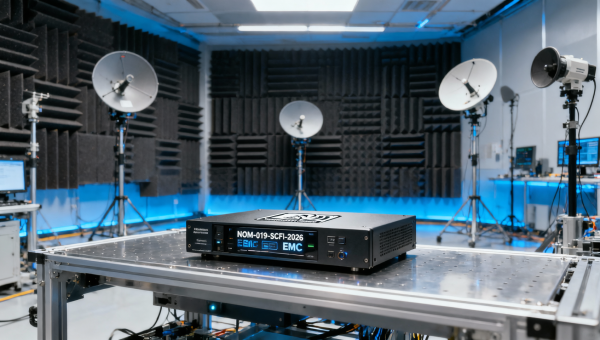
 Mexico NOM-019-SCFI-2026 Effective May 1, 2026: EMC Certification Mandatory for Auto ElectronicsNOM-019-SCFI-2026 EMC certification is now mandatory for auto electronics in Mexico—effective May 1, 2026. Ensure compliance for infotainment, ADAS, OBD-II & more.
") TÜV Rheinland Updates CE Requirements for Servo Drives (PLd + EMC Class 3)TÜV Rheinland updates CE requirements for servo drives: PLd + EMC Class 3 joint validation mandatory from Q3 2026. Act now to avoid delays, rejections, or compliance risks.
TÜV Rheinland Updates CE Requirements for Servo Drives (PLd + EMC Class 3)TÜV Rheinland updates CE requirements for servo drives: PLd + EMC Class 3 joint validation mandatory from Q3 2026. Act now to avoid delays, rejections, or compliance risks. SABER Phase II Launch: Building Hardware Must Submit Digital e-CoC & UPISABER Phase II mandates digital e-CoC & UPI for building hardware imports to Saudi Arabia—act now to ensure customs clearance and market access.
 FDA AI Diagnostic Device Draft Rules: Bias Assessment for ImportsFDA AI diagnostic device draft rules mandate bias assessment for imports — discover how algorithmic fairness impacts 510(k)/De Novo submissions and what to do now.
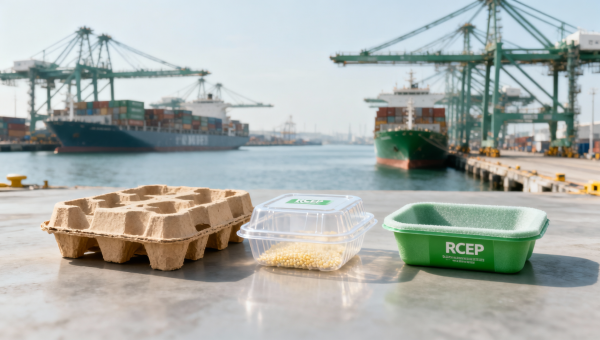
 RCEP Green Packaging Mutual Recognition Starts June 1, 2026RCEP Green Packaging Mutual Recognition starts June 1, 2026 — unlock faster exports to Australia, NZ, Japan & Korea with GB/T 37572-2025 certification.
 Vietnam Suspends SASO Mutual Recognition for Chinese Irrigation EquipmentVietnam suspends SASO mutual recognition for Chinese irrigation equipment—impacting exporters, testers & suppliers. Act now to avoid 6–8 week delays & 35% cost hikes.
 IMDG Code 41-24 Enforces UN3480 Class 9 Labeling for Li-ion Battery Sea FreightIMDG Code 41-24 enforces UN3480 Class 9 labeling for Li-ion battery sea freight—learn mandatory QR labels, compliance actions & port enforcement risks.
 EU CBAM Enters Enforcement Phase on April 1, 2026EU CBAM enforcement starts April 1, 2026 — critical for Chinese battery materials, construction profiles & industrial coatings exporters. Act now to avoid customs delays.
 Mexico Enforces NOM-019-SCFI-2026 EMC Certification for Auto Electronics from May 2026Mexico enforces NOM-019-SCFI-2026 EMC certification for auto electronics from May 2026 — mandatory local testing, stricter standards, and urgent compliance action required.
 Global Port Congestion Eases, but Red Sea Rerouting PersistsRed Sea rerouting persists amid easing port congestion—Shanghai–Rotterdam freight rates surge 4.2% to $5,280/TEU. Critical insights for exporters, importers & logistics leaders.
 RCEP Green Packaging Mutual Recognition Starts June 2026RCEP Green Packaging Mutual Recognition starts June 2026 — streamline exports to Australia, NZ, Japan & SK with GB/T 37572-2025 certification. Save time & costs!
 FDA AI Diagnostic Device Rules: ABIA Required from Q3 2026FDA AI diagnostic device rules now require ABIA reports from Q3 2026 — essential for 510(k)/De Novo submissions. Stay compliant, avoid delays & secure U.S. market access.
 Vietnam Suspends SASO Mutual Recognition for Chinese Irrigation EquipmentVietnam suspends SASO mutual recognition for Chinese irrigation equipment—sprinkler systems, drip controllers & irrigation systems now require local QUATEST 3 testing. Act now to avoid 12-week delays & 35% cost hikes.
") TÜV Rheinland Updates CE Certification for Industrial Robot Drives (2026 Q3)TÜV Rheinland’s 2026 Q3 CE certification update for industrial robot drives mandates PLd safety + EN 61800-3 EMC — act now to avoid EU market delays.
TÜV Rheinland Updates CE Certification for Industrial Robot Drives (2026 Q3)TÜV Rheinland’s 2026 Q3 CE certification update for industrial robot drives mandates PLd safety + EN 61800-3 EMC — act now to avoid EU market delays. IMDG Code Amendment 41-24 Takes Effect for Lithium Battery Sea FreightIMDG Code Amendment 41-24 is live: New QR labels, bilingual handling tags & SOC disclosure required for UN3480 lithium battery sea freight—act now to avoid delays.
 SASO SABER Phase II: Digital Type Test Reports Required for Building Hardware from Jun 2026SASO SABER Phase II requires digital type test reports & unique product IDs for building hardware exports to Saudi Arabia — effective June 2026. Act now to ensure compliance and avoid customs delays.
 CPSC Updates 16 CFR Part 1236: New Suffocation Test for Children's Sleep Sacks Effective July 2026CPSC Updates 16 CFR Part 1236: New suffocation test for children's sleep sacks takes effect July 2026 — ensure compliance, avoid delays & protect your U.S. market access.
 EN IEC 62471-2:2026 Effective Oct 2026 for EU LED Lighting ExportsEN IEC 62471-2:2026 mandates full-spectrum photobiological safety testing (200–3000 nm) for all EU-bound LED lighting — effective 1 Oct 2026. Act now to secure CE marking & avoid market access delays.
 AI Patent Tools Security Flaw Triggers Compliance ReviewAI Patent Tools security flaw exposed—triggering urgent compliance reviews for medical device, semiconductor & AI firms. Act now to secure submissions.


















Popular Tags
Global Trade Insights & Industry
Our mission is to empower global exporters and importers with data-driven insights that foster strategic growth.
Search News
Popular Tags
Industry Overview
The global commercial kitchen equipment market is projected to reach $112 billion by 2027. Driven by urbanization, the rise of e-commerce food delivery, and strict hygiene regulations.