

First Batch of National SME Service Platforms Announced
On April 29, 2026, China’s Ministry of Industry and Information Technology (MIIT) announced the first cohort of 30 national demonstration platforms for public services to small and medium-sized enterprises (SMEs), including 16 dedicated cross-border certification and compliance service centers. This development is especially relevant for export-oriented manufacturing, electronics, lighting, home appliances, automotive components, and green energy equipment sectors — where adherence to foreign market准入 requirements directly affects market access and supply chain continuity.
Event Overview
On April 29, 2026, MIIT published the list of 30 entities selected as creation candidates for the National SME Public Service Demonstration Platforms (bases). Of these, 16 platforms are explicitly designated to provide services in export certification guidance, target-market entry consultation, and green-low-carbon compliance diagnostics. Their scope covers regulatory frameworks in 32 countries, including EU CB Scheme, US UL/FCC, Saudi SASO, and Vietnam CRoHS. Services are open to overseas buyers via appointment, and include joint factory audits and localized compliance training.
Industries Affected by Sector
Direct Export Trading Enterprises
These enterprises face immediate pressure to align product documentation and testing with evolving third-country requirements. The new platforms reduce reliance on private intermediaries for certification navigation but require proactive engagement to map applicable standards per destination market — particularly where overlapping or newly updated rules (e.g., EU Ecodesign, US EPA labeling) apply.
Contract Manufacturing & OEM Suppliers
OEMs often lack direct visibility into downstream certification obligations imposed by brand owners or importers. With 16 platforms offering ‘green-low-carbon compliance diagnostics’, manufacturers supplying to global brands must now assess whether their production processes, material declarations, or packaging meet emerging environmental thresholds — even if not yet mandated domestically.
Raw Material & Component Sourcing Firms
Suppliers of batteries, PCBs, plastics, or chemical additives may be asked to provide substance-level declarations (e.g., RoHS, REACH SVHC, PFAS statements) earlier in procurement cycles. The inclusion of Vietnam CRoHS and Saudi SASO signals expanding demand for traceable, auditable supply chain data beyond traditional Tier-1 relationships.
Logistics & Certification Intermediary Providers
Third-party labs, freight forwarders, and compliance consultants may experience shifting service demand: less need for standalone document translation or basic checklist support, and more for integrated support across audit coordination, local-language training delivery, and multi-market conformity mapping — especially for SMEs without in-house regulatory teams.
What Relevant Enterprises Should Monitor and Do Now
Track official platform operational timelines and service scopes
MIIT’s announcement identifies ‘creation candidates’, not fully operational platforms. Enterprises should monitor subsequent MIIT or provincial工信 department notices confirming launch dates, service eligibility criteria (e.g., SME size definitions, export volume thresholds), and whether services are fee-based or subsidized.
Prioritize markets and product categories with active regulatory updates
Not all 32 covered markets carry equal urgency. Current focus should fall on jurisdictions with recently enforced or upcoming requirements — such as EU’s updated Radio Equipment Directive (RED), Vietnam’s CRoHS implementation timeline, or Saudi SASO’s mandatory SABER portal integration — rather than broad geographic coverage.
Distinguish policy signal from near-term operational readiness
The designation reflects strategic intent, not immediate capacity. Analysis shows most listed platforms are still in setup phase; actual service availability — especially for joint audits or multilingual training — may take 6–12 months. Companies should continue existing compliance workflows while using this period to audit internal documentation readiness.
Prepare for buyer-facing compliance coordination
Since overseas buyers can book platform services directly, suppliers should proactively review current technical files, test reports, and factory audit records. Where gaps exist (e.g., missing UL follow-up service reports or incomplete EU Declaration of Conformity templates), internal alignment between R&D, QA, and export sales teams becomes critical ahead of potential joint verification requests.
Editorial Observation / Industry Perspective
Observably, this initiative functions primarily as a structural signal — not an immediate operational solution. It formalizes state-backed infrastructure for export compliance, signaling long-term prioritization of SME internationalization quality over speed. From an industry perspective, it shifts part of the regulatory burden from individual firms to shared-service ecosystems — but only if those ecosystems achieve consistent service depth, multilingual capability, and cross-border audit recognition. Current rollout status remains early-stage; sustained monitoring of platform performance metrics (e.g., average response time, audit pass rates, buyer uptake) will determine its real-world utility.

Conclusion: This announcement marks the institutionalization of export compliance support for Chinese SMEs — but its practical impact depends on execution fidelity, not just designation. It is better understood as the start of a capacity-building cycle, not a turnkey remedy. Enterprises should treat it as a developing resource — one requiring active tracking, selective engagement, and parallel strengthening of internal compliance capabilities.
Source: Ministry of Industry and Information Technology (MIIT) official notice, issued April 29, 2026. Note: Platform operational details, funding mechanisms, and service fee structures remain pending official release and are subject to ongoing observation.
Recommended News
 China’s First Embodied AI Robot Export Liability Insurance Launched in GuangxiEmbodied AI Robot Export Liability Insurance — China’s first dedicated policy, 22% cheaper, covers EU/US/ASEAN markets. Secure compliance & boost exports now!
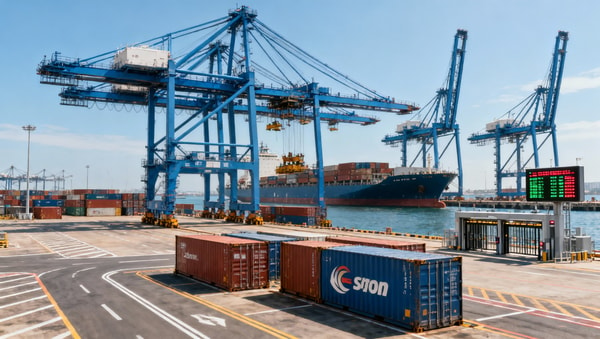
 China’s Q1 2026 Logistics Volume Rises 6.2%: Shipping Rates StabilizeChina’s Q1 2026 logistics volume rose 6.2% — shipping rates stabilize across US/EU lanes. Key insights for exporters, manufacturers & 3PLs.
 China to Include AI Quality Inspection, Remote IoT Maintenance in Export CertificationChina now certifies AI quality inspection & remote IoT maintenance for exports—unlock global market access, incentives, and trust. Act now to align with DS-EF.
 MIIT Releases 10G-PON Pilot Completion List, Boosting Global Export of Chinese Optical ModulesMIIT's 10G-PON pilot completion list unlocks global export opportunities for Chinese optical modules — gain 10G-IOA certification & win tenders in Spain, Brazil, Indonesia.
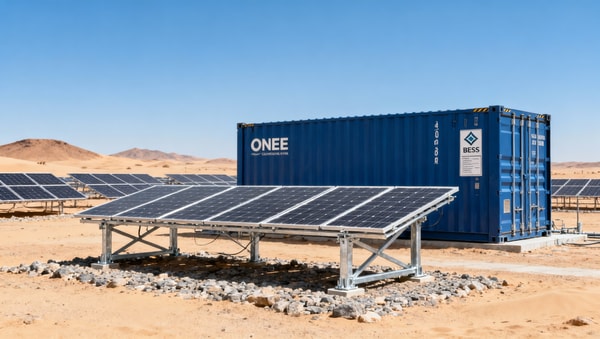
 Morocco Ranks 4th in EU Energy Aid to Africa; PV Mounting & BESS Export Pathways ExpandPV mounting & BESS exporters: Morocco’s ONEE white list unlocks EU-funded solar microgrid opportunities — faster clearance, stronger EU-Africa energy alignment.
 MIIT Introduces SGEER for Green Data Center ExportsSGEER for green data center exports is now a key tender requirement in Singapore, UAE & Chile—learn how MIIT’s new Space-Ground Energy Efficiency Ratio impacts servers, liquid cooling & intelligent PDUs.
 ADB Raises Vietnam’s 2026 GDP Forecast to 7.2% on Electronics & Solar Supply Chain GrowthADB raises Vietnam’s 2026 GDP forecast to 7.2%—driven by electronics & solar supply chain growth. Discover how PV bundling, 12-day deliveries, and Sino-Vietnamese integration reshape global procurement.
 First Batch of National SME Service Platforms AnnouncedNational SME Service Platforms launched: 30 demonstration hubs, including 16 for cross-border certification & green compliance—key for exporters in electronics, auto parts, and green energy.
 MIIT Approves 690 Industry Standards, Including AI Deep Synthesis Image SpecificationMIIT approves AI Deep Synthesis Image Specification amid 690 new industry standards—critical for AI visual inspection, industrial QA, and remote O&M exporters.
 EN 62368-1:2026 Mandatory in EU from May 2026 for Wearables & Smart HomeEN 62368-1:2026 mandates thermal runaway protection for wearables & smart home devices in the EU from May 2026 — ensure CE compliance now.
 China Accelerates Export Refunds for Cement, Glass FirmsChina accelerates export refunds for cement & glass firms—T+3 VAT rebates + 30% lower inspections for ISO 14067-certified exporters. Act now!
 MIIT Sets New Certification for Green Data Center ExportsMIIT Sets New Certification for Green Data Center Exports: LEO satellite sync, space-ground scheduling & liquid-cooling (PUE<1.15) now key for NEOM/G42 bids.
 China’s First Embodied AI Robot Insurance Launched in GuangxiChina’s first Embodied AI Robot Insurance launched in Guangxi—key for EU-bound service robot exporters, OEMs & compliance teams seeking faster market access.
 MIIT Releases List of Completed 10G-PON Pilot CitiesMIIT Releases List of Completed 10G-PON Pilot Cities — Discover how 800G optical modules, low-loss fiber patch cords & intelligent ODN cabinets are shaping global telecom procurement trends.
 Morocco: 4th Top African Recipient of EU Energy Aid, Boost for Chinese PV Mounting & BESS ExportsMorocco’s €1.2B EU energy aid boosts demand for Chinese PV mounting structures & containerized BESS — key export opportunity in North Africa.
 China’s 2026–2030 Service Trade Standardization PlanChina’s 2026–2030 Service Trade Standardization Plan officially recognizes AI inspection reports, cloud maintenance logs, and SaaS packages as certifiable digital exports—key for global SaaS, smart manufacturing & IT outsourcing firms.
 ADB Raises Vietnam’s 2026 GDP Forecast to 7.2% on Sino-Vietnam Electronics & Solar Supply Chain IntegrationADB raises Vietnam’s 2026 GDP forecast to 7.2% amid surging Sino-Vietnam electronics & solar supply chain integration—key insight for OEMs, EMS providers, and cross-border traders.
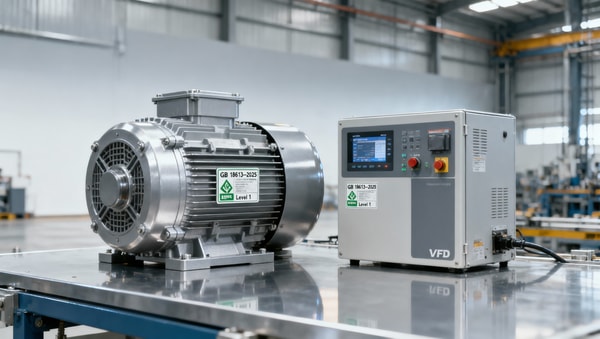
 China Launches Green Export Channel for High-Efficiency Motors & DrivesGreen export channel launched for high-efficiency motors & drives meeting GB 18613–2025 Level 1 — faster clearance, certification & global edge.
 EN 62368-1:2026 Mandatory in EU from May 2026 for Wearables & Smart Home DevicesEN 62368-1:2026 is mandatory for wearables & smart home devices in the EU from May 2026 — ensure CE compliance now with thermal, PCB, and flame-retardancy updates.
 WeChat Pay Connects QR Codes in 5 Countries for Cross-Border TradeWeChat Pay Connects QR Codes in 5 Countries for Cross-Border Trade — enabling seamless, wallet-to-wallet payments for SMEs importing from China. Faster settlement, no RMB top-up or cards needed.
 MIIT Releases First List of Completed 10G-PON Pilot ProjectsMIIT Releases First List of Completed 10G-PON Pilot Projects — discover how XGS-PON, 25G WDM-PON chips and China’s 10G optical network pilots impact global export opportunities.


















Popular Tags
Global Trade Insights & Industry
Our mission is to empower global exporters and importers with data-driven insights that foster strategic growth.
Search News
Popular Tags
Industry Overview
The global commercial kitchen equipment market is projected to reach $112 billion by 2027. Driven by urbanization, the rise of e-commerce food delivery, and strict hygiene regulations.