

Morocco: 4th Top African Recipient of EU Energy Aid, Boost for Chinese PV Mounting & BESS Exports
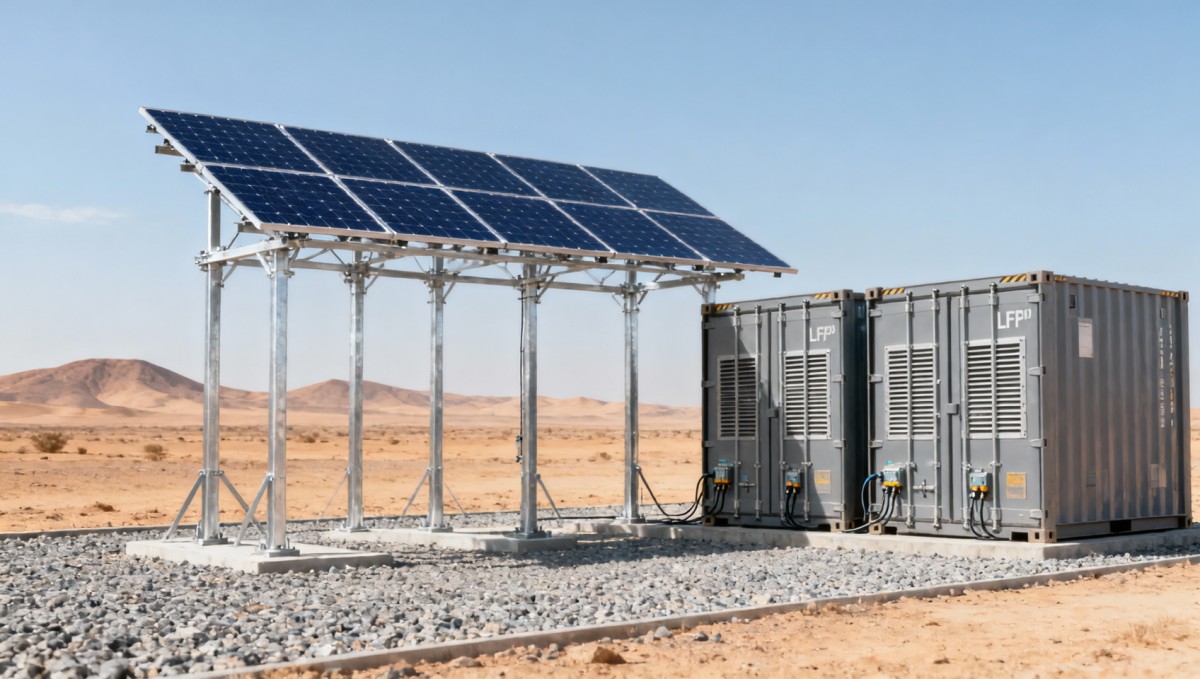
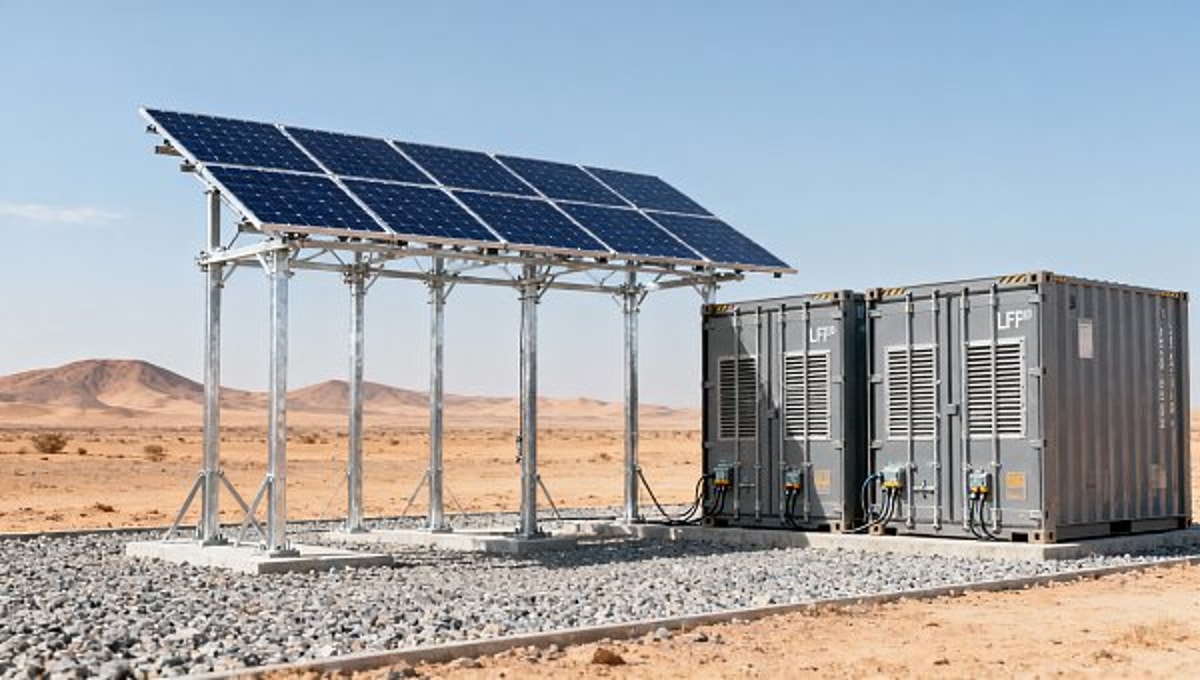
EU Commission data indicates that Morocco is set to receive €1.2 billion in EU energy aid by 2026 — making it the fourth-largest African beneficiary — with funding directed toward northern photovoltaic (PV) power station clusters and lithium iron phosphate (LFP) battery energy storage system (BESS) demonstration projects. This development signals new traction for Chinese PV mounting structure manufacturers and containerized BESS suppliers entering the North Africa–Europe linked energy market, particularly as they have been shortlisted for EPC subcontracting roles and are expected to begin bulk deliveries from Q3.
Event Overview
According to publicly disclosed information from the European Commission, Morocco’s allocated EU energy assistance for 2026 totals €1.2 billion. The funds are earmarked for two priority areas: large-scale photovoltaic power station clusters in northern Morocco and pilot-scale LFP-based battery energy storage systems. Chinese companies specializing in ground-mount PV structural systems and standardized, containerized BESS solutions have been included in local EPC contractors’ prequalified subcontractor shortlists. Initial batch deliveries are scheduled to commence in Q3 — though no specific delivery volumes or contract values have been released.
Impact on Specific Industry Segments
Direct Exporters of PV Mounting Structures
These firms face direct exposure to demand shifts tied to Moroccan infrastructure timelines and EU-funded procurement rules. Impact manifests in order timing, compliance requirements (e.g., CE marking, IEC 61215/61730 alignment), and logistics lead times for North African ports.
Exporters of Containerized BESS Systems
Suppliers of prefabricated, skid-mounted or ISO-container-based BESS units are affected by technical interoperability expectations (e.g., grid-code compliance with EN 50549, UL 9540A reporting), local certification pathways, and integration readiness with European-sourced inverters or SCADA platforms.
Supply Chain & Logistics Service Providers
Firms offering freight forwarding, customs brokerage, or last-mile inland transport in Casablanca, Nador, or Tangier are seeing increased inquiry volume related to oversized or hazardous-goods shipments (e.g., lithium batteries). Regulatory clarity on UN3480 classification handling and Moroccan customs valuation procedures for integrated BESS modules remains pending.
Local EPC Contractors & System Integrators (Non-Chinese)
European and Moroccan EPC firms managing EU-funded packages must coordinate technical documentation handover, warranty alignment, and commissioning support across time zones and language barriers. Their subcontractor selection now includes more Chinese-origin hardware — raising visibility of cross-border service-level agreement (SLA) expectations.
What Relevant Companies or Practitioners Should Focus On Now
Monitor official tender documentation updates from Moroccan Agency for Sustainable Energy (MASEN) and EU Delegation to Morocco
While shortlisting has occurred, formal award notices, scope-of-work definitions, and payment milestone structures have not yet been published. These documents will clarify whether delivery obligations include local assembly, after-sales service localization, or cybersecurity certification.
Verify regulatory entry pathways for LFP BESS units into Morocco — distinct from EU CE routes
Moroccan customs apply national standards (NM 03.1.200 for batteries; NM 10.7.001 for PV systems) alongside EU-aligned norms. Pre-shipment conformity assessments via accredited bodies (e.g., Bureau Veritas Morocco, SGS Casablanca) are advisable before Q3 dispatch.
Distinguish between policy signal and commercial execution
The €1.2 billion figure reflects a commitment ceiling, not disbursed funds. Disbursement depends on project milestones, environmental safeguards, and audit compliance. Firms should treat shortlist inclusion as conditional qualification — not guaranteed revenue.
Prepare for port-handling coordination and inland transport constraints
Nador Port handles most containerized BESS imports but lacks dedicated hazardous cargo berths. Early engagement with Moroccan terminal operators and inland hauliers — especially for 20-ft or 40-ft ISO containers with integrated thermal management — helps avoid demurrage or inspection delays.
Editorial Perspective / Industry Observation
Observably, this development functions less as an immediate revenue catalyst and more as a structural signal: it confirms Morocco’s role as a testbed for EU-funded, China-supplied clean energy hardware within a trans-Mediterranean framework. Analysis shows that inclusion in EPC shortlists — rather than direct EU grants — marks a shift toward supply-chain integration over grant-dependent procurement. From an industry standpoint, this reflects growing acceptance of Chinese BESS and mounting solutions in regulated, multilateral infrastructure programs — provided technical, certification, and logistical interfaces are rigorously managed. It is not yet evidence of scaled commercial adoption, but rather validation of technical eligibility under stringent international frameworks.
Conclusion:
This aid allocation and associated supplier shortlisting do not represent a near-term market opening in volume terms, but instead constitute a procedural milestone: Chinese PV mounting and containerized BESS providers have met threshold technical and compliance criteria for participation in EU-backed North African energy infrastructure. For stakeholders, the event is best understood as a credentialing step — one that lowers entry barriers for future tenders, yet requires continued attention to local regulatory implementation, not just headline figures.
Source Attribution:
- Main source: European Commission public disclosure on 2026 energy aid allocation to Morocco (no document ID or publication date specified in input)
- Additional context: Shortlist status and Q3 delivery timeline are based on disclosed EPC subcontractor selection announcements — no named entities or tender references were provided in the input and remain unconfirmed beyond general industry reporting.
- Note: Ongoing observation is warranted for official tender award notices, MASEN implementation updates, and Moroccan customs circulars on BESS import protocols.
Recommended News
 China Accelerates Export Refunds for Cement, Glass FirmsChina accelerates export refunds for cement & glass firms—T+3 VAT rebates + 30% lower inspections for ISO 14067-certified exporters. Act now!
 MIIT Sets New Certification for Green Data Center ExportsMIIT Sets New Certification for Green Data Center Exports: LEO satellite sync, space-ground scheduling & liquid-cooling (PUE<1.15) now key for NEOM/G42 bids.
 China’s First Embodied AI Robot Insurance Launched in GuangxiChina’s first Embodied AI Robot Insurance launched in Guangxi—key for EU-bound service robot exporters, OEMs & compliance teams seeking faster market access.
 MIIT Releases List of Completed 10G-PON Pilot CitiesMIIT Releases List of Completed 10G-PON Pilot Cities — Discover how 800G optical modules, low-loss fiber patch cords & intelligent ODN cabinets are shaping global telecom procurement trends.
 Morocco: 4th Top African Recipient of EU Energy Aid, Boost for Chinese PV Mounting & BESS ExportsMorocco’s €1.2B EU energy aid boosts demand for Chinese PV mounting structures & containerized BESS — key export opportunity in North Africa.
 China’s 2026–2030 Service Trade Standardization PlanChina’s 2026–2030 Service Trade Standardization Plan officially recognizes AI inspection reports, cloud maintenance logs, and SaaS packages as certifiable digital exports—key for global SaaS, smart manufacturing & IT outsourcing firms.
 ADB Raises Vietnam’s 2026 GDP Forecast to 7.2% on Sino-Vietnam Electronics & Solar Supply Chain IntegrationADB raises Vietnam’s 2026 GDP forecast to 7.2% amid surging Sino-Vietnam electronics & solar supply chain integration—key insight for OEMs, EMS providers, and cross-border traders.
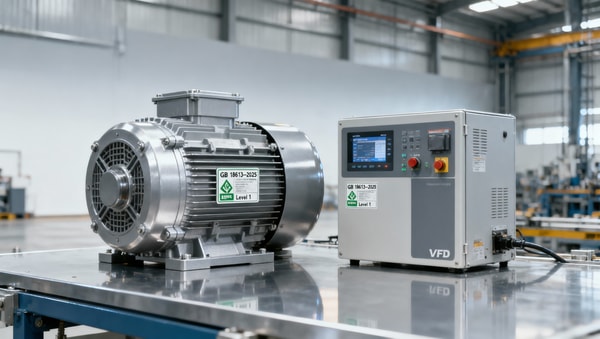
 China Launches Green Export Channel for High-Efficiency Motors & DrivesGreen export channel launched for high-efficiency motors & drives meeting GB 18613–2025 Level 1 — faster clearance, certification & global edge.
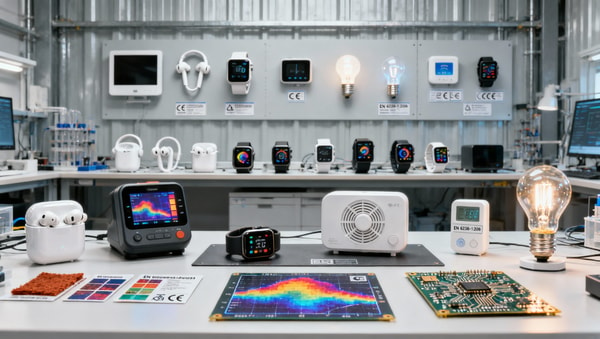
 EN 62368-1:2026 Mandatory in EU from May 2026 for Wearables & Smart Home DevicesEN 62368-1:2026 is mandatory for wearables & smart home devices in the EU from May 2026 — ensure CE compliance now with thermal, PCB, and flame-retardancy updates.
 WeChat Pay Connects QR Codes in 5 Countries for Cross-Border TradeWeChat Pay Connects QR Codes in 5 Countries for Cross-Border Trade — enabling seamless, wallet-to-wallet payments for SMEs importing from China. Faster settlement, no RMB top-up or cards needed.
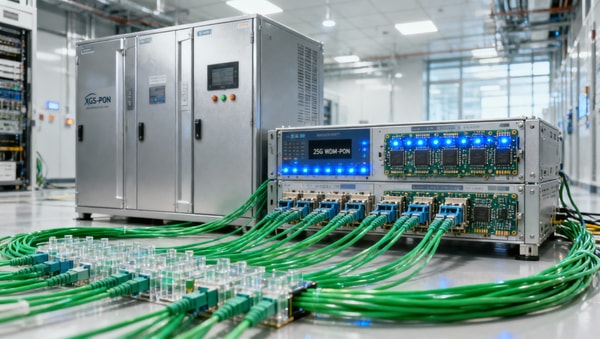
 MIIT Releases First List of Completed 10G-PON Pilot ProjectsMIIT Releases First List of Completed 10G-PON Pilot Projects — discover how XGS-PON, 25G WDM-PON chips and China’s 10G optical network pilots impact global export opportunities.
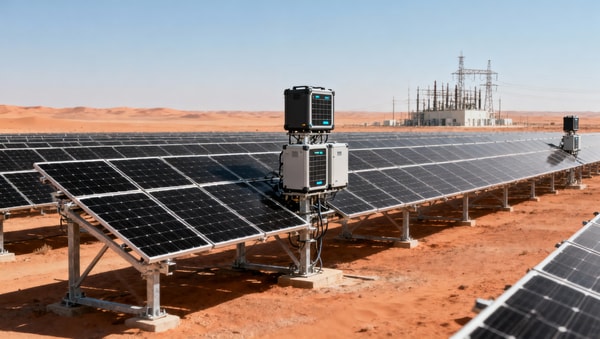
 Morocco: 4th Top African Recipient of EU Energy Aid, New Channel for Chinese PV & StorageMorocco: 4th top African recipient of EU energy aid (€4.1B) — unlocking new opportunities for Chinese PV modules, solar trackers, PV-storage cabinets & microgrid systems.
 MIIT Launches Space-Ground Computing Coordination PlanMIIT Launches Space-Ground Computing Coordination Plan — unlocking export opportunities for energy-efficient data center hardware in emerging markets.
 ADB Raises Vietnam’s 2026 GDP Forecast to 7.2% on China-Vietnam Supply Chain UpgradesADB raises Vietnam’s 2026 GDP forecast to 7.2% amid China-Vietnam supply chain upgrades in electronics, PV, and NEV sectors—key insight for global manufacturers and procurement teams.
 EN 62368-1:2026 Mandatory from Oct 2026: Thermal Runaway Protection for Wearables & Smart Home DevicesEN 62368-1:2026 mandates thermal runaway protection for wearables & smart home devices from Oct 2026 — act now to ensure EU market access, CB certification, and design compliance.
 UAE Emerges as Global AI Hub; Chinese AI Hardware Gains TractionUAE emerges as global AI hub—Chinese AI hardware from Shenzhen, Hangzhou & Suzhou gains traction in smart infrastructure, sandbox deployments & GCC market access.
 CMDE Adds 74 External Experts to Boost Med Device Export RegistrationCMDE Adds 74 External Experts to Boost Med Device Export Registration — accelerate FDA/EU/GCC submissions for medical equipment & rehab devices.
 MIIT Launches Space-Ground Compute & Power CoordinationMIIT Launches Space-Ground Compute & Power Coordination—unlocking export opportunities in liquid cooling, optical modules & high-efficiency servers for hot-humid markets.
 2026 Bio-based Raw Material Supplier Guide Released2026 Bio-based Raw Material Supplier Guide: Discover the official White List for PLA, PHA, bamboo fiber & more — boost EU/US compliance and procurement efficiency now.
 China Launches 'Model-Data Resonance' Initiative for AI+Manufacturing StandardsChina's 'Model-Data Resonance' initiative launches AI+Manufacturing standards — CESI/AI-MFG-2026 ensures plug-and-play interoperability for CNC, AGVs, MES & more across global smart factories.
 China’s First Embodied AI Robot Export Liability Insurance Launched in GuangxiChina’s first Embodied AI Robot Export Liability Insurance launched in Guangxi—key for robot exporters targeting EU, US & Saudi markets. Secure compliance-backed coverage now.









Popular Tags
Global Trade Insights & Industry
Our mission is to empower global exporters and importers with data-driven insights that foster strategic growth.
Search News
Popular Tags
Industry Overview
The global commercial kitchen equipment market is projected to reach $112 billion by 2027. Driven by urbanization, the rise of e-commerce food delivery, and strict hygiene regulations.