

ADB Raises Vietnam’s 2026 GDP Forecast to 7.2% on Sino-Vietnam Electronics & Solar Supply Chain Integration
Asian Development Bank (ADB) has revised upward its 2026 GDP growth forecast for Vietnam to 7.2%, citing rapid expansion in electronics manufacturing and new energy equipment exports. The update — released in the ADB’s latest Asian Development Outlook supplement — signals accelerating functional integration between China and Vietnam across key segments of the electronics assembly and photovoltaic (PV) component supply chain. Export-oriented electronics, power electronics (e.g., inverters), and PV structural components are now central to Vietnam’s export momentum — making this development especially relevant for global OEMs, contract manufacturers, component traders, and logistics providers operating across Southeast Asia and Greater China.
Event Overview
The Asian Development Bank (ADB) has updated its Vietnam GDP projection for 2026 to 7.2% in its most recent Asian Development Outlook report. This revision reflects stronger-than-expected export performance, particularly in electronic goods and renewable energy equipment. The report explicitly identifies deepening operational linkages between Chinese suppliers and Vietnamese assemblers — specifically in surface-mount technology (SMT) assembly, inverter housing production, and PV mounting frame fabrication — as a primary driver. According to the report, bilateral trade in intermediate parts and components between China and Vietnam rose 41% year-on-year in Q1, reinforcing Vietnam’s role as an extension node of China-based supply chains for multinational buyers.
Industries Affected by Segment
Direct Trade Enterprises (Cross-Border Component Traders)
These firms handle import/export of subassemblies, housings, frames, and SMT-ready PCBs between China and Vietnam. Their transaction volumes are directly tied to the 41% YoY rise in Q1 parts trade. Impact manifests in increased customs documentation volume, tighter lead-time expectations, and heightened scrutiny on origin compliance and tariff classification under ASEAN-China FTA frameworks.
Raw Material & Component Procurement Firms
Suppliers of aluminum extrusions (for PV frames), sheet metal (for inverter enclosures), and passive/active SMT components face growing demand from Vietnamese EMS providers. The ‘China core parts + Vietnam final assembly’ model increases order frequency but compresses margin visibility due to layered procurement paths and inventory buffering requirements at both ends of the corridor.
Electronics & PV Equipment Manufacturing (EMS/ODM Providers)
Vietnamese contract manufacturers engaged in SMT, box-build, and mechanical assembly of inverters or solar racking systems are experiencing higher capacity utilization and expanded scope of work — but also greater dependency on timely inbound shipments of Chinese-sourced modules, ICs, and thermal management parts. Delays or quality variances upstream can cascade into delivery risk downstream.
Supply Chain Service Providers (Logistics, Customs Brokerage, Compliance Support)
Firms offering cross-border freight coordination, bonded warehousing near HCMC/Haiphong, and HS code advisory services are seeing elevated demand for time-definite, documentation-accurate solutions. The complexity of dual-country value-add — e.g., Chinese components undergoing minor processing before re-export — raises classification and preferential tariff eligibility questions that require specialist support.
What Relevant Enterprises or Practitioners Should Focus On Now
Monitor official updates on Vietnam’s industrial zone incentives and China’s export control adjustments
While the ADB report highlights current momentum, neither country has announced new policy measures targeting this specific integration pattern. Any upcoming revisions to Vietnam’s Decree 154 (on export processing zones) or China’s dual-use export controls affecting power electronics components could alter cost structures or lead times.
Track shipment-level data for high-frequency categories: SMT reels, aluminum PV frames, and die-cast inverter housings
These three categories anchor the ‘core parts + final assembly’ workflow described in the ADB report. Disruptions or price volatility in any one category may signal broader pressure points — making them early indicators worth mapping against customs release times and container dwell metrics.
Distinguish between reported trade growth and actual value-add localization
The 41% YoY increase in bilateral parts trade reflects volume and documentation flow — not necessarily deeper local sourcing or skills development in Vietnam. Enterprises should assess whether their Vietnamese partners have expanded testing, firmware loading, or certification capabilities — or remain reliant on Chinese engineering oversight.
Pre-position buffer stock for critical subcomponents with long lead times
Given reliance on Chinese inputs for final assembly in Vietnam, maintaining strategic safety stock — especially for custom-machined housings or proprietary controller boards — helps mitigate transit delays or sudden customs inspections without halting line operations.
Editorial Perspective / Industry Observation
Observably, this ADB revision functions less as a standalone economic indicator and more as a formal validation of an operational reality already underway since 2023: the institutionalization of a hybrid China–Vietnam production architecture for electronics and solar hardware. Analysis shows the model is gaining traction not because of cost arbitrage alone, but due to regulatory scalability — Vietnam offers faster factory ramp-up and export licensing than China for certain end products, while retaining access to China’s component ecosystem. That said, it remains a transitional configuration: true supply chain resilience would require localized testing labs, domestic semiconductor packaging options, and harmonized technical standards — none of which are reflected in current ADB assumptions. The trend is real, but its durability hinges on continued policy alignment and infrastructure investment — areas requiring ongoing observation rather than assumption.

In summary, the ADB’s GDP upgrade underscores how deeply integrated — and operationally interdependent — China and Vietnam have become in electronics and solar hardware production. It does not signify full decoupling from China, nor does it imply self-sufficiency in Vietnam. Rather, it reflects an adaptive, functionally segmented supply chain that prioritizes speed, compliance flexibility, and export market access. For stakeholders, the priority is not to interpret this as a permanent shift, but as a measurable phase in regional manufacturing evolution — one demanding precise, segment-specific responsiveness rather than broad strategic overhauls.
Source: Asian Development Bank, Asian Development Outlook (ADO) Supplement, latest edition. Note: Specific release date not disclosed in source material; Q1 2024 trade data cited is publicly verifiable through Vietnam General Department of Vietnam Customs and China’s General Administration of Customs. Further policy developments — including potential updates to Vietnam’s Investment Law implementation or China’s export control list — remain subject to monitoring.
Recommended News
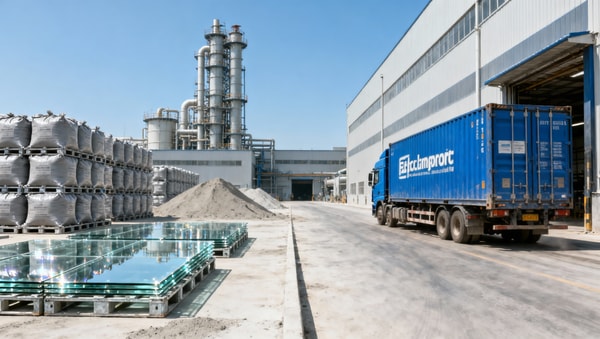
 China Accelerates Export Refunds for Cement, Glass FirmsChina accelerates export refunds for cement & glass firms—T+3 VAT rebates + 30% lower inspections for ISO 14067-certified exporters. Act now!
 MIIT Sets New Certification for Green Data Center ExportsMIIT Sets New Certification for Green Data Center Exports: LEO satellite sync, space-ground scheduling & liquid-cooling (PUE<1.15) now key for NEOM/G42 bids.
 China’s First Embodied AI Robot Insurance Launched in GuangxiChina’s first Embodied AI Robot Insurance launched in Guangxi—key for EU-bound service robot exporters, OEMs & compliance teams seeking faster market access.
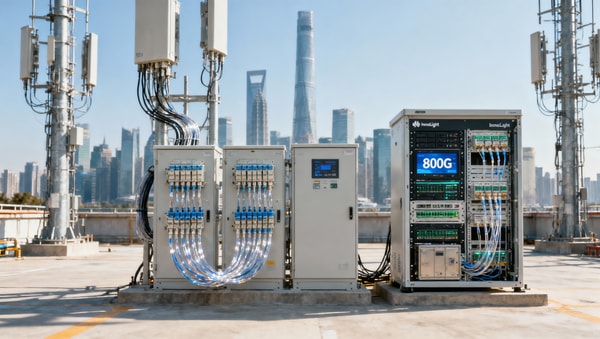
 MIIT Releases List of Completed 10G-PON Pilot CitiesMIIT Releases List of Completed 10G-PON Pilot Cities — Discover how 800G optical modules, low-loss fiber patch cords & intelligent ODN cabinets are shaping global telecom procurement trends.
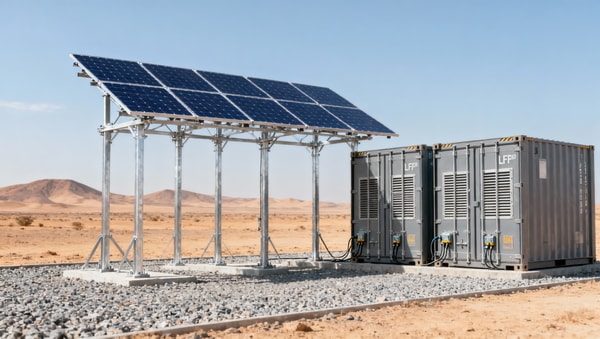
 Morocco: 4th Top African Recipient of EU Energy Aid, Boost for Chinese PV Mounting & BESS ExportsMorocco’s €1.2B EU energy aid boosts demand for Chinese PV mounting structures & containerized BESS — key export opportunity in North Africa.
 China’s 2026–2030 Service Trade Standardization PlanChina’s 2026–2030 Service Trade Standardization Plan officially recognizes AI inspection reports, cloud maintenance logs, and SaaS packages as certifiable digital exports—key for global SaaS, smart manufacturing & IT outsourcing firms.
 ADB Raises Vietnam’s 2026 GDP Forecast to 7.2% on Sino-Vietnam Electronics & Solar Supply Chain IntegrationADB raises Vietnam’s 2026 GDP forecast to 7.2% amid surging Sino-Vietnam electronics & solar supply chain integration—key insight for OEMs, EMS providers, and cross-border traders.
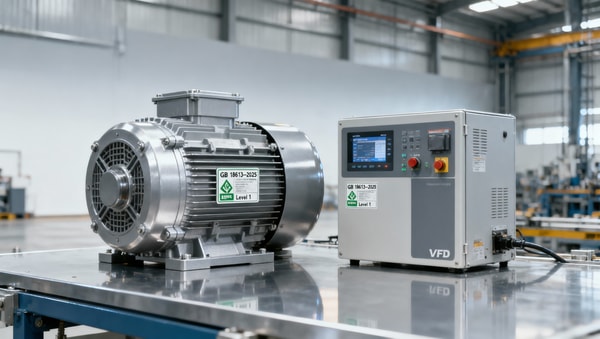
 China Launches Green Export Channel for High-Efficiency Motors & DrivesGreen export channel launched for high-efficiency motors & drives meeting GB 18613–2025 Level 1 — faster clearance, certification & global edge.
 EN 62368-1:2026 Mandatory in EU from May 2026 for Wearables & Smart Home DevicesEN 62368-1:2026 is mandatory for wearables & smart home devices in the EU from May 2026 — ensure CE compliance now with thermal, PCB, and flame-retardancy updates.
 WeChat Pay Connects QR Codes in 5 Countries for Cross-Border TradeWeChat Pay Connects QR Codes in 5 Countries for Cross-Border Trade — enabling seamless, wallet-to-wallet payments for SMEs importing from China. Faster settlement, no RMB top-up or cards needed.
 MIIT Releases First List of Completed 10G-PON Pilot ProjectsMIIT Releases First List of Completed 10G-PON Pilot Projects — discover how XGS-PON, 25G WDM-PON chips and China’s 10G optical network pilots impact global export opportunities.
 Morocco: 4th Top African Recipient of EU Energy Aid, New Channel for Chinese PV & StorageMorocco: 4th top African recipient of EU energy aid (€4.1B) — unlocking new opportunities for Chinese PV modules, solar trackers, PV-storage cabinets & microgrid systems.
 MIIT Launches Space-Ground Computing Coordination PlanMIIT Launches Space-Ground Computing Coordination Plan — unlocking export opportunities for energy-efficient data center hardware in emerging markets.
 ADB Raises Vietnam’s 2026 GDP Forecast to 7.2% on China-Vietnam Supply Chain UpgradesADB raises Vietnam’s 2026 GDP forecast to 7.2% amid China-Vietnam supply chain upgrades in electronics, PV, and NEV sectors—key insight for global manufacturers and procurement teams.
 EN 62368-1:2026 Mandatory from Oct 2026: Thermal Runaway Protection for Wearables & Smart Home DevicesEN 62368-1:2026 mandates thermal runaway protection for wearables & smart home devices from Oct 2026 — act now to ensure EU market access, CB certification, and design compliance.
 UAE Emerges as Global AI Hub; Chinese AI Hardware Gains TractionUAE emerges as global AI hub—Chinese AI hardware from Shenzhen, Hangzhou & Suzhou gains traction in smart infrastructure, sandbox deployments & GCC market access.
 CMDE Adds 74 External Experts to Boost Med Device Export RegistrationCMDE Adds 74 External Experts to Boost Med Device Export Registration — accelerate FDA/EU/GCC submissions for medical equipment & rehab devices.
 MIIT Launches Space-Ground Compute & Power CoordinationMIIT Launches Space-Ground Compute & Power Coordination—unlocking export opportunities in liquid cooling, optical modules & high-efficiency servers for hot-humid markets.
 2026 Bio-based Raw Material Supplier Guide Released2026 Bio-based Raw Material Supplier Guide: Discover the official White List for PLA, PHA, bamboo fiber & more — boost EU/US compliance and procurement efficiency now.
 China Launches 'Model-Data Resonance' Initiative for AI+Manufacturing StandardsChina's 'Model-Data Resonance' initiative launches AI+Manufacturing standards — CESI/AI-MFG-2026 ensures plug-and-play interoperability for CNC, AGVs, MES & more across global smart factories.
 China’s First Embodied AI Robot Export Liability Insurance Launched in GuangxiChina’s first Embodied AI Robot Export Liability Insurance launched in Guangxi—key for robot exporters targeting EU, US & Saudi markets. Secure compliance-backed coverage now.















Popular Tags
Global Trade Insights & Industry
Our mission is to empower global exporters and importers with data-driven insights that foster strategic growth.
Search News
Popular Tags
Industry Overview
The global commercial kitchen equipment market is projected to reach $112 billion by 2027. Driven by urbanization, the rise of e-commerce food delivery, and strict hygiene regulations.