

China’s First Embodied AI Robot Insurance Launched in Guangxi
On April 7, 2026, Guangxi Banking and Insurance Regulatory Bureau approved the nation’s first dedicated product liability insurance for embodied intelligent robots — a milestone with direct implications for service robot exporters, EU market access providers, and robotics compliance professionals. This development signals a structural shift in how regulatory risk is managed for AI-driven physical systems entering high-compliance jurisdictions.
Event Overview
On April 7, 2026, the Guangxi Banking and Insurance Regulatory Bureau approved the first ‘Embodied Intelligent Robot Product Liability Insurance’ in China. The policy covers emerging risks including autonomous navigation collisions, erroneous execution of AI-generated commands, and injuries arising from human-robot interaction. The insurance has been accepted by TÜV Rheinland Germany; eligible Chinese service robot exporters may use the policy to substitute for certain third-party safety testing requirements when entering the EU market, shortening regulatory approval timelines by approximately 45 days.
Industries Affected
Direct Exporters of Service Robots
Exporters targeting the EU face tightened conformity assessment under the EU Machinery Regulation (EU) 2023/1230. Since this insurance is recognized by TÜV Rheinland — a Notified Body for CE marking — it may reduce reliance on full-scale physical safety testing for specific risk scenarios. Impact manifests in shorter time-to-market and lower pre-certification testing costs, but only where the insured risks align precisely with the scope accepted by the Notified Body.
Robotics OEMs and System Integrators
OEMs embedding AI-driven navigation or interaction modules into service robots (e.g., hospitality, logistics, healthcare assistants) are now exposed to new contractual and liability expectations. Buyers — especially EU-based distributors or public-sector procurers — may begin requiring proof of such insurance as a procurement condition. This shifts part of the compliance burden upstream in the value chain.
Third-Party Certification and Testing Providers
With partial substitution of physical testing now possible via an approved insurance instrument, demand for certain categories of mechanical safety validation may decline temporarily for covered risk types. However, certification bodies retain authority over scope definition: acceptance by TÜV Rheinland does not imply blanket equivalence across all test items under EN ISO 13849 or EN 1525.
Supply Chain Compliance Officers and Legal Counsel
For companies managing cross-border robot deployments, this insurance introduces a new layer of documentation requirement. Contractual clauses related to liability allocation, incident reporting protocols, and evidence submission to insurers must be aligned with both Chinese insurance terms and EU product liability directives (e.g., Directive 85/374/EEC).
What Enterprises and Practitioners Should Focus On Now
Monitor official scope definitions from TÜV Rheinland and EU national market surveillance authorities
The current acceptance is confirmed by TÜV Rheinland, but not yet codified in EU-level guidance. Analysis shows that whether this insurance can replace specific test reports — and which clauses of harmonized standards it maps to — remains subject to individual Notified Body interpretation.
Review export target markets and prioritize applications where AI-related interaction risks dominate
Observably, the policy’s value is highest for robots deployed in dynamic human environments (e.g., hotel concierges, hospital delivery units), where collision and miscommunication risks are central. It offers less advantage for stationary or highly constrained industrial robots governed by established functional safety frameworks.
Distinguish between policy issuance and regulatory recognition
This is a commercially issued insurance product approved by a provincial regulator — not an EU-mandated instrument. Current more suitable understanding is that it functions as a complementary risk mitigation tool, not a formal regulatory equivalence mechanism. Its utility depends on bilateral acceptance by buyers and certifiers, not automatic legal effect.
Prepare documentation workflows for insurer coordination during incident reporting
Since coverage includes AI instruction errors and human-robot interaction injuries, affected enterprises should establish internal protocols for logging system logs, sensor data, and user interaction records — all potentially required by the insurer during claims assessment. Delayed or incomplete data submission may affect claim validity.
Editorial Perspective / Industry Observation
This initiative is better understood as an early-stage institutional signal — not a fully scaled regulatory pathway. From industry perspective, it reflects growing recognition that traditional product liability frameworks struggle to accommodate real-time AI decision-making in physical agents. While the 45-day timeline reduction is meaningful, its replicability depends on further alignment between Chinese insurance standards and EU technical requirements. Observably, similar instruments are likely to emerge first in jurisdictions with active robotics export clusters (e.g., Guangdong, Jiangsu) and for high-visibility use cases like elderly care or airport assistance. Continued monitoring is warranted — particularly for updates from China’s National Financial Regulatory Administration and EU Commission’s AI Office regarding insurance-based conformity pathways.

Conclusion
This insurance marks the first formal step toward adapting financial risk transfer mechanisms to the unique hazards of embodied AI. Its immediate significance lies not in replacing certification, but in enabling faster, more predictable compliance engagement for targeted robot applications entering the EU. Currently, it is more appropriately interpreted as a pragmatic, insurer-mediated bridge — not a regulatory shortcut — and its operational value hinges on precise alignment between insured risk scope, buyer requirements, and Notified Body acceptance criteria.
Information Sources
— Guangxi Banking and Insurance Regulatory Bureau (official approval notice, April 7, 2026)
— Public statement by TÜV Rheinland confirming acceptance of the policy for selected EU market access purposes
Note: Ongoing observation is recommended for updates on broader regulatory endorsement, including potential inclusion in China’s national AI product liability guidelines or EU AI Act implementation acts.
Recommended News
 China Accelerates Export Refunds for Cement, Glass FirmsChina accelerates export refunds for cement & glass firms—T+3 VAT rebates + 30% lower inspections for ISO 14067-certified exporters. Act now!
 MIIT Sets New Certification for Green Data Center ExportsMIIT Sets New Certification for Green Data Center Exports: LEO satellite sync, space-ground scheduling & liquid-cooling (PUE<1.15) now key for NEOM/G42 bids.
 China’s First Embodied AI Robot Insurance Launched in GuangxiChina’s first Embodied AI Robot Insurance launched in Guangxi—key for EU-bound service robot exporters, OEMs & compliance teams seeking faster market access.
 MIIT Releases List of Completed 10G-PON Pilot CitiesMIIT Releases List of Completed 10G-PON Pilot Cities — Discover how 800G optical modules, low-loss fiber patch cords & intelligent ODN cabinets are shaping global telecom procurement trends.
 Morocco: 4th Top African Recipient of EU Energy Aid, Boost for Chinese PV Mounting & BESS ExportsMorocco’s €1.2B EU energy aid boosts demand for Chinese PV mounting structures & containerized BESS — key export opportunity in North Africa.
 China’s 2026–2030 Service Trade Standardization PlanChina’s 2026–2030 Service Trade Standardization Plan officially recognizes AI inspection reports, cloud maintenance logs, and SaaS packages as certifiable digital exports—key for global SaaS, smart manufacturing & IT outsourcing firms.
 ADB Raises Vietnam’s 2026 GDP Forecast to 7.2% on Sino-Vietnam Electronics & Solar Supply Chain IntegrationADB raises Vietnam’s 2026 GDP forecast to 7.2% amid surging Sino-Vietnam electronics & solar supply chain integration—key insight for OEMs, EMS providers, and cross-border traders.
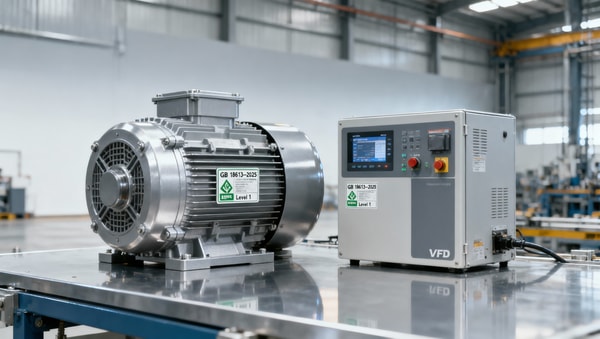
 China Launches Green Export Channel for High-Efficiency Motors & DrivesGreen export channel launched for high-efficiency motors & drives meeting GB 18613–2025 Level 1 — faster clearance, certification & global edge.
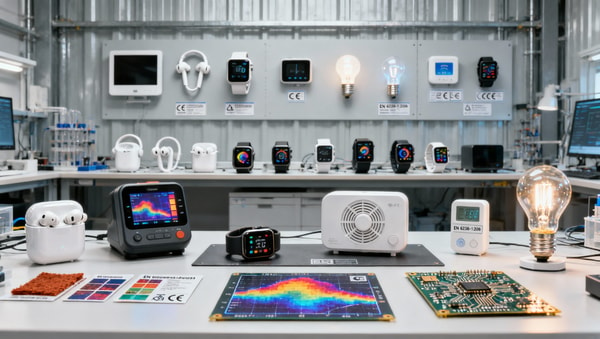
 EN 62368-1:2026 Mandatory in EU from May 2026 for Wearables & Smart Home DevicesEN 62368-1:2026 is mandatory for wearables & smart home devices in the EU from May 2026 — ensure CE compliance now with thermal, PCB, and flame-retardancy updates.
 WeChat Pay Connects QR Codes in 5 Countries for Cross-Border TradeWeChat Pay Connects QR Codes in 5 Countries for Cross-Border Trade — enabling seamless, wallet-to-wallet payments for SMEs importing from China. Faster settlement, no RMB top-up or cards needed.
 MIIT Releases First List of Completed 10G-PON Pilot ProjectsMIIT Releases First List of Completed 10G-PON Pilot Projects — discover how XGS-PON, 25G WDM-PON chips and China’s 10G optical network pilots impact global export opportunities.
 Morocco: 4th Top African Recipient of EU Energy Aid, New Channel for Chinese PV & StorageMorocco: 4th top African recipient of EU energy aid (€4.1B) — unlocking new opportunities for Chinese PV modules, solar trackers, PV-storage cabinets & microgrid systems.
 MIIT Launches Space-Ground Computing Coordination PlanMIIT Launches Space-Ground Computing Coordination Plan — unlocking export opportunities for energy-efficient data center hardware in emerging markets.
 ADB Raises Vietnam’s 2026 GDP Forecast to 7.2% on China-Vietnam Supply Chain UpgradesADB raises Vietnam’s 2026 GDP forecast to 7.2% amid China-Vietnam supply chain upgrades in electronics, PV, and NEV sectors—key insight for global manufacturers and procurement teams.
 EN 62368-1:2026 Mandatory from Oct 2026: Thermal Runaway Protection for Wearables & Smart Home DevicesEN 62368-1:2026 mandates thermal runaway protection for wearables & smart home devices from Oct 2026 — act now to ensure EU market access, CB certification, and design compliance.
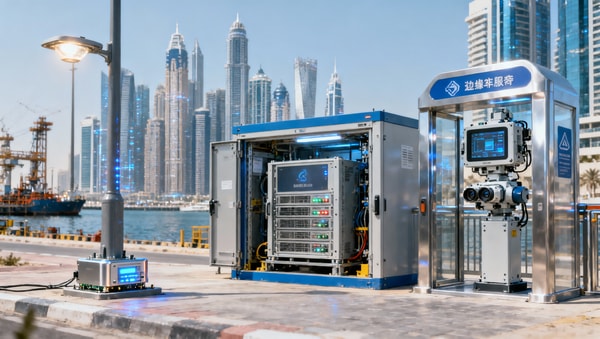
 UAE Emerges as Global AI Hub; Chinese AI Hardware Gains TractionUAE emerges as global AI hub—Chinese AI hardware from Shenzhen, Hangzhou & Suzhou gains traction in smart infrastructure, sandbox deployments & GCC market access.
 CMDE Adds 74 External Experts to Boost Med Device Export RegistrationCMDE Adds 74 External Experts to Boost Med Device Export Registration — accelerate FDA/EU/GCC submissions for medical equipment & rehab devices.
 MIIT Launches Space-Ground Compute & Power CoordinationMIIT Launches Space-Ground Compute & Power Coordination—unlocking export opportunities in liquid cooling, optical modules & high-efficiency servers for hot-humid markets.
 2026 Bio-based Raw Material Supplier Guide Released2026 Bio-based Raw Material Supplier Guide: Discover the official White List for PLA, PHA, bamboo fiber & more — boost EU/US compliance and procurement efficiency now.
 China Launches 'Model-Data Resonance' Initiative for AI+Manufacturing StandardsChina's 'Model-Data Resonance' initiative launches AI+Manufacturing standards — CESI/AI-MFG-2026 ensures plug-and-play interoperability for CNC, AGVs, MES & more across global smart factories.
 China’s First Embodied AI Robot Export Liability Insurance Launched in GuangxiChina’s first Embodied AI Robot Export Liability Insurance launched in Guangxi—key for robot exporters targeting EU, US & Saudi markets. Secure compliance-backed coverage now.















Popular Tags
Global Trade Insights & Industry
Our mission is to empower global exporters and importers with data-driven insights that foster strategic growth.
Search News
Popular Tags
Industry Overview
The global commercial kitchen equipment market is projected to reach $112 billion by 2027. Driven by urbanization, the rise of e-commerce food delivery, and strict hygiene regulations.