

MIIT Introduces SGEER for Green Data Center Exports
China’s Ministry of Industry and Information Technology (MIIT) launched the ‘Space-Based Computing Infrastructure Coordination Initiative’ on April 29, 2026, introducing the Space-Ground Energy Efficiency Ratio (SGEER) as a new evaluation criterion for green data center equipment exports. This development directly affects server manufacturers, liquid cooling module suppliers, intelligent PDU producers, and exporters serving emerging markets—including Singapore, the UAE, and Chile—where SGEER compliance is now adopted as a prequalification condition in IDC procurement tenders.
Event Overview
On April 29, 2026, MIIT initiated the ‘Space-Based Computing Infrastructure Coordination Initiative’. As part of this initiative, the Space-Ground Energy Efficiency Ratio (SGEER) was formally incorporated into the recommended technical indicators for green data center equipment exported from China. SGEER requires that servers, liquid cooling modules, and intelligent PDUs achieve a Power Usage Effectiveness (PUE) of ≤1.05 under low Earth orbit (LEO) satellite scheduling. The metric has been accepted by IDC operators in Singapore, the United Arab Emirates, and Chile as a mandatory pre-bid qualification requirement.
Industries Affected by This Development
Direct Exporters of Data Center Equipment
These companies are directly impacted because SGEER is now embedded in export eligibility criteria for key emerging markets. Compliance affects tender eligibility—not just performance claims—and may influence product certification timelines, test reporting formats, and documentation requirements submitted to foreign buyers.
Liquid Cooling Module Manufacturers
As SGEER mandates PUE ≤1.05 under dynamic LEO-scheduled workloads, thermal management systems must demonstrate stability and responsiveness beyond steady-state lab conditions. This shifts validation expectations from static efficiency benchmarks toward real-time adaptive cooling performance under variable compute loads coordinated via satellite signals.
Intelligent PDU and Power Management Suppliers
SGEER introduces a new layer of system-level coordination: PDUs must interface with satellite-scheduled workload signals to modulate power delivery with sub-second latency. This implies updated firmware architecture, secure time-sync protocols, and interoperability testing against reference LEO scheduling frameworks—capabilities not previously required for standard green data center certifications.
Supply Chain Certification and Testing Service Providers
Third-party labs and certification bodies face new scope requirements. SGEER validation involves joint testing across terrestrial hardware and simulated LEO scheduling environments—a departure from conventional PUE measurement protocols. Accreditation pathways for SGEER verification remain undefined, creating uncertainty for service providers supporting export compliance.
What Enterprises and Practitioners Should Focus On Now
Monitor official SGEER implementation guidance from MIIT
The current announcement establishes SGEER as a ‘recommended export indicator’, not a mandatory regulatory standard. Analysis shows that its enforceability hinges on forthcoming technical specifications, test methodology documents, and recognition agreements with international accreditation bodies—none of which have been published as of the initiative’s launch date.
Assess exposure in priority markets where SGEER is already operational
Singapore, the UAE, and Chile have independently adopted SGEER as a tender precondition. From industry perspective, this indicates early-mover adoption rather than harmonized regulation. Exporters targeting these jurisdictions should treat SGEER as an active procurement filter—not a future-readiness item—and prioritize alignment with local IDC operator interpretation guidelines.
Distinguish between policy signal and commercial implementation
Observably, SGEER reflects strategic positioning around space-terrestrial infrastructure convergence—not immediate scalability. Its current application remains confined to specific high-value tenders; it does not yet apply to general export declarations or customs clearance. Companies should avoid overextending internal R&D or certification budgets until scope boundaries (e.g., product categories covered, geographic applicability, enforcement mechanisms) are clarified.
Prepare for cross-domain validation coordination
SGEER compliance requires synchronized testing across hardware vendors, satellite communication integrators, and energy monitoring platforms. Current more suitable preparation includes mapping existing test infrastructure gaps, identifying potential partners for LEO simulation environments, and reviewing contractual terms with overseas customers regarding shared validation responsibilities.
Editorial Perspective / Industry Observation
This initiative is better understood as a forward-looking technical signaling mechanism than an immediately binding regulatory change. Analysis shows that SGEER’s inclusion in export recommendations serves dual purposes: first, to align domestic equipment standards with next-generation distributed computing architectures; second, to strengthen China’s influence in shaping interoperability norms for hybrid space-ground infrastructure—particularly in markets actively building sovereign cloud and edge capabilities. Its adoption by select IDCs suggests early-stage market-led validation, but widespread implementation depends on satellite network maturity, standardization progress, and bilateral technical recognition agreements. Industry stakeholders should track how SGEER evolves alongside parallel developments such as ITU spectrum allocation decisions and ISO/IEC JTC 1 working group outputs on heterogeneous computing energy metrics.

Concluding, the introduction of SGEER marks a structural shift—not merely a refinement—in how energy efficiency is defined for globally traded data center hardware. It extends the evaluation boundary beyond the data hall to include orbital coordination logic, thereby redefining what constitutes ‘green’ in transnational infrastructure deployments. For now, it is best interpreted as a strategic calibration point: one that reveals evolving priorities in export competitiveness, not an imminent compliance deadline.
Source: Official announcement issued by the Ministry of Industry and Information Technology (MIIT), April 29, 2026. Note: Technical specifications, test methodologies, and enforcement mechanisms for SGEER remain pending public release and are subject to ongoing observation.
Recommended News
 China’s First Embodied AI Robot Export Liability Insurance Launched in GuangxiEmbodied AI Robot Export Liability Insurance — China’s first dedicated policy, 22% cheaper, covers EU/US/ASEAN markets. Secure compliance & boost exports now!
 China’s Q1 2026 Logistics Volume Rises 6.2%: Shipping Rates StabilizeChina’s Q1 2026 logistics volume rose 6.2% — shipping rates stabilize across US/EU lanes. Key insights for exporters, manufacturers & 3PLs.
 China to Include AI Quality Inspection, Remote IoT Maintenance in Export CertificationChina now certifies AI quality inspection & remote IoT maintenance for exports—unlock global market access, incentives, and trust. Act now to align with DS-EF.
 MIIT Releases 10G-PON Pilot Completion List, Boosting Global Export of Chinese Optical ModulesMIIT's 10G-PON pilot completion list unlocks global export opportunities for Chinese optical modules — gain 10G-IOA certification & win tenders in Spain, Brazil, Indonesia.
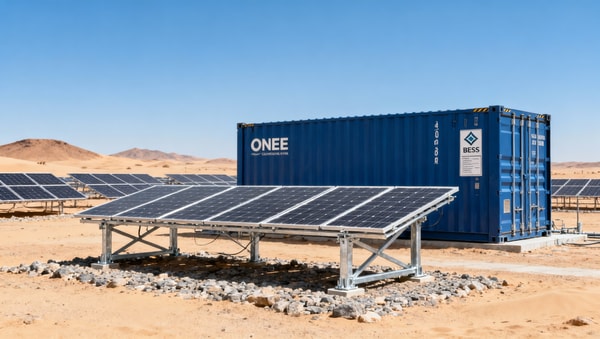
 Morocco Ranks 4th in EU Energy Aid to Africa; PV Mounting & BESS Export Pathways ExpandPV mounting & BESS exporters: Morocco’s ONEE white list unlocks EU-funded solar microgrid opportunities — faster clearance, stronger EU-Africa energy alignment.
 MIIT Introduces SGEER for Green Data Center ExportsSGEER for green data center exports is now a key tender requirement in Singapore, UAE & Chile—learn how MIIT’s new Space-Ground Energy Efficiency Ratio impacts servers, liquid cooling & intelligent PDUs.
 ADB Raises Vietnam’s 2026 GDP Forecast to 7.2% on Electronics & Solar Supply Chain GrowthADB raises Vietnam’s 2026 GDP forecast to 7.2%—driven by electronics & solar supply chain growth. Discover how PV bundling, 12-day deliveries, and Sino-Vietnamese integration reshape global procurement.
 First Batch of National SME Service Platforms AnnouncedNational SME Service Platforms launched: 30 demonstration hubs, including 16 for cross-border certification & green compliance—key for exporters in electronics, auto parts, and green energy.
 MIIT Approves 690 Industry Standards, Including AI Deep Synthesis Image SpecificationMIIT approves AI Deep Synthesis Image Specification amid 690 new industry standards—critical for AI visual inspection, industrial QA, and remote O&M exporters.
 EN 62368-1:2026 Mandatory in EU from May 2026 for Wearables & Smart HomeEN 62368-1:2026 mandates thermal runaway protection for wearables & smart home devices in the EU from May 2026 — ensure CE compliance now.
 China Accelerates Export Refunds for Cement, Glass FirmsChina accelerates export refunds for cement & glass firms—T+3 VAT rebates + 30% lower inspections for ISO 14067-certified exporters. Act now!
 MIIT Sets New Certification for Green Data Center ExportsMIIT Sets New Certification for Green Data Center Exports: LEO satellite sync, space-ground scheduling & liquid-cooling (PUE<1.15) now key for NEOM/G42 bids.
 China’s First Embodied AI Robot Insurance Launched in GuangxiChina’s first Embodied AI Robot Insurance launched in Guangxi—key for EU-bound service robot exporters, OEMs & compliance teams seeking faster market access.
 MIIT Releases List of Completed 10G-PON Pilot CitiesMIIT Releases List of Completed 10G-PON Pilot Cities — Discover how 800G optical modules, low-loss fiber patch cords & intelligent ODN cabinets are shaping global telecom procurement trends.
 Morocco: 4th Top African Recipient of EU Energy Aid, Boost for Chinese PV Mounting & BESS ExportsMorocco’s €1.2B EU energy aid boosts demand for Chinese PV mounting structures & containerized BESS — key export opportunity in North Africa.
 China’s 2026–2030 Service Trade Standardization PlanChina’s 2026–2030 Service Trade Standardization Plan officially recognizes AI inspection reports, cloud maintenance logs, and SaaS packages as certifiable digital exports—key for global SaaS, smart manufacturing & IT outsourcing firms.
 ADB Raises Vietnam’s 2026 GDP Forecast to 7.2% on Sino-Vietnam Electronics & Solar Supply Chain IntegrationADB raises Vietnam’s 2026 GDP forecast to 7.2% amid surging Sino-Vietnam electronics & solar supply chain integration—key insight for OEMs, EMS providers, and cross-border traders.
 China Launches Green Export Channel for High-Efficiency Motors & DrivesGreen export channel launched for high-efficiency motors & drives meeting GB 18613–2025 Level 1 — faster clearance, certification & global edge.
 EN 62368-1:2026 Mandatory in EU from May 2026 for Wearables & Smart Home DevicesEN 62368-1:2026 is mandatory for wearables & smart home devices in the EU from May 2026 — ensure CE compliance now with thermal, PCB, and flame-retardancy updates.
 WeChat Pay Connects QR Codes in 5 Countries for Cross-Border TradeWeChat Pay Connects QR Codes in 5 Countries for Cross-Border Trade — enabling seamless, wallet-to-wallet payments for SMEs importing from China. Faster settlement, no RMB top-up or cards needed.
 MIIT Releases First List of Completed 10G-PON Pilot ProjectsMIIT Releases First List of Completed 10G-PON Pilot Projects — discover how XGS-PON, 25G WDM-PON chips and China’s 10G optical network pilots impact global export opportunities.




















Popular Tags
Global Trade Insights & Industry
Our mission is to empower global exporters and importers with data-driven insights that foster strategic growth.
Search News
Popular Tags
Industry Overview
The global commercial kitchen equipment market is projected to reach $112 billion by 2027. Driven by urbanization, the rise of e-commerce food delivery, and strict hygiene regulations.