

China Launches Green Export Channel for High-Efficiency Motors & Drives
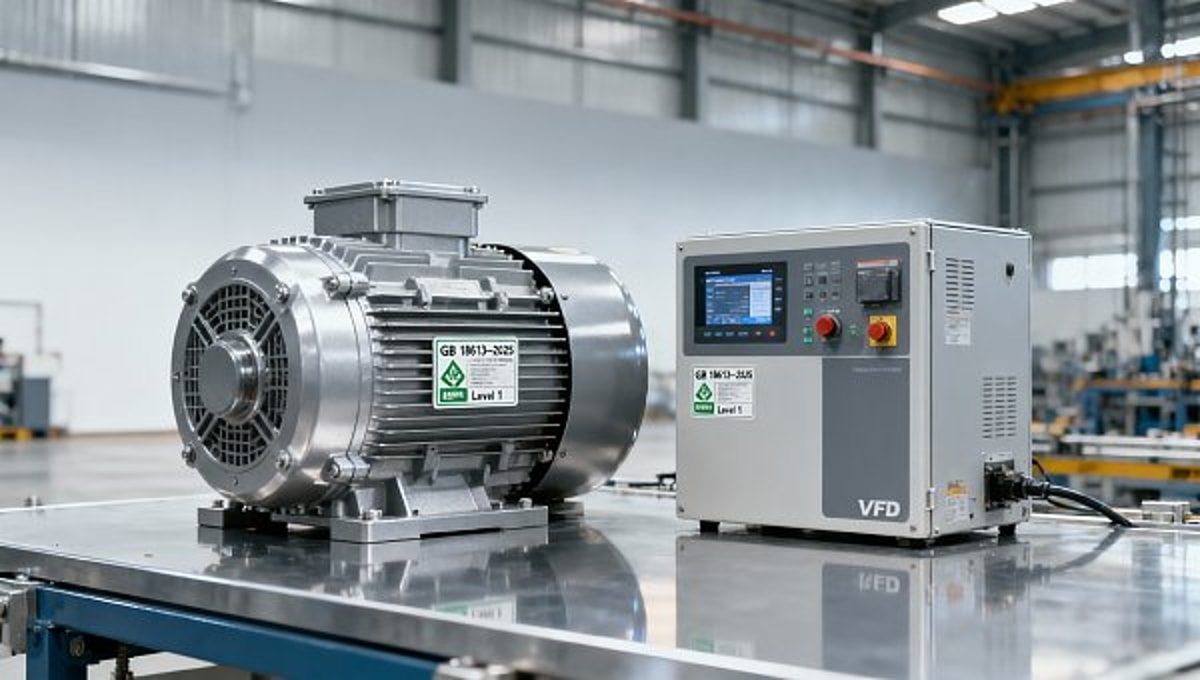
On April 23, 2026, China’s Ministry of Industry and Information Technology (MIIT), State Administration for Market Regulation (SAMR), General Administration of Customs, and Ministry of Ecology and Environment jointly issued the Implementation Plan for High-Quality Development of Energy-Saving Equipment (2026–2028). The plan introduces a green export fast-track for energy-efficient motors, pumps, air compressors, and associated variable-frequency drives (VFDs) meeting GB 18613–2025 Level 1 efficiency requirements. This development directly impacts exporters and manufacturers in industrial automation, HVAC, water infrastructure, and energy-intensive manufacturing sectors — as it alters customs clearance timelines, certification workflows, and market access conditions for key energy-saving equipment.
Event Overview
On April 23, 2026, four Chinese government departments — MIIT, SAMR, General Administration of Customs, and Ministry of Ecology and Environment — jointly released the Implementation Plan for High-Quality Development of Energy-Saving Equipment (2026–2028). The plan establishes an export ‘green fast-track’ for products complying with GB 18613–2025 Level 1 energy efficiency standards, including high-efficiency motors, pumps, air compressors, and their matched variable-frequency drives. Under this mechanism: (1) priority scheduling for energy efficiency testing; (2) expedited issuance of China Energy Conservation Certification; and (3) exemption from customs inspection for up to 70% of declared shipments. The plan entered into force immediately upon release, and the first batch of eligible enterprises has begun registration.
Industries Affected by Segment
Direct Exporters and OEM Manufacturers
Exporters of motors, pumps, compressors, and integrated VFD systems are directly affected because eligibility for the green fast-track depends on product-level compliance with GB 18613–2025 Level 1 — not just design or labeling. Impact manifests in reduced time-to-market (faster certification and clearance), lower logistics risk (higher inspection exemption rate), and potential competitive differentiation in international tenders requiring verified energy performance.
Component Suppliers and Subsystem Integrators
Suppliers of core components — such as IGBT modules, control boards, or motor windings — may face upstream demand shifts. If OEMs accelerate qualification of Level 1–compliant models to access the fast-track, component sourcing may prioritize suppliers able to support certified energy performance data, traceable test reports, and documentation aligned with GB 18613–2025 verification protocols.
Domestic Distributors and Aftermarket Service Providers
Distributors handling imported or domestically produced VFDs and motors may see altered inventory planning cycles. As more exporters pursue fast-track eligibility, stock rotation could shift toward Level 1–certified SKUs, while legacy non-certified units may face slower clearance or higher scrutiny — affecting warehouse throughput and warranty claim processing tied to compliance evidence.
Third-Party Certification and Testing Service Providers
Laboratories and certification bodies accredited under China Energy Conservation Certification schemes will likely experience increased demand for GB 18613–2025 Level 1 verification. The requirement for ‘priority scheduling’ implies potential workload redistribution among accredited institutions — favoring those with capacity to deliver test reports and certificates within compressed timelines.
Key Focus Areas and Recommended Actions for Enterprises
Monitor official implementation guidance and enterprise registration criteria
The plan states that ‘the first batch of applicable enterprises has initiated registration’, but no public list or detailed eligibility checklist has been published. Enterprises should track updates from SAMR and MIIT on registration thresholds (e.g., minimum annual export volume, required documentation format, or audit frequency) — as these will determine practical access to the fast-track.
Verify current product certifications against GB 18613–2025 Level 1 requirements
GB 18613–2025 introduces updated test methods and stricter minimum efficiency values compared to prior versions. Firms should cross-check existing motor/VFD model certifications — especially those issued before 2026 — to identify gaps. Relying on older GB 18613–2012 or GB 18613–2020 certificates does not automatically qualify for the green fast-track.
Distinguish between policy signal and operational readiness
While the plan is effective immediately, customs and certification agencies require internal alignment before full rollout. Early adopters should treat initial fast-track applications as pilot cases — confirming with local customs branches whether inspection exemption percentages and certificate issuance timelines are already enforceable at port level, rather than assuming uniform nationwide implementation.
Prepare technical documentation and supply chain traceability for Level 1 verification
To support expedited certification, firms should organize test reports, nameplate data, winding schematics, and material declarations in formats compatible with SAMR’s digital submission portal (if specified). Where VFDs are supplied separately from motors, ensure compatibility documentation explicitly references joint efficiency validation per GB 18613–2025 Annex D — as bundled claims may affect fast-track eligibility.
Editorial Perspective / Industry Observation
Observably, this initiative functions primarily as a targeted administrative enabler — not a broad subsidy or tariff incentive. It streamlines existing regulatory steps for a narrowly defined set of products meeting a specific national standard. Analysis shows the green fast-track reflects a dual objective: reinforcing domestic energy efficiency upgrade momentum while strengthening China’s position in global green trade infrastructure. However, its immediate impact remains constrained by implementation fidelity — particularly the speed at which customs offices and certification bodies adjust workflows. From an industry perspective, the plan is better understood as a signal of tightening alignment between China’s domestic energy policy and its outward-facing trade mechanisms — rather than a standalone market opportunity.
Conclusion
This plan marks a procedural recalibration in how China manages export compliance for select energy-saving equipment. Its significance lies less in introducing new market access rights and more in accelerating execution for firms already operating within strict technical parameters. For stakeholders, the current priority is verification and preparation — not speculation. It is more appropriately understood as an operational adjustment framework than a strategic pivot.
Information Sources
Main source: Joint notice issued by MIIT, SAMR, General Administration of Customs, and Ministry of Ecology and Environment on April 23, 2026 — titled Implementation Plan for High-Quality Development of Energy-Saving Equipment (2026–2028).
Note: Specific enterprise registration procedures, regional customs implementation timetables, and accreditation criteria for third-party labs remain pending official publication and are subject to ongoing observation.
Recommended News
 China Accelerates Export Refunds for Cement, Glass FirmsChina accelerates export refunds for cement & glass firms—T+3 VAT rebates + 30% lower inspections for ISO 14067-certified exporters. Act now!
 MIIT Sets New Certification for Green Data Center ExportsMIIT Sets New Certification for Green Data Center Exports: LEO satellite sync, space-ground scheduling & liquid-cooling (PUE<1.15) now key for NEOM/G42 bids.
 China’s First Embodied AI Robot Insurance Launched in GuangxiChina’s first Embodied AI Robot Insurance launched in Guangxi—key for EU-bound service robot exporters, OEMs & compliance teams seeking faster market access.
 MIIT Releases List of Completed 10G-PON Pilot CitiesMIIT Releases List of Completed 10G-PON Pilot Cities — Discover how 800G optical modules, low-loss fiber patch cords & intelligent ODN cabinets are shaping global telecom procurement trends.
 Morocco: 4th Top African Recipient of EU Energy Aid, Boost for Chinese PV Mounting & BESS ExportsMorocco’s €1.2B EU energy aid boosts demand for Chinese PV mounting structures & containerized BESS — key export opportunity in North Africa.
 China’s 2026–2030 Service Trade Standardization PlanChina’s 2026–2030 Service Trade Standardization Plan officially recognizes AI inspection reports, cloud maintenance logs, and SaaS packages as certifiable digital exports—key for global SaaS, smart manufacturing & IT outsourcing firms.
 ADB Raises Vietnam’s 2026 GDP Forecast to 7.2% on Sino-Vietnam Electronics & Solar Supply Chain IntegrationADB raises Vietnam’s 2026 GDP forecast to 7.2% amid surging Sino-Vietnam electronics & solar supply chain integration—key insight for OEMs, EMS providers, and cross-border traders.
 China Launches Green Export Channel for High-Efficiency Motors & DrivesGreen export channel launched for high-efficiency motors & drives meeting GB 18613–2025 Level 1 — faster clearance, certification & global edge.
 EN 62368-1:2026 Mandatory in EU from May 2026 for Wearables & Smart Home DevicesEN 62368-1:2026 is mandatory for wearables & smart home devices in the EU from May 2026 — ensure CE compliance now with thermal, PCB, and flame-retardancy updates.
 WeChat Pay Connects QR Codes in 5 Countries for Cross-Border TradeWeChat Pay Connects QR Codes in 5 Countries for Cross-Border Trade — enabling seamless, wallet-to-wallet payments for SMEs importing from China. Faster settlement, no RMB top-up or cards needed.
 MIIT Releases First List of Completed 10G-PON Pilot ProjectsMIIT Releases First List of Completed 10G-PON Pilot Projects — discover how XGS-PON, 25G WDM-PON chips and China’s 10G optical network pilots impact global export opportunities.
 Morocco: 4th Top African Recipient of EU Energy Aid, New Channel for Chinese PV & StorageMorocco: 4th top African recipient of EU energy aid (€4.1B) — unlocking new opportunities for Chinese PV modules, solar trackers, PV-storage cabinets & microgrid systems.
 MIIT Launches Space-Ground Computing Coordination PlanMIIT Launches Space-Ground Computing Coordination Plan — unlocking export opportunities for energy-efficient data center hardware in emerging markets.
 ADB Raises Vietnam’s 2026 GDP Forecast to 7.2% on China-Vietnam Supply Chain UpgradesADB raises Vietnam’s 2026 GDP forecast to 7.2% amid China-Vietnam supply chain upgrades in electronics, PV, and NEV sectors—key insight for global manufacturers and procurement teams.
 EN 62368-1:2026 Mandatory from Oct 2026: Thermal Runaway Protection for Wearables & Smart Home DevicesEN 62368-1:2026 mandates thermal runaway protection for wearables & smart home devices from Oct 2026 — act now to ensure EU market access, CB certification, and design compliance.
 UAE Emerges as Global AI Hub; Chinese AI Hardware Gains TractionUAE emerges as global AI hub—Chinese AI hardware from Shenzhen, Hangzhou & Suzhou gains traction in smart infrastructure, sandbox deployments & GCC market access.
 CMDE Adds 74 External Experts to Boost Med Device Export RegistrationCMDE Adds 74 External Experts to Boost Med Device Export Registration — accelerate FDA/EU/GCC submissions for medical equipment & rehab devices.
 MIIT Launches Space-Ground Compute & Power CoordinationMIIT Launches Space-Ground Compute & Power Coordination—unlocking export opportunities in liquid cooling, optical modules & high-efficiency servers for hot-humid markets.
 2026 Bio-based Raw Material Supplier Guide Released2026 Bio-based Raw Material Supplier Guide: Discover the official White List for PLA, PHA, bamboo fiber & more — boost EU/US compliance and procurement efficiency now.
 China Launches 'Model-Data Resonance' Initiative for AI+Manufacturing StandardsChina's 'Model-Data Resonance' initiative launches AI+Manufacturing standards — CESI/AI-MFG-2026 ensures plug-and-play interoperability for CNC, AGVs, MES & more across global smart factories.
 China’s First Embodied AI Robot Export Liability Insurance Launched in GuangxiChina’s first Embodied AI Robot Export Liability Insurance launched in Guangxi—key for robot exporters targeting EU, US & Saudi markets. Secure compliance-backed coverage now.


















Popular Tags
Global Trade Insights & Industry
Our mission is to empower global exporters and importers with data-driven insights that foster strategic growth.
Search News
Popular Tags
Industry Overview
The global commercial kitchen equipment market is projected to reach $112 billion by 2027. Driven by urbanization, the rise of e-commerce food delivery, and strict hygiene regulations.