

ADB Raises Vietnam’s 2026 GDP Forecast to 7.2% on Electronics & Solar Supply Chain Growth
On April 30, 2026, the Asian Development Bank (ADB) released its Asian Development Outlook update, revising Vietnam’s 2026 GDP growth forecast upward to 7.2%. This revision reflects stronger-than-expected export performance in electronics manufacturing and new energy products—particularly solar photovoltaic (PV) components. The development signals accelerating cross-border supply chain integration between China and Vietnam, with implications for electronics OEMs, PV equipment exporters, logistics providers, and procurement managers serving global markets.
Event Overview
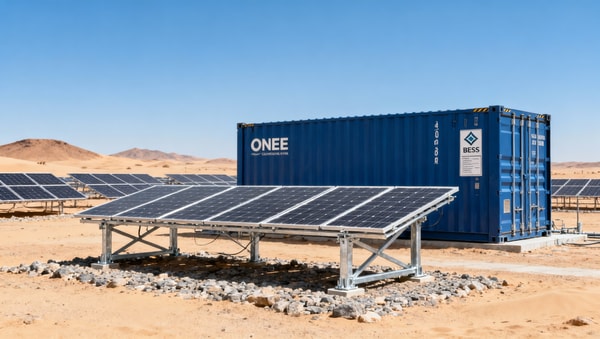
On April 30, 2026, the Asian Development Bank published its updated Asian Development Outlook report, raising Vietnam’s projected GDP growth for 2026 from a prior estimate to 7.2%. According to the report, the upward revision is primarily driven by outperformance in electronics manufacturing and new energy exports. The ADB specifically noted deepening collaboration between Chinese and Vietnamese firms in building an integrated delivery chain for ‘PV modules—mounting structures—energy storage containers’, with Guangdong- and Jiangsu-based PV enterprises establishing local certification and logistics centers in Vietnam. As a result, end-to-end delivery lead times for such bundled solutions have been reduced from 28 days to 12 days—supporting Western buyers’ nearshoring procurement strategies.
Industries Affected
Direct Exporters (Electronics & PV Equipment)
Manufacturers exporting finished electronics or PV system components from China to Vietnam—or directly from Vietnam to EU/US markets—are experiencing tighter integration requirements. The shift toward bundled, certified, and logistics-optimized deliveries means compliance, labeling, and regional certification (e.g., EU CE, US UL) must now be coordinated earlier in the design and production cycle—not as post-manufacturing add-ons.
Raw Material & Component Suppliers
Suppliers of aluminum frames, junction boxes, lithium battery cells, or inverters used in PV systems may face increased demand for Vietnam-localized testing or documentation support. With PV firms setting up certification hubs in Vietnam, suppliers whose components lack pre-validated compatibility with those hubs may encounter longer qualification cycles or order delays.
Contract Manufacturers & EMS Providers
Electronics manufacturing services (EMS) and original design manufacturers (ODMs) operating in Vietnam are under growing pressure to support multi-tier assembly—e.g., integrating locally sourced mounting hardware with imported modules and containerized storage units. This requires updated quality control protocols, traceability systems across sub-assemblies, and alignment with new delivery SLAs tied to the 12-day benchmark.
Distribution & Logistics Service Providers
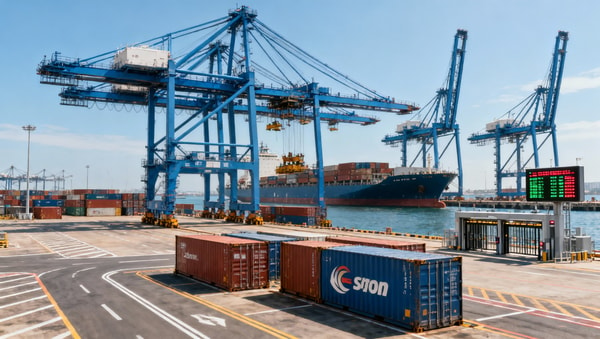
Firms offering bonded warehousing, customs brokerage, or last-mile delivery for PV or electronics goods in Vietnam must adapt to accelerated handover windows and consolidated documentation flows. The 12-day delivery target implies stricter coordination between inland transport, port clearance, and export documentation—a shift from traditional batch-based logistics toward synchronized, order-triggered workflows.
What Relevant Companies or Practitioners Should Focus On
Monitor official updates on Vietnam’s certification recognition framework
The establishment of local certification centers by Chinese PV firms suggests evolving alignment between Vietnamese regulatory authorities and international standards bodies. Companies should track whether Vietnam’s National Standardization Agency (TCVN) or Ministry of Industry and Trade issues formal guidance on mutual recognition of test reports—especially for UL, IEC, and EN standards.
Assess exposure to ‘bundled delivery’ contracts in key export markets
EU and US buyers increasingly request full-system quotations—including modules, racking, and storage—in single POs with unified delivery terms. Firms currently selling components separately should review their quoting templates, warranty frameworks, and liability clauses to assess readiness for integrated offers.
Distinguish between pilot deployment and scalable rollout
The 12-day lead time cited by the ADB reflects early-stage implementation by select Guangdong/Jiangsu firms—not yet an industry-wide standard. Practitioners should verify whether this timeline applies only to specific product configurations, volumes, or logistics partners before adjusting internal planning assumptions.
Prepare for upstream alignment on documentation and traceability
To meet compressed timelines, upstream suppliers may need to provide digital certificates of conformity, material declarations (e.g., RoHS), and serial-level traceability data earlier in the order cycle. Procurement teams should audit current supplier data exchange capabilities and identify gaps in ERP or PLM system integration.
Editorial Perspective / Industry Observation
Observably, this ADB revision functions less as a standalone economic indicator and more as a validation signal for ongoing structural shifts in regional supply chain architecture. The emphasis on ‘integrated delivery’—rather than just component export volume—suggests that competitiveness is now being measured in terms of system-level responsiveness, not just cost or capacity. Analysis shows that the 12-day lead time achievement hinges on co-located certification and logistics infrastructure, implying that future advantages will accrue to firms with embedded local operational capability—not just offshore contract manufacturing. From an industry perspective, this development is best understood not as a short-term demand surge, but as an inflection point in how electronics and clean energy supply chains define speed, compliance, and coordination across borders.
Concluding, this ADB forecast revision reflects measurable progress in Sino-Vietnamese industrial coordination—but it does not yet indicate broad-based scalability across all PV or electronics subsectors. It is more accurately interpreted as evidence of targeted, client-driven supply chain reconfiguration, centered on high-priority export corridors and standardized system bundles. For practitioners, the priority remains operational clarity: distinguishing confirmed deployments from aspirational targets, and aligning internal processes with verifiable service-level commitments—not headline figures alone.
Information Source: Asian Development Bank, Asian Development Outlook 2026 Update, released April 30, 2026.
Areas for continued observation: Formalization of Vietnam’s third-party certification reciprocity arrangements; expansion of the 12-day delivery model beyond initial Guangdong/Jiangsu-led pilots; adoption rates of bundled quoting among Tier-2 and Tier-3 European and North American off-takers.
Recommended News
 China’s First Embodied AI Robot Export Liability Insurance Launched in GuangxiEmbodied AI Robot Export Liability Insurance — China’s first dedicated policy, 22% cheaper, covers EU/US/ASEAN markets. Secure compliance & boost exports now!
 China’s Q1 2026 Logistics Volume Rises 6.2%: Shipping Rates StabilizeChina’s Q1 2026 logistics volume rose 6.2% — shipping rates stabilize across US/EU lanes. Key insights for exporters, manufacturers & 3PLs.
 China to Include AI Quality Inspection, Remote IoT Maintenance in Export CertificationChina now certifies AI quality inspection & remote IoT maintenance for exports—unlock global market access, incentives, and trust. Act now to align with DS-EF.
 MIIT Releases 10G-PON Pilot Completion List, Boosting Global Export of Chinese Optical ModulesMIIT's 10G-PON pilot completion list unlocks global export opportunities for Chinese optical modules — gain 10G-IOA certification & win tenders in Spain, Brazil, Indonesia.
 Morocco Ranks 4th in EU Energy Aid to Africa; PV Mounting & BESS Export Pathways ExpandPV mounting & BESS exporters: Morocco’s ONEE white list unlocks EU-funded solar microgrid opportunities — faster clearance, stronger EU-Africa energy alignment.
 MIIT Introduces SGEER for Green Data Center ExportsSGEER for green data center exports is now a key tender requirement in Singapore, UAE & Chile—learn how MIIT’s new Space-Ground Energy Efficiency Ratio impacts servers, liquid cooling & intelligent PDUs.
 ADB Raises Vietnam’s 2026 GDP Forecast to 7.2% on Electronics & Solar Supply Chain GrowthADB raises Vietnam’s 2026 GDP forecast to 7.2%—driven by electronics & solar supply chain growth. Discover how PV bundling, 12-day deliveries, and Sino-Vietnamese integration reshape global procurement.
 First Batch of National SME Service Platforms AnnouncedNational SME Service Platforms launched: 30 demonstration hubs, including 16 for cross-border certification & green compliance—key for exporters in electronics, auto parts, and green energy.
 MIIT Approves 690 Industry Standards, Including AI Deep Synthesis Image SpecificationMIIT approves AI Deep Synthesis Image Specification amid 690 new industry standards—critical for AI visual inspection, industrial QA, and remote O&M exporters.
 EN 62368-1:2026 Mandatory in EU from May 2026 for Wearables & Smart HomeEN 62368-1:2026 mandates thermal runaway protection for wearables & smart home devices in the EU from May 2026 — ensure CE compliance now.
 China Accelerates Export Refunds for Cement, Glass FirmsChina accelerates export refunds for cement & glass firms—T+3 VAT rebates + 30% lower inspections for ISO 14067-certified exporters. Act now!
 MIIT Sets New Certification for Green Data Center ExportsMIIT Sets New Certification for Green Data Center Exports: LEO satellite sync, space-ground scheduling & liquid-cooling (PUE<1.15) now key for NEOM/G42 bids.
 China’s First Embodied AI Robot Insurance Launched in GuangxiChina’s first Embodied AI Robot Insurance launched in Guangxi—key for EU-bound service robot exporters, OEMs & compliance teams seeking faster market access.
 MIIT Releases List of Completed 10G-PON Pilot CitiesMIIT Releases List of Completed 10G-PON Pilot Cities — Discover how 800G optical modules, low-loss fiber patch cords & intelligent ODN cabinets are shaping global telecom procurement trends.
 Morocco: 4th Top African Recipient of EU Energy Aid, Boost for Chinese PV Mounting & BESS ExportsMorocco’s €1.2B EU energy aid boosts demand for Chinese PV mounting structures & containerized BESS — key export opportunity in North Africa.
 China’s 2026–2030 Service Trade Standardization PlanChina’s 2026–2030 Service Trade Standardization Plan officially recognizes AI inspection reports, cloud maintenance logs, and SaaS packages as certifiable digital exports—key for global SaaS, smart manufacturing & IT outsourcing firms.
 ADB Raises Vietnam’s 2026 GDP Forecast to 7.2% on Sino-Vietnam Electronics & Solar Supply Chain IntegrationADB raises Vietnam’s 2026 GDP forecast to 7.2% amid surging Sino-Vietnam electronics & solar supply chain integration—key insight for OEMs, EMS providers, and cross-border traders.
 China Launches Green Export Channel for High-Efficiency Motors & DrivesGreen export channel launched for high-efficiency motors & drives meeting GB 18613–2025 Level 1 — faster clearance, certification & global edge.
 EN 62368-1:2026 Mandatory in EU from May 2026 for Wearables & Smart Home DevicesEN 62368-1:2026 is mandatory for wearables & smart home devices in the EU from May 2026 — ensure CE compliance now with thermal, PCB, and flame-retardancy updates.
 WeChat Pay Connects QR Codes in 5 Countries for Cross-Border TradeWeChat Pay Connects QR Codes in 5 Countries for Cross-Border Trade — enabling seamless, wallet-to-wallet payments for SMEs importing from China. Faster settlement, no RMB top-up or cards needed.
 MIIT Releases First List of Completed 10G-PON Pilot ProjectsMIIT Releases First List of Completed 10G-PON Pilot Projects — discover how XGS-PON, 25G WDM-PON chips and China’s 10G optical network pilots impact global export opportunities.



















Popular Tags
Global Trade Insights & Industry
Our mission is to empower global exporters and importers with data-driven insights that foster strategic growth.
Search News
Popular Tags
Industry Overview
The global commercial kitchen equipment market is projected to reach $112 billion by 2027. Driven by urbanization, the rise of e-commerce food delivery, and strict hygiene regulations.