

Morocco Ranks 4th in EU Energy Aid to Africa; PV Mounting & BESS Export Pathways Expand
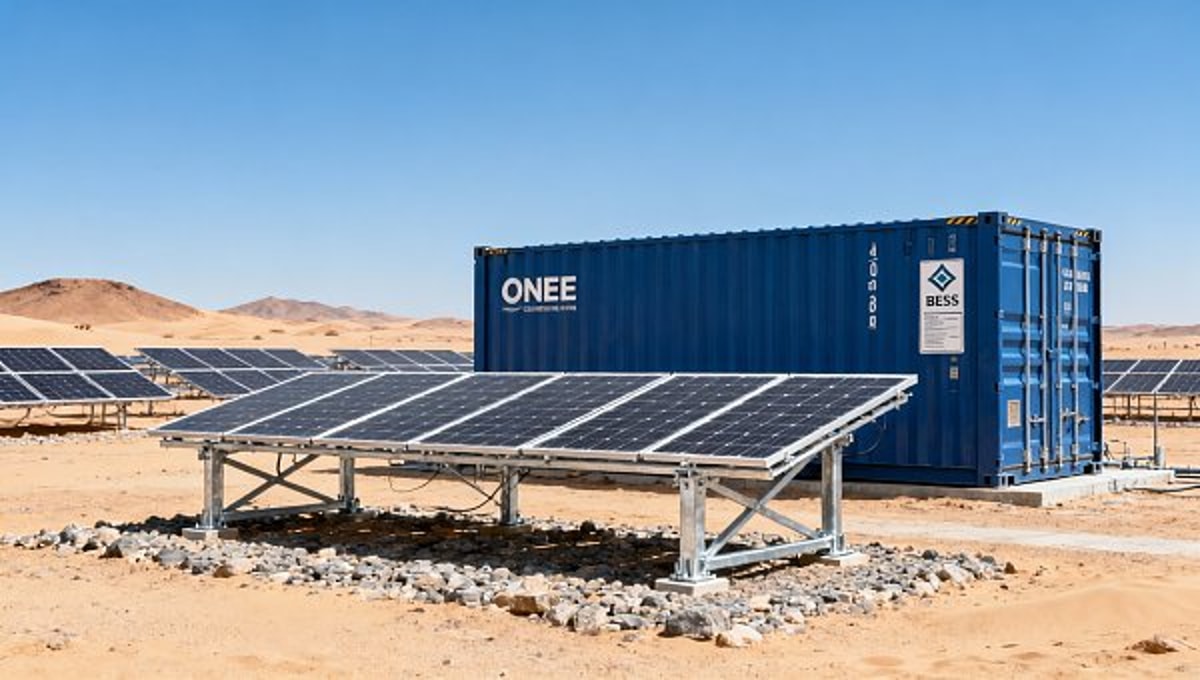
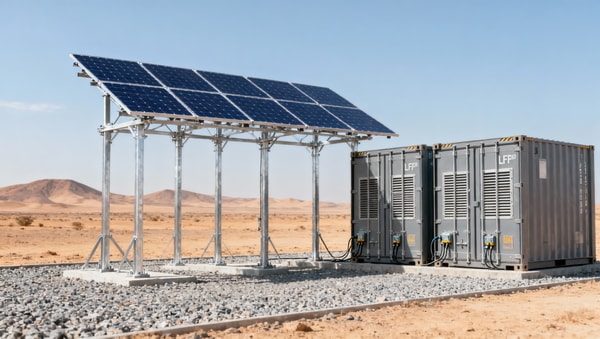
According to the European Commission’s Africa Green Energy Partnership Progress Report, released on 30 April 2026, Morocco has become the fourth-largest recipient of EU energy assistance to Africa, receiving €1.24 billion in 2026 — primarily for solar microgrids and off-grid energy storage projects. This development signals growing strategic alignment between EU climate finance, North African energy infrastructure, and third-party export channels for Chinese photovoltaic (PV) mounting structures and 40-foot battery energy storage system (BESS) containers — particularly those certified under Morocco’s National Office of Electricity and Drinking Water (ONEE) white list.
Event Overview
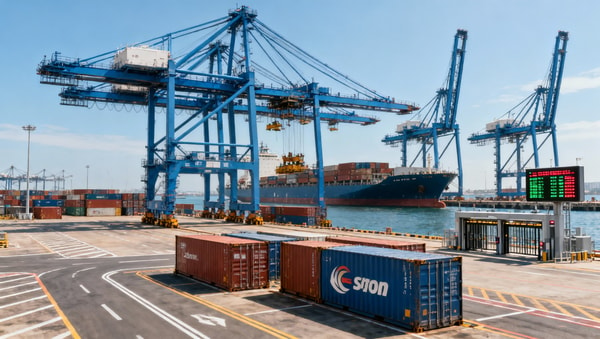
The European Commission published its Africa Green Energy Partnership Progress Report on 30 April 2026. The report states that Morocco received €1.24 billion in EU energy aid in 2026, ranking fourth among African beneficiary countries. Funding is directed toward solar microgrid deployment and off-grid energy storage initiatives. Separately, Chinese manufacturers of PV mounting structures and 40-foot BESS containers have been included in the ONEE-certified white list, granting them access to a customs ‘green channel’ with an average clearance time of 3.2 working days.
Industries Affected by This Development
Direct Exporters of PV Mounting Structures
These enterprises are directly impacted because ONEE certification now enables faster customs clearance for their products entering Morocco. The reduction in average clearance time from typical benchmarks (often 7–10+ days) to 3.2 working days lowers demurrage costs, improves shipment predictability, and strengthens competitiveness against non-certified suppliers.
Exporters of 40-Foot BESS Containers
As modular, containerized energy storage gains traction in off-grid and microgrid applications, streamlined entry for 40-foot BESS units into Morocco becomes operationally significant. The green channel applies specifically to this standardized form factor, implying preferential treatment for compliant units — not generic battery systems or smaller formats.
Supply Chain & Logistics Service Providers
Firms offering customs brokerage, inland transport, or bonded warehousing in Morocco or neighboring ports (e.g., Nador West Med, Casablanca) may see increased demand for services supporting ONEE-compliant shipments. The 3.2-day clearance benchmark creates new service-level expectations and potential differentiation opportunities for providers familiar with ONEE documentation requirements.
Local Distributors & Project Integrators in Morocco
Entities sourcing PV mounting or BESS containers for turnkey solar microgrid deployments now benefit from shorter lead times and greater inventory planning certainty. This may accelerate project timelines — especially for EU-funded or blended-finance initiatives tied to the reported €1.24 billion disbursement.
What Relevant Enterprises or Practitioners Should Focus On Now
Monitor ONEE’s official updates on white list eligibility criteria and renewal cycles
Current access to the green channel is contingent on inclusion in the ONEE white list. Analysis shows that certification is not automatic or perpetual; periodic revalidation and technical documentation updates may be required. Exporters should track ONEE’s public notices and maintain direct engagement with its certification unit.
Verify product compliance with ONEE’s technical specifications — not just CE or IEC standards
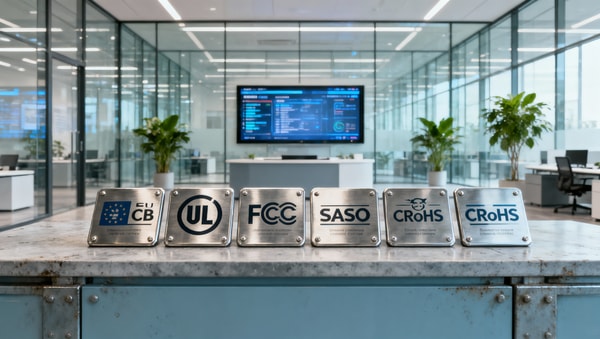
Observably, ONEE’s white list approval involves Morocco-specific structural, corrosion-resistance, and labeling requirements for PV mounting systems, and thermal management, fire safety, and communication protocol validations for BESS containers. Conformity with international standards alone does not guarantee eligibility.
Distinguish between EU funding allocation (a policy signal) and actual procurement execution (a business timeline)
The €1.24 billion figure reflects committed aid, not yet disbursed contracts. From industry perspective, tender announcements, local partner selection, and equipment specification finalization typically lag formal budget allocations by 6–12 months. Companies should avoid assuming immediate order volume — instead, align sales outreach with expected EU-Moroccan project implementation milestones.
Prepare documentation packages in advance for ONEE pre-submission review
Given the administrative rigor observed in similar North African certification schemes, current best practice is to assemble test reports, assembly instructions, and Arabic/French bilingual labeling templates before initiating formal application. This reduces processing delays and avoids last-minute rework.
Editorial Perspective / Industry Observation
This development is better understood as a dual-signal event: first, a reinforcement of Morocco’s role as an EU-aligned energy transition hub in Africa; second, an early-stage enabler for specific Chinese industrial exports — not a broad market opening. Analysis shows that the green channel applies narrowly to two product categories (PV mounting and 40-ft BESS containers), under strict certification conditions, and only within one national regulatory framework (ONEE). It does not imply tariff reductions, broader import liberalization, or automatic recognition across other Maghreb or Sahel markets. Continued relevance depends on whether ONEE extends the white list to additional product types, and whether EU aid translates into sustained procurement velocity beyond 2026.
Conclusion
This update reflects a targeted, procedural advancement — not a wholesale market shift. Its primary significance lies in improved operational efficiency for a defined subset of exporters serving Moroccan solar microgrid projects funded via EU mechanisms. For stakeholders, it is more appropriately interpreted as an incremental logistics upgrade with conditional eligibility, rather than a strategic market-entry milestone. Ongoing attention should focus on ONEE’s implementation fidelity and the pace at which EU aid flows translate into tangible equipment orders.
Information Sources
Main source: European Commission, Africa Green Energy Partnership Progress Report, published 30 April 2026.
Additional reference: ONEE (National Office of Electricity and Drinking Water, Morocco) white list for certified PV mounting structures and 40-foot BESS containers — status confirmed as of Q2 2026.
Note: The timeline for ONEE white list renewals, future expansion to other product categories, and disbursement schedules for the €1.24 billion remain subject to official updates and require ongoing monitoring.
Recommended News
 China’s First Embodied AI Robot Export Liability Insurance Launched in GuangxiEmbodied AI Robot Export Liability Insurance — China’s first dedicated policy, 22% cheaper, covers EU/US/ASEAN markets. Secure compliance & boost exports now!
 China’s Q1 2026 Logistics Volume Rises 6.2%: Shipping Rates StabilizeChina’s Q1 2026 logistics volume rose 6.2% — shipping rates stabilize across US/EU lanes. Key insights for exporters, manufacturers & 3PLs.
 China to Include AI Quality Inspection, Remote IoT Maintenance in Export CertificationChina now certifies AI quality inspection & remote IoT maintenance for exports—unlock global market access, incentives, and trust. Act now to align with DS-EF.
 MIIT Releases 10G-PON Pilot Completion List, Boosting Global Export of Chinese Optical ModulesMIIT's 10G-PON pilot completion list unlocks global export opportunities for Chinese optical modules — gain 10G-IOA certification & win tenders in Spain, Brazil, Indonesia.
 Morocco Ranks 4th in EU Energy Aid to Africa; PV Mounting & BESS Export Pathways ExpandPV mounting & BESS exporters: Morocco’s ONEE white list unlocks EU-funded solar microgrid opportunities — faster clearance, stronger EU-Africa energy alignment.
 MIIT Introduces SGEER for Green Data Center ExportsSGEER for green data center exports is now a key tender requirement in Singapore, UAE & Chile—learn how MIIT’s new Space-Ground Energy Efficiency Ratio impacts servers, liquid cooling & intelligent PDUs.
 ADB Raises Vietnam’s 2026 GDP Forecast to 7.2% on Electronics & Solar Supply Chain GrowthADB raises Vietnam’s 2026 GDP forecast to 7.2%—driven by electronics & solar supply chain growth. Discover how PV bundling, 12-day deliveries, and Sino-Vietnamese integration reshape global procurement.
 First Batch of National SME Service Platforms AnnouncedNational SME Service Platforms launched: 30 demonstration hubs, including 16 for cross-border certification & green compliance—key for exporters in electronics, auto parts, and green energy.
 MIIT Approves 690 Industry Standards, Including AI Deep Synthesis Image SpecificationMIIT approves AI Deep Synthesis Image Specification amid 690 new industry standards—critical for AI visual inspection, industrial QA, and remote O&M exporters.
 EN 62368-1:2026 Mandatory in EU from May 2026 for Wearables & Smart HomeEN 62368-1:2026 mandates thermal runaway protection for wearables & smart home devices in the EU from May 2026 — ensure CE compliance now.
 China Accelerates Export Refunds for Cement, Glass FirmsChina accelerates export refunds for cement & glass firms—T+3 VAT rebates + 30% lower inspections for ISO 14067-certified exporters. Act now!
 MIIT Sets New Certification for Green Data Center ExportsMIIT Sets New Certification for Green Data Center Exports: LEO satellite sync, space-ground scheduling & liquid-cooling (PUE<1.15) now key for NEOM/G42 bids.
 China’s First Embodied AI Robot Insurance Launched in GuangxiChina’s first Embodied AI Robot Insurance launched in Guangxi—key for EU-bound service robot exporters, OEMs & compliance teams seeking faster market access.
 MIIT Releases List of Completed 10G-PON Pilot CitiesMIIT Releases List of Completed 10G-PON Pilot Cities — Discover how 800G optical modules, low-loss fiber patch cords & intelligent ODN cabinets are shaping global telecom procurement trends.
 Morocco: 4th Top African Recipient of EU Energy Aid, Boost for Chinese PV Mounting & BESS ExportsMorocco’s €1.2B EU energy aid boosts demand for Chinese PV mounting structures & containerized BESS — key export opportunity in North Africa.
 China’s 2026–2030 Service Trade Standardization PlanChina’s 2026–2030 Service Trade Standardization Plan officially recognizes AI inspection reports, cloud maintenance logs, and SaaS packages as certifiable digital exports—key for global SaaS, smart manufacturing & IT outsourcing firms.
 ADB Raises Vietnam’s 2026 GDP Forecast to 7.2% on Sino-Vietnam Electronics & Solar Supply Chain IntegrationADB raises Vietnam’s 2026 GDP forecast to 7.2% amid surging Sino-Vietnam electronics & solar supply chain integration—key insight for OEMs, EMS providers, and cross-border traders.
 China Launches Green Export Channel for High-Efficiency Motors & DrivesGreen export channel launched for high-efficiency motors & drives meeting GB 18613–2025 Level 1 — faster clearance, certification & global edge.
 EN 62368-1:2026 Mandatory in EU from May 2026 for Wearables & Smart Home DevicesEN 62368-1:2026 is mandatory for wearables & smart home devices in the EU from May 2026 — ensure CE compliance now with thermal, PCB, and flame-retardancy updates.
 WeChat Pay Connects QR Codes in 5 Countries for Cross-Border TradeWeChat Pay Connects QR Codes in 5 Countries for Cross-Border Trade — enabling seamless, wallet-to-wallet payments for SMEs importing from China. Faster settlement, no RMB top-up or cards needed.
 MIIT Releases First List of Completed 10G-PON Pilot ProjectsMIIT Releases First List of Completed 10G-PON Pilot Projects — discover how XGS-PON, 25G WDM-PON chips and China’s 10G optical network pilots impact global export opportunities.















Popular Tags
Global Trade Insights & Industry
Our mission is to empower global exporters and importers with data-driven insights that foster strategic growth.
Search News
Popular Tags
Industry Overview
The global commercial kitchen equipment market is projected to reach $112 billion by 2027. Driven by urbanization, the rise of e-commerce food delivery, and strict hygiene regulations.