

Smart street lighting works best when control systems are not overlooked
Smart street lighting delivers its full value only when control systems are treated as a core project priority, not an afterthought. For project managers and engineering leads, overlooking centralized monitoring, dimming logic, data integration, and maintenance visibility can turn a promising upgrade into a costly operational challenge. Understanding this connection is essential to building reliable, efficient, and scalable urban lighting infrastructure.
Why the conversation around Smart street lighting is changing
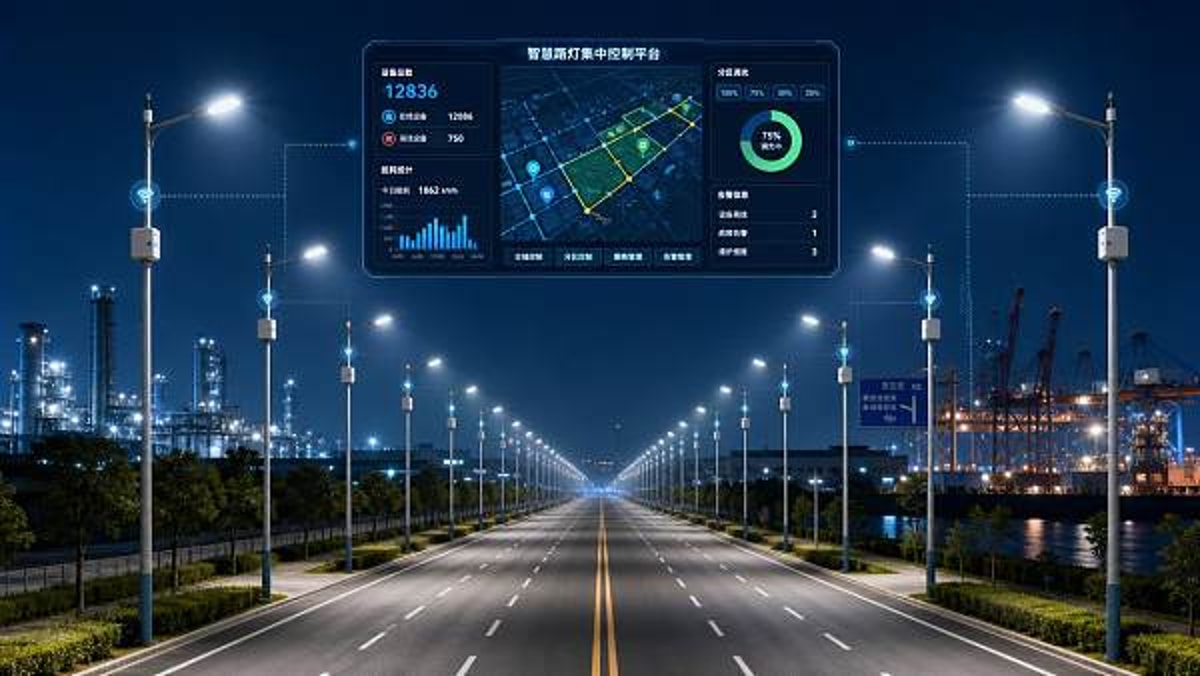
Across cities, industrial parks, ports, campuses, and transport corridors, Smart street lighting is no longer viewed as a simple LED replacement program. The market has moved from hardware-focused upgrades toward digitally managed infrastructure. That shift matters because the value case has changed. Energy savings still matter, but stakeholders increasingly expect better fault visibility, adaptive dimming, lifecycle control, and integration with broader smart city systems. In this environment, luminaires alone do not define project success. The control layer now shapes whether the system performs as promised over time.
For project managers, this is a critical trend signal. Earlier projects often measured success by installation speed, wattage reduction, and basic compliance. Today, procurement teams, municipal authorities, and asset owners are placing greater weight on interoperability, data access, remote management, cybersecurity, and maintenance response. In practical terms, Smart street lighting is becoming part of the digital operations stack. When control systems are under-scoped, cities may end up with efficient fixtures but limited operational intelligence, fragmented maintenance processes, and weak adaptability.
This change is also influenced by how infrastructure investments are being evaluated. Decision-makers want returns that extend beyond electricity bills. They want stronger service continuity, fewer site visits, improved night-time safety management, and future-readiness for sensors, traffic logic, or environmental monitoring. As a result, the market is rewarding projects that treat controls as foundational infrastructure rather than optional software added late in the process.
The strongest trend signals project leaders should not ignore
Several signals show why Smart street lighting projects are being evaluated differently than in the past. First, operators are demanding visibility at the asset level. They want to know which nodes are online, which fixtures are underperforming, and where faults occur before residents or end users report them. Second, dimming is becoming more dynamic. Fixed schedules are giving way to profiles linked to traffic density, seasonal needs, operating hours, and special events. Third, integration expectations are rising. Lighting systems are increasingly expected to exchange data with central management platforms, energy dashboards, or broader urban infrastructure tools.
Another strong signal is the growing concern about operational fragmentation. In many projects, one vendor supplies luminaires, another provides gateways, and a third handles software. Without careful planning, that mix creates hidden risk around protocol compatibility, update responsibility, and warranty accountability. Project leaders are therefore paying more attention to architecture decisions earlier in the project cycle. The question is no longer only whether the lamps work, but whether the whole Smart street lighting system remains manageable, secure, and scalable after handover.
Key shifts in project evaluation
What is driving this shift toward control-first thinking
The first driver is rising pressure to prove measurable performance. Energy targets are now often linked with reporting requirements, budget scrutiny, or sustainability commitments. A Smart street lighting system without reliable controls can estimate savings, but it struggles to document them with precision. Centralized platforms allow managers to compare schedules, analyze consumption patterns, and verify whether dimming strategies are actually being executed in the field.
The second driver is labor efficiency. Maintenance teams are under pressure to cover more territory with fewer resources. If every outage still requires manual discovery, the operational model remains inefficient even after a capital upgrade. Smart street lighting becomes far more valuable when control systems show real-time faults, communications health, and asset status, reducing unnecessary patrols and improving maintenance prioritization.
A third driver is urban complexity. Lighting conditions vary across roads, logistics zones, pedestrian areas, residential districts, and industrial sites. Static operation no longer fits all use cases. Control systems enable zoning, scheduling, exception rules, and adaptive responses that better align with actual usage patterns. This is especially important for engineering leads who manage mixed environments rather than uniform street grids.
A final driver is digital infrastructure convergence. As organizations look for multi-use poles, sensor-ready corridors, and connected public assets, Smart street lighting increasingly sits at the edge of larger platforms. Even when advanced integrations are not implemented on day one, buyers want systems that do not block future expansion. This is why control architecture, protocol choice, and software flexibility are becoming strategic decisions rather than technical footnotes.
Who feels the impact most when controls are overlooked
The impact of weak control planning is not evenly distributed. Different stakeholders experience different forms of friction, and recognizing that helps project teams build stronger business cases. For project managers, the risk appears in commissioning delays, scope disputes, and post-installation performance questions. For maintenance teams, the burden shows up as blind troubleshooting and inefficient field deployment. For procurement teams, insufficient control specification can lead to vendor lock-in or compatibility issues that only become visible after rollout.
Why control gaps often appear despite strong upgrade intentions
In many projects, control gaps do not come from poor intent. They come from sequencing errors. Teams may finalize fixture selection, civil work planning, and budget allocation before fully defining network topology, communications method, data ownership, and software responsibilities. Once hardware is locked in, control decisions become constrained by what is physically deployable, contractually covered, or financially acceptable.
Another common issue is overreliance on headline savings. If business cases focus mainly on LED efficiency, control capabilities may be treated as optional enhancements. That can produce a lower initial bid but a weaker operating model. Smart street lighting projects that skip robust control planning often discover hidden costs later through manual audits, fragmented dashboards, firmware update difficulty, or inconsistent dimming behavior across zones.
There is also a market communication problem. Vendors may describe systems using broad terms such as smart, connected, or interoperable, yet the actual degree of openness, scalability, or diagnostic depth varies significantly. Project teams therefore need more precise evaluation criteria. The key trend here is a move away from feature lists toward operational questions: Can the platform isolate failures quickly? Can control groups be changed remotely? Can data be exported? Can the system support future devices without complete redesign?
What project teams should evaluate earlier than before
The direction of the market suggests that early-stage evaluation must become more control-centric. Smart street lighting should be scoped as a managed service environment, not just an equipment deployment. That means project teams should examine communications reliability, node-level versus cabinet-level control, alarm granularity, cybersecurity update pathways, and software usability before procurement is finalized.
It is also wise to assess who will operate the system after commissioning. Some organizations have strong internal digital operations capability; others do not. A technically advanced Smart street lighting platform can still underperform if daily use is too complex or if responsibilities are unclear. The future direction of procurement is therefore not simply more technology, but better alignment between technology design and operating reality.
Priority checks before locking project scope
- Define whether the project needs node-level monitoring, group-level control, or a hybrid model.
- Confirm the communications approach and its suitability for the site environment.
- Specify how dimming logic will be created, adjusted, and audited over time.
- Clarify data ownership, export capability, and integration requirements.
- Check software support, firmware update process, and long-term maintenance accountability.
- Evaluate whether the platform can scale with future smart infrastructure needs.
How the next phase of Smart street lighting will likely evolve
Looking ahead, the next phase of Smart street lighting is likely to be shaped less by whether controls are included and more by how intelligently they are used. The market is moving toward richer operational analytics, more granular dimming strategies, and stronger integration with energy management and urban systems. This does not mean every project will become a full smart city deployment. It means even modest projects will increasingly be expected to provide usable operational data and remote adaptability.
Another likely direction is tighter scrutiny of platform openness and lifecycle support. Buyers are becoming more cautious about systems that are difficult to migrate, expand, or integrate. For project leaders, this is a meaningful trend because control systems affect not only current performance but also future procurement flexibility. A well-chosen Smart street lighting control platform can support phased expansion. A closed or weakly supported one can force premature replacement of otherwise functional assets.
There is also a growing expectation that lighting infrastructure should support resilience. In practice, that means better outage awareness, easier remote response, and clearer operational reporting during abnormal conditions. As cities and industrial operators place more emphasis on service continuity, the operational intelligence provided by controls will continue to gain importance.
Practical judgment signals for managers and engineering leads
If you are assessing Smart street lighting options today, the most useful judgment signals are not marketing claims but operational proofs. Look for demonstrations of alarm handling, not just dashboard screenshots. Ask how dimming exceptions are managed across zones. Review how the system behaves when communications fail, power quality varies, or assets are added later. The more a supplier can explain real operational scenarios, the better positioned your project will be.
It is equally important to verify that controls support your reporting model. Whether the project serves a municipality, logistics hub, industrial park, or mixed-use development, Smart street lighting must align with how decisions are made after commissioning. If the system cannot provide the visibility required for maintenance planning, energy review, and service assurance, then much of the strategic value remains unrealized.
A practical closing view for decision-makers
The most important industry change is clear: Smart street lighting is no longer judged only by installed hardware efficiency, but by how effectively it can be monitored, controlled, adapted, and maintained over time. For project management teams, that shifts attention upstream. Control systems should be part of the first serious design and procurement conversation, not a late-stage addition.
For organizations seeking stronger global visibility in infrastructure, industrial technology, and cross-border market trends, platforms such as GTIIN and TradeVantage highlight why trust, technical clarity, and search-friendly industry communication now matter alongside engineering performance. In a market where stakeholders compare long-term infrastructure outcomes, better information supports better decisions.
If your team wants to judge how this trend affects your own projects, start by confirming five questions: Is the control architecture matched to operational goals? Can the Smart street lighting system provide actionable maintenance visibility? Does the dimming logic reflect real use patterns? Will the platform integrate with future digital infrastructure? And who owns long-term performance once installation is complete? The answers to those questions will often determine whether a lighting upgrade becomes a durable operational asset or just a short-term efficiency project.
Recommended News
 China’s First Embodied AI Robot Export Liability Insurance Launched in GuangxiEmbodied AI Robot Export Liability Insurance launched in Guangxi—China’s first insurer-backed solution for EU/Japan-bound industrial & service robots. Boost compliance, trust & tenders now.
 Morocco: 4th Top African Recipient of EU Energy Aid, Boosting China’s PV & Storage ExportsMorocco’s EU energy aid boost unlocks opportunities for Chinese PV mounting structures & containerized energy storage exports—act now to leverage new regulatory advantages.
 Industrial Robot Controller Thermal Gel: China's Export-Ready Heat Dissipation SolutionIndustrial Robot Controller Thermal Gel: China’s export-ready, TÜV-certified heat dissipation solution (8.5 W/mK) for robotics in SEA & Mexico.
 ADB Raises Vietnam’s 2026 GDP Forecast to 7.2% on Sino-Vietnam Supply Chain IntegrationADB raises Vietnam’s 2026 GDP forecast to 7.2% amid deepening Sino-Vietnam supply chain integration in electronics, solar PV, and lithium battery PACK production — key insight for OEMs, exporters & integrators.
 First National SME Service Demonstration Platforms AnnouncedFirst National SME Service Demonstration Platforms announced—16 specialize in REACH, UKCA, UL certification & rapid factory audits for exporters.
 U.S. Natural Gas Inventory Growth Below Forecast: Impact on Plastic Export CostsU.S. natural gas inventory growth missed forecast—impacting plastic export costs globally. Learn how rising TTF prices affect PP/PE resin costs, margins & supply chain strategy for exporters.
 EN 62368-1:2026 Enforced in EU: Thermal Runaway Protection for Wearables & Smart Home DevicesEN 62368-1:2026 is now mandatory in the EU—learn how thermal runaway protection impacts wearables, smart home devices & EV accessories.
 Q1 2026 Industrial Profits Up 15.5%: Supply Chain Cost Stability ConfirmedQ1 2026 Industrial Profits Up 15.5% — supply chain cost stability confirmed for global procurement, contract manufacturing & OEM teams.
") MIIT Releases Service Trade Standardization Plan (2026–2030)MIIT's 2026–2030 Service Trade Standardization Plan boosts AI-driven digital services—remote QA, cloud maintenance, intelligent warehouse SaaS—for global export competitiveness.
MIIT Releases Service Trade Standardization Plan (2026–2030)MIIT's 2026–2030 Service Trade Standardization Plan boosts AI-driven digital services—remote QA, cloud maintenance, intelligent warehouse SaaS—for global export competitiveness. WeChat Pay Integrates QR Codes from 5 Countries for B2B Cross-Border SettlementWeChat Pay integrates QR codes from South Korea, Sri Lanka, Thailand, Malaysia & Singapore — enabling faster, cheaper B2B cross-border settlement for global buyers and Chinese suppliers.
 Portable oxygen concentrators get noisy over time for several reasonsPortable oxygen concentrators get noisy over time due to dust, wear, loose parts, and aging compressors. Learn key causes, inspection priorities, and service tips to prevent failures.
 Interactive whiteboards: what schools regret not checking earlyInteractive whiteboards can boost learning, but schools often regret missing key checks on compatibility, durability, training, and support. Discover how to buy smarter.
 Medical diagnostic equipment downtime usually starts with this oversightMedical diagnostic equipment downtime often starts with one overlooked maintenance gap. Learn the warning signs, hidden costs, and smart service strategies to improve uptime.
 Eco-friendly building materials: where certification changes the decisionEco-friendly building materials now win or lose on certification. Learn how verified standards reduce sourcing risk, support compliance, and improve procurement decisions.
 Ergonomic workspace design mistakes that still cause daily strainErgonomic workspace design mistakes can silently cause daily strain, fatigue, and lower productivity. Discover practical fixes to improve comfort, focus, and workstation performance.
 Outdoor garden supplies that wear out too fast in summer heatOutdoor garden supplies can fail fast in extreme summer heat. Discover which items wear out first, what materials last longer, and how to buy smarter for durable, cost-saving performance.
 Sustainable home decor: how to spot green claims with substanceSustainable home decor explained: learn how to spot credible green claims, avoid greenwashing, compare materials and certifications, and choose stylish, healthier pieces with real impact.
 Modern office furniture trends that improve layout flexibilityModern office furniture trends are transforming flexible workplace design. Explore modular, mobile, ergonomic, and acoustic solutions that boost productivity and smarter space planning.
 Smart street lighting works best when control systems are not overlookedSmart street lighting succeeds when control systems come first. Learn how better monitoring, dimming, and integration improve ROI, maintenance efficiency, and long-term project performance.
 What solid-state battery breakthroughs are still years from market?Solid-state battery breakthroughs sound transformative, but which ones are still years from market? Explore the technical, cost, and scaling barriers shaping real adoption timelines.
 Commercial LED lighting retrofits: when is payback slower than planned?Commercial LED lighting payback can slip when costs, runtime, rebates, and controls are misjudged. Learn the hidden risks and review steps that protect ROI before approval.



















Popular Tags
Global Trade Insights & Industry
Our mission is to empower global exporters and importers with data-driven insights that foster strategic growth.
Search News
Popular Tags
Industry Overview
The global commercial kitchen equipment market is projected to reach $112 billion by 2027. Driven by urbanization, the rise of e-commerce food delivery, and strict hygiene regulations.