

Modern office furniture trends that improve layout flexibility
Modern office furniture is redefining how businesses plan adaptable workspaces, helping decision-makers balance collaboration, privacy, and efficient space use. As workplace needs continue to shift, understanding the latest trends in flexible layouts can support smarter investments, stronger employee experience, and long-term operational agility.
Why is Modern office furniture becoming a strategic decision instead of a simple purchasing task?
For many business leaders, office furniture used to be treated as a one-time operational expense. That view is changing quickly. Today, Modern office furniture plays a direct role in how teams collaborate, how space is reconfigured, and how organizations respond to hybrid work, changing headcount, and rising occupancy costs. Flexible layouts are no longer only about appearance. They affect workflow speed, employee comfort, acoustic quality, meeting efficiency, and even how easily a company can scale.
This shift matters across industries because office space has become more dynamic. A growing number of companies need zones that can support focused work in the morning, team discussions in the afternoon, and client presentations later the same day. In that context, fixed furniture systems often reduce agility. Modern office furniture, by contrast, is designed to support mobility, modularity, and multi-use planning.
Decision-makers are also paying closer attention to the long-term business value of furniture investments. A workstation, lounge setting, storage unit, or movable partition is now judged not only by price, but by lifespan, adaptability, maintenance needs, and contribution to workplace experience. In global trade and business intelligence environments, where teams process information rapidly and frequently host partners, layout flexibility can strengthen both daily performance and brand perception.
What trends in Modern office furniture are improving layout flexibility the most?
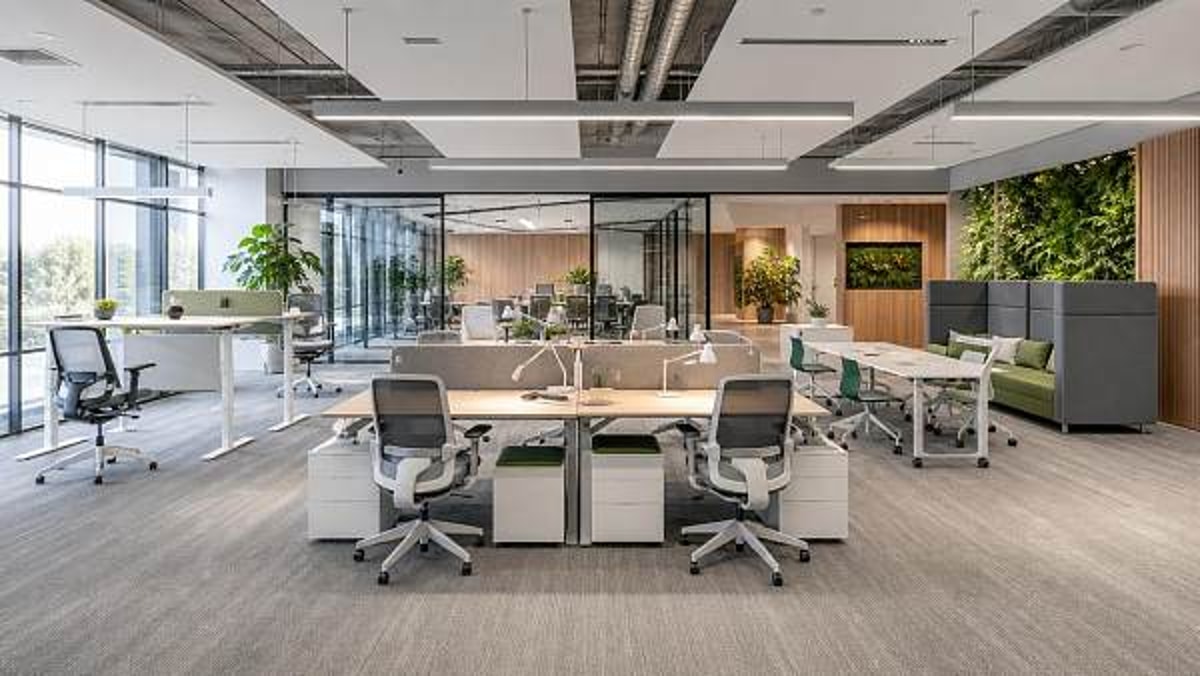
Several high-impact trends are shaping the market, and each one supports flexible workspace design in a different way. The most important trend is modularity. Modular desks, seating systems, storage blocks, and meeting tables allow companies to rearrange layouts without fully replacing furniture. This helps organizations adapt to new departments, project teams, or seasonal activity with lower disruption.
Another major trend is mobile furniture. Tables on casters, lightweight chairs, foldable training tables, and movable acoustic screens make it easier to switch between individual work and group collaboration. This trend is especially useful in offices where meeting rooms are limited and open-plan areas must serve multiple purposes.
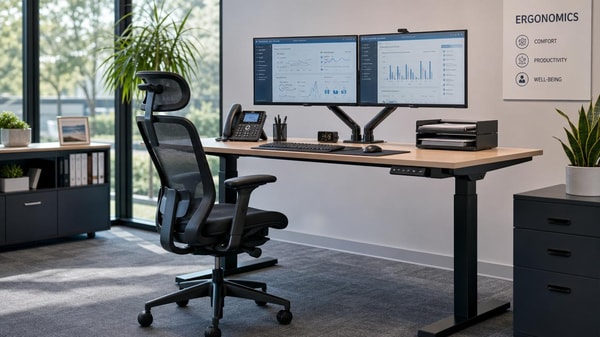
Height-adjustable solutions are also becoming central. Sit-stand desks and adjustable collaboration tables support ergonomic needs while giving teams more control over how they use space. In many modern layouts, flexibility is not only spatial but also physical. Employees increasingly expect workstations to fit different working styles and body needs rather than forcing everyone into a fixed setup.
Acoustic furniture is another fast-growing category. High-back sofas, pod seating, privacy booths, and partition-integrated benches help companies create quiet zones without major construction. This is a practical answer to one of the biggest challenges in open offices: too much noise and too little privacy. Instead of investing immediately in permanent walls, many firms are using Modern office furniture to create semi-private micro-environments.
Sustainability is influencing trend direction as well. Buyers increasingly prefer furniture made with recyclable materials, low-emission finishes, durable hardware, and replaceable parts. Flexible layouts become more viable when products are built to be repaired, reconfigured, or reused across departments. That reduces waste and improves return on investment over time.
Which types of businesses benefit most from flexible Modern office furniture?
Although nearly every organization can benefit, some business environments gain more immediate value. Fast-growing companies are a clear example. When teams expand quickly, fixed layouts often become inefficient within months. Modular Modern office furniture allows these companies to add seats, divide zones, and reshape meeting areas without major renovation.
Hybrid workplaces also benefit significantly. If employees rotate between home and office, the space often needs more shared touchdown areas, bookable collaboration points, and fewer permanently assigned desks. Flexible furniture supports this transition by enabling a mix of work modes rather than a single uniform layout.
Companies that host clients, suppliers, or cross-functional teams also see strong advantages. In these settings, one room may need to function as a briefing zone, a workshop space, or a temporary project room. Modern office furniture helps create responsive environments that support professional presentation without sacrificing adaptability.
Global trade, media, consulting, technology, and service-focused businesses often rely on rapid communication and changing project structures. For them, layout flexibility is closely linked to operational responsiveness. In contrast, organizations with highly fixed workflows may adopt these trends more gradually, but even they can benefit from flexible meeting spaces, ergonomic upgrades, and acoustic improvements.
How can decision-makers evaluate which Modern office furniture trends are actually worth investing in?
A practical evaluation starts with business function, not product style. Before selecting furniture, leaders should ask how the space is really used today, where friction occurs, and what changes are likely over the next two to three years. The best Modern office furniture choices are those that solve current layout pain points while preserving future flexibility.
A useful way to assess options is to compare furniture by adaptability, user experience, and total lifecycle value. The table below highlights common buying considerations.
Cost should be analyzed in a broader way. A cheaper fixed desk may appear efficient at purchase, but if it limits future changes, requires frequent replacement, or reduces usable floor efficiency, it may be more expensive over time. Decision-makers should review ownership cost, assembly complexity, vendor support, and compatibility with existing infrastructure such as power access, cable routing, and digital meeting tools.
What mistakes do companies make when adopting Modern office furniture for flexible layouts?
One of the most common mistakes is focusing too much on visual trends and not enough on actual workplace behavior. Stylish furniture can attract attention, but if it fails to support daily tasks, it quickly becomes underused. For example, collaborative lounge pieces may look innovative, yet they provide limited value if teams mostly need task seating, screens, and quick-access meeting tables.
Another frequent issue is buying flexibility in theory, but not in practice. Some products are marketed as modular or mobile, yet they are difficult to move, reconnect, or maintain. Decision-makers should test how easily furniture can be reconfigured by facility teams or staff. If layout changes require significant labor, special tools, or operational downtime, flexibility may be overstated.
A third mistake is ignoring zoning balance. A flexible office still needs structure. Too much openness can lead to distraction, while too many enclosed solutions can reduce interaction. Effective Modern office furniture planning usually includes a balanced mix of focus areas, collaboration zones, touchdown points, and informal meeting settings.
Companies also underestimate the importance of employee adoption. Even high-quality furniture may fail if users do not understand how to use adjustable features, shared settings, or reconfiguration options. A short onboarding process, simple usage guidelines, and clear booking or space-use policies can improve return on investment significantly.
How do flexible furniture layouts affect productivity, culture, and space efficiency?
When planned well, Modern office furniture can improve more than physical layout. It can support a more responsive workplace culture. Teams gain the ability to choose settings based on task type, whether that means concentrated individual work, quick stand-up collaboration, or formal presentations. This choice can improve energy, reduce friction, and make office attendance more meaningful.
From a productivity perspective, flexible layouts reduce the mismatch between space and activity. Instead of forcing all work into identical desk rows or oversized meeting rooms, businesses can create varied zones with furniture scaled to real use. This often increases utilization rates and allows companies to achieve more output from the same footprint.
Culturally, furniture sends signals. Open collaborative settings may communicate accessibility and innovation, while quiet booths and ergonomic stations show respect for focus and wellbeing. The strongest office environments are not those that follow a single trend, but those that support different work styles without confusion. In this sense, Modern office furniture becomes part of organizational design, not just interior design.
Space efficiency also improves when storage, seating, and meeting functions are integrated more intelligently. Benches with built-in power, modular shelving that doubles as a divider, and foldable tables for training rooms can reduce wasted square meters. For firms managing cost pressure in urban offices, this can produce substantial operational value.
What should buyers confirm before selecting suppliers or launching a furniture upgrade project?
Before moving forward, decision-makers should define the business case clearly. That means identifying whether the primary goal is higher capacity, better hybrid work support, stronger client presentation, improved employee experience, or a combination of these outcomes. The right Modern office furniture strategy depends on this priority.
They should also confirm practical details early. Key questions include lead times, customization options, warranty terms, spare parts availability, installation sequencing, and whether products can integrate with existing furniture. If a company operates across regions, consistency of sourcing and after-sales support becomes especially important.
It is wise to request pilot layouts or sample zones before a full rollout. A test area can reveal circulation issues, acoustic weaknesses, and user preferences that are difficult to predict on paper. For larger organizations, involving facilities teams, department managers, and representative users in the review process usually leads to better outcomes than relying only on procurement or design teams.
If you need to confirm a specific Modern office furniture plan, pricing direction, implementation timeline, or sourcing approach, the most useful first discussions usually cover space usage data, expected team changes, workflow pain points, acoustic requirements, sustainability targets, and the level of reconfiguration needed over the next few years. Starting with these questions helps businesses move from trend awareness to a practical, future-ready workplace decision.
Recommended News
 China’s First Embodied AI Robot Export Liability Insurance Launched in GuangxiEmbodied AI Robot Export Liability Insurance launched in Guangxi—China’s first insurer-backed solution for EU/Japan-bound industrial & service robots. Boost compliance, trust & tenders now.
 Morocco: 4th Top African Recipient of EU Energy Aid, Boosting China’s PV & Storage ExportsMorocco’s EU energy aid boost unlocks opportunities for Chinese PV mounting structures & containerized energy storage exports—act now to leverage new regulatory advantages.
 Industrial Robot Controller Thermal Gel: China's Export-Ready Heat Dissipation SolutionIndustrial Robot Controller Thermal Gel: China’s export-ready, TÜV-certified heat dissipation solution (8.5 W/mK) for robotics in SEA & Mexico.
 ADB Raises Vietnam’s 2026 GDP Forecast to 7.2% on Sino-Vietnam Supply Chain IntegrationADB raises Vietnam’s 2026 GDP forecast to 7.2% amid deepening Sino-Vietnam supply chain integration in electronics, solar PV, and lithium battery PACK production — key insight for OEMs, exporters & integrators.
 First National SME Service Demonstration Platforms AnnouncedFirst National SME Service Demonstration Platforms announced—16 specialize in REACH, UKCA, UL certification & rapid factory audits for exporters.
 U.S. Natural Gas Inventory Growth Below Forecast: Impact on Plastic Export CostsU.S. natural gas inventory growth missed forecast—impacting plastic export costs globally. Learn how rising TTF prices affect PP/PE resin costs, margins & supply chain strategy for exporters.
 EN 62368-1:2026 Enforced in EU: Thermal Runaway Protection for Wearables & Smart Home DevicesEN 62368-1:2026 is now mandatory in the EU—learn how thermal runaway protection impacts wearables, smart home devices & EV accessories.
 Q1 2026 Industrial Profits Up 15.5%: Supply Chain Cost Stability ConfirmedQ1 2026 Industrial Profits Up 15.5% — supply chain cost stability confirmed for global procurement, contract manufacturing & OEM teams.
") MIIT Releases Service Trade Standardization Plan (2026–2030)MIIT's 2026–2030 Service Trade Standardization Plan boosts AI-driven digital services—remote QA, cloud maintenance, intelligent warehouse SaaS—for global export competitiveness.
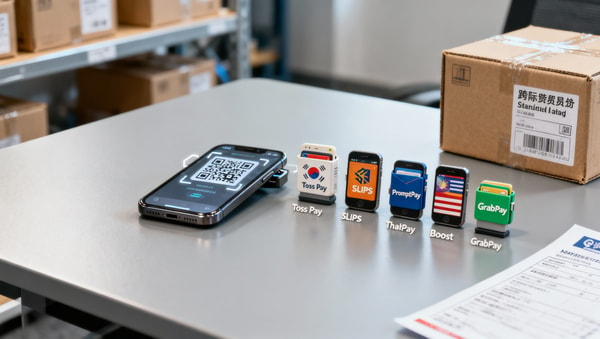
MIIT Releases Service Trade Standardization Plan (2026–2030)MIIT's 2026–2030 Service Trade Standardization Plan boosts AI-driven digital services—remote QA, cloud maintenance, intelligent warehouse SaaS—for global export competitiveness. WeChat Pay Integrates QR Codes from 5 Countries for B2B Cross-Border SettlementWeChat Pay integrates QR codes from South Korea, Sri Lanka, Thailand, Malaysia & Singapore — enabling faster, cheaper B2B cross-border settlement for global buyers and Chinese suppliers.
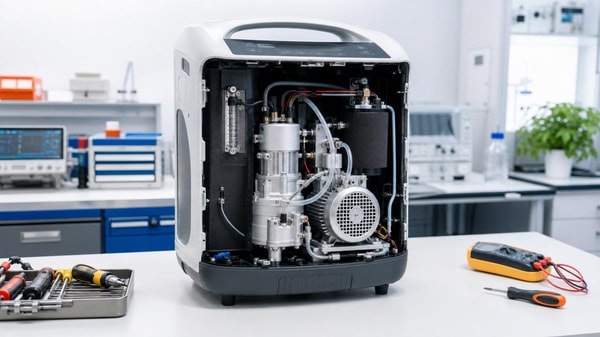
 Portable oxygen concentrators get noisy over time for several reasonsPortable oxygen concentrators get noisy over time due to dust, wear, loose parts, and aging compressors. Learn key causes, inspection priorities, and service tips to prevent failures.
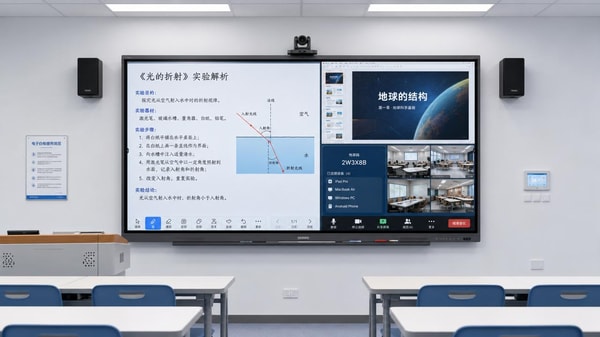
 Interactive whiteboards: what schools regret not checking earlyInteractive whiteboards can boost learning, but schools often regret missing key checks on compatibility, durability, training, and support. Discover how to buy smarter.
 Medical diagnostic equipment downtime usually starts with this oversightMedical diagnostic equipment downtime often starts with one overlooked maintenance gap. Learn the warning signs, hidden costs, and smart service strategies to improve uptime.
 Eco-friendly building materials: where certification changes the decisionEco-friendly building materials now win or lose on certification. Learn how verified standards reduce sourcing risk, support compliance, and improve procurement decisions.
 Ergonomic workspace design mistakes that still cause daily strainErgonomic workspace design mistakes can silently cause daily strain, fatigue, and lower productivity. Discover practical fixes to improve comfort, focus, and workstation performance.
 Outdoor garden supplies that wear out too fast in summer heatOutdoor garden supplies can fail fast in extreme summer heat. Discover which items wear out first, what materials last longer, and how to buy smarter for durable, cost-saving performance.
 Sustainable home decor: how to spot green claims with substanceSustainable home decor explained: learn how to spot credible green claims, avoid greenwashing, compare materials and certifications, and choose stylish, healthier pieces with real impact.
 Modern office furniture trends that improve layout flexibilityModern office furniture trends are transforming flexible workplace design. Explore modular, mobile, ergonomic, and acoustic solutions that boost productivity and smarter space planning.
 Smart street lighting works best when control systems are not overlookedSmart street lighting succeeds when control systems come first. Learn how better monitoring, dimming, and integration improve ROI, maintenance efficiency, and long-term project performance.
 What solid-state battery breakthroughs are still years from market?Solid-state battery breakthroughs sound transformative, but which ones are still years from market? Explore the technical, cost, and scaling barriers shaping real adoption timelines.
 Commercial LED lighting retrofits: when is payback slower than planned?Commercial LED lighting payback can slip when costs, runtime, rebates, and controls are misjudged. Learn the hidden risks and review steps that protect ROI before approval.









Popular Tags
Global Trade Insights & Industry
Our mission is to empower global exporters and importers with data-driven insights that foster strategic growth.
Search News
Popular Tags
Industry Overview
The global commercial kitchen equipment market is projected to reach $112 billion by 2027. Driven by urbanization, the rise of e-commerce food delivery, and strict hygiene regulations.