

EN 62368-1:2026 Enforced in EU: Thermal Runaway Protection for Wearables & Smart Home Devices
As of 1 May 2026, the revised EU safety standard EN 62368-1:2026 has entered mandatory force, introducing new thermal runaway protection requirements for lithium-ion battery modules, fast-charging circuits, and high-power wireless modules. This update directly affects exporters of smart wearable devices, smart home products, and EV accessories from China and other non-EU countries — making compliance a prerequisite for market access.
Event Overview
The European standard EN 62368-1:2026 — covering audio/video, information and communication technology (ICT) equipment — became compulsory across the EU on 1 May 2026. It mandates additional testing for thermal runaway prevention specifically targeting lithium battery packs, fast-charging subsystems, and high-power wireless transmission modules. Products placed on the EU market after this date must demonstrate conformity with these updated provisions; non-compliant devices will be prohibited from import or sale.
Industries Affected by Segment
Direct Exporters (OEM/ODM)
Manufacturers exporting smart wearables (e.g., fitness trackers, AR glasses), smart home devices (e.g., smart thermostats, voice-controlled hubs), and EV accessories (e.g., portable chargers, battery-powered tools) are directly impacted. Their CE marking process now requires verification of thermal runaway mitigation under EN 62368-1:2026 — meaning previously certified models may require retesting or design modification before continued EU placement.
Component Suppliers (Battery & Power IC Providers)
Suppliers of lithium-ion battery modules, charging ICs, and high-frequency RF power amplifiers face upstream compliance pressure. OEMs increasingly demand documentation proving thermal stability under fault conditions (e.g., overcharge, short-circuit, elevated ambient temperature), shifting part-level validation responsibility earlier in the supply chain.
Contract Manufacturers & EMS Providers
Electronics manufacturing services (EMS) firms handling final assembly must verify that incoming battery subassemblies, PCB layouts, and firmware-level thermal management logic meet the new standard’s fault-simulation test criteria. This may require updates to production test protocols and supplier qualification checklists.
Regulatory & Certification Service Providers
Third-party testing laboratories and Notified Bodies accredited for EN 62368-1 now need to demonstrate capability for the newly specified thermal runaway evaluation methods — including accelerated stress tests, thermal imaging during fault propagation, and failure mode analysis of battery management systems (BMS).
What Enterprises and Practitioners Should Focus On Now
Confirm current certification status against EN 62368-1:2026
Review existing CE declarations and test reports to determine whether prior certifications were issued under EN 62368-1:2019 or earlier editions. Only certificates referencing the 2026 edition (or explicitly stating equivalency per EU Commission guidance) remain valid post-1 May 2026.
Prioritize high-risk product categories for re-evaluation
Focus first on devices integrating >20 Wh lithium batteries, USB-PD 3.1+ charging, or >5 W wireless power transmission — as these fall most clearly within the scope of the new thermal runaway clauses. Avoid blanket retesting; instead, conduct gap analyses based on actual architecture and use-case stress profiles.
Engage early with accredited labs for test planning
Due to increased demand for thermal propagation testing capacity, lead times for full EN 62368-1:2026 assessments have extended. Initiate lab consultations now to align on test plans, sample submission schedules, and required documentation — especially BMS schematics and thermal design files.
Update internal technical documentation and supplier agreements
Revise bill-of-materials (BOM) control procedures to flag thermally critical components requiring EN 62368-1:2026-specific declarations. Where applicable, amend procurement contracts to include thermal runaway performance warranties from component vendors.
Editorial Perspective / Industry Observation
Observably, EN 62368-1:2026 represents less a sudden regulatory shift and more an incremental tightening aligned with real-world safety incidents involving lithium-based electronics. Analysis shows the thermal runaway requirements formalize practices already emerging among leading manufacturers — particularly around cell-level fusing, thermal cutoff thresholds, and BMS fault logging. From an industry perspective, this is best understood not as a one-time compliance hurdle, but as a signal of sustained regulatory focus on system-level functional safety in energy-dense consumer electronics. Continuous monitoring of CENELEC interpretations and EU Commission FAQs remains essential, as implementation details — such as transitional arrangements for legacy stock — are still evolving.
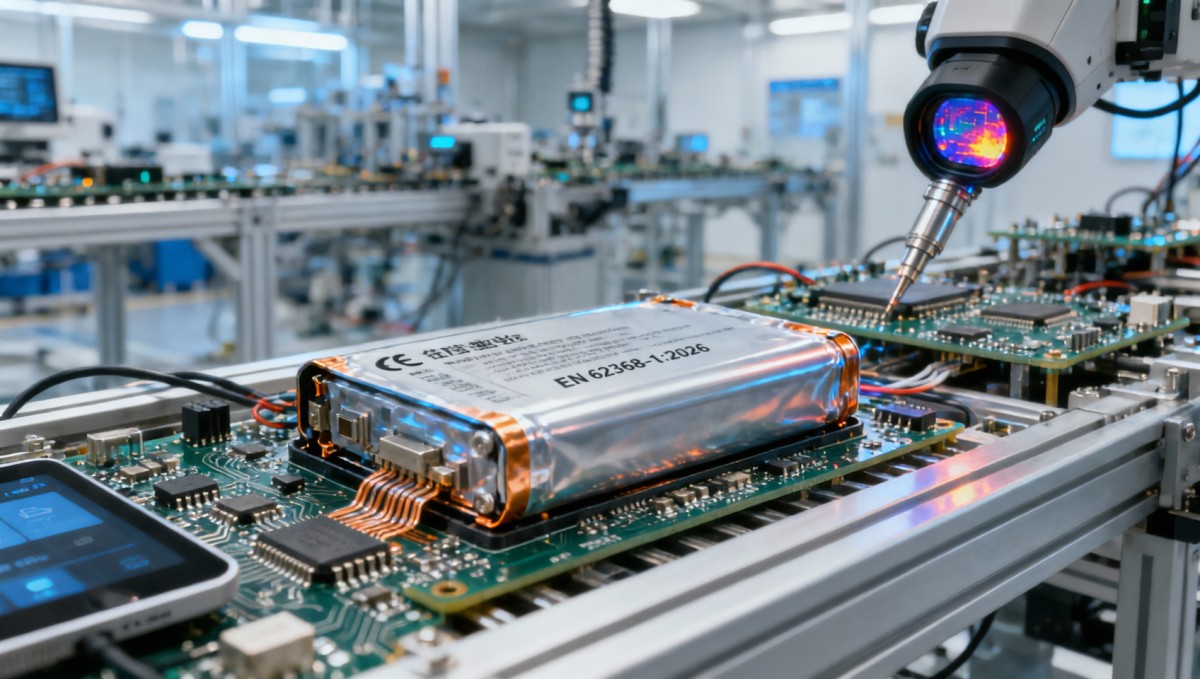
In summary, EN 62368-1:2026 marks a procedural milestone rather than a paradigm shift: it codifies thermal risk management expectations that are already technically feasible and increasingly adopted. For affected enterprises, the priority is not reinvention, but systematic alignment — verifying design assumptions, updating test protocols, and clarifying accountability across the value chain. The regulation is best interpreted as reinforcing existing engineering discipline, not demanding fundamentally new capabilities.
Source: Official publication of EN 62368-1:2026 in the EU Official Journal; CENELEC website notices dated Q4 2025; EU Commission Guidance Document SANCO/11915/2025 (published 15 March 2026). Note: Transitional provisions for products placed on the market before 1 May 2026 remain subject to ongoing clarification by national market surveillance authorities.
Recommended News
 China’s First Embodied AI Robot Export Liability Insurance Launched in GuangxiEmbodied AI Robot Export Liability Insurance launched in Guangxi—China’s first insurer-backed solution for EU/Japan-bound industrial & service robots. Boost compliance, trust & tenders now.
 Morocco: 4th Top African Recipient of EU Energy Aid, Boosting China’s PV & Storage ExportsMorocco’s EU energy aid boost unlocks opportunities for Chinese PV mounting structures & containerized energy storage exports—act now to leverage new regulatory advantages.
 Industrial Robot Controller Thermal Gel: China's Export-Ready Heat Dissipation SolutionIndustrial Robot Controller Thermal Gel: China’s export-ready, TÜV-certified heat dissipation solution (8.5 W/mK) for robotics in SEA & Mexico.
 ADB Raises Vietnam’s 2026 GDP Forecast to 7.2% on Sino-Vietnam Supply Chain IntegrationADB raises Vietnam’s 2026 GDP forecast to 7.2% amid deepening Sino-Vietnam supply chain integration in electronics, solar PV, and lithium battery PACK production — key insight for OEMs, exporters & integrators.
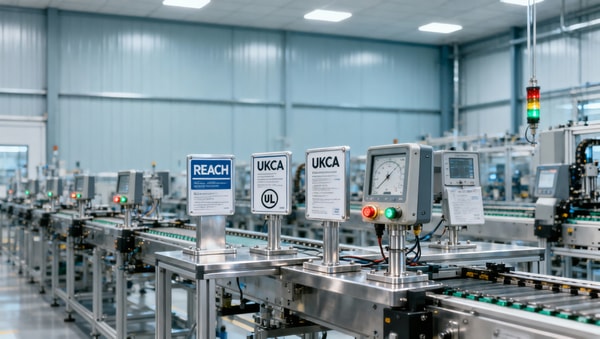
 First National SME Service Demonstration Platforms AnnouncedFirst National SME Service Demonstration Platforms announced—16 specialize in REACH, UKCA, UL certification & rapid factory audits for exporters.
 U.S. Natural Gas Inventory Growth Below Forecast: Impact on Plastic Export CostsU.S. natural gas inventory growth missed forecast—impacting plastic export costs globally. Learn how rising TTF prices affect PP/PE resin costs, margins & supply chain strategy for exporters.
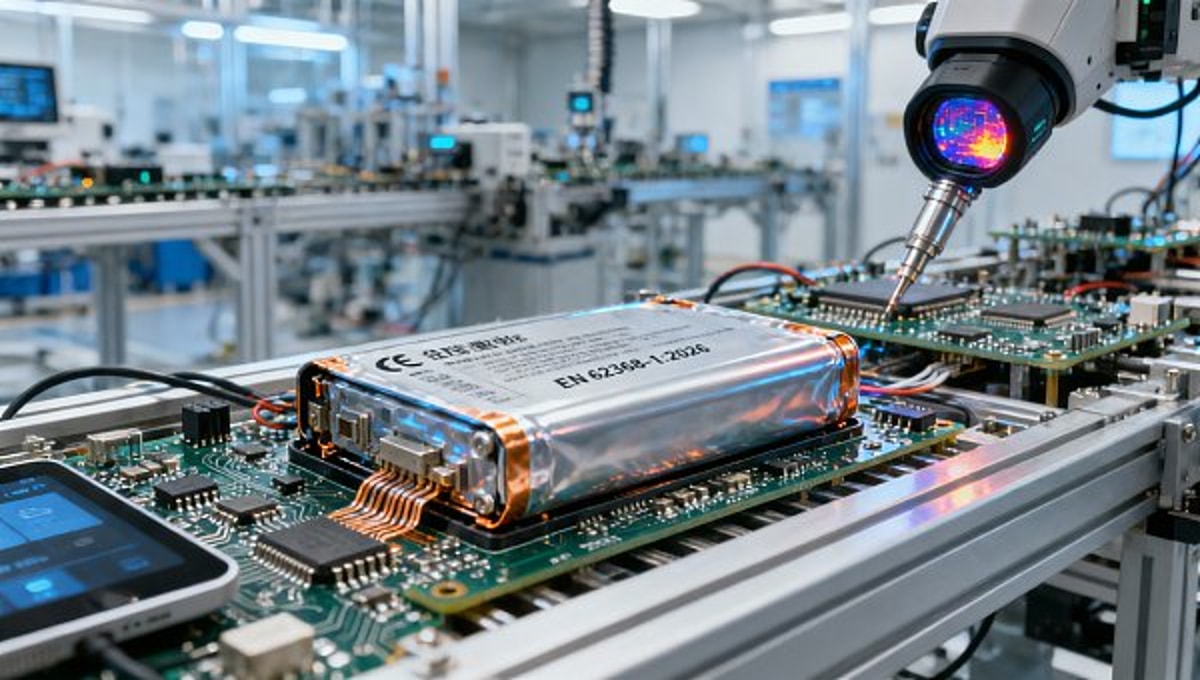
 EN 62368-1:2026 Enforced in EU: Thermal Runaway Protection for Wearables & Smart Home DevicesEN 62368-1:2026 is now mandatory in the EU—learn how thermal runaway protection impacts wearables, smart home devices & EV accessories.
 Q1 2026 Industrial Profits Up 15.5%: Supply Chain Cost Stability ConfirmedQ1 2026 Industrial Profits Up 15.5% — supply chain cost stability confirmed for global procurement, contract manufacturing & OEM teams.
") MIIT Releases Service Trade Standardization Plan (2026–2030)MIIT's 2026–2030 Service Trade Standardization Plan boosts AI-driven digital services—remote QA, cloud maintenance, intelligent warehouse SaaS—for global export competitiveness.
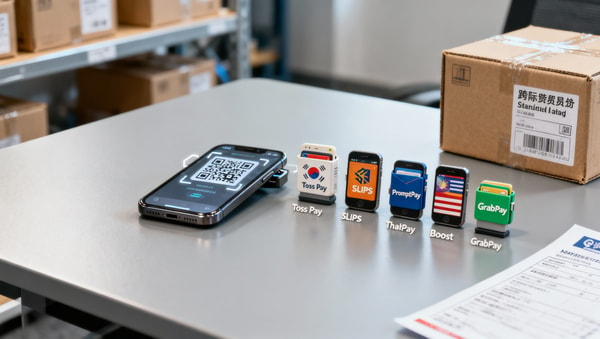
MIIT Releases Service Trade Standardization Plan (2026–2030)MIIT's 2026–2030 Service Trade Standardization Plan boosts AI-driven digital services—remote QA, cloud maintenance, intelligent warehouse SaaS—for global export competitiveness. WeChat Pay Integrates QR Codes from 5 Countries for B2B Cross-Border SettlementWeChat Pay integrates QR codes from South Korea, Sri Lanka, Thailand, Malaysia & Singapore — enabling faster, cheaper B2B cross-border settlement for global buyers and Chinese suppliers.
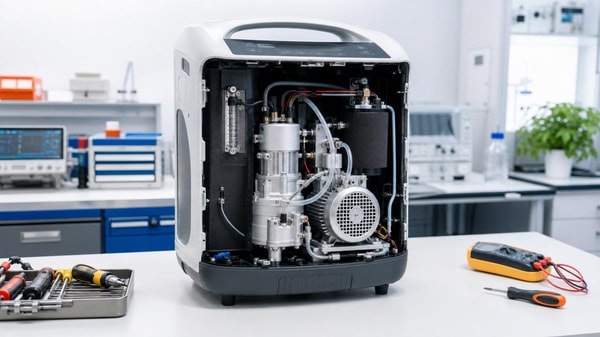
 Portable oxygen concentrators get noisy over time for several reasonsPortable oxygen concentrators get noisy over time due to dust, wear, loose parts, and aging compressors. Learn key causes, inspection priorities, and service tips to prevent failures.
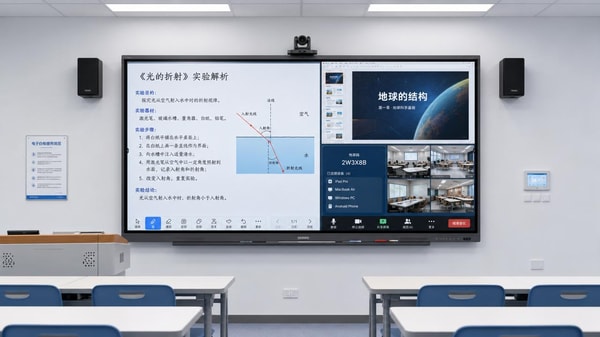
 Interactive whiteboards: what schools regret not checking earlyInteractive whiteboards can boost learning, but schools often regret missing key checks on compatibility, durability, training, and support. Discover how to buy smarter.
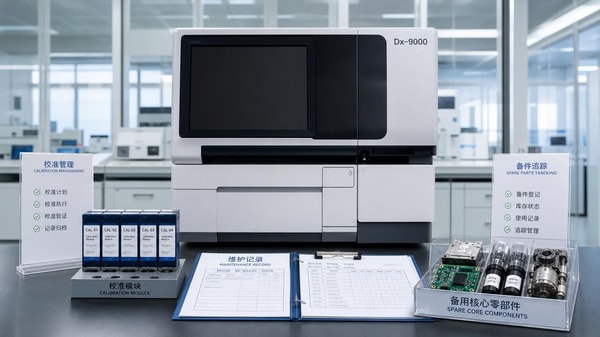
 Medical diagnostic equipment downtime usually starts with this oversightMedical diagnostic equipment downtime often starts with one overlooked maintenance gap. Learn the warning signs, hidden costs, and smart service strategies to improve uptime.
 Eco-friendly building materials: where certification changes the decisionEco-friendly building materials now win or lose on certification. Learn how verified standards reduce sourcing risk, support compliance, and improve procurement decisions.
 Ergonomic workspace design mistakes that still cause daily strainErgonomic workspace design mistakes can silently cause daily strain, fatigue, and lower productivity. Discover practical fixes to improve comfort, focus, and workstation performance.
 Outdoor garden supplies that wear out too fast in summer heatOutdoor garden supplies can fail fast in extreme summer heat. Discover which items wear out first, what materials last longer, and how to buy smarter for durable, cost-saving performance.
 Sustainable home decor: how to spot green claims with substanceSustainable home decor explained: learn how to spot credible green claims, avoid greenwashing, compare materials and certifications, and choose stylish, healthier pieces with real impact.
 Modern office furniture trends that improve layout flexibilityModern office furniture trends are transforming flexible workplace design. Explore modular, mobile, ergonomic, and acoustic solutions that boost productivity and smarter space planning.
 Smart street lighting works best when control systems are not overlookedSmart street lighting succeeds when control systems come first. Learn how better monitoring, dimming, and integration improve ROI, maintenance efficiency, and long-term project performance.
 What solid-state battery breakthroughs are still years from market?Solid-state battery breakthroughs sound transformative, but which ones are still years from market? Explore the technical, cost, and scaling barriers shaping real adoption timelines.
 Commercial LED lighting retrofits: when is payback slower than planned?Commercial LED lighting payback can slip when costs, runtime, rebates, and controls are misjudged. Learn the hidden risks and review steps that protect ROI before approval.















Popular Tags
Global Trade Insights & Industry
Our mission is to empower global exporters and importers with data-driven insights that foster strategic growth.
Search News
Popular Tags
Industry Overview
The global commercial kitchen equipment market is projected to reach $112 billion by 2027. Driven by urbanization, the rise of e-commerce food delivery, and strict hygiene regulations.