

ADB Raises Vietnam’s 2026 GDP Forecast to 7.2% on Sino-Vietnam Supply Chain Integration
Asian Development Bank (ADB) has revised upward its GDP growth forecast for Vietnam in 2026 to 7.2%, citing deepening vertical integration between Chinese and Vietnamese manufacturers in consumer electronics contract manufacturing, photovoltaic module assembly, and lithium battery pack (PACK) production. This update signals tangible acceleration in cross-border supply chain coordination — particularly relevant for electronics OEMs, solar component exporters, and battery system integrators operating across Southeast Asia.
Event Overview
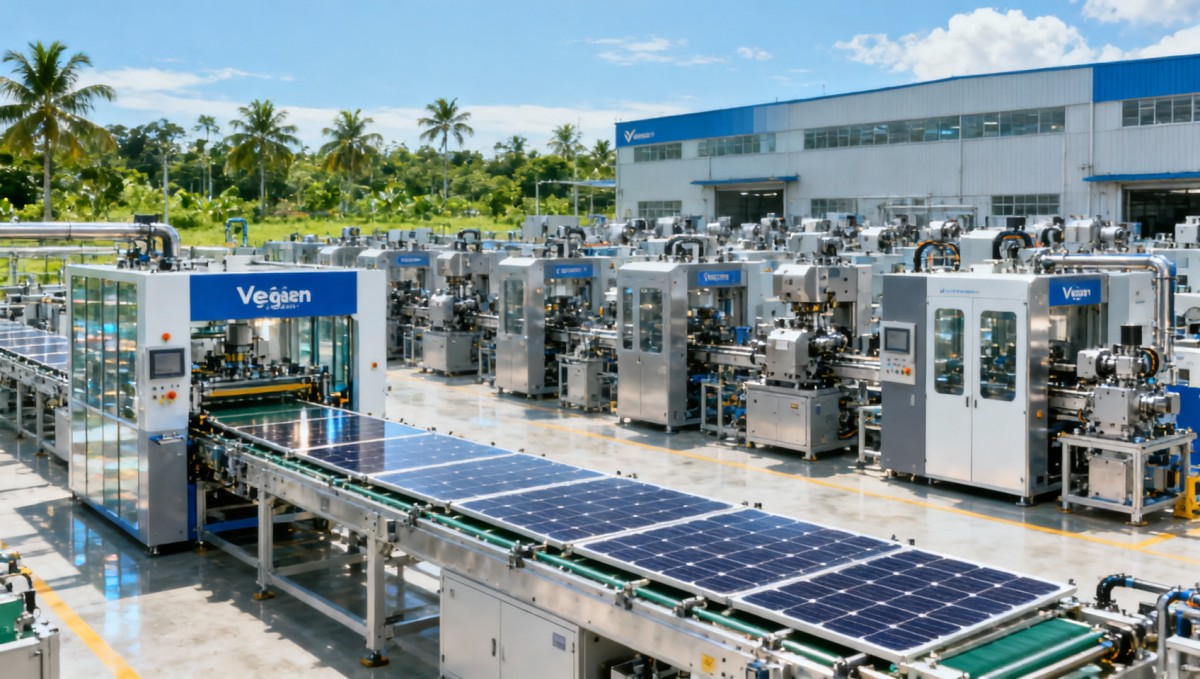
The Asian Development Bank updated its macroeconomic projection for Vietnam’s 2026 GDP growth to 7.2%. The revision reflects observed progress in collaborative industrial development between China and Vietnam, specifically in three linked segments: consumer electronics contract assembly, photovoltaic module encapsulation, and lithium battery PACK integration. Chinese firms active in CNC machining, solar photovoltaic manufacturing, and lithium battery systems are engaging in ‘technology transfer + localized service’ models to support modular factory construction in Vietnam — enabling hybrid supply chain offerings branded as ‘China-designed, Vietnam-delivered’ for global buyers.
Industries Affected
Electronics Contract Manufacturers (OEM/ODM)
These firms face intensified competition and shifting client expectations as Vietnamese-based assembly capacity expands with Chinese technical input. Impact manifests in tighter lead-time requirements, increased demand for design-for-manufacturability (DFM) alignment across borders, and pressure to standardize quality protocols between Chinese engineering teams and Vietnamese production lines.
Solar Photovoltaic Component Suppliers
Suppliers of PV cells, glass, EVA, backsheets, and junction boxes are experiencing rising order visibility from Vietnamese module assemblers backed by Chinese technology partners. Impact includes greater scrutiny on traceability documentation, compliance with evolving Vietnamese customs classification rules for semi-finished modules, and need for just-in-time logistics coordination across the China–Vietnam corridor.
Lithium Battery System Integrators
Firms involved in PACK-level integration — especially those serving EV, energy storage, and two-wheeler markets — encounter growing demand for standardized mechanical interfaces and BMS communication protocols compatible with both Chinese cell suppliers and Vietnamese assembly partners. Impact centers on interoperability validation timelines and local regulatory interpretation of safety certifications (e.g., UL 1973, IEC 62619).
Supply Chain Service Providers
Third-party logistics providers, customs brokers, and technical compliance consultants supporting cross-border manufacturing operations must adapt to more frequent movement of semi-finished goods (e.g., sub-assemblies, pre-qualified modules, unpackaged battery cells). Impact includes higher volume of partial shipments, increased documentation complexity for intra-ASEAN preferential tariff claims, and need for bilingual technical support capacity.
What Enterprises and Practitioners Should Monitor and Do Now
Track official ADB commentary and Vietnam’s National Assembly mid-year economic review
The ADB’s revised forecast is a forward-looking indicator — not yet tied to formal policy shifts. Monitoring subsequent statements from Vietnam’s Ministry of Industry and Trade or General Department of Vietnam Customs will clarify whether this growth expectation translates into targeted incentives (e.g., expanded bonded zone eligibility, expedited import licenses for tooling equipment) or regulatory adjustments.
Assess exposure to three priority segments: consumer electronics enclosures, PV module framing & laminating lines, and battery PACK line tooling
These are the most actively co-developed infrastructure layers identified in current reporting. Firms supplying precision-machined housings, automated lamination conveyors, or modular thermal management fixtures should prioritize engagement with Vietnamese industrial park developers and Chinese engineering contractors active in ‘factory-in-a-box’ deployments.
Distinguish between policy signaling and operational readiness
While ‘China-designed, Vietnam-delivered’ is gaining traction as a commercial narrative, actual throughput at newly built Vietnamese facilities remains subject to labor upskilling timelines, utility grid stability, and local supplier qualification cycles. Companies should avoid over-indexing on headline forecasts and instead validate lead times and first-article approval rates directly with facility operators.
Pre-position technical documentation and bilingual QA protocols for joint audits
With shared engineering oversight increasing, clients and auditors are more likely to request concurrent reviews across R&D (China), pilot production (Vietnam), and final inspection (Vietnam). Preparing bilingual versions of control plans, PFMEAs, and calibration records — aligned to ISO 9001:2015 and IATF 16949 where applicable — reduces friction during cross-border quality assessments.
Editorial Perspective / Industry Observation
Observably, this ADB revision functions less as a standalone economic milestone and more as a formalized confirmation of an ongoing structural shift — one where Vietnam is increasingly positioned not just as a low-cost assembly base, but as a coordinated extension of China’s advanced manufacturing ecosystem. Analysis shows that the 7.2% figure reflects confidence in institutional capacity to absorb and scale integrated processes, rather than purely cyclical demand drivers. From an industry standpoint, it signals that cross-border value chain orchestration — not just relocation — is becoming the dominant model for electronics, solar, and battery sectors in ASEAN. Current monitoring should therefore focus less on GDP thresholds and more on the pace of harmonization in technical standards, workforce certification frameworks, and customs treatment of intermediate goods.
This update does not represent a new policy initiative or a completed industrial transformation. Rather, it marks a point of inflection where bilateral collaboration in specific manufacturing domains has reached sufficient maturity to influence multilateral macroeconomic forecasting. For stakeholders, the core implication remains pragmatic: supply chain planning must now routinely account for dual-location execution — with design, process validation, and component sourcing distributed intentionally across China and Vietnam, not sequentially.
Source: Asian Development Bank (ADB) country economic update for Vietnam; public statements referencing CNC machining, solar photovoltaic, and lithium battery sector involvement in Vietnamese modular factory development. Note: Specific project timelines, facility commissioning dates, and buyer commitments remain unconfirmed and require ongoing verification.
Recommended News
 China’s First Embodied AI Robot Export Liability Insurance Launched in GuangxiEmbodied AI Robot Export Liability Insurance launched in Guangxi—China’s first insurer-backed solution for EU/Japan-bound industrial & service robots. Boost compliance, trust & tenders now.
 Morocco: 4th Top African Recipient of EU Energy Aid, Boosting China’s PV & Storage ExportsMorocco’s EU energy aid boost unlocks opportunities for Chinese PV mounting structures & containerized energy storage exports—act now to leverage new regulatory advantages.
 Industrial Robot Controller Thermal Gel: China's Export-Ready Heat Dissipation SolutionIndustrial Robot Controller Thermal Gel: China’s export-ready, TÜV-certified heat dissipation solution (8.5 W/mK) for robotics in SEA & Mexico.
 ADB Raises Vietnam’s 2026 GDP Forecast to 7.2% on Sino-Vietnam Supply Chain IntegrationADB raises Vietnam’s 2026 GDP forecast to 7.2% amid deepening Sino-Vietnam supply chain integration in electronics, solar PV, and lithium battery PACK production — key insight for OEMs, exporters & integrators.
 First National SME Service Demonstration Platforms AnnouncedFirst National SME Service Demonstration Platforms announced—16 specialize in REACH, UKCA, UL certification & rapid factory audits for exporters.
 U.S. Natural Gas Inventory Growth Below Forecast: Impact on Plastic Export CostsU.S. natural gas inventory growth missed forecast—impacting plastic export costs globally. Learn how rising TTF prices affect PP/PE resin costs, margins & supply chain strategy for exporters.
 EN 62368-1:2026 Enforced in EU: Thermal Runaway Protection for Wearables & Smart Home DevicesEN 62368-1:2026 is now mandatory in the EU—learn how thermal runaway protection impacts wearables, smart home devices & EV accessories.
 Q1 2026 Industrial Profits Up 15.5%: Supply Chain Cost Stability ConfirmedQ1 2026 Industrial Profits Up 15.5% — supply chain cost stability confirmed for global procurement, contract manufacturing & OEM teams.
") MIIT Releases Service Trade Standardization Plan (2026–2030)MIIT's 2026–2030 Service Trade Standardization Plan boosts AI-driven digital services—remote QA, cloud maintenance, intelligent warehouse SaaS—for global export competitiveness.
MIIT Releases Service Trade Standardization Plan (2026–2030)MIIT's 2026–2030 Service Trade Standardization Plan boosts AI-driven digital services—remote QA, cloud maintenance, intelligent warehouse SaaS—for global export competitiveness. WeChat Pay Integrates QR Codes from 5 Countries for B2B Cross-Border SettlementWeChat Pay integrates QR codes from South Korea, Sri Lanka, Thailand, Malaysia & Singapore — enabling faster, cheaper B2B cross-border settlement for global buyers and Chinese suppliers.
 Portable oxygen concentrators get noisy over time for several reasonsPortable oxygen concentrators get noisy over time due to dust, wear, loose parts, and aging compressors. Learn key causes, inspection priorities, and service tips to prevent failures.
 Interactive whiteboards: what schools regret not checking earlyInteractive whiteboards can boost learning, but schools often regret missing key checks on compatibility, durability, training, and support. Discover how to buy smarter.
 Medical diagnostic equipment downtime usually starts with this oversightMedical diagnostic equipment downtime often starts with one overlooked maintenance gap. Learn the warning signs, hidden costs, and smart service strategies to improve uptime.
 Eco-friendly building materials: where certification changes the decisionEco-friendly building materials now win or lose on certification. Learn how verified standards reduce sourcing risk, support compliance, and improve procurement decisions.
 Ergonomic workspace design mistakes that still cause daily strainErgonomic workspace design mistakes can silently cause daily strain, fatigue, and lower productivity. Discover practical fixes to improve comfort, focus, and workstation performance.
 Outdoor garden supplies that wear out too fast in summer heatOutdoor garden supplies can fail fast in extreme summer heat. Discover which items wear out first, what materials last longer, and how to buy smarter for durable, cost-saving performance.
 Sustainable home decor: how to spot green claims with substanceSustainable home decor explained: learn how to spot credible green claims, avoid greenwashing, compare materials and certifications, and choose stylish, healthier pieces with real impact.
 Modern office furniture trends that improve layout flexibilityModern office furniture trends are transforming flexible workplace design. Explore modular, mobile, ergonomic, and acoustic solutions that boost productivity and smarter space planning.
 Smart street lighting works best when control systems are not overlookedSmart street lighting succeeds when control systems come first. Learn how better monitoring, dimming, and integration improve ROI, maintenance efficiency, and long-term project performance.
 What solid-state battery breakthroughs are still years from market?Solid-state battery breakthroughs sound transformative, but which ones are still years from market? Explore the technical, cost, and scaling barriers shaping real adoption timelines.
 Commercial LED lighting retrofits: when is payback slower than planned?Commercial LED lighting payback can slip when costs, runtime, rebates, and controls are misjudged. Learn the hidden risks and review steps that protect ROI before approval.

















Popular Tags
Global Trade Insights & Industry
Our mission is to empower global exporters and importers with data-driven insights that foster strategic growth.
Search News
Popular Tags
Industry Overview
The global commercial kitchen equipment market is projected to reach $112 billion by 2027. Driven by urbanization, the rise of e-commerce food delivery, and strict hygiene regulations.