

Medical diagnostic equipment downtime usually starts with this oversight
When Medical diagnostic equipment fails unexpectedly, the root cause often traces back to a simple oversight in routine maintenance planning. For after-sales service teams, even minor gaps in inspection, calibration, or parts tracking can trigger costly downtime, delayed diagnoses, and frustrated clients. Understanding this hidden weak point is the first step toward improving reliability, response speed, and long-term equipment performance.
What is the oversight that most often causes Medical diagnostic equipment downtime?
In many service environments, the biggest problem is not a dramatic component failure. It is the absence of a disciplined maintenance planning system. Medical diagnostic equipment often runs daily under heavy workloads, but maintenance tasks may still be handled reactively, scattered across spreadsheets, handwritten notes, or informal technician memory. That gap becomes the oversight: nobody has a complete, current view of inspection intervals, calibration status, software updates, wear-part life, and service history.
For after-sales maintenance personnel, this is critical because diagnostic systems do not usually fail without warning. Imaging devices, analyzers, monitors, and testing platforms often show subtle signs first: drifting readings, unstable startup behavior, delayed processing, recurring alarms, overheating, or declining output consistency. When these signals are not logged and tied to a preventive action schedule, avoidable downtime becomes almost inevitable.
The issue is especially common when service teams focus only on emergency repair metrics. Fast response matters, but if Medical diagnostic equipment maintenance is treated as a repair-only function instead of a lifecycle management function, service quality eventually suffers. The true oversight is not a missing screwdriver or a single missed inspection. It is the lack of a structured system that connects asset condition, usage intensity, risk level, and planned intervention.
Why does this small maintenance gap create such expensive consequences?
Medical diagnostic equipment supports time-sensitive clinical decisions. That means even a short interruption has effects beyond the service department. Downtime can delay patient workflows, reduce daily test capacity, create rescheduling pressure, and harm the reputation of both the healthcare facility and the equipment support provider. A minor planning failure can therefore become an operational and commercial problem.
There are several reasons the consequences escalate quickly. First, many diagnostic devices depend on precise calibration and stable environmental conditions. If preventive checks are late, measurement accuracy may decline before total failure occurs. Second, replacement parts for Medical diagnostic equipment may have long lead times, especially for imported modules, sensors, power boards, probes, or specialized consumables. If no advance parts forecast exists, repair time extends significantly. Third, unscheduled breakdowns usually cost more than planned service because they require urgent dispatch, expedited logistics, and greater disruption to client operations.
For service managers, the lesson is simple: downtime cost is rarely limited to labor and parts. It includes lost throughput, customer dissatisfaction, contract risk, and weaker trust. In a market where suppliers compete on reliability and responsiveness, service discipline becomes a business differentiator.
Which warning signs tell after-sales teams that Medical diagnostic equipment is heading toward preventable failure?
Preventable failure usually leaves clues. The challenge is recognizing which clues matter and acting before they become service calls. After-sales personnel should look beyond obvious alarms and pay attention to trend changes across the full maintenance record.
Common warning signs include repeated minor faults that are temporarily cleared but never fully analyzed, longer warm-up time, increased recalibration frequency, inconsistent image or test quality, unusual fan noise, unstable voltage behavior, rising operating temperature, and greater dependence on operator workarounds. On connected systems, spikes in error logs or network communication failures may also indicate underlying hardware or software stress.
A practical way to improve detection is to group symptoms into three categories: performance drift, reliability drift, and service drift. Performance drift means the Medical diagnostic equipment still works, but output quality or speed is declining. Reliability drift means faults are becoming more frequent, even if the device can still be restarted. Service drift means the maintenance pattern itself is deteriorating, such as overdue inspections, missing calibration certificates, incomplete repair notes, or no confirmed spare inventory.
How should after-sales teams build a maintenance plan that actually reduces downtime?
An effective maintenance plan for Medical diagnostic equipment should be risk-based, not generic. Service teams often make the mistake of applying identical intervals to different devices regardless of age, workload, clinical criticality, or component sensitivity. That approach creates blind spots. A better system ranks assets by impact and failure probability, then assigns maintenance depth accordingly.
Start with a complete asset register. Every unit should have a unique record including model, serial number, installation date, site condition, service contract level, software version, calibration history, common fault modes, and critical spare requirements. Then divide maintenance tasks into daily operator checks, scheduled technical inspections, periodic calibration, firmware and software review, and lifecycle replacement actions. This structure helps everyone understand what must happen, who owns it, and when it becomes overdue.
Next, align maintenance frequency with real usage. A high-throughput laboratory analyzer or imaging platform used across multiple shifts should not follow the same timing as a lightly used unit in a smaller facility. For Medical diagnostic equipment, usage-based triggers are often more meaningful than calendar-only triggers. If the manufacturer provides service thresholds by cycles, scans, tests, or hours, those thresholds should be built into the plan.
Finally, close the loop with measurable follow-up. A strong maintenance plan is not just a calendar. It is a controlled process that tracks completion rate, repeat fault rate, mean time between failures, first-time fix rate, and parts consumption trends. These metrics allow after-sales teams to refine intervals, justify spare stock, and identify weak models or high-risk sites earlier.
What are the most common mistakes in Medical diagnostic equipment service management?
Several mistakes appear again and again across service organizations. The first is treating preventive maintenance as optional when customer demand is high. It is understandable to prioritize breakdown calls, but each postponed inspection increases future emergency workload. The second is poor documentation. If a technician solves a recurring issue but does not record the symptom, root cause, and corrective action clearly, the next technician starts from zero.
A third mistake is weak spare parts planning. Medical diagnostic equipment often depends on a small number of critical components that can stop the entire system when unavailable. Service teams should identify these bottleneck parts in advance instead of reacting after failure. The fourth mistake is ignoring site conditions. Power instability, dust, humidity, improper ventilation, and inconsistent operator practices can accelerate wear. When after-sales teams focus only on the device and not the environment, they miss a major source of repeated faults.
Another frequent issue is underestimating software and connectivity. Modern Medical diagnostic equipment is increasingly integrated with hospital information systems, cloud diagnostics, and cybersecurity controls. Downtime may result from version mismatch, communication failure, or delayed patches as much as from physical hardware problems. Service planning must therefore include digital maintenance, not just mechanical or electrical checks.
How can teams decide what to inspect first when resources are limited?
When technician time, budget, or parts inventory is limited, prioritization becomes essential. The best approach is to score Medical diagnostic equipment across three dimensions: clinical impact, failure likelihood, and recovery difficulty. Devices that influence urgent diagnosis, show recurring instability, and require long-lead parts should move to the top of the schedule.
A simple practical framework is to ask five questions for each asset. How often is it used? What happens if it stops today? Has it shown repeat symptoms in the last six months? Are critical parts readily available? Does the site have environmental or operator-related risk factors? If several answers indicate high risk, the equipment should receive earlier inspection, stronger spare support, and more frequent condition review.
This kind of structured prioritization is also valuable for communication with customers and internal management. Instead of saying a unit “needs attention,” after-sales teams can explain the operational reason, the expected downtime risk, and the preventive value of immediate service. That improves approval speed and reinforces trust.
Quick decision guide for service prioritization
What should be confirmed before improving maintenance strategy or discussing service cooperation?
Before redesigning a service program or evaluating external support, after-sales teams should confirm several basics. First, define the installed base clearly. Without accurate asset visibility, no Medical diagnostic equipment service strategy can be reliable. Second, map failure patterns by model, age, site, and usage intensity. Third, identify whether downtime is mainly caused by delayed inspections, calibration gaps, parts shortages, software inconsistency, or operator-related issues. Different causes require different solutions.
It is also important to review process maturity. Are service records standardized? Is there a preventive maintenance completion target? Are critical spare parts classified and forecasted? Can remote diagnostics shorten troubleshooting time? Is there a clear escalation path for recurring faults? These questions help determine whether the problem lies in technical capability, planning discipline, or coordination.
For organizations that rely on global market intelligence and industrial information platforms, one more factor matters: visibility into supply chain and technology change. Medical diagnostic equipment support increasingly depends on component availability, manufacturer updates, compliance expectations, and regional demand shifts. Access to timely B2B intelligence helps service teams anticipate parts risk, benchmark industry practice, and make smarter maintenance decisions before customers feel the impact.
What is the key takeaway for after-sales maintenance personnel?
Most Medical diagnostic equipment downtime does not begin with a catastrophic event. It begins with a missed check, an incomplete record, an overdue calibration, an untracked spare, or a recurring warning that nobody formally reviewed. For after-sales maintenance personnel, the real opportunity is to move from reactive repair to visible, prioritized, data-backed maintenance control.
If you need to confirm a more practical path forward, start by discussing a few specific questions: Which devices create the highest operational risk if they fail? Which maintenance tasks are currently overdue or undocumented? Which critical parts have the longest replenishment cycle? Which fault patterns repeat across sites? And which software, calibration, or environmental factors are being overlooked? Answering these questions first will make any future plan, service upgrade, procurement decision, or cooperation model much more effective.
Recommended News
 China’s First Embodied AI Robot Export Liability Insurance Launched in GuangxiEmbodied AI Robot Export Liability Insurance launched in Guangxi—China’s first insurer-backed solution for EU/Japan-bound industrial & service robots. Boost compliance, trust & tenders now.
 Morocco: 4th Top African Recipient of EU Energy Aid, Boosting China’s PV & Storage ExportsMorocco’s EU energy aid boost unlocks opportunities for Chinese PV mounting structures & containerized energy storage exports—act now to leverage new regulatory advantages.
 Industrial Robot Controller Thermal Gel: China's Export-Ready Heat Dissipation SolutionIndustrial Robot Controller Thermal Gel: China’s export-ready, TÜV-certified heat dissipation solution (8.5 W/mK) for robotics in SEA & Mexico.
 ADB Raises Vietnam’s 2026 GDP Forecast to 7.2% on Sino-Vietnam Supply Chain IntegrationADB raises Vietnam’s 2026 GDP forecast to 7.2% amid deepening Sino-Vietnam supply chain integration in electronics, solar PV, and lithium battery PACK production — key insight for OEMs, exporters & integrators.
 First National SME Service Demonstration Platforms AnnouncedFirst National SME Service Demonstration Platforms announced—16 specialize in REACH, UKCA, UL certification & rapid factory audits for exporters.
 U.S. Natural Gas Inventory Growth Below Forecast: Impact on Plastic Export CostsU.S. natural gas inventory growth missed forecast—impacting plastic export costs globally. Learn how rising TTF prices affect PP/PE resin costs, margins & supply chain strategy for exporters.
 EN 62368-1:2026 Enforced in EU: Thermal Runaway Protection for Wearables & Smart Home DevicesEN 62368-1:2026 is now mandatory in the EU—learn how thermal runaway protection impacts wearables, smart home devices & EV accessories.
 Q1 2026 Industrial Profits Up 15.5%: Supply Chain Cost Stability ConfirmedQ1 2026 Industrial Profits Up 15.5% — supply chain cost stability confirmed for global procurement, contract manufacturing & OEM teams.
") MIIT Releases Service Trade Standardization Plan (2026–2030)MIIT's 2026–2030 Service Trade Standardization Plan boosts AI-driven digital services—remote QA, cloud maintenance, intelligent warehouse SaaS—for global export competitiveness.
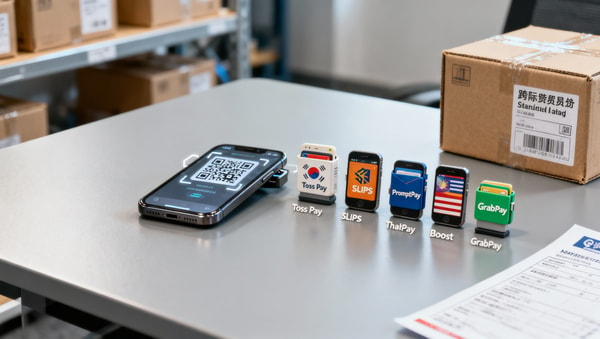
MIIT Releases Service Trade Standardization Plan (2026–2030)MIIT's 2026–2030 Service Trade Standardization Plan boosts AI-driven digital services—remote QA, cloud maintenance, intelligent warehouse SaaS—for global export competitiveness. WeChat Pay Integrates QR Codes from 5 Countries for B2B Cross-Border SettlementWeChat Pay integrates QR codes from South Korea, Sri Lanka, Thailand, Malaysia & Singapore — enabling faster, cheaper B2B cross-border settlement for global buyers and Chinese suppliers.
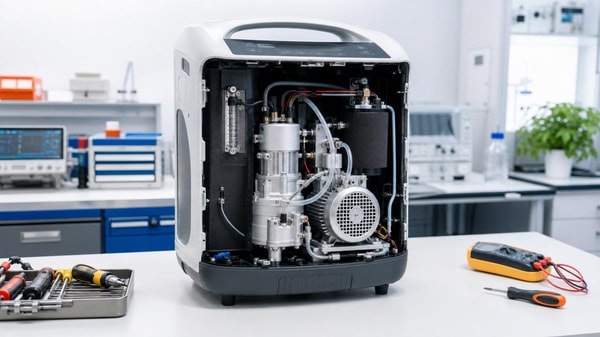
 Portable oxygen concentrators get noisy over time for several reasonsPortable oxygen concentrators get noisy over time due to dust, wear, loose parts, and aging compressors. Learn key causes, inspection priorities, and service tips to prevent failures.
 Interactive whiteboards: what schools regret not checking earlyInteractive whiteboards can boost learning, but schools often regret missing key checks on compatibility, durability, training, and support. Discover how to buy smarter.
 Medical diagnostic equipment downtime usually starts with this oversightMedical diagnostic equipment downtime often starts with one overlooked maintenance gap. Learn the warning signs, hidden costs, and smart service strategies to improve uptime.
 Eco-friendly building materials: where certification changes the decisionEco-friendly building materials now win or lose on certification. Learn how verified standards reduce sourcing risk, support compliance, and improve procurement decisions.
 Ergonomic workspace design mistakes that still cause daily strainErgonomic workspace design mistakes can silently cause daily strain, fatigue, and lower productivity. Discover practical fixes to improve comfort, focus, and workstation performance.
 Outdoor garden supplies that wear out too fast in summer heatOutdoor garden supplies can fail fast in extreme summer heat. Discover which items wear out first, what materials last longer, and how to buy smarter for durable, cost-saving performance.
 Sustainable home decor: how to spot green claims with substanceSustainable home decor explained: learn how to spot credible green claims, avoid greenwashing, compare materials and certifications, and choose stylish, healthier pieces with real impact.
 Modern office furniture trends that improve layout flexibilityModern office furniture trends are transforming flexible workplace design. Explore modular, mobile, ergonomic, and acoustic solutions that boost productivity and smarter space planning.
 Smart street lighting works best when control systems are not overlookedSmart street lighting succeeds when control systems come first. Learn how better monitoring, dimming, and integration improve ROI, maintenance efficiency, and long-term project performance.
 What solid-state battery breakthroughs are still years from market?Solid-state battery breakthroughs sound transformative, but which ones are still years from market? Explore the technical, cost, and scaling barriers shaping real adoption timelines.
 Commercial LED lighting retrofits: when is payback slower than planned?Commercial LED lighting payback can slip when costs, runtime, rebates, and controls are misjudged. Learn the hidden risks and review steps that protect ROI before approval.



















Popular Tags
Global Trade Insights & Industry
Our mission is to empower global exporters and importers with data-driven insights that foster strategic growth.
Search News
Popular Tags
Industry Overview
The global commercial kitchen equipment market is projected to reach $112 billion by 2027. Driven by urbanization, the rise of e-commerce food delivery, and strict hygiene regulations.