

Industrial Robot Controller Thermal Gel: China's Export-Ready Heat Dissipation Solution
High-frequency operation of industrial robot controllers is intensifying chip thermal stress, driving demand for advanced thermal interface materials. With no specific date disclosed, this development signals growing technical alignment between Chinese material suppliers and global robotics integration requirements—particularly for export-oriented smart factory and industrial robot manufacturers targeting Southeast Asia and Mexico.
Event Overview
Chromium Rare Earth Industrial Co., Ltd. and other domestic manufacturers have launched new thermal gels tailored for SiC/GaN power devices used in industrial robot controllers. These gels achieve a thermal conductivity of 8.5 W/mK and have passed TÜV Rheinland’s automotive-grade vibration and aging tests. The material is now being supplied in volume to robotics integrators in Southeast Asia and Mexico, supporting localized thermal management for Chinese-made industrial robots and smart factory systems deployed overseas.
Industries Affected by This Development
Direct Exporters of Industrial Robots and Smart Factory Systems
These companies face tightening thermal reliability expectations in overseas markets—especially where robotic systems operate under high-duty-cycle conditions. The availability of certified, locally compatible thermal gels reduces qualification lead times and mitigates field failure risk in temperature-sensitive control units.
Raw Material Procurement Teams at Robotics OEMs
Procurement functions must reassess thermal interface material (TIM) sourcing strategies, as legacy silicone-based pastes may no longer meet performance thresholds for next-generation wide-bandgap controllers. Certification status (e.g., TÜV Rheinland automotive-grade validation) is becoming a functional requirement—not just a differentiator.
Contract Manufacturers and System Integrators in ASEAN and Mexico
Local integrators benefit from shorter supply chains and simplified compliance documentation when sourcing TIMs pre-qualified for automotive-grade durability. However, they must verify compatibility with specific controller PCB layouts and rework protocols before full adoption.
Supply Chain Service Providers Supporting Cross-Border Robotics Logistics
Logistics and customs service providers handling thermal materials must confirm classification under HS code 3906 (acrylic polymers) or 3910 (silicones), as regulatory treatment—including import duties and conformity assessments—varies significantly across ASEAN and Mexican jurisdictions for thermally functional polymers.
What Relevant Enterprises or Practitioners Should Focus On Now
Monitor certification scope and regional acceptance of TÜV Rheinland test reports
Observably, TÜV Rheinland’s automotive-grade validation covers vibration and aging—but not necessarily chemical resistance or long-term outgassing in enclosed controller housings. Enterprises should track whether downstream customers require additional testing (e.g., ISO 16750-3 for mechanical shock or IEC 60068-2-64 for random vibration).
Assess thermal gel integration into existing controller assembly workflows
Analysis shows that switching from traditional grease-based TIMs to higher-viscosity, cure-on-demand gels may require adjustments in dispensing equipment, curing time budgets, and post-application inspection criteria—especially for automated SMT lines.
Track inventory and lead-time implications for dual-sourcing strategies
From the industry perspective, reliance on a single domestic supplier for high-performance TIMs introduces supply continuity risks. Companies should evaluate minimum order quantities, regional warehousing options (e.g., in Malaysia or near Monterrey), and cross-border stockholding feasibility before scaling usage.
Verify local regulatory labeling and safety data sheet (SDS) compliance
Current more appropriate understanding is that thermal gels classified as “non-hazardous” under GHS in China may still require SDS localization and bilingual labeling (e.g., Spanish/English in Mexico; English/Bahasa in Indonesia) prior to customs clearance.
Editorial Perspective / Industry Observation
This development is better understood as an early-stage infrastructure signal—not yet a market-wide shift. It reflects growing synchronization between Chinese material innovation and international robotics deployment environments, particularly where thermal reliability intersects with export compliance. Analysis shows it is less about displacement of incumbent Western TIM suppliers and more about filling a niche: cost-effective, regionally validated thermal solutions for mid-tier robotics integrators scaling rapidly in emerging manufacturing hubs. Continued observation is warranted on whether similar certifications expand to UL 94 flammability or RoHS 3 compliance—both increasingly referenced in tender documents for smart factory projects in LATAM and ASEAN.
Conclusion
This advancement underscores a maturing link between Chinese thermal material R&D and real-world export logistics for robotics hardware. It does not indicate broad-based substitution across all TIM applications, but rather points to a targeted, certification-driven pathway for localized support of industrial robot deployments abroad. For stakeholders, it is best interpreted as an operational enabler—not a strategic pivot—and merits attention primarily through the lens of supply chain resilience and regional compliance readiness.
Information Sources
Main source: Publicly reported product launch and certification details from Chromium Rare Earth Industrial Co., Ltd. (as cited in the input brief).
Points requiring ongoing observation: Expansion of certification scope beyond TÜV Rheinland’s current vibration/aging validation; uptake by Tier-1 robotics OEMs outside ASEAN/Mexico; formal inclusion in national or regional smart manufacturing procurement guidelines.

Recommended News
 China’s First Embodied AI Robot Export Liability Insurance Launched in GuangxiEmbodied AI Robot Export Liability Insurance launched in Guangxi—China’s first insurer-backed solution for EU/Japan-bound industrial & service robots. Boost compliance, trust & tenders now.
 Morocco: 4th Top African Recipient of EU Energy Aid, Boosting China’s PV & Storage ExportsMorocco’s EU energy aid boost unlocks opportunities for Chinese PV mounting structures & containerized energy storage exports—act now to leverage new regulatory advantages.
 Industrial Robot Controller Thermal Gel: China's Export-Ready Heat Dissipation SolutionIndustrial Robot Controller Thermal Gel: China’s export-ready, TÜV-certified heat dissipation solution (8.5 W/mK) for robotics in SEA & Mexico.
 ADB Raises Vietnam’s 2026 GDP Forecast to 7.2% on Sino-Vietnam Supply Chain IntegrationADB raises Vietnam’s 2026 GDP forecast to 7.2% amid deepening Sino-Vietnam supply chain integration in electronics, solar PV, and lithium battery PACK production — key insight for OEMs, exporters & integrators.
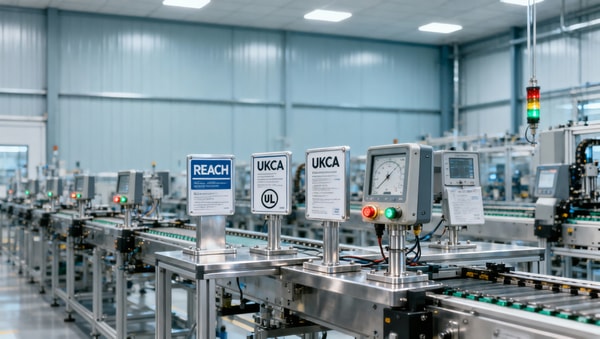
 First National SME Service Demonstration Platforms AnnouncedFirst National SME Service Demonstration Platforms announced—16 specialize in REACH, UKCA, UL certification & rapid factory audits for exporters.
 U.S. Natural Gas Inventory Growth Below Forecast: Impact on Plastic Export CostsU.S. natural gas inventory growth missed forecast—impacting plastic export costs globally. Learn how rising TTF prices affect PP/PE resin costs, margins & supply chain strategy for exporters.
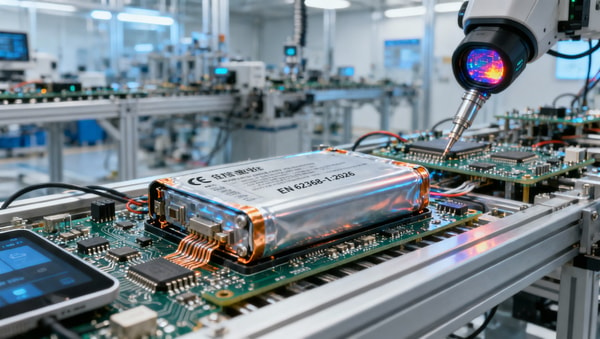
 EN 62368-1:2026 Enforced in EU: Thermal Runaway Protection for Wearables & Smart Home DevicesEN 62368-1:2026 is now mandatory in the EU—learn how thermal runaway protection impacts wearables, smart home devices & EV accessories.
 Q1 2026 Industrial Profits Up 15.5%: Supply Chain Cost Stability ConfirmedQ1 2026 Industrial Profits Up 15.5% — supply chain cost stability confirmed for global procurement, contract manufacturing & OEM teams.
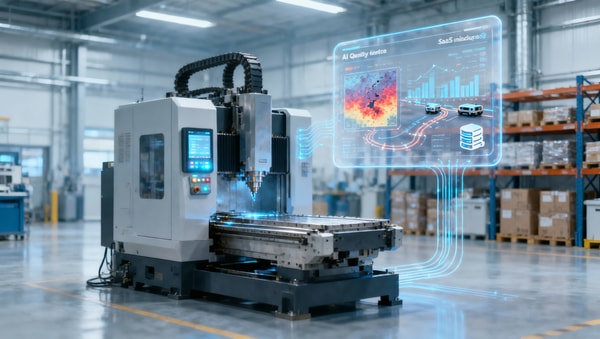
") MIIT Releases Service Trade Standardization Plan (2026–2030)MIIT's 2026–2030 Service Trade Standardization Plan boosts AI-driven digital services—remote QA, cloud maintenance, intelligent warehouse SaaS—for global export competitiveness.
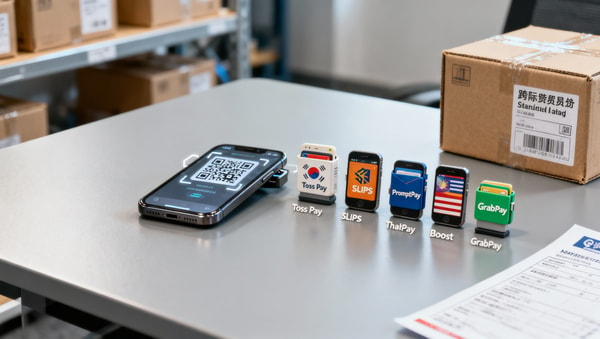
MIIT Releases Service Trade Standardization Plan (2026–2030)MIIT's 2026–2030 Service Trade Standardization Plan boosts AI-driven digital services—remote QA, cloud maintenance, intelligent warehouse SaaS—for global export competitiveness. WeChat Pay Integrates QR Codes from 5 Countries for B2B Cross-Border SettlementWeChat Pay integrates QR codes from South Korea, Sri Lanka, Thailand, Malaysia & Singapore — enabling faster, cheaper B2B cross-border settlement for global buyers and Chinese suppliers.
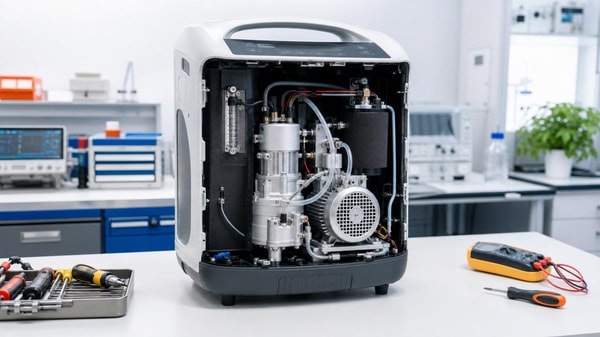
 Portable oxygen concentrators get noisy over time for several reasonsPortable oxygen concentrators get noisy over time due to dust, wear, loose parts, and aging compressors. Learn key causes, inspection priorities, and service tips to prevent failures.
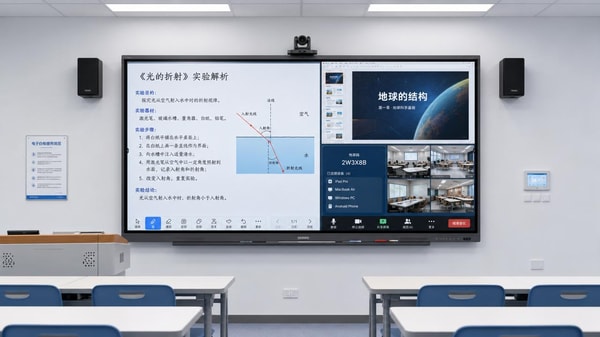
 Interactive whiteboards: what schools regret not checking earlyInteractive whiteboards can boost learning, but schools often regret missing key checks on compatibility, durability, training, and support. Discover how to buy smarter.
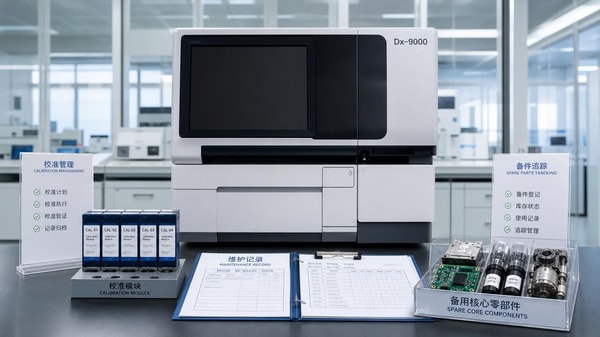
 Medical diagnostic equipment downtime usually starts with this oversightMedical diagnostic equipment downtime often starts with one overlooked maintenance gap. Learn the warning signs, hidden costs, and smart service strategies to improve uptime.
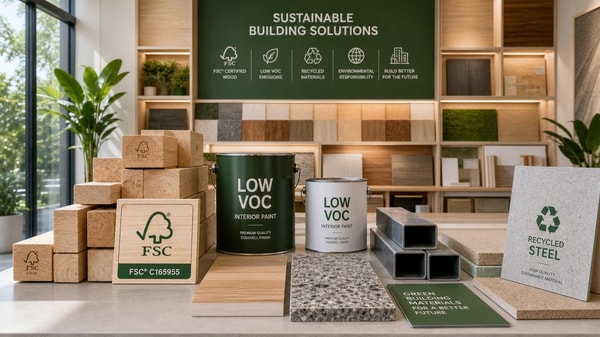
 Eco-friendly building materials: where certification changes the decisionEco-friendly building materials now win or lose on certification. Learn how verified standards reduce sourcing risk, support compliance, and improve procurement decisions.
 Ergonomic workspace design mistakes that still cause daily strainErgonomic workspace design mistakes can silently cause daily strain, fatigue, and lower productivity. Discover practical fixes to improve comfort, focus, and workstation performance.
 Outdoor garden supplies that wear out too fast in summer heatOutdoor garden supplies can fail fast in extreme summer heat. Discover which items wear out first, what materials last longer, and how to buy smarter for durable, cost-saving performance.
 Sustainable home decor: how to spot green claims with substanceSustainable home decor explained: learn how to spot credible green claims, avoid greenwashing, compare materials and certifications, and choose stylish, healthier pieces with real impact.
 Modern office furniture trends that improve layout flexibilityModern office furniture trends are transforming flexible workplace design. Explore modular, mobile, ergonomic, and acoustic solutions that boost productivity and smarter space planning.
 Smart street lighting works best when control systems are not overlookedSmart street lighting succeeds when control systems come first. Learn how better monitoring, dimming, and integration improve ROI, maintenance efficiency, and long-term project performance.
 What solid-state battery breakthroughs are still years from market?Solid-state battery breakthroughs sound transformative, but which ones are still years from market? Explore the technical, cost, and scaling barriers shaping real adoption timelines.
 Commercial LED lighting retrofits: when is payback slower than planned?Commercial LED lighting payback can slip when costs, runtime, rebates, and controls are misjudged. Learn the hidden risks and review steps that protect ROI before approval.













Popular Tags
Global Trade Insights & Industry
Our mission is to empower global exporters and importers with data-driven insights that foster strategic growth.
Search News
Popular Tags
Industry Overview
The global commercial kitchen equipment market is projected to reach $112 billion by 2027. Driven by urbanization, the rise of e-commerce food delivery, and strict hygiene regulations.