

Solid-state battery breakthroughs are real, but mass rollout is still difficult
Solid-state battery breakthroughs are no longer theoretical—they are reshaping expectations across the global energy, automotive, and electronics sectors. Yet despite rapid progress in materials, safety, and performance, large-scale commercialization remains constrained by cost, manufacturing complexity, and supply chain readiness. For information researchers tracking industrial transformation, understanding both the promise and the bottlenecks is essential to evaluating what comes next.
The core takeaway is straightforward: the recent wave of solid-state battery breakthroughs is real, technically meaningful, and strategically important, but it does not automatically mean mass-market adoption is imminent. For researchers, investors, sourcing teams, and policy watchers, the most useful question is no longer whether solid-state batteries can work in the lab. It is whether the industry can scale them at competitive cost, with stable yield, manufacturable designs, and reliable upstream materials.
What searchers really want to know about solid-state battery breakthroughs
When people search for solid-state battery breakthroughs, they are usually looking for more than headline-level innovation news. They want to know whether the latest claims signal a true turning point or another cycle of hype. They are trying to separate scientific progress from commercial readiness.
For information researchers in particular, the priority is practical interpretation. Which breakthroughs matter most? Which companies or regions are advancing fastest? What technical barriers remain unresolved? How far are we from mass deployment in electric vehicles, consumer electronics, and grid storage? These are the questions that shape business forecasting and industry intelligence.
This is why an evidence-based view matters. The industry has clearly moved beyond theory, with progress in solid electrolytes, interface engineering, anode strategies, and pilot-scale manufacturing. At the same time, the path from pilot lines to millions of battery packs remains difficult because battery success depends on repeatable manufacturing, supply chain coordination, and long-term reliability—not just energy density claims.
Why solid-state batteries matter so much to industry
Interest in solid-state batteries is driven by the possibility of solving several persistent problems in conventional lithium-ion systems at once. In the best-case scenario, solid-state designs could improve safety by replacing flammable liquid electrolytes, raise energy density, enable faster charging, and support longer cycle life. That combination is powerful for electric vehicles, premium electronics, aviation, and high-performance industrial applications.
For automakers, the biggest attraction is strategic differentiation. A battery that offers longer driving range, better thermal stability, and a smaller pack footprint could significantly improve vehicle design and brand competitiveness. For electronics manufacturers, the appeal lies in thinner form factors, safer operation, and potentially longer runtime. For energy system planners, more stable chemistries may also open new possibilities in specialized storage segments.
These benefits explain why solid-state battery breakthroughs attract so much attention across the supply chain. Materials producers, separator specialists, equipment makers, OEMs, and governments all see an opportunity to secure an early position in what could become a major industrial platform. But high strategic value does not eliminate execution risk. In fact, it often amplifies it.
What the latest breakthroughs actually show
The most meaningful breakthroughs are not all of the same type, and that distinction matters. Some advances come from materials science, such as better sulfide, oxide, or polymer-based solid electrolytes with higher ionic conductivity. Others come from interface management, where researchers improve contact between electrolyte and electrode to reduce resistance and extend cycle life.
Another major area of progress is lithium metal anodes. One of the long-standing ambitions of solid-state batteries is to pair a solid electrolyte with lithium metal, which can theoretically deliver much higher energy density than graphite-based systems. Recent work has improved dendrite suppression and mechanical stability, both of which are essential for safe operation. However, success in controlled conditions does not always translate into scalable cell production.
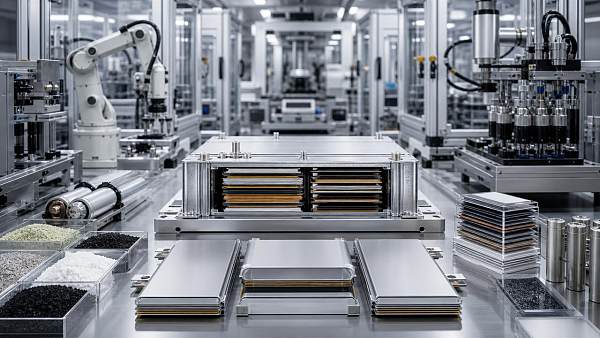
There have also been important manufacturing breakthroughs. Companies are learning how to process sensitive materials in dry-room environments, how to stack layers with tighter tolerances, and how to reduce defects during cell assembly. These developments are often less visible in public headlines than chemistry announcements, but they may be even more important for commercialization because production yield is what determines whether a technology becomes economically viable.
In short, the latest solid-state battery breakthroughs demonstrate that multiple technical pathways are advancing at once. That is encouraging. But it also means the sector is still in a competitive discovery phase rather than a fully standardized industrial phase.
If breakthroughs are real, why is mass rollout still difficult?
The answer is scale. A battery chemistry can show excellent lab performance and still fail commercially if it is too expensive, too fragile, too slow to manufacture, or too difficult to source at industrial volume. Solid-state batteries face all of these challenges in varying degrees.
First, materials costs remain high. Some solid electrolytes require expensive precursors, highly controlled processing conditions, or strict moisture management. Sulfide-based systems, for example, offer strong conductivity but can be sensitive during manufacturing. Oxide systems may be more stable in some respects but can be harder to process efficiently. Every chemistry tradeoff affects cost, throughput, and equipment needs.
Second, interface engineering remains a core bottleneck. In liquid electrolyte batteries, the liquid helps create contact across surfaces. In solid-state cells, maintaining stable contact between solid layers over repeated charging and discharging is far more demanding. Tiny defects, mechanical stress, or volume changes can degrade performance over time. This is one reason why promising prototypes do not always maintain performance in realistic use conditions.
Third, manufacturing yield is a critical barrier. Battery production is not simply about proving that one cell works. It is about making thousands, then millions, of cells with uniform quality. Even a small defect rate can destroy commercial economics. Solid-state systems often require new production tools, new quality-control methods, and tighter environmental controls than existing lithium-ion lines.
Fourth, the supply chain is not yet mature. Scaling any new battery platform requires validated material suppliers, processing equipment vendors, pack integration expertise, testing standards, and logistics capabilities. Today, much of that ecosystem is still developing. Until it matures, even strong technical progress can remain trapped in pilot or low-volume applications.
Where commercialization is likely to happen first
Mass-market passenger EVs get most of the attention, but they may not be the first large commercial winners. In many cases, solid-state batteries are more likely to appear first in premium, niche, or performance-sensitive segments where higher cost can be justified by higher value. That includes luxury EVs, motorsports, aerospace applications, defense systems, medical devices, and select consumer electronics.
This pattern is common in industrial technology adoption. New platforms often begin where performance matters more than price, then move gradually toward larger and more cost-sensitive markets as production improves. For researchers, this means that early commercialization should not be judged only by whether solid-state batteries immediately transform the mass EV market.
A more realistic lens is staged adoption. Watch for low-volume deployment, strategic partnerships, pilot fleet integration, qualification milestones, and manufacturing expansion plans. These markers often reveal more about true market readiness than ambitious launch dates alone.
What information researchers should track beyond the headlines
To evaluate whether solid-state battery breakthroughs are translating into durable industrial progress, researchers should look at a broader set of indicators. Technical claims are only one part of the picture. Commercial signals matter just as much.
One important indicator is pilot-line scale and yield performance. A company that demonstrates steady yield improvement at pre-commercial scale may be in a stronger position than one announcing exceptional single-cell metrics without manufacturing detail. Another key signal is the quality of partnerships. Collaborations with automakers, chemical suppliers, or equipment firms often show whether a technology is being validated for real-world integration.
Researchers should also monitor capital expenditure patterns. Building capacity for advanced batteries requires large investments in production lines, dry-room infrastructure, materials processing, and quality assurance systems. If companies continue to invest despite macroeconomic pressure, that can indicate confidence in long-term feasibility. On the other hand, repeated delays, shifting chemistry roadmaps, or reduced capex may suggest unresolved problems.
Regulatory and regional policy developments are also significant. Governments in Asia, Europe, and North America are competing to localize battery supply chains and reduce strategic dependence. Incentives for advanced battery manufacturing, local content requirements, and research funding can accelerate commercialization timelines in specific geographies.
How the supply chain could reshape the competitive landscape
Solid-state batteries are not only a product innovation story. They are also a supply chain reconfiguration story. If the technology scales, it could shift value among raw materials suppliers, electrolyte producers, equipment manufacturers, cell makers, and OEMs. Some incumbent lithium-ion leaders may adapt successfully, while others may face disruption if their assets are too tied to legacy production methods.
This matters for B2B intelligence because supply chain readiness will influence which regions capture the most value. Countries with strong materials processing, precision manufacturing, and battery engineering ecosystems may gain an edge. The race is therefore not just about patents or laboratory milestones. It is about industrial coordination across mining, refining, machinery, testing, and final assembly.
For exporters and importers, this creates practical implications. Companies connected to advanced ceramics, specialty chemicals, coating technologies, automation systems, and thermal management components may see new demand if solid-state battery production expands. But timing is crucial. Entering too early carries risk, while entering too late may limit strategic positioning.
How to judge hype versus credible progress
The battery sector is especially vulnerable to exaggerated claims because the commercial prize is so large. To assess whether a reported breakthrough is credible, researchers should ask a few disciplined questions. Was the result achieved in a full cell or only in a lab component? Were performance metrics measured under commercially relevant conditions? Is there evidence of cycle life, safety validation, manufacturability, and independent verification?
It is also important to distinguish between “possible,” “demonstrated,” and “scalable.” A company may prove that a material can work, but that does not mean it can be manufactured economically. Likewise, a pilot demonstration is not the same as automotive qualification, and qualification is not the same as mass production. These stages are often blurred in public communications.
The most reliable signals usually come from converging evidence: repeatable technical data, transparent manufacturing milestones, strategic customer engagement, and sustained funding. When these elements align, a breakthrough is more likely to have lasting industrial relevance.
What comes next for solid-state batteries
Over the next several years, the sector will likely move through a period of uneven but meaningful progress. Some companies will narrow their focus to specific applications rather than chasing immediate mass-market adoption. Others will pursue hybrid approaches that combine elements of current lithium-ion architecture with partial solid-state innovation to reduce risk and accelerate deployment.
This middle path may become increasingly important. The industry does not need a sudden all-or-nothing transition for solid-state technology to be transformative. Incremental integration, selective commercialization, and application-specific scaling can still reshape competitive dynamics and supply chain investment decisions.
For information researchers, the best approach is to treat solid-state battery breakthroughs as both real and conditional. Real, because the science and engineering advances are substantial. Conditional, because commercial success depends on solving manufacturing, cost, durability, and sourcing problems at the same time. Breakthroughs matter—but only when they survive industrial reality.
Conclusion: real progress, but not a simple timeline
Solid-state battery breakthroughs deserve serious attention because they reflect genuine advances in energy storage performance, safety, and design potential. The technology is no longer just a theoretical concept or a distant research ambition. It is moving steadily toward commercial relevance.
However, the gap between breakthrough and mass rollout remains wide. Cost structures, production yield, interface stability, and ecosystem maturity will determine how fast the transition happens and which companies benefit most. For researchers and market observers, the most useful conclusion is neither blind optimism nor blanket skepticism. It is disciplined realism.
In practical terms, that means watching manufacturing data as closely as lab results, tracking partnerships as carefully as patents, and evaluating supply chain readiness alongside product performance. The next chapter in advanced batteries will not be defined by one announcement. It will be defined by who can turn solid-state promise into repeatable industrial execution.
Recommended News
 Portable oxygen concentrators vary more in noise than spec sheets suggestPortable oxygen concentrators may share similar specs, yet real-world noise can vary widely. Learn what decibel ratings miss and choose a quieter, more comfortable model with confidence.
 Interactive whiteboards are easier to buy than to integrate wellInteractive whiteboards are easy to buy, but hard to integrate. Discover how to align workflows, IT, training, and ROI for smarter deployment.
![]() Medical diagnostic equipment upgrades should start with workflow bottlenecksMedical diagnostic equipment upgrades should start with workflow bottlenecks. Discover how targeted investments improve throughput, integration, ROI, and diagnostic efficiency.
Medical diagnostic equipment upgrades should start with workflow bottlenecksMedical diagnostic equipment upgrades should start with workflow bottlenecks. Discover how targeted investments improve throughput, integration, ROI, and diagnostic efficiency.![]() Eco-friendly building materials can raise budgets before they lower themEco-friendly building materials may raise upfront budgets, but they can cut long-term costs, improve compliance, and strengthen asset value. Learn when the premium truly pays off.
Eco-friendly building materials can raise budgets before they lower themEco-friendly building materials may raise upfront budgets, but they can cut long-term costs, improve compliance, and strengthen asset value. Learn when the premium truly pays off. Ergonomic workspace design fixes discomfort, but not every layout problemErgonomic workspace design improves comfort, focus, and buying decisions—but not every layout issue. Learn what upgrades work, what room limits remain, and how to choose smarter.
![]() Outdoor garden supplies demand shifts earlier than many sellers plan forOutdoor garden supplies demand is starting earlier than many sellers expect. Learn what drives the shift and how distributors, wholesalers, and agents can plan smarter to win more sales.
Outdoor garden supplies demand shifts earlier than many sellers plan forOutdoor garden supplies demand is starting earlier than many sellers expect. Learn what drives the shift and how distributors, wholesalers, and agents can plan smarter to win more sales. Sustainable home decor sells better when materials are easy to verifySustainable home decor sells better when material claims are easy to verify. Discover how traceable data, certifications, and clear sourcing build trust and boost B2B sales.
 Modern office furniture trends are changing around hybrid work needsModern office furniture trends are redefining hybrid workplaces with flexible layouts, ergonomic design, and smart tech integration. Discover what drives demand and smarter buying decisions.
 Smart street lighting projects often miss the maintenance sideSmart street lighting projects often overlook maintenance. Learn how diagnostics, spare parts, and scenario-based support improve reliability, reduce downtime, and protect long-term value.
 Solid-state battery breakthroughs are real, but mass rollout is still difficultSolid-state battery breakthroughs are real, but scaling remains difficult. Explore what’s driving progress, what blocks mass rollout, and where commercialization may happen first.
![]() Commercial LED lighting retrofits save money, but not at the same paceCommercial LED lighting can cut costs, but payback varies by warehouse, office, retail, and industrial scenario. Discover how to identify the fastest-return retrofit opportunities.
Commercial LED lighting retrofits save money, but not at the same paceCommercial LED lighting can cut costs, but payback varies by warehouse, office, retail, and industrial scenario. Discover how to identify the fastest-return retrofit opportunities. Lithium battery storage projects fail early when thermal planning is weakLithium battery storage projects fail early when thermal planning is weak. Learn the key checks to improve safety, uptime, compliance, and long-term project returns.
 Photovoltaic solar panels: when higher efficiency is not the better dealPhotovoltaic solar panels are not always best when efficiency is highest. Discover how lifecycle cost, payback, and site conditions can deliver smarter ROI and better sourcing decisions.
 Plant-based protein processing depends more on texture than many expectPlant-based protein processing relies heavily on texture to improve quality, control risk, and boost consistency. Learn how better texture management strengthens compliance and competitiveness.
 Foldable screen technology keeps improving, yet repair costs remain a problemFoldable screen technology is getting stronger and smarter, but repair costs still worry buyers. Discover who should buy, key ownership risks, and how to choose wisely.
 Next-gen wireless charging sounds convenient, but how efficient is it?Next-gen wireless charging sounds effortless, but how efficient is it in real use? Explore heat, power loss, alignment, and the market factors shaping adoption.
![]() Wearable technology is improving fast, but comfort still decides adoptionWearable technology is evolving fast, but comfort still drives real adoption. Explore how design, fit, battery life, and daily usability shape the wearables consumers truly keep using.
Wearable technology is improving fast, but comfort still decides adoptionWearable technology is evolving fast, but comfort still drives real adoption. Explore how design, fit, battery life, and daily usability shape the wearables consumers truly keep using. Smart home devices wholesale margins shrink faster than many expectSmart home devices wholesale margins are shrinking fast. Learn what causes profit erosion, which categories face price wars, and how distributors can protect growth and improve sourcing decisions.
 Agri-PV systems make sense only when land use goals are clearAgri-PV systems create business value only when land use goals are clearly defined. Discover how aligned energy, farming, and ESG priorities reduce risk and improve returns.
 Organic fertilizers vs synthetic inputs: where does the payoff change?Organic fertilizers vs synthetic inputs: discover where costs, compliance, soil health, and market premiums shift the payoff—and how to choose the smartest long-term strategy.
 Smart classroom solutions often underdeliver without teacher-side usabilitySmart classroom solutions often fail when teacher-side usability is ignored. Discover scenario-based insights to improve adoption, reduce friction, and maximize classroom ROI.











Popular Tags
Global Trade Insights & Industry
Our mission is to empower global exporters and importers with data-driven insights that foster strategic growth.
Search News
Popular Tags
Industry Overview
The global commercial kitchen equipment market is projected to reach $112 billion by 2027. Driven by urbanization, the rise of e-commerce food delivery, and strict hygiene regulations.