

Smart street lighting projects often miss the maintenance side
Smart street lighting projects often focus on deployment speed, connectivity, and energy savings, but long-term performance depends on what happens after installation. For after-sales maintenance teams, Smart street lighting is not just about smart controls—it is about diagnostics, spare parts, service response, and lifecycle reliability. Ignoring maintenance can turn an efficient system into a costly burden, making support strategy a critical part of every project.
Why maintenance priorities change from one project scenario to another
Not every Smart street lighting project fails for the same reason, and not every site needs the same service model. A downtown boulevard with decorative poles, dense traffic, and high public visibility creates very different maintenance pressure from a logistics park, a residential district, or a highway corridor. For after-sales teams, this matters because fault response, spare part planning, software support, and inspection routines must match the actual operating environment.
In practice, the biggest mistake in Smart street lighting is assuming that all luminaires, controllers, and communication nodes can be maintained with one generic workflow. Projects vary by pole density, access conditions, network architecture, weather exposure, vandalism risk, and the consequences of downtime. A failed lamp in a low-traffic industrial lane is inconvenient; a failed cluster near a city center, hospital route, or school zone can quickly become a public safety issue and a political problem.
That is why maintenance teams should evaluate Smart street lighting by scenario, not only by equipment specifications. The right question is not simply whether the system is intelligent. The right question is whether the support model is realistic for the place where it will operate for the next five to ten years.
Typical Smart street lighting scenarios and what maintenance teams should expect
The most common Smart street lighting applications can be grouped into several operational settings. Each one affects maintenance cost, staffing, service-level expectations, and spare part strategy.
Scenario 1: Urban core projects need service speed more than feature depth
In dense city environments, Smart street lighting is often deployed to support energy management, adaptive dimming, and centralized oversight. However, maintenance teams quickly discover that public visibility is the defining factor. A communication node outage or a gateway fault can affect many lamps at once, and citizens notice immediately. In these settings, after-sales success depends less on how many smart features were sold and more on whether technicians can isolate failures within minutes.
For this scenario, remote diagnostics should be considered essential rather than optional. Maintenance staff need device-level status, fault history, power anomalies, and communication health data from the platform. Without this visibility, field teams waste time checking drivers, controllers, power supply lines, and software settings one by one. Urban Smart street lighting also benefits from modular hardware because replacing a controller or luminaire should not require lengthy road closures or specialized reconfiguration.
A practical rule for city-center deployments is simple: if the system cannot support quick fault localization and consistent spare availability, it is not truly optimized for that scene.
Scenario 2: Residential areas demand stable operation and simple maintenance routines
Residential Smart street lighting has a different pressure profile. Complaints often arise not from large network failures but from repeated small issues: inconsistent dimming times, individual lamp outages, sensor misbehavior, or brightness levels that residents perceive as unsafe. Here, the maintenance challenge is not only technical. It also involves expectation management and service consistency.
After-sales teams serving housing communities should prioritize products with straightforward replacement procedures, common component compatibility, and intuitive commissioning tools. If every local repair requires software specialists, proprietary access permissions, or hard-to-find parts, maintenance costs climb quickly. Smart street lighting in residential zones should also have clear fallback modes. When communications fail, lamps should continue to operate on safe schedules instead of defaulting into unpredictable behavior.
This is a scenario where maintenance documentation matters greatly. Service manuals, wiring consistency, and standardized pole-level layouts make a significant difference when teams must resolve faults across many scattered streets with limited time windows.
Scenario 3: Industrial parks and logistics zones need reliability under harsh operating conditions
Industrial and logistics environments often run long hours, involve heavy vehicles, and expose equipment to dust, vibration, humidity, and electrical fluctuations. In these conditions, Smart street lighting must be judged by service resilience more than by visual sophistication. A maintenance-friendly system in a logistics corridor should offer durable enclosures, surge protection, robust connectors, and platform alerts that help technicians identify recurring risk patterns.
For after-sales personnel, one of the smartest approaches is zone-based maintenance planning. Instead of reacting to each lamp independently, teams should group assets by loading area, perimeter road, warehouse frontage, or truck circulation path. That makes it easier to compare failure trends, identify infrastructure-related issues, and organize preventive inspections. In industrial Smart street lighting, patterns usually matter more than isolated incidents.
Another important consideration is maintenance access timing. Repairs may need to avoid shift changes, loading peaks, or forklift activity. Therefore, projects in this scenario should include service procedures that align with operational schedules, not just technical specifications.
Scenario 4: Highway and remote-road deployments require low-intervention designs
Highways and remote arterial roads create one of the hardest maintenance environments for Smart street lighting. Access is expensive, technician safety is a concern, and a single outage may take longer to inspect simply because of travel distance and traffic control requirements. In such scenarios, a highly complex architecture can become a maintenance burden if it introduces too many failure points.
The best fit for this scene is usually a low-intervention model: long-life luminaires, dependable communication, effective surge protection, and strong alarm logic that distinguishes between lamp failure, power loss, and control failure. After-sales teams should ask whether the project design minimizes emergency visits and supports planned maintenance windows. Smart street lighting along highways should not depend on constant on-site adjustment.
This is also where lifecycle cost becomes clearer than purchase price. A system that is slightly more expensive upfront but reduces field visits can be much more economical over the full service period.
Scenario 5: Campuses and mixed-use districts create integration-heavy maintenance tasks
In campuses, ports, commercial complexes, and mixed-use smart districts, Smart street lighting is often connected with sensors, security platforms, environmental monitoring, or broader smart city systems. These projects look attractive on paper because they promise data value beyond illumination. Yet for maintenance teams, integration multiplies responsibility. A fault may not originate in the lamp at all; it may involve middleware, network permissions, platform updates, or third-party interfaces.
In this scenario, clear vendor responsibility boundaries are critical. After-sales staff should know which team handles gateways, which team supports cloud software, which supplier covers sensor modules, and how escalation works when one subsystem affects another. Smart street lighting projects with many integrations should always include compatibility records, firmware management processes, and backup operating logic.
If those service responsibilities are vague, even a small incident can lead to long delays and dispute-driven downtime.
How maintenance requirements differ by project object and stakeholder
The same Smart street lighting system may be judged differently by municipalities, property managers, industrial operators, and contractors. After-sales maintenance teams should align support plans with the stakeholder that owns the service risk.
Common misjudgments that make Smart street lighting harder to maintain
Several recurring errors weaken Smart street lighting performance after launch. The first is overvaluing advanced features while undervaluing field service practicality. A system may support sophisticated analytics, but if controllers are difficult to replace or alarms are too vague, maintenance efficiency suffers.
The second mistake is treating spare parts as an afterthought. Projects often approve luminaires and software but fail to define stock levels for drivers, communication modules, surge protectors, connectors, and power components. As a result, repair cycles stretch unnecessarily.
The third is ignoring interoperability risk. Smart street lighting frequently involves multiple vendors, and maintenance teams inherit the complexity. Without firmware discipline, interface testing, and escalation rules, minor updates can trigger major support issues.
The fourth is assuming remote monitoring alone solves maintenance. Monitoring is valuable, but it does not replace service process design. Teams still need response thresholds, technician training, route planning, and closure verification.
Practical selection checklist for after-sales maintenance teams
When reviewing or supporting a Smart street lighting project, maintenance teams should confirm several scene-based questions before accepting the service burden:
- What is the real downtime tolerance for this location?
- Can faults be diagnosed remotely at node, segment, and power level?
- Are key components modular and locally replaceable?
- Is there a defined spare parts list based on failure probability?
- What fallback behavior applies if communications or software fail?
- Who owns each layer of support across hardware, connectivity, and platform?
- Do field technicians have access to current diagrams, firmware records, and maintenance history?
Final takeaway: match Smart street lighting support to the real scene
Smart street lighting creates value only when long-term operation is as carefully planned as installation. For after-sales maintenance personnel, the best projects are not always the ones with the most features. They are the ones where scenario fit is clear, service logic is realistic, and maintenance responsibilities are built into the project from the beginning.
Whether the site is a central business district, a residential network, an industrial park, a highway corridor, or a mixed-use campus, the maintenance model should change with the environment. That scene-based mindset helps teams reduce downtime, control lifecycle cost, and protect the reliability promise behind Smart street lighting.
For organizations seeking stronger market visibility around infrastructure, maintenance, and industrial intelligence, platforms such as GTIIN and TradeVantage help connect technical content with global buyers, project stakeholders, and decision-makers. In a market where trust signals, operational insight, and search visibility all matter, pairing solid field performance with authoritative information exposure can support both service excellence and business growth.
Recommended News
 Portable oxygen concentrators vary more in noise than spec sheets suggestPortable oxygen concentrators may share similar specs, yet real-world noise can vary widely. Learn what decibel ratings miss and choose a quieter, more comfortable model with confidence.
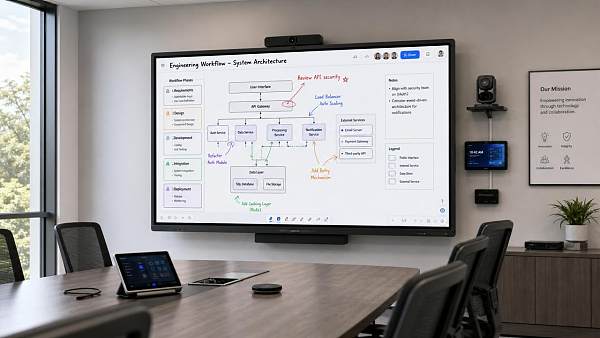
 Interactive whiteboards are easier to buy than to integrate wellInteractive whiteboards are easy to buy, but hard to integrate. Discover how to align workflows, IT, training, and ROI for smarter deployment.
![]() Medical diagnostic equipment upgrades should start with workflow bottlenecksMedical diagnostic equipment upgrades should start with workflow bottlenecks. Discover how targeted investments improve throughput, integration, ROI, and diagnostic efficiency.
Medical diagnostic equipment upgrades should start with workflow bottlenecksMedical diagnostic equipment upgrades should start with workflow bottlenecks. Discover how targeted investments improve throughput, integration, ROI, and diagnostic efficiency.![]() Eco-friendly building materials can raise budgets before they lower themEco-friendly building materials may raise upfront budgets, but they can cut long-term costs, improve compliance, and strengthen asset value. Learn when the premium truly pays off.
Eco-friendly building materials can raise budgets before they lower themEco-friendly building materials may raise upfront budgets, but they can cut long-term costs, improve compliance, and strengthen asset value. Learn when the premium truly pays off. Ergonomic workspace design fixes discomfort, but not every layout problemErgonomic workspace design improves comfort, focus, and buying decisions—but not every layout issue. Learn what upgrades work, what room limits remain, and how to choose smarter.
![]() Outdoor garden supplies demand shifts earlier than many sellers plan forOutdoor garden supplies demand is starting earlier than many sellers expect. Learn what drives the shift and how distributors, wholesalers, and agents can plan smarter to win more sales.
Outdoor garden supplies demand shifts earlier than many sellers plan forOutdoor garden supplies demand is starting earlier than many sellers expect. Learn what drives the shift and how distributors, wholesalers, and agents can plan smarter to win more sales. Sustainable home decor sells better when materials are easy to verifySustainable home decor sells better when material claims are easy to verify. Discover how traceable data, certifications, and clear sourcing build trust and boost B2B sales.
 Modern office furniture trends are changing around hybrid work needsModern office furniture trends are redefining hybrid workplaces with flexible layouts, ergonomic design, and smart tech integration. Discover what drives demand and smarter buying decisions.
 Smart street lighting projects often miss the maintenance sideSmart street lighting projects often overlook maintenance. Learn how diagnostics, spare parts, and scenario-based support improve reliability, reduce downtime, and protect long-term value.
 Solid-state battery breakthroughs are real, but mass rollout is still difficultSolid-state battery breakthroughs are real, but scaling remains difficult. Explore what’s driving progress, what blocks mass rollout, and where commercialization may happen first.
![]() Commercial LED lighting retrofits save money, but not at the same paceCommercial LED lighting can cut costs, but payback varies by warehouse, office, retail, and industrial scenario. Discover how to identify the fastest-return retrofit opportunities.
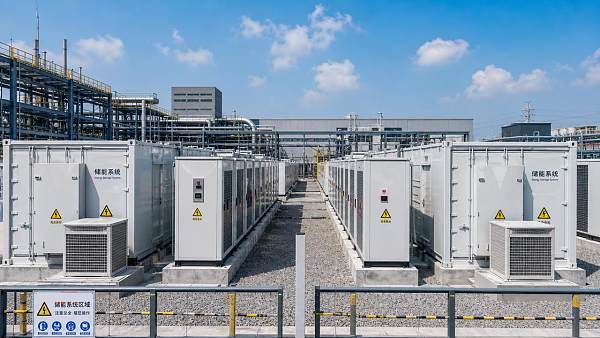
Commercial LED lighting retrofits save money, but not at the same paceCommercial LED lighting can cut costs, but payback varies by warehouse, office, retail, and industrial scenario. Discover how to identify the fastest-return retrofit opportunities. Lithium battery storage projects fail early when thermal planning is weakLithium battery storage projects fail early when thermal planning is weak. Learn the key checks to improve safety, uptime, compliance, and long-term project returns.
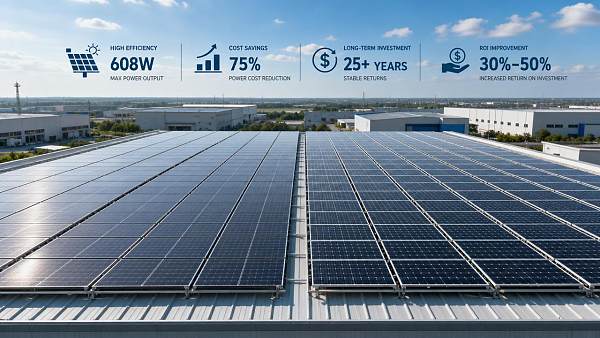
 Photovoltaic solar panels: when higher efficiency is not the better dealPhotovoltaic solar panels are not always best when efficiency is highest. Discover how lifecycle cost, payback, and site conditions can deliver smarter ROI and better sourcing decisions.
 Plant-based protein processing depends more on texture than many expectPlant-based protein processing relies heavily on texture to improve quality, control risk, and boost consistency. Learn how better texture management strengthens compliance and competitiveness.
 Foldable screen technology keeps improving, yet repair costs remain a problemFoldable screen technology is getting stronger and smarter, but repair costs still worry buyers. Discover who should buy, key ownership risks, and how to choose wisely.
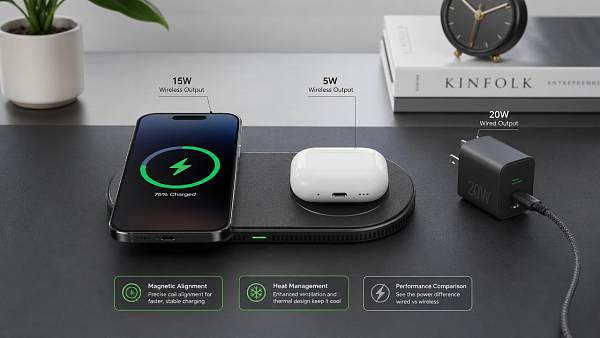
 Next-gen wireless charging sounds convenient, but how efficient is it?Next-gen wireless charging sounds effortless, but how efficient is it in real use? Explore heat, power loss, alignment, and the market factors shaping adoption.
![]() Wearable technology is improving fast, but comfort still decides adoptionWearable technology is evolving fast, but comfort still drives real adoption. Explore how design, fit, battery life, and daily usability shape the wearables consumers truly keep using.
Wearable technology is improving fast, but comfort still decides adoptionWearable technology is evolving fast, but comfort still drives real adoption. Explore how design, fit, battery life, and daily usability shape the wearables consumers truly keep using. Smart home devices wholesale margins shrink faster than many expectSmart home devices wholesale margins are shrinking fast. Learn what causes profit erosion, which categories face price wars, and how distributors can protect growth and improve sourcing decisions.
 Agri-PV systems make sense only when land use goals are clearAgri-PV systems create business value only when land use goals are clearly defined. Discover how aligned energy, farming, and ESG priorities reduce risk and improve returns.
 Organic fertilizers vs synthetic inputs: where does the payoff change?Organic fertilizers vs synthetic inputs: discover where costs, compliance, soil health, and market premiums shift the payoff—and how to choose the smartest long-term strategy.
 Smart classroom solutions often underdeliver without teacher-side usabilitySmart classroom solutions often fail when teacher-side usability is ignored. Discover scenario-based insights to improve adoption, reduce friction, and maximize classroom ROI.












Popular Tags
Global Trade Insights & Industry
Our mission is to empower global exporters and importers with data-driven insights that foster strategic growth.
Search News
Popular Tags
Industry Overview
The global commercial kitchen equipment market is projected to reach $112 billion by 2027. Driven by urbanization, the rise of e-commerce food delivery, and strict hygiene regulations.