

State Grid’s $680M Embodied AI Procurement Opens Export Path
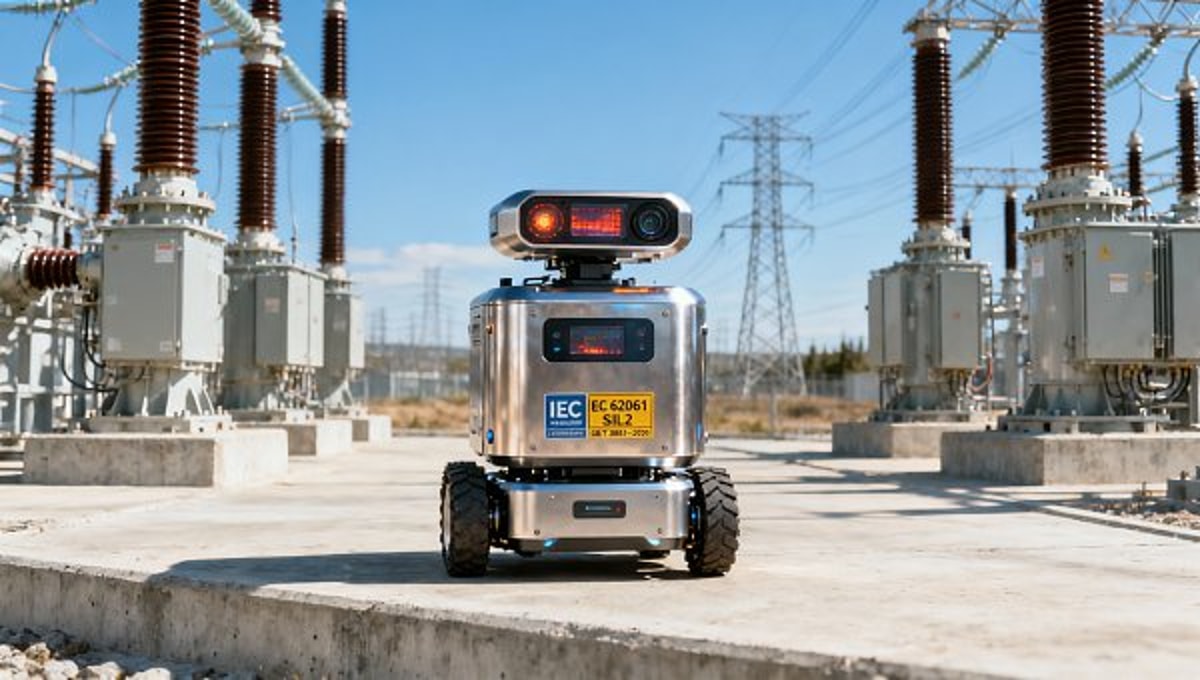
On April 30, 2026, State Grid Corporation of China launched a landmark procurement initiative for embodied intelligent inspection equipment — a $680 million framework agreement tender. This move signals heightened demand for industrial robots and related subsystems compliant with international functional safety (IEC 62061 SIL2) and electromagnetic compatibility (GB/T 38851–2020) standards — directly impacting manufacturers targeting energy infrastructure markets in Europe, the UK, and North America.
Event Overview
On April 30, 2026, State Grid issued the Framework Agreement Procurement Announcement for Embodied Intelligent Inspection Equipment (2026). The first-phase procurement value is RMB 6.8 billion (approx. USD 680 million). The announcement explicitly requires bidders’ products to hold IEC 62061 SIL2 functional safety certification and compliance with GB/T 38851–2020, China’s national standard for electromagnetic compatibility of intelligent robots.
Industries Affected by This Procurement
Industrial robot manufacturers (OEMs): Directly affected as primary suppliers. Compliance with IEC 62061 SIL2 — a rigorous functional safety standard widely recognized in EU and UK energy sectors — is now a mandatory qualification, not optional. Non-compliant models are excluded from bidding.
Machine vision system suppliers: Vision modules integrated into inspection robots must contribute to SIL2-certified safety functions (e.g., emergency stop triggering, obstacle detection with defined failure modes). Standalone vision components without traceable safety architecture documentation may fail integration validation.
Servo system and motion control vendors: These components fall under the scope of functional safety assessment when used in safety-critical motion tasks (e.g., robotic arm positioning near live equipment). Suppliers must provide evidence of systematic capability per IEC 61508 and hardware fault tolerance metrics aligned with SIL2 requirements.
EMC testing and certification service providers: Demand for GB/T 38851–2020 testing capacity is rising, particularly among labs accredited for both domestic and international standards (e.g., ISO/IEC 17025 with scope covering GB/T 38851 and EN 61000-6-2/6-4). Domestic labs lacking dual accreditation may face bottlenecks in supporting export-ready submissions.
What Relevant Enterprises or Practitioners Should Focus On — And How to Respond
Monitor official updates to State Grid’s technical specification addenda
The framework agreement allows for future volume orders and variant configurations. Any revisions to safety or EMC test protocols — especially those referencing harmonized European standards (e.g., EN 62061) — will indicate alignment pathways for CE/UKCA-marked products. Subscribers should track State Grid’s e-procurement platform for specification supplements issued within Q3 2026.
Prioritize product families with existing CE/UKCA/UL certification coverage
Manufacturers holding CE (per Machinery Directive + EN 62061), UKCA, or UL 1740 certifications should map their certified models against State Grid’s listed functional requirements (e.g., autonomous navigation under partial visibility, thermal anomaly recognition latency ≤ 200 ms). Cross-referencing reduces retesting time and strengthens bid responsiveness.
Distinguish between procurement signal and near-term revenue impact
This is a framework agreement — not a firm order. Actual delivery timelines, volume tranches, and vendor selection outcomes remain subject to evaluation cycles extending through late 2026. Companies should treat this as a strategic alignment milestone, not an immediate sales trigger.
Initiate internal cross-functional readiness checks — now
Engineering, quality assurance, and regulatory affairs teams should jointly audit: (1) current safety case documentation depth; (2) availability of SIL2-ready firmware versions; (3) traceability of EMC test reports to GB/T 38851–2020 clauses. Gaps identified before July 2026 allow time for lab engagement and documentation remediation ahead of potential follow-up tenders.
Editorial Perspective / Industry Observation
Observably, this procurement is less about immediate deployment and more about standard-setting acceleration. By mandating IEC 62061 SIL2 — a standard historically dominant in process industries but newly enforced in grid inspection — State Grid is de facto raising the baseline for robotics interoperability in critical infrastructure. Analysis shows that the requirement does not merely reflect domestic safety policy; it mirrors contractual expectations increasingly embedded in overseas EPC contracts for substations and transmission corridors. From an industry perspective, this signals a structural shift: compliance is becoming a prerequisite for market access, not a differentiator. It is currently best understood as a strong regulatory and commercial signal — not yet a realized revenue stream — but one demanding proactive technical alignment.
Conclusion
This procurement marks a formal inflection point where domestic infrastructure demand begins to enforce global-grade functional safety and EMC discipline across China’s robotics supply chain. Its significance lies not in short-term contract awards, but in its role as a catalyst for upstream standardization. For industry stakeholders, the event is better interpreted as a calibration benchmark — indicating which technical capabilities are now table stakes for participation in high-integrity energy automation markets, both domestically and internationally.
Source Attribution
Main source: State Grid Corporation of China, Framework Agreement Procurement Announcement for Embodied Intelligent Inspection Equipment (2026), published April 30, 2026. Note: Tender evaluation results, final awarded vendors, and subsequent volume orders remain pending and require ongoing observation.
Recommended News
 CMDE Adds 74 External Experts to Boost Med Device Export RegistrationCMDE Adds 74 External Experts to Boost Med Device Export Registration — accelerate FDA/EU/GCC submissions for medical equipment & rehab devices.
 MIIT Launches Space-Ground Compute & Power CoordinationMIIT Launches Space-Ground Compute & Power Coordination—unlocking export opportunities in liquid cooling, optical modules & high-efficiency servers for hot-humid markets.
 2026 Bio-based Raw Material Supplier Guide Released2026 Bio-based Raw Material Supplier Guide: Discover the official White List for PLA, PHA, bamboo fiber & more — boost EU/US compliance and procurement efficiency now.
 China Launches 'Model-Data Resonance' Initiative for AI+Manufacturing StandardsChina's 'Model-Data Resonance' initiative launches AI+Manufacturing standards — CESI/AI-MFG-2026 ensures plug-and-play interoperability for CNC, AGVs, MES & more across global smart factories.
 China’s First Embodied AI Robot Export Liability Insurance Launched in GuangxiChina’s first Embodied AI Robot Export Liability Insurance launched in Guangxi—key for robot exporters targeting EU, US & Saudi markets. Secure compliance-backed coverage now.
 State Grid’s $680M Embodied AI Procurement Opens Export PathState Grid’s $680M embodied AI procurement sets global safety standards — IEC 62061 SIL2 & GB/T 38851 compliance unlocks EU/UK/NA export opportunities.
 WeChat Pay Cross-Border B2B QR Code Access in 5 ASEAN CountriesWeChat Pay Cross-Border B2B QR Code Access now live in 5 ASEAN countries — enabling real-time, local-currency settlements up to USD 50,000. Boost your hardware, garden & appliance exports today!
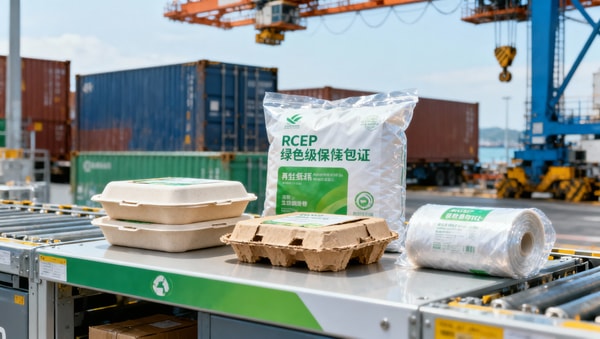
 RCEP Green Packaging Mutual Recognition Extended to AU, NZ, JP, KRRCEP Green Packaging Mutual Recognition now extends to AU, NZ, JP, KR — enabling customs-exempt clearance for certified Chinese food, infant & supplement packaging. Act now.
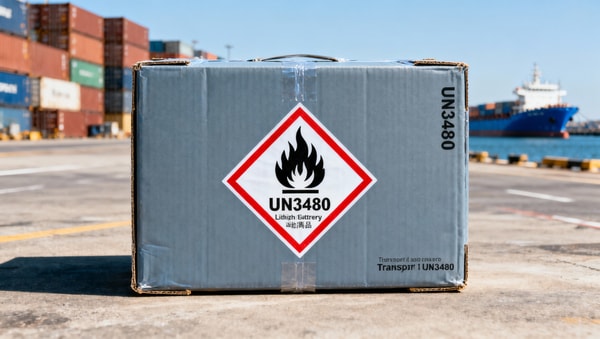
 IMDG Code 41-24 Enforces New UN3480 Lithium Battery Labels GloballyIMDG Code 41-24 mandates new UN3480 lithium battery labels globally from 1 May 2026—ensure compliance now to avoid shipment delays, rejections & penalties.
 CDE Adds 74 International Experts to Accelerate MedTech Export RegistrationCDE adds 74 international experts to accelerate MedTech export registration—key for IVD, imaging & rehab device exporters targeting FDA, EU MDR, Health Canada.
 MIIT Launches Space-Ground Computing & Green Data Center Export PlanMIIT's Space-Ground Computing & Green Data Center Export Plan unlocks global opportunities for liquid-cooled servers, PV direct-drive power, and satellite-ground scheduling—learn key impacts now.
 2026 Bio-based Raw Material Supplier Guide ReleasedBio-based raw material supplier guide 2026: Discover 47 ISO 16128-certified Chinese PLA, PBAT & PHA suppliers trusted by CBL, BPI & JIS.
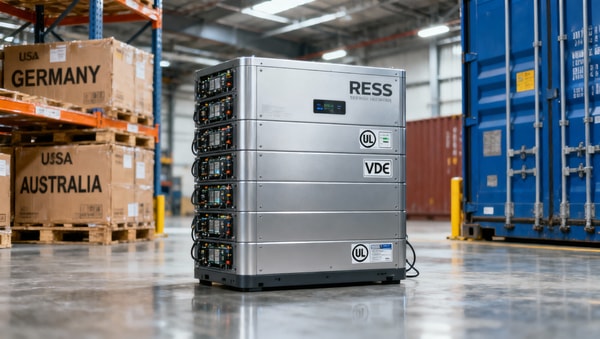
 Q1 2026 Lithium Battery Export Prices Rise 11.3% YoYQ1 2026 Lithium Battery Export Prices Rise 11.3% YoY — discover why residential energy storage systems (RESS) drove the surge and what it means for exporters, suppliers & integrators.
 ‘Modular-Data Resonance’ Initiative Launches AI+Manufacturing Interface StandardModular-Data Resonance standard GB/T 45288-2026 launches AI+manufacturing interoperability—key for smart equipment exporters, MES/SCADA & AI model developers targeting EU/US markets.
 China's First Embodied AI Robot Export Liability Insurance Launched in GuangxiChina's first Embodied AI Robot Export Liability Insurance launched in Guangxi—key for robotics exporters targeting EU & SEA markets. Get compliant, certified, and covered.
 State Grid Launches $682M Embodied AI Inspection Equipment ProcurementState Grid’s $940M embodied AI inspection tender mandates IEC 62443-4-2 & ISO 13482 certs—key for robotics makers and global compliance teams. Act now.
 WeChat Pay Cross-Border B2B QR Code Live in 5 ASEAN CountriesWeChat Pay Cross-Border B2B QR Code is now live in 5 ASEAN countries — enabling fast, low-cost, local-currency settlements for SMEs and trade firms. Discover how it cuts costs by 47% and accelerates procurement.
 RCEP Green Packaging Mutual Recognition Extended to AU, NZ, JP, KRRCEP Green Packaging Mutual Recognition now extends to AU, NZ, JP, KR — unlock faster customs clearance & zero on-site inspection for compliant Chinese food packaging exports.
 IMDG Code 41-24 Enforces UN3480 Lithium Battery Labeling GloballyIMDG Code 41-24 enforces global UN3480 lithium battery labeling, packaging & e-CMR rules from 1 May 2026—act now to avoid port rejections and delays.
 Medical diagnostic equipment buying mistakes often start with workflowMedical diagnostic equipment buying mistakes often begin with workflow gaps. Learn how to compare systems, uncover hidden costs, and choose suppliers that fit real clinical operations.
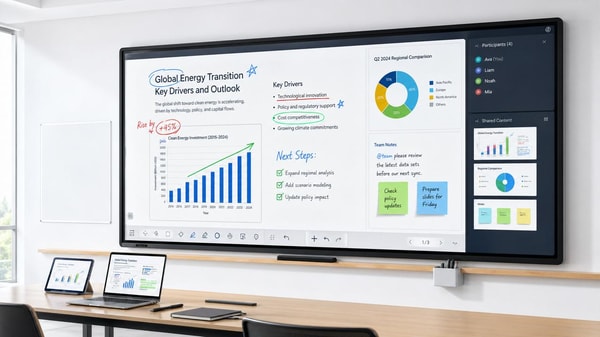
 Interactive whiteboards are improving, but teacher adoption is unevenInteractive whiteboards are improving fast, but teacher adoption remains uneven. Explore what drives classroom success, ROI, and smarter edtech implementation.













Popular Tags
Global Trade Insights & Industry
Our mission is to empower global exporters and importers with data-driven insights that foster strategic growth.
Search News
Popular Tags
Industry Overview
The global commercial kitchen equipment market is projected to reach $112 billion by 2027. Driven by urbanization, the rise of e-commerce food delivery, and strict hygiene regulations.