

Car Maintenance Basics: What Should Be Done First?
Car maintenance starts with the essentials: checking car batteries, radiators, and lubricants before moving to advanced repairs. For buyers, distributors, and market researchers, understanding what should be done first helps reduce downtime, control costs, and evaluate supply opportunities across the broader automotive and industrial landscape.
In B2B automotive supply chains, the first step in maintenance is not only a technical issue but also a purchasing and risk-management decision. Fleet operators, parts distributors, workshop managers, and sourcing teams all need a clear sequence: diagnose the power system, inspect cooling performance, verify lubricant condition, and only then consider deeper mechanical intervention. This approach helps avoid unnecessary parts replacement, shortens service cycles, and improves inventory planning.
For commercial decision-makers, early-stage maintenance priorities also reveal demand patterns. Battery turnover, coolant system wear, and lubricant replacement cycles influence procurement volumes, seasonal stocking, aftersales support, and cross-border sourcing strategies. A structured maintenance-first view makes it easier to compare suppliers, estimate service frequency, and identify where recurring parts demand is likely to emerge.
Why the First Maintenance Step Matters in Automotive Operations
The question “what should be done first” matters because initial inspection determines whether a vehicle needs simple preventive care or expensive repair. In many cases, 3 basic checks—battery health, coolant circulation, and lubricant quality—can identify the root of starting issues, overheating, or abnormal engine noise without dismantling major components.
For procurement teams and distributors, these first checks correspond to three high-frequency product categories. Car batteries often require review every 12–36 months depending on climate and usage intensity. Coolant condition is commonly assessed every 6–12 months, while engine oil and related lubricants may follow service intervals of 5,000–15,000 km, depending on oil grade, operating load, and vehicle type.
From a commercial perspective, prioritizing essential maintenance improves uptime. A distributor serving workshops or fleet customers can reduce emergency orders if fast-moving SKUs are aligned with real maintenance sequences. This is especially important when lead times for imported aftermarket parts range from 2–6 weeks, while customer expectations for service turnaround are often within 24–72 hours.
The cost of getting the sequence wrong
When maintenance begins with advanced repairs instead of basic checks, costs rise quickly. A workshop may replace sensors, hoses, or even internal engine parts when the actual issue is low coolant, a weak battery, or degraded lubricant. For buyers managing bulk supply, this creates distorted demand signals and can lead to overstocking low-turn items while understocking essential consumables.
A practical rule is to start with non-invasive inspection before labor-intensive work. This reduces diagnostic time, often by 20–40 minutes per vehicle in routine service environments, and supports better service bay utilization. Across fleets of 50, 100, or 500 vehicles, that time difference becomes commercially significant.
Key business implications
- Lower unplanned downtime through early detection of consumable-related failures.
- More accurate demand forecasting for batteries, coolant products, filters, and lubricants.
- Improved supplier negotiation by linking purchase cycles to real maintenance intervals.
- Better customer retention for service providers that can solve common issues in 1 visit instead of 2–3 visits.
This is why the first step in car maintenance should be viewed as both a technical screening process and a commercial filter. It determines labor allocation, replacement urgency, parts sourcing priorities, and aftersales support planning across the automotive value chain.
What Should Be Checked First: Batteries, Radiators, and Lubricants
The first maintenance stage should focus on three systems that affect immediate drivability and operational safety: battery condition, radiator and coolant performance, and lubricant status. These items are easy to inspect relative to deeper engine or transmission work, yet they influence starting reliability, thermal stability, and wear control across nearly every passenger and light commercial vehicle category.
A weak battery may show up as slow cranking, dim electrical response, or voltage loss after short idle periods. In practical workshop terms, a battery below about 12.4V at rest may already indicate undercharge or deterioration, while charging system output usually needs to remain in a healthy band near 13.5–14.8V when the engine is running. These thresholds guide whether the next step is charging, replacement, or alternator inspection.
Radiator and coolant checks come next because overheating can escalate from a minor maintenance issue to a major repair event. Coolant should be inspected for level, discoloration, contamination, and leak signs around hoses, clamps, and the radiator core. In many operating environments, coolant replacement cycles fall within 2–5 years, but harsh temperature swings and heavy-duty use can shorten the interval.
Lubricants complete the essential first-round check. Engine oil that is too low, excessively dark, contaminated, or outside the recommended viscosity grade increases friction, heat, and component wear. For procurement managers, this means lubricant category planning should consider vehicle age, climate range, and service intensity rather than simply buying by price point.
Initial maintenance priorities by component
The table below shows how these three core checks align with risk level, inspection method, and likely follow-up action in a commercial service setting.
The main conclusion is straightforward: if the goal is to restore reliability quickly, the battery, radiator, and lubricants should be checked before more complex systems. This sequence is also commercially useful because it maps directly to repeat-purchase items with predictable replacement cycles.
A simple first-inspection order
- Check battery voltage, terminal condition, and charging behavior.
- Inspect coolant level, radiator surfaces, hose integrity, and leak points.
- Confirm engine oil level, color, service interval, and grade suitability.
- Only after these steps, move to belts, filters, ignition, sensors, or internal diagnostics.
Procurement and Distribution Considerations for Essential Maintenance Parts
For B2B buyers, understanding what should be done first in car maintenance helps define which SKUs deserve the highest stocking priority. Batteries, coolant products, lubricants, oil filters, hose clamps, and related inspection tools tend to move faster than deeper repair components because they support preventive maintenance as well as first-response servicing.
Inventory planning should balance turnover rate with shelf-life and storage requirements. For example, batteries require stricter storage monitoring than packaged lubricants, especially if warehoused for more than 3–6 months. Coolants need compatibility review by formulation type, while engine oils must be grouped by viscosity grades such as 5W-30, 10W-40, or other regionally common specifications.
Distributors serving workshops or regional dealers should also segment demand by vehicle profile. Urban passenger cars may create frequent battery and oil demand, while commercial fleets often generate higher recurring need for coolant management, heavy-use lubrication, and faster replenishment cycles. This segmentation can improve fill rate and reduce dead stock by 10–20% in well-managed category planning.
Key sourcing factors for first-line maintenance items
The following procurement matrix helps buyers compare essential maintenance categories using practical B2B criteria rather than generic quality claims.
A useful purchasing takeaway is that first-line maintenance items should be sourced as a category bundle, not as isolated SKUs. Bundled planning supports workshop efficiency, improves cross-selling to distributors, and strengthens reorder visibility. For trade-focused businesses, this also creates stronger listing opportunities, more relevant inquiries, and better alignment between market intelligence and actual buying behavior.
Questions buyers should ask suppliers
- What is the standard lead time for replenishment: 7 days, 15 days, or longer?
- Can the supplier support mixed orders across batteries, coolant products, and lubricants?
- Are packaging formats available for retail, workshop, and fleet consumption?
- What technical documentation is provided for compatibility, storage, and handling?
These questions help buyers move from price comparison to operational fit. In practical terms, the best supplier is often the one that can maintain consistency across 3 priorities: product reliability, replenishment speed, and technical clarity for downstream users.
A Practical Maintenance Workflow for Workshops, Fleets, and Evaluators
A standard workflow helps service teams and business evaluators determine what should be done first without wasting labor. In most cases, the process can be completed in 4 stages: intake review, essential system inspection, consumable decision, and escalation to advanced diagnostics if needed. This structure supports repeatability across independent garages, fleet service centers, and regional distribution partners.
Stage 1: Intake and symptom screening
The service team should record starting issues, overheating events, warning lights, unusual smells, and recent service history. A 5-minute intake process can prevent misdiagnosis because it links symptoms to recent operating patterns such as long idle time, heavy traffic, high ambient heat, or delayed oil changes.
Stage 2: Core inspection of essential systems
This stage focuses on battery voltage, terminal condition, coolant level and leaks, radiator airflow condition, oil level, and visible contamination. In routine service settings, the core check can often be completed in 15–25 minutes. That makes it an ideal first-line process for high-throughput workshops or fleet maintenance centers handling multiple vehicles per day.
Stage 3: Immediate service or replacement decision
If the issue is traced to weak battery output, low coolant, radiator leakage, or degraded lubricants, corrective action should happen before advanced diagnostics. This is the point where workshops can convert inspection into saleable service packages, and where distributors can align inventory with actual maintenance demand instead of theoretical parts movement.
Suggested operational checklist
- Confirm vehicle age, mileage band, and recent maintenance record.
- Test battery status and inspect visible electrical contact points.
- Review cooling system level, pressure indicators, and hose condition.
- Check oil level, condition, leakage signs, and replacement interval.
- Escalate to ignition, charging, sensor, belt, or internal diagnostics only if the essentials pass inspection.
This workflow is useful not only for technicians but also for commercial evaluators. It creates a measurable basis for comparing service capability across vendors, estimating consumable demand, and identifying whether a supplier understands high-frequency maintenance categories or focuses only on low-volume repair parts.
For importers and exporters working in the automotive aftermarket, the workflow also highlights where value-added information matters. Product listings supported by maintenance interval guidance, compatibility notes, and service-use scenarios are generally more useful to buyers than listings that only provide broad claims without application context.
Common Mistakes, Risk Controls, and Market Implications
One common mistake in car maintenance is assuming that visible symptoms always indicate complex mechanical failure. A no-start condition may be traced to a battery nearing end-of-life. Repeated overheating may come from coolant loss or blocked radiator airflow rather than catastrophic engine damage. Increased noise or roughness may be linked to delayed oil service rather than immediate component failure.
Another mistake is treating all vehicles the same. Maintenance priorities can change across climates, operating cycles, and load profiles. In colder markets, battery performance may deteriorate faster during winter peaks. In hotter regions, radiator and coolant stress becomes more pronounced. High-mileage commercial use may shorten lubricant replacement cycles compared with lightly used urban vehicles.
For distributors and sourcing managers, risk control starts with accurate product matching and end-user guidance. Supplying the wrong coolant type or an unsuitable oil grade can create claims, returns, or customer dissatisfaction. Good product information, clear labeling, and application-based categorization reduce these risks and improve conversion quality in B2B inquiries.
Frequent mistakes in first-line maintenance
- Replacing advanced components before checking battery voltage and terminal condition.
- Ignoring small coolant loss until overheating causes larger repair costs.
- Choosing lubricants by price alone instead of service interval and viscosity fit.
- Stocking too many low-demand repair parts while understocking high-turn maintenance items.
FAQ for buyers and market researchers
How often should the first maintenance checks be performed?
For general-use vehicles, a basic battery, radiator, and lubricant review every 3–6 months is a practical benchmark. For fleets, high-mileage vehicles, or harsh-temperature operations, monthly quick checks or inspection at each service interval may be more appropriate.
Which products usually show the strongest recurring demand?
Lubricants and filters often generate the highest repeat frequency, followed by coolant products and then batteries, which have longer but still predictable replacement cycles. Demand patterns vary by vehicle mix, but these three categories consistently form the base of preventive maintenance purchasing.
What should a distributor prioritize in category expansion?
Start with essential maintenance lines that support 70–80% of routine workshop needs, then expand into related items such as filters, hoses, clamps, and basic diagnostic tools. This approach usually creates faster turnover than beginning with specialized low-frequency components.
The wider market implication is clear: businesses that understand maintenance sequence can position inventory, content, and customer support around real service behavior. That improves both operational relevance and commercial visibility in global automotive trade channels.
Conclusion: Start with the Essentials and Build Smarter Supply Decisions
The first step in car maintenance should focus on essential systems that most directly affect reliability: the battery, the radiator and cooling system, and the vehicle’s lubricants. These checks are fast to perform, commercially meaningful, and often sufficient to identify whether the problem is preventive, consumable-related, or severe enough to justify advanced repair.
For information researchers, procurement teams, business evaluators, and distributors, this maintenance sequence offers more than a technical checklist. It supports smarter inventory planning, stronger supplier comparison, clearer demand forecasting, and better service alignment across the automotive aftermarket and broader industrial supply chain.
When businesses align sourcing strategies with real-world maintenance priorities, they reduce downtime, improve replenishment accuracy, and create better value for workshops, fleets, and end customers. If you want deeper market insights, supplier visibility, or tailored B2B content support for automotive maintenance categories, contact us to explore customized solutions and learn more about strategic trade opportunities.
Recommended News
 US CPSC Updates Child Sleep Sack Standard Effective July 2026US CPSC updates child sleep sack standard with new DSST test—mandatory for all U.S.-bound infant sleep sacks from July 2026. Act now to ensure compliance and market access.
 Red Sea Rerouting Pushes Asia-Europe Freight Premium to $1,850/TEURed Sea rerouting pushes Asia-Europe freight premium to $1,850/TEU—impacting importers, manufacturers & logistics providers. Act now to reassess costs, lead times & contracts.
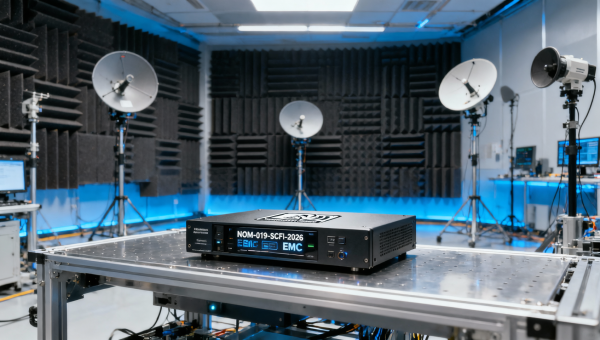
 Mexico NOM-019-SCFI-2026 Effective May 1, 2026: EMC Certification Mandatory for Auto ElectronicsNOM-019-SCFI-2026 EMC certification is now mandatory for auto electronics in Mexico—effective May 1, 2026. Ensure compliance for infotainment, ADAS, OBD-II & more.
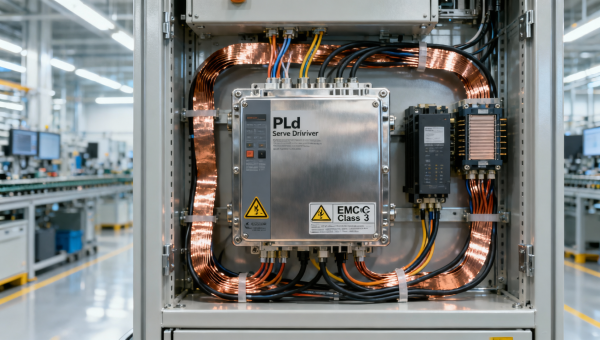
") TÜV Rheinland Updates CE Requirements for Servo Drives (PLd + EMC Class 3)TÜV Rheinland updates CE requirements for servo drives: PLd + EMC Class 3 joint validation mandatory from Q3 2026. Act now to avoid delays, rejections, or compliance risks.
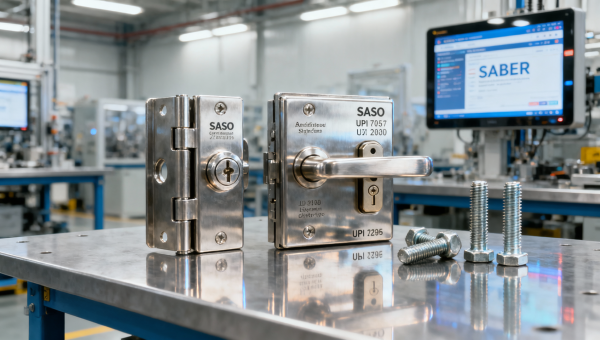
TÜV Rheinland Updates CE Requirements for Servo Drives (PLd + EMC Class 3)TÜV Rheinland updates CE requirements for servo drives: PLd + EMC Class 3 joint validation mandatory from Q3 2026. Act now to avoid delays, rejections, or compliance risks. SABER Phase II Launch: Building Hardware Must Submit Digital e-CoC & UPISABER Phase II mandates digital e-CoC & UPI for building hardware imports to Saudi Arabia—act now to ensure customs clearance and market access.
 FDA AI Diagnostic Device Draft Rules: Bias Assessment for ImportsFDA AI diagnostic device draft rules mandate bias assessment for imports — discover how algorithmic fairness impacts 510(k)/De Novo submissions and what to do now.
 RCEP Green Packaging Mutual Recognition Starts June 1, 2026RCEP Green Packaging Mutual Recognition starts June 1, 2026 — unlock faster exports to Australia, NZ, Japan & Korea with GB/T 37572-2025 certification.
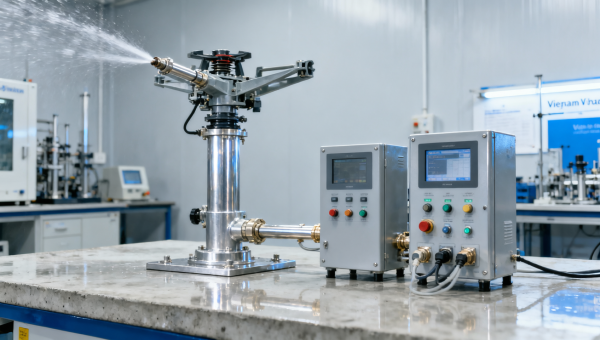
 Vietnam Suspends SASO Mutual Recognition for Chinese Irrigation EquipmentVietnam suspends SASO mutual recognition for Chinese irrigation equipment—impacting exporters, testers & suppliers. Act now to avoid 6–8 week delays & 35% cost hikes.
 IMDG Code 41-24 Enforces UN3480 Class 9 Labeling for Li-ion Battery Sea FreightIMDG Code 41-24 enforces UN3480 Class 9 labeling for Li-ion battery sea freight—learn mandatory QR labels, compliance actions & port enforcement risks.
 EU CBAM Enters Enforcement Phase on April 1, 2026EU CBAM enforcement starts April 1, 2026 — critical for Chinese battery materials, construction profiles & industrial coatings exporters. Act now to avoid customs delays.
 Mexico Enforces NOM-019-SCFI-2026 EMC Certification for Auto Electronics from May 2026Mexico enforces NOM-019-SCFI-2026 EMC certification for auto electronics from May 2026 — mandatory local testing, stricter standards, and urgent compliance action required.
 Global Port Congestion Eases, but Red Sea Rerouting PersistsRed Sea rerouting persists amid easing port congestion—Shanghai–Rotterdam freight rates surge 4.2% to $5,280/TEU. Critical insights for exporters, importers & logistics leaders.
 RCEP Green Packaging Mutual Recognition Starts June 2026RCEP Green Packaging Mutual Recognition starts June 2026 — streamline exports to Australia, NZ, Japan & SK with GB/T 37572-2025 certification. Save time & costs!
 FDA AI Diagnostic Device Rules: ABIA Required from Q3 2026FDA AI diagnostic device rules now require ABIA reports from Q3 2026 — essential for 510(k)/De Novo submissions. Stay compliant, avoid delays & secure U.S. market access.
 Vietnam Suspends SASO Mutual Recognition for Chinese Irrigation EquipmentVietnam suspends SASO mutual recognition for Chinese irrigation equipment—sprinkler systems, drip controllers & irrigation systems now require local QUATEST 3 testing. Act now to avoid 12-week delays & 35% cost hikes.
") TÜV Rheinland Updates CE Certification for Industrial Robot Drives (2026 Q3)TÜV Rheinland’s 2026 Q3 CE certification update for industrial robot drives mandates PLd safety + EN 61800-3 EMC — act now to avoid EU market delays.
TÜV Rheinland Updates CE Certification for Industrial Robot Drives (2026 Q3)TÜV Rheinland’s 2026 Q3 CE certification update for industrial robot drives mandates PLd safety + EN 61800-3 EMC — act now to avoid EU market delays. IMDG Code Amendment 41-24 Takes Effect for Lithium Battery Sea FreightIMDG Code Amendment 41-24 is live: New QR labels, bilingual handling tags & SOC disclosure required for UN3480 lithium battery sea freight—act now to avoid delays.
 SASO SABER Phase II: Digital Type Test Reports Required for Building Hardware from Jun 2026SASO SABER Phase II requires digital type test reports & unique product IDs for building hardware exports to Saudi Arabia — effective June 2026. Act now to ensure compliance and avoid customs delays.
 CPSC Updates 16 CFR Part 1236: New Suffocation Test for Children's Sleep Sacks Effective July 2026CPSC Updates 16 CFR Part 1236: New suffocation test for children's sleep sacks takes effect July 2026 — ensure compliance, avoid delays & protect your U.S. market access.
 EN IEC 62471-2:2026 Effective Oct 2026 for EU LED Lighting ExportsEN IEC 62471-2:2026 mandates full-spectrum photobiological safety testing (200–3000 nm) for all EU-bound LED lighting — effective 1 Oct 2026. Act now to secure CE marking & avoid market access delays.
 AI Patent Tools Security Flaw Triggers Compliance ReviewAI Patent Tools security flaw exposed—triggering urgent compliance reviews for medical device, semiconductor & AI firms. Act now to secure submissions.













Popular Tags
Global Trade Insights & Industry
Our mission is to empower global exporters and importers with data-driven insights that foster strategic growth.
Search News
Popular Tags
Industry Overview
The global commercial kitchen equipment market is projected to reach $112 billion by 2027. Driven by urbanization, the rise of e-commerce food delivery, and strict hygiene regulations.