

Car Maintenance Cost: What Should You Budget For?
Understanding car maintenance cost is essential for buyers, fleet managers, and distributors comparing long-term operating expenses. From lubricants price and radiators cost to car batteries supplier options and overall car maintenance price, budgeting requires more than rough estimates. This guide breaks down key cost factors, market variables, and sourcing considerations to help procurement teams and business evaluators make smarter, data-driven decisions.
What Does Car Maintenance Cost Really Include in a B2B Budget?
For information researchers, purchasing teams, and distributors, car maintenance cost is not a single line item. It is a layered budget made up of scheduled service, wear parts replacement, unplanned repairs, compliance checks, and supplier management. In most commercial evaluations, the useful budgeting horizon is 12 months, 24 months, or 36 months, depending on fleet turnover and contract length.
A practical budget usually starts with preventive maintenance. This includes engine oil and filters, brake fluid, coolant, air filters, tire rotation, battery checks, and belt inspection. For passenger vehicles and light commercial fleets, service intervals are often every 5,000–15,000 km or every 6–12 months, depending on duty cycle, road conditions, and manufacturer guidance.
The second layer is component-related replacement. Buyers often compare lubricants price, radiators cost, brake component pricing, and car batteries supplier offers because these categories strongly influence annual car maintenance price. A low upfront vehicle cost can become a poor decision if service parts are expensive, difficult to source, or uneven in quality across regions.
The third layer is operational risk. Delayed parts supply, inconsistent specifications, missing compliance documents, and poor distributor support can increase downtime costs far beyond the invoice value of a single component. In B2B procurement, true maintenance budgeting must include not only unit price, but also lead time, replacement frequency, and service continuity.
Core Cost Categories Procurement Teams Should Track
- Routine service items: engine oil, oil filters, cabin filters, coolant, brake fluid, and inspection labor.
- Wear-and-tear parts: brake pads, tires, belts, wiper blades, and suspension components replaced over 12–24 months.
- Electrical and thermal parts: batteries, alternator-related items, hoses, and radiators that may create urgent replacement demand.
- Indirect cost drivers: vehicle downtime, emergency freight, labor variability, and supplier switching risk.
When decision-makers separate these categories, they gain a clearer view of car maintenance cost by service cycle rather than by isolated invoice. This is especially useful for distributors and agents that need to build stock plans for 3–6 months while protecting margin and service reliability.
Which Parts and Service Items Drive the Highest Car Maintenance Price?
Not all maintenance items carry the same budget impact. Some are predictable and low risk, while others can distort annual cost if ignored during sourcing. In commercial evaluations, the biggest cost drivers are usually frequent consumables, high-failure components, and parts with long replacement downtime. This is why procurement teams often compare car batteries supplier terms and radiators cost early in the sourcing process.
Lubricants price matters because oil changes are recurring and affect every vehicle in a fleet. A small price difference per service becomes material when multiplied across 50, 100, or 500 vehicles. However, the lowest lubricant quote is not always the best value if viscosity grade consistency, packaging integrity, or supply continuity is weak.
Radiators cost and cooling system components deserve close attention because thermal failures can create secondary damage. In hot climates, stop-and-go urban traffic, or logistics routes with long idle time, cooling components face higher stress. Procurement managers should review material thickness, compatibility, and typical lead times of 2–6 weeks for cross-border orders.
Battery replacement is another major variable. A car batteries supplier may offer different product tiers for standard vehicles, start-stop systems, and heavier commercial use. If cycle life and warranty coverage are unclear, the apparent savings on unit price can disappear after premature replacements within 12–18 months.
Typical Maintenance Cost Drivers by Category
The table below helps buyers compare how different maintenance categories influence budgeting, sourcing complexity, and service continuity. It is designed for B2B users evaluating annual car maintenance cost rather than one-time retail repair decisions.
This comparison shows why a realistic car maintenance price model should rank categories by replacement frequency and operational consequence. For buyers handling multi-country supply chains, frequent low-cost items may consume more total budget than occasional high-ticket parts, especially when freight and stockholding are included.
A useful budgeting rule
Split maintenance items into 3 groups: recurring consumables, predictable replacement parts, and failure-driven emergency items. This simple structure helps business evaluators compare supplier programs, estimate annual purchasing volume, and avoid treating every component as an isolated purchase.
How Should Buyers Compare Suppliers, Parts Quality, and Total Cost?
In B2B sourcing, comparing car maintenance cost requires more than collecting three quotations. A complete evaluation should examine fitment accuracy, product grading, compliance paperwork, packaging suitability, and the supplier’s ability to support repeat orders. For distributors and agents, margin protection often depends on whether the supplier can maintain stable quality over 2–4 procurement cycles.
The lowest quote can increase total cost if rejection rates are high or if the supplier cannot maintain batch consistency. This issue appears frequently in categories such as batteries, filters, hoses, and cooling parts. A car batteries supplier should be assessed not only on price but also on after-sales handling, date code transparency, and storage condition guidance.
For lubricants, technical matching is critical. Buyers should confirm viscosity class, application suitability, packaging options such as 1 L, 4 L, 20 L, or drum supply, and whether the supplier can support private label or mixed container orders. Lubricants price becomes meaningful only when matched against product grade and operating conditions.
For radiators and cooling parts, procurement teams should verify dimensions, core material, connection design, and compatibility range before discussing volume discounts. A low radiators cost loses value if installation mismatch causes return handling, labor loss, or delayed vehicle release.
5 Key Checks Before Approving a Supplier
- Confirm product specifications against vehicle application lists, service manuals, or OEM reference mapping.
- Review warranty scope, especially for batteries, cooling parts, and safety-relevant components.
- Check standard lead times, which in many export scenarios may range from 7–15 days for stocked items to 30–45 days for production orders.
- Assess documentation readiness, including packing lists, labeling compliance, and any required technical declarations.
- Evaluate whether the supplier can support sample validation, mixed-SKU consolidation, and after-sales response within a defined window.
Supplier Comparison Framework for Maintenance Purchasing
The table below is useful for procurement managers who need to compare supplier offers beyond headline price. It brings car maintenance price analysis closer to actual operating risk and decision quality.
Using this framework, buyers can move from a unit-price mindset to a total-cost mindset. That shift is essential when evaluating annual car maintenance cost across different markets, suppliers, and vehicle categories.
What Budgeting Method Works Best for Fleets, Distributors, and Business Evaluators?
A workable budgeting model should match the business scenario. Fleet buyers need service continuity and downtime control. Distributors need inventory turnover and margin discipline. Business evaluators need clear assumptions they can defend in procurement reviews. In each case, the best car maintenance cost model combines service intervals, replacement cycles, and supplier risk into one planning sheet.
A common approach is to build a 3-layer forecast. Layer one estimates routine service by mileage or months. Layer two estimates replacement parts based on vehicle age and operating intensity. Layer three applies a contingency reserve for unscheduled items such as battery failure, hose leaks, cooling issues, or emergency freight. This method is more reliable than using a single annual average.
For example, a distributor managing fast-moving SKUs may forecast 60% of spend in recurring items, 25% in wear parts, and 15% in urgent or irregular demand. The exact ratio varies by vehicle mix and route conditions, but the principle remains useful: budget by behavior, not by rough guess. This also makes car maintenance price discussions easier during internal approval.
Procurement teams should also separate landed cost from workshop cost. Landed cost covers product, freight, duties, and storage. Workshop cost covers labor time, fitment risk, and downtime exposure. When these two areas are mixed together, buyers often underestimate the true impact of cheap but inconsistent supply.
A Practical 4-Step Maintenance Budget Process
- Classify vehicles by use case, such as urban delivery, intercity transport, sales fleet, or mixed private-commercial use.
- Assign service cycles and expected part replacement windows over 12 months or 20,000–40,000 km.
- Match each category to approved suppliers, including one primary source and one backup source for critical items.
- Review actual spend quarterly to adjust assumptions for lubricants price shifts, radiators cost changes, and battery replacement patterns.
Why market intelligence matters
In cross-border trade, maintenance budgeting is influenced by commodity movements, regional demand swings, freight volatility, and supplier concentration. This is where GTIIN and TradeVantage create practical value. By aggregating market signals across 50+ sectors and translating them into usable procurement insight, the platform helps buyers compare sourcing options, identify supply-side shifts earlier, and make decisions with stronger commercial context.
For importers, exporters, and distribution partners, access to structured industry intelligence shortens research time and improves supplier screening. Instead of relying on fragmented quotations alone, teams can track broader industrial trends, assess category exposure, and align maintenance purchasing with market timing and business growth objectives.
Common Mistakes, Compliance Checks, and FAQ for Car Maintenance Cost Planning
Even experienced buyers can underestimate car maintenance cost when they focus only on visible service items. The most common mistakes are inconsistent specification matching, weak replacement planning, and ignoring documentation requirements in cross-border transactions. These gaps create rework, stock imbalance, and avoidable downtime.
Compliance also matters. While maintenance parts vary by product category and destination market, buyers should still check labeling, transport requirements for certain battery types, safety-related component documentation, and any local import rules. A 1-day delay in customs or a missing declaration can disrupt a service schedule built around 7-day to 10-day turnaround promises.
Another mistake is treating all suppliers as interchangeable. In reality, the right car batteries supplier for one market may not suit another due to climate, usage profile, or warranty expectations. The same applies to lubricants price comparisons and radiators cost discussions, where packaging, fitment, and local service conditions change the value equation.
The most resilient strategy is to combine product screening, supplier evaluation, and market monitoring into one workflow. That gives procurement teams clearer decisions, fewer surprises, and a more defendable car maintenance price forecast.
FAQ
How should I estimate annual car maintenance cost for procurement planning?
Start with three buckets: scheduled service, expected replacement parts, and contingency spend. Use a 12-month baseline, then review by mileage bands such as 10,000 km, 20,000 km, and 40,000 km. This gives a more stable estimate than using a single average cost per vehicle.
What should buyers check when comparing a car batteries supplier?
Check application fit, capacity and voltage match, storage and transport conditions, warranty process, production date traceability, and lead time. For distribution businesses, stock turnover and claim handling speed are just as important as unit price.
Why can low lubricants price still lead to higher operating cost?
If the product grade is inconsistent, packaging is damaged, or the service interval is shortened, cheaper oil may increase labor frequency and engine risk. Procurement should compare technical suitability, pack size, and supply continuity along with price.
How do radiators cost affect wider maintenance budgeting?
Cooling system failures can cause urgent repairs, lost operating hours, and additional component damage. That is why radiators cost should be evaluated together with fitment reliability, material quality, and shipping availability, not as a stand-alone spare parts quote.
Why Work With Us for Market-Led Sourcing Decisions?
For buyers navigating car maintenance cost, the challenge is rarely limited to finding a part number. The harder task is connecting pricing, supply stability, market movement, and commercial risk into one decision. GTIIN and TradeVantage are built for that need. We bridge fragmented supply-chain information with actionable B2B intelligence that supports importers, exporters, sourcing teams, and channel partners.
Our editorial and industry intelligence capabilities help users monitor product categories, compare sourcing signals across regions, and identify practical decision points faster. Whether you are tracking lubricants price trends, evaluating radiators cost exposure, screening a car batteries supplier, or building a broader car maintenance price model, we support more informed and commercially grounded decisions.
You can contact us to discuss supplier landscape research, product category analysis, lead time comparison, application-specific sourcing logic, and market visibility strategies for your business. We can also help you refine procurement questions around specification confirmation, replacement planning, delivery cycle expectations, documentation concerns, sample support pathways, and quotation benchmarking.
If your team needs clearer insight before the next sourcing round, reach out with your target vehicle category, part scope, expected order cycle, and destination market. That information allows a more useful discussion around maintenance budgeting, supplier selection, content visibility, and cross-border trade opportunities.
Recommended News
 US CPSC Updates Child Sleep Sack Standard Effective July 2026US CPSC updates child sleep sack standard with new DSST test—mandatory for all U.S.-bound infant sleep sacks from July 2026. Act now to ensure compliance and market access.
 Red Sea Rerouting Pushes Asia-Europe Freight Premium to $1,850/TEURed Sea rerouting pushes Asia-Europe freight premium to $1,850/TEU—impacting importers, manufacturers & logistics providers. Act now to reassess costs, lead times & contracts.
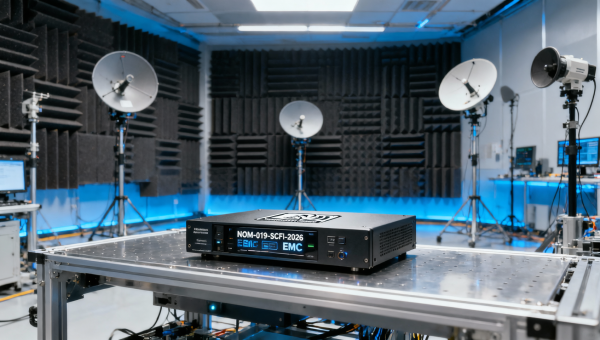
 Mexico NOM-019-SCFI-2026 Effective May 1, 2026: EMC Certification Mandatory for Auto ElectronicsNOM-019-SCFI-2026 EMC certification is now mandatory for auto electronics in Mexico—effective May 1, 2026. Ensure compliance for infotainment, ADAS, OBD-II & more.
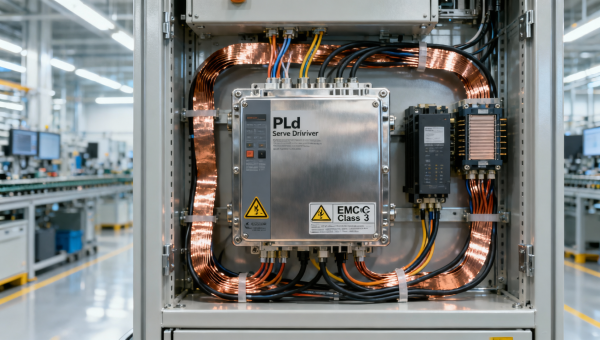
") TÜV Rheinland Updates CE Requirements for Servo Drives (PLd + EMC Class 3)TÜV Rheinland updates CE requirements for servo drives: PLd + EMC Class 3 joint validation mandatory from Q3 2026. Act now to avoid delays, rejections, or compliance risks.
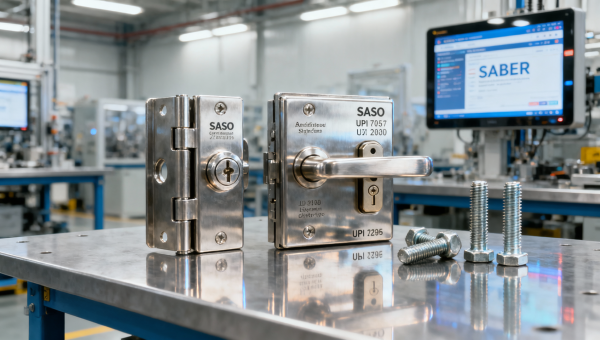
TÜV Rheinland Updates CE Requirements for Servo Drives (PLd + EMC Class 3)TÜV Rheinland updates CE requirements for servo drives: PLd + EMC Class 3 joint validation mandatory from Q3 2026. Act now to avoid delays, rejections, or compliance risks. SABER Phase II Launch: Building Hardware Must Submit Digital e-CoC & UPISABER Phase II mandates digital e-CoC & UPI for building hardware imports to Saudi Arabia—act now to ensure customs clearance and market access.
 FDA AI Diagnostic Device Draft Rules: Bias Assessment for ImportsFDA AI diagnostic device draft rules mandate bias assessment for imports — discover how algorithmic fairness impacts 510(k)/De Novo submissions and what to do now.
 RCEP Green Packaging Mutual Recognition Starts June 1, 2026RCEP Green Packaging Mutual Recognition starts June 1, 2026 — unlock faster exports to Australia, NZ, Japan & Korea with GB/T 37572-2025 certification.
 Vietnam Suspends SASO Mutual Recognition for Chinese Irrigation EquipmentVietnam suspends SASO mutual recognition for Chinese irrigation equipment—impacting exporters, testers & suppliers. Act now to avoid 6–8 week delays & 35% cost hikes.
 IMDG Code 41-24 Enforces UN3480 Class 9 Labeling for Li-ion Battery Sea FreightIMDG Code 41-24 enforces UN3480 Class 9 labeling for Li-ion battery sea freight—learn mandatory QR labels, compliance actions & port enforcement risks.
 EU CBAM Enters Enforcement Phase on April 1, 2026EU CBAM enforcement starts April 1, 2026 — critical for Chinese battery materials, construction profiles & industrial coatings exporters. Act now to avoid customs delays.
 Mexico Enforces NOM-019-SCFI-2026 EMC Certification for Auto Electronics from May 2026Mexico enforces NOM-019-SCFI-2026 EMC certification for auto electronics from May 2026 — mandatory local testing, stricter standards, and urgent compliance action required.
 Global Port Congestion Eases, but Red Sea Rerouting PersistsRed Sea rerouting persists amid easing port congestion—Shanghai–Rotterdam freight rates surge 4.2% to $5,280/TEU. Critical insights for exporters, importers & logistics leaders.
 RCEP Green Packaging Mutual Recognition Starts June 2026RCEP Green Packaging Mutual Recognition starts June 2026 — streamline exports to Australia, NZ, Japan & SK with GB/T 37572-2025 certification. Save time & costs!
 FDA AI Diagnostic Device Rules: ABIA Required from Q3 2026FDA AI diagnostic device rules now require ABIA reports from Q3 2026 — essential for 510(k)/De Novo submissions. Stay compliant, avoid delays & secure U.S. market access.
 Vietnam Suspends SASO Mutual Recognition for Chinese Irrigation EquipmentVietnam suspends SASO mutual recognition for Chinese irrigation equipment—sprinkler systems, drip controllers & irrigation systems now require local QUATEST 3 testing. Act now to avoid 12-week delays & 35% cost hikes.
") TÜV Rheinland Updates CE Certification for Industrial Robot Drives (2026 Q3)TÜV Rheinland’s 2026 Q3 CE certification update for industrial robot drives mandates PLd safety + EN 61800-3 EMC — act now to avoid EU market delays.
TÜV Rheinland Updates CE Certification for Industrial Robot Drives (2026 Q3)TÜV Rheinland’s 2026 Q3 CE certification update for industrial robot drives mandates PLd safety + EN 61800-3 EMC — act now to avoid EU market delays. IMDG Code Amendment 41-24 Takes Effect for Lithium Battery Sea FreightIMDG Code Amendment 41-24 is live: New QR labels, bilingual handling tags & SOC disclosure required for UN3480 lithium battery sea freight—act now to avoid delays.
 SASO SABER Phase II: Digital Type Test Reports Required for Building Hardware from Jun 2026SASO SABER Phase II requires digital type test reports & unique product IDs for building hardware exports to Saudi Arabia — effective June 2026. Act now to ensure compliance and avoid customs delays.
 CPSC Updates 16 CFR Part 1236: New Suffocation Test for Children's Sleep Sacks Effective July 2026CPSC Updates 16 CFR Part 1236: New suffocation test for children's sleep sacks takes effect July 2026 — ensure compliance, avoid delays & protect your U.S. market access.
 EN IEC 62471-2:2026 Effective Oct 2026 for EU LED Lighting ExportsEN IEC 62471-2:2026 mandates full-spectrum photobiological safety testing (200–3000 nm) for all EU-bound LED lighting — effective 1 Oct 2026. Act now to secure CE marking & avoid market access delays.
 AI Patent Tools Security Flaw Triggers Compliance ReviewAI Patent Tools security flaw exposed—triggering urgent compliance reviews for medical device, semiconductor & AI firms. Act now to secure submissions.















Popular Tags
Global Trade Insights & Industry
Our mission is to empower global exporters and importers with data-driven insights that foster strategic growth.
Search News
Popular Tags
Industry Overview
The global commercial kitchen equipment market is projected to reach $112 billion by 2027. Driven by urbanization, the rise of e-commerce food delivery, and strict hygiene regulations.