

How to Evaluate a Car Batteries Manufacturer
Choosing the right car batteries manufacturer is not just about comparing voltage, size, or unit price. For procurement teams, distributors, and market researchers, the real question is whether a supplier can deliver stable quality, consistent lead times, compliant products, and long-term commercial value. In practice, a strong car batteries manufacturer should be evaluated across five core areas: product quality, manufacturing capability, certification and compliance, export and supply reliability, and total cost over time. Buyers who assess these factors systematically are far more likely to avoid sourcing risks and build a sustainable supply relationship.
What Is the Real Search Intent Behind Evaluating a Car Batteries Manufacturer?
Most readers searching for how to evaluate a car batteries manufacturer are not looking for a basic definition of car batteries. They want a practical framework for supplier selection. Their goal is usually one of the following:
- Shortlist qualified manufacturers for sourcing or private label cooperation
- Reduce the risk of quality complaints, delivery delays, or compliance issues
- Compare manufacturers beyond quoted price
- Understand which indicators reveal whether a supplier is truly reliable
- Support internal purchasing, vendor approval, or business due diligence
For this audience, generic advice is not enough. They need clear evaluation criteria, warning signs, and a way to compare suppliers on business performance as well as product quality.
What Buyers Care About Most When Comparing Car Batteries Suppliers
Whether the reader is a procurement officer, distributor, or market analyst, the biggest concerns usually center on operational risk and commercial predictability. In other words, they want to know whether the manufacturer can support real business growth without creating hidden problems later.
The most common buyer concerns include:
- Quality consistency: Can the factory maintain stable product performance across batches?
- Production capacity: Can it support large orders or seasonal demand swings?
- Technical range: Does it offer the battery types required for target markets, such as AGM, EFB, lead-acid, or maintenance-free models?
- Compliance: Are products backed by the certifications required for import, distribution, or OEM-related channels?
- Delivery reliability: Does the company have export experience, shipping coordination, and realistic lead time management?
- After-sales support: How does it handle claims, warranty issues, and technical feedback?
- Total sourcing cost: Is the low ex-factory price offset by high defect rates, poor packaging, or weak service?
This is why the best supplier evaluation process combines factory capability review, document verification, product testing, and commercial assessment.
Start with Product Quality, Not Just Specifications
Many buyers make the mistake of comparing only catalogue data. A battery may look competitive on paper, but real value comes from performance consistency in actual operating conditions. When evaluating a car batteries manufacturer, quality should be examined at both the product level and the process level.
Key product quality points to assess include:
- Cold cranking amps (CCA) stability
- Reserve capacity and cycle life
- Charge acceptance performance
- Leak resistance and casing durability
- Performance under temperature variation
- Shelf life and self-discharge control
Beyond performance data, ask how the manufacturer controls plate production, electrolyte filling, formation processes, sealing, and final inspection. A dependable car batteries supplier should be able to explain its quality control system clearly, provide testing records, and show traceability by batch or production date.
If possible, request samples for lab testing or field testing before placing a large order. For distributors and importers, early sample validation can prevent expensive warranty exposure later.
Review Manufacturing Capability and Capacity in Practical Terms
A supplier may market itself as a major manufacturer, but buyers should verify what that means in operational terms. The real issue is whether the factory can produce the right battery types at the required scale while maintaining quality and lead time.
Important questions include:
- What is the annual and monthly production capacity?
- Which battery categories are produced in-house?
- How automated is the production line?
- Are key components made internally or sourced externally?
- Can the factory support OEM, ODM, or private label projects?
- How does it handle peak season demand?
In-house manufacturing depth matters. A manufacturer with stronger control over critical production stages is generally better positioned to manage cost, quality, and delivery consistency. If too much is outsourced, buyers should investigate supplier dependency risks.
For procurement teams, this is especially important when building long-term supply agreements. Capacity claims should be supported by factory audit findings, equipment lists, and recent shipment records.
Check Certifications, Standards, and Market Compliance
Compliance is a major filter in global battery sourcing. A manufacturer may offer attractive pricing, but without valid certifications and export-ready documentation, the sourcing risk rises sharply.
The relevant certifications will vary by market, but buyers commonly review:
- ISO 9001 for quality management
- ISO 14001 for environmental management
- IATF 16949 where automotive quality systems are relevant
- CE or other destination-market compliance documents where applicable
- MSDS, UN38.3-related transport information where needed for logistics handling
- RoHS or related environmental declarations depending on market requirements
Also review whether the manufacturer understands destination-country labeling, packaging, hazardous goods handling, and customs documentation. An experienced exporter usually has a more complete compliance workflow and can reduce border clearance issues.
Do not simply accept logos on a brochure. Ask for valid certificates, issuing bodies, and expiration dates. Compliance verification is one of the easiest ways to filter out weak suppliers early.
Evaluate Export Experience and Supply Chain Reliability
For international buyers, manufacturing quality alone is not enough. The supplier must also be able to deliver consistently across borders. This is where export strength becomes a critical part of manufacturer evaluation.
Look into the following:
- Main export markets and years of export experience
- Container loading capacity and shipment frequency
- Packaging standards for long-distance transport
- Lead time performance history
- Ability to coordinate documents, labeling, and customs support
- Contingency planning for raw material or logistics disruptions
A manufacturer with mature export operations is generally easier to work with, especially for distributors and agents who need predictable replenishment. If a supplier cannot clearly explain its export process, buyers should be cautious.
You can also assess reliability by reviewing customer references, export records, trade fair participation, and responsiveness during quotation and negotiation stages. Delays and vague answers early in communication often signal larger execution issues later.
Look Beyond Unit Price to Understand Total Cost Value
One of the most important parts of evaluating a car batteries manufacturer is understanding total cost, not just purchase price. A lower quotation can become more expensive if the supplier causes returns, warranty claims, stockouts, or customer dissatisfaction.
Total cost evaluation should include:
- Unit price by specification and order volume
- Packaging quality and damage risk
- Expected defect rate and claim handling cost
- Payment terms and financing impact
- Lead time reliability and inventory implications
- Warranty policy and replacement procedures
- Marketing support or customization capability for distributors
For resellers and importers, a battery with slightly higher initial cost may offer better margin protection if it reduces field failures and strengthens customer trust. For procurement teams, total cost analysis also helps justify supplier selection internally.
Assess Communication, Responsiveness, and Commercial Support
Even technically capable factories can become difficult partners if communication is poor. In B2B sourcing, responsiveness is a practical indicator of future cooperation quality.
During the evaluation process, pay attention to:
- How quickly the supplier replies to technical and commercial questions
- Whether quotations are clear and complete
- How transparently it discusses limitations or lead times
- Whether it provides organized documents and test reports
- Its willingness to support labeling, branding, or market-specific requests
Strong communication often reflects stronger internal systems. For distributors and agents, this also affects how quickly issues in the market can be resolved.
Red Flags That Suggest a Car Batteries Manufacturer May Be Risky
Some warning signs appear repeatedly in poor supplier cases. Buyers should treat the following as risk indicators:
- Prices far below market level without clear explanation
- Inconsistent information across website, quotation, and certificates
- Reluctance to provide factory details or audit access
- Unclear warranty terms
- No batch traceability or test documentation
- Overpromised capacity with weak evidence
- Slow or evasive replies to compliance questions
None of these points alone proves a supplier is unqualified, but together they often indicate a high-risk manufacturer. In competitive sourcing environments, removing weak candidates early saves time and protects procurement outcomes.
A Practical Checklist for Supplier Evaluation
To compare suppliers objectively, buyers can use a simple scorecard. This helps procurement teams, evaluation committees, and channel partners make decisions based on evidence rather than impressions.
Suggested evaluation categories:
- Product quality: test data, sample performance, batch consistency
- Factory strength: equipment, capacity, in-house production depth
- Certifications: quality and market compliance documents
- Export capability: shipping experience, packaging, document support
- Commercial terms: pricing, MOQ, payment, warranty
- Service: response speed, problem solving, customization support
- Reputation: references, market presence, customer feedback
Using weighted scoring can be especially useful. For example, distributors may assign more weight to warranty support and consistency, while procurement managers may prioritize compliance and lead time reliability.
Conclusion: The Best Manufacturer Is the One That Reduces Business Risk While Supporting Growth
To evaluate a car batteries manufacturer effectively, buyers should go far beyond catalogue specs and headline pricing. The strongest suppliers are those that combine stable product quality, verified manufacturing capability, valid certifications, dependable export operations, and commercially sustainable terms. For procurement professionals, distributors, and business evaluators, the goal is not to find the cheapest battery supplier but the manufacturer that delivers repeatable value with the lowest operational risk.
In a competitive global sourcing environment, a structured evaluation process leads to better supplier decisions, fewer downstream problems, and stronger long-term returns. When buyers assess quality, compliance, capacity, and total cost together, they are in a much better position to choose a car batteries supplier that can support both immediate procurement needs and future market growth.
Recommended News
 US CPSC Updates Child Sleep Sack Standard Effective July 2026US CPSC updates child sleep sack standard with new DSST test—mandatory for all U.S.-bound infant sleep sacks from July 2026. Act now to ensure compliance and market access.
 Red Sea Rerouting Pushes Asia-Europe Freight Premium to $1,850/TEURed Sea rerouting pushes Asia-Europe freight premium to $1,850/TEU—impacting importers, manufacturers & logistics providers. Act now to reassess costs, lead times & contracts.
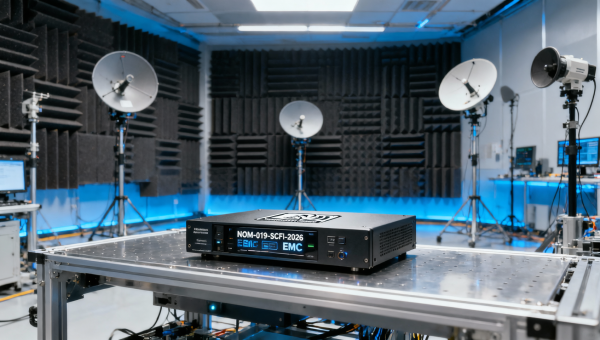
 Mexico NOM-019-SCFI-2026 Effective May 1, 2026: EMC Certification Mandatory for Auto ElectronicsNOM-019-SCFI-2026 EMC certification is now mandatory for auto electronics in Mexico—effective May 1, 2026. Ensure compliance for infotainment, ADAS, OBD-II & more.
") TÜV Rheinland Updates CE Requirements for Servo Drives (PLd + EMC Class 3)TÜV Rheinland updates CE requirements for servo drives: PLd + EMC Class 3 joint validation mandatory from Q3 2026. Act now to avoid delays, rejections, or compliance risks.
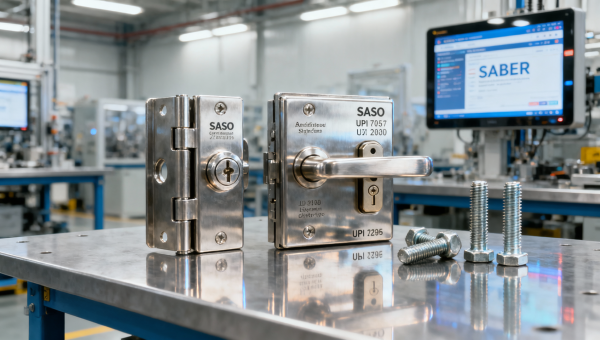
TÜV Rheinland Updates CE Requirements for Servo Drives (PLd + EMC Class 3)TÜV Rheinland updates CE requirements for servo drives: PLd + EMC Class 3 joint validation mandatory from Q3 2026. Act now to avoid delays, rejections, or compliance risks. SABER Phase II Launch: Building Hardware Must Submit Digital e-CoC & UPISABER Phase II mandates digital e-CoC & UPI for building hardware imports to Saudi Arabia—act now to ensure customs clearance and market access.
 FDA AI Diagnostic Device Draft Rules: Bias Assessment for ImportsFDA AI diagnostic device draft rules mandate bias assessment for imports — discover how algorithmic fairness impacts 510(k)/De Novo submissions and what to do now.
 RCEP Green Packaging Mutual Recognition Starts June 1, 2026RCEP Green Packaging Mutual Recognition starts June 1, 2026 — unlock faster exports to Australia, NZ, Japan & Korea with GB/T 37572-2025 certification.
 Vietnam Suspends SASO Mutual Recognition for Chinese Irrigation EquipmentVietnam suspends SASO mutual recognition for Chinese irrigation equipment—impacting exporters, testers & suppliers. Act now to avoid 6–8 week delays & 35% cost hikes.
 IMDG Code 41-24 Enforces UN3480 Class 9 Labeling for Li-ion Battery Sea FreightIMDG Code 41-24 enforces UN3480 Class 9 labeling for Li-ion battery sea freight—learn mandatory QR labels, compliance actions & port enforcement risks.
 EU CBAM Enters Enforcement Phase on April 1, 2026EU CBAM enforcement starts April 1, 2026 — critical for Chinese battery materials, construction profiles & industrial coatings exporters. Act now to avoid customs delays.
 Mexico Enforces NOM-019-SCFI-2026 EMC Certification for Auto Electronics from May 2026Mexico enforces NOM-019-SCFI-2026 EMC certification for auto electronics from May 2026 — mandatory local testing, stricter standards, and urgent compliance action required.
 Global Port Congestion Eases, but Red Sea Rerouting PersistsRed Sea rerouting persists amid easing port congestion—Shanghai–Rotterdam freight rates surge 4.2% to $5,280/TEU. Critical insights for exporters, importers & logistics leaders.
 RCEP Green Packaging Mutual Recognition Starts June 2026RCEP Green Packaging Mutual Recognition starts June 2026 — streamline exports to Australia, NZ, Japan & SK with GB/T 37572-2025 certification. Save time & costs!
 FDA AI Diagnostic Device Rules: ABIA Required from Q3 2026FDA AI diagnostic device rules now require ABIA reports from Q3 2026 — essential for 510(k)/De Novo submissions. Stay compliant, avoid delays & secure U.S. market access.
 Vietnam Suspends SASO Mutual Recognition for Chinese Irrigation EquipmentVietnam suspends SASO mutual recognition for Chinese irrigation equipment—sprinkler systems, drip controllers & irrigation systems now require local QUATEST 3 testing. Act now to avoid 12-week delays & 35% cost hikes.
") TÜV Rheinland Updates CE Certification for Industrial Robot Drives (2026 Q3)TÜV Rheinland’s 2026 Q3 CE certification update for industrial robot drives mandates PLd safety + EN 61800-3 EMC — act now to avoid EU market delays.
TÜV Rheinland Updates CE Certification for Industrial Robot Drives (2026 Q3)TÜV Rheinland’s 2026 Q3 CE certification update for industrial robot drives mandates PLd safety + EN 61800-3 EMC — act now to avoid EU market delays. IMDG Code Amendment 41-24 Takes Effect for Lithium Battery Sea FreightIMDG Code Amendment 41-24 is live: New QR labels, bilingual handling tags & SOC disclosure required for UN3480 lithium battery sea freight—act now to avoid delays.
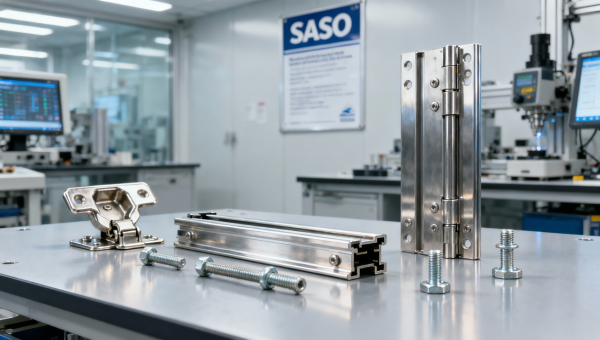
 SASO SABER Phase II: Digital Type Test Reports Required for Building Hardware from Jun 2026SASO SABER Phase II requires digital type test reports & unique product IDs for building hardware exports to Saudi Arabia — effective June 2026. Act now to ensure compliance and avoid customs delays.
 CPSC Updates 16 CFR Part 1236: New Suffocation Test for Children's Sleep Sacks Effective July 2026CPSC Updates 16 CFR Part 1236: New suffocation test for children's sleep sacks takes effect July 2026 — ensure compliance, avoid delays & protect your U.S. market access.
 EN IEC 62471-2:2026 Effective Oct 2026 for EU LED Lighting ExportsEN IEC 62471-2:2026 mandates full-spectrum photobiological safety testing (200–3000 nm) for all EU-bound LED lighting — effective 1 Oct 2026. Act now to secure CE marking & avoid market access delays.
 AI Patent Tools Security Flaw Triggers Compliance ReviewAI Patent Tools security flaw exposed—triggering urgent compliance reviews for medical device, semiconductor & AI firms. Act now to secure submissions.


















Popular Tags
Global Trade Insights & Industry
Our mission is to empower global exporters and importers with data-driven insights that foster strategic growth.
Search News
Popular Tags
Industry Overview
The global commercial kitchen equipment market is projected to reach $112 billion by 2027. Driven by urbanization, the rise of e-commerce food delivery, and strict hygiene regulations.